Aglist
Equipment
Tractors
Сompact Loaders
Compact & Mini Excavators
Mowers
Telehandlers
Tillage
Grain Dryers
Attachments
Snow Pushers
Snow Blades
Brands
Blog
Tools & Calculators
Contact
Model
Types of Transport
Make
Model
DefaultRating: High to LowRating: Low to High
John Deere 60 P-Tier (60G)
 John Deere 60 P-Tier (60G)
John Deere 17 P-Tier (17G)
 John Deere 17 P-Tier (17G)
John Deere 26 P-Tier (26G)
 John Deere 26 P-Tier (26G)
John Deere 30 P-Tier (30G)
 John Deere 30 P-Tier (30G)
John Deere 50 P-Tier (50G)
 John Deere 50 P-Tier (50G)
John Deere 35 P-Tier (35G)
 John Deere 35 P-Tier (35G)
Kubota KX057-5
 Kubota KX057-5
Kubota KX080-5
 Kubota KX080-5
Kubota KX040-5
 Kubota KX040-5
Kubota KX033-4
 Kubota KX033-4
Kubota KX018-4
 Kubota KX018-4
Kubota U55-5
 Kubota U55-5
Kubota KX040-5
 Kubota KX040-5
Kubota U35-4
 Kubota U35-4
Kubota U27-4
 Kubota U27-4

Compact & Mini Excavators: Specs, Reviews & Buyer's Guides in Canada

Introduction

Compact and mini excavators have become some of the most useful machines a prairie operation can own. Whether you're digging footings for a new shop, laying tile drainage across a wet quarter, cleaning out a dugout, trenching a water line, or doing landscaping and demolition around an acreage, a compact excavator does the work of a crew with a shovel in a fraction of the time. And because they're small enough to trailer behind a three-quarter-ton truck yet powerful enough for serious digging, they fit the way farms, acreage owners, and small contractors across Saskatchewan, Alberta, and Manitoba actually work.

But choosing one means navigating a crowded field. Bobcat, Kubota, John Deere, and several other manufacturers all build compact excavators, and within each brand you'll find a range of sizes from sub-one-tonne micro machines to ten-tonne models that blur the line into full-size equipment. Dig depth, operating weight, reach, and — critically — whether the machine has zero or conventional tail swing all shape what a given excavator can do and where it can work.

Aglist is built to make that comparison straightforward. Here you can explore compact and mini excavators by brand, open model pages for structured spec breakdowns, and use real owner reviews to understand how each machine performs in the field — not just on paper. Whether you're confirming dig depth for a drainage project, comparing tail swing for tight-quarters work, or weighing one brand against another, this category page is your starting point.

Browse Compact & Mini Excavators by Brand

Compact excavators are offered by most major equipment manufacturers, each with its own size range, lift geometry, and feature set. As Aglist builds out detailed model pages and brand coverage across the excavator category, use the sections below to explore by manufacturer.

Bobcat Excavators

Bobcat is one of the most recognized names in compact excavators, with a lineup spanning sub-one-tonne micro machines up to ten-tonne models, including the next-generation R2-Series and the new E20 introduced at ConExpo 2026. Many Bobcat compact excavators feature zero tail swing or zero house swing designs for working tight against walls and obstacles — a major advantage in confined acreage and construction settings. Explore the full Bobcat range, including skid steers and compact track loaders, on the Bobcat brand hub.

Kubota Excavators

Kubota is a dominant force in the compact excavator market, particularly strong in the sub-six-tonne classes that suit farm and acreage work. The KX and U series are staples on Canadian job sites and farms, known for reliable diesel engines, smooth hydraulics, and tight-tail-swing designs. Dedicated Kubota excavator model pages are being added to Aglist — in the meantime, explore Kubota's broader equipment coverage across our tractor and loader content.

John Deere Excavators

John Deere's compact excavator lineup spans the small-frame machines through larger models, carrying the same reliability and dealer-network strength that define Deere's agricultural and construction equipment. Deere compact excavators are a natural fit for operations already running green equipment. Dedicated John Deere excavator model pages are being added to Aglist.

More Brands

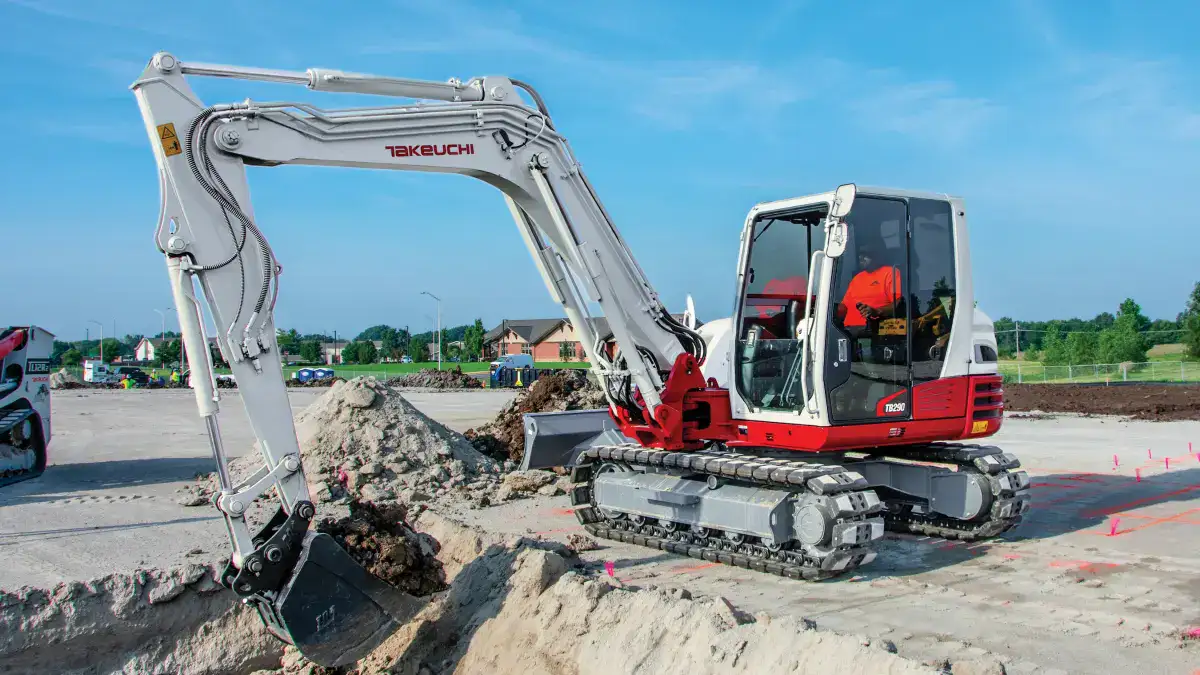
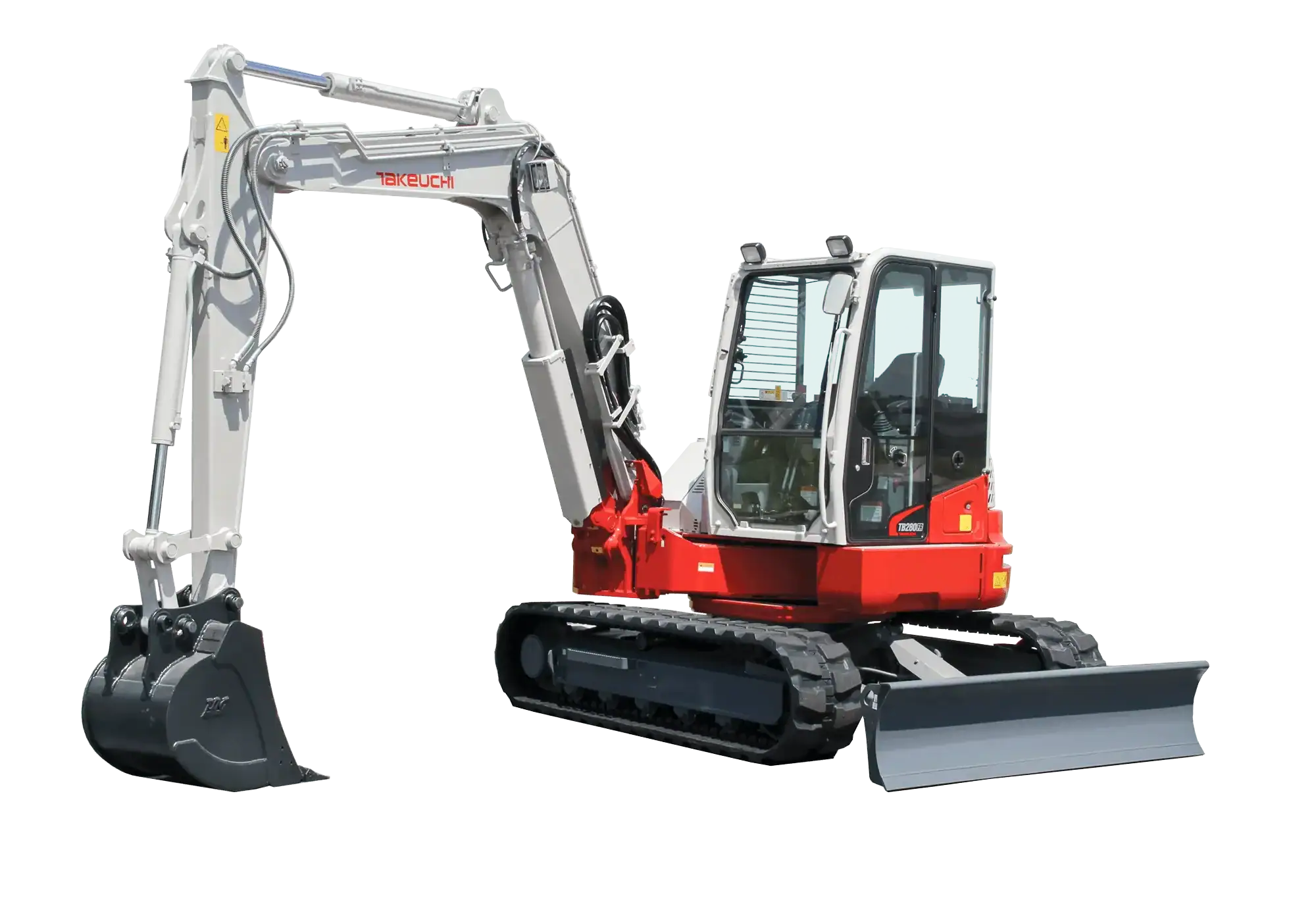
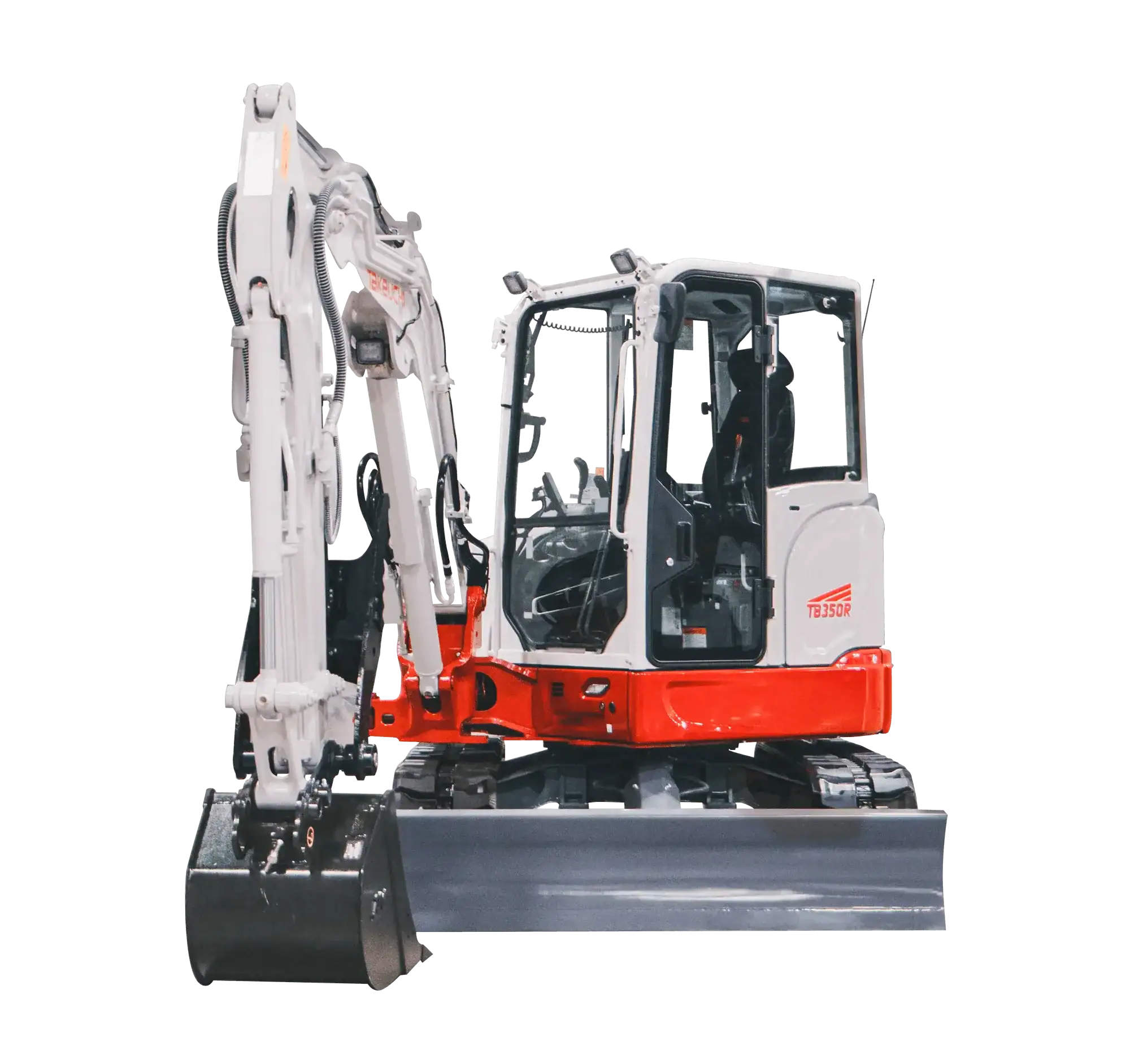
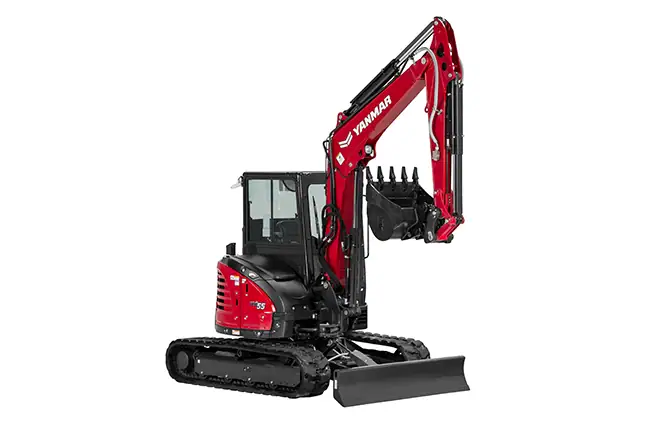
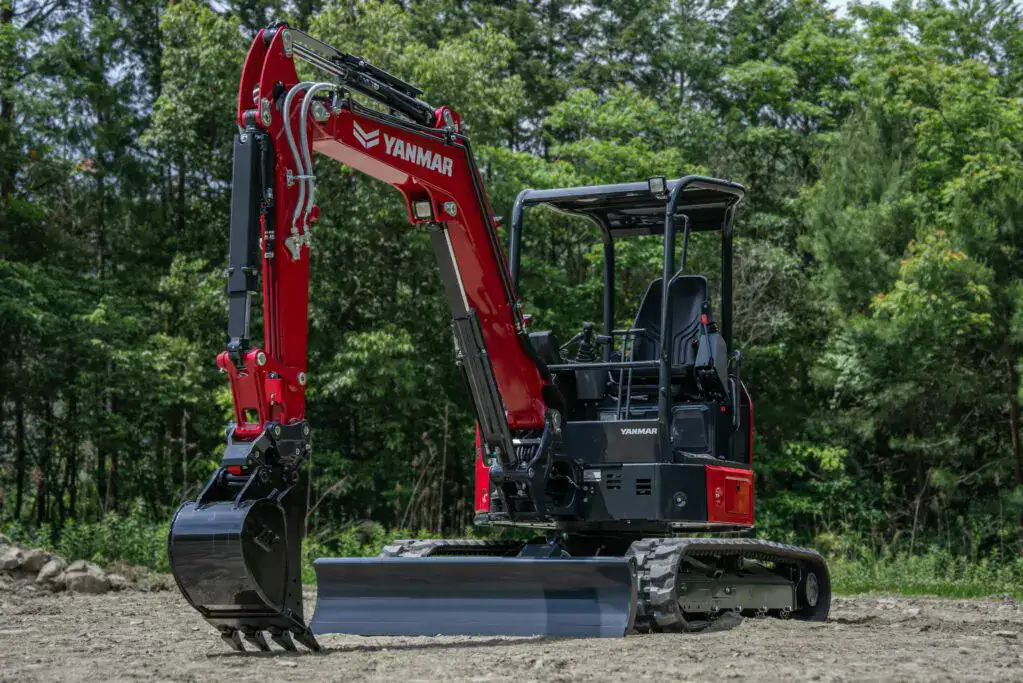
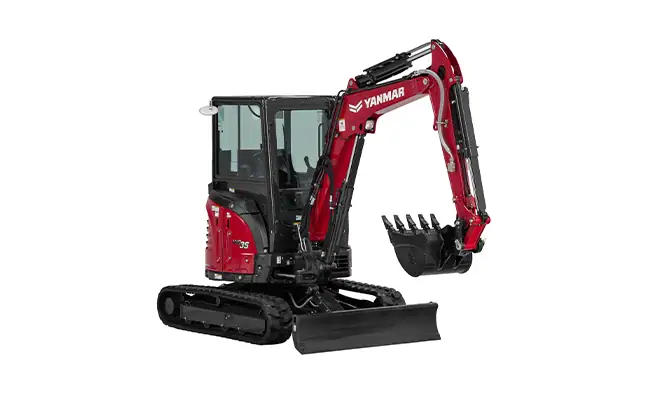
The compact excavator market also includes strong offerings from Caterpillar, Takeuchi, Yanmar, Kubota-rival Kioti, and others. As Aglist expands its excavator coverage, additional brands and model pages will be added to this category. If there's a specific machine you'd like to see covered, your feedback helps shape what we build next.

As this category grows, this page will link to detailed brand hubs and model pages across the full compact and mini excavator market.

What Specs Matter Most When Comparing Compact Excavators

Excavators are compared on a different set of numbers than loaders, and a few specs matter far more than the rest. Here's what to focus on when shopping compact and mini excavators for prairie work.

Tail Swing: Zero, Reduced, or Conventional

This is the single most important design choice on a compact excavator, and the one most buyers underestimate. Tail swing describes how far the back of the machine (the counterweight and engine housing) extends past the tracks when the upper structure rotates.

  • Conventional tail swing machines have a counterweight that swings well past the tracks. They offer excellent stability and lifting performance, but the operator must constantly watch the rear to avoid hitting walls, fences, or obstacles — a real hazard in tight spaces.
  • Zero tail swing (ZTS) machines keep the counterweight within or nearly within the track width, so the rear doesn't overhang as the machine rotates. This lets you work right up against a wall, in a trench beside a building, or along a fence line without the back of the machine striking anything. The trade-off is usually slightly reduced lifting capacity or a wider house.
  • Reduced (or minimal) tail swing machines split the difference, with a small overhang that balances stability against tight-quarters capability.

For acreage work near buildings, trenching beside structures, or any confined job site, zero or reduced tail swing is often worth prioritizing over raw digging numbers. Match the tail swing to where you'll actually work.

Dig Depth and Reach

Maximum dig depth — how deep the machine can excavate in a single pass — is the headline spec for any excavator, and it scales with machine size. A one-tonne micro machine might dig around six feet; a six-tonne machine can reach twelve to fourteen feet or more. Maximum reach (how far out the machine can dig at ground level) matters for clearing spoil piles, loading trucks parked alongside, and working across a wide trench. Always match dig depth to your deepest realistic job — footings, drainage tile, water lines, or dugout work — rather than buying more or less than you need.

Operating Weight (Tonnage Class)

Compact excavators are categorized by operating weight, typically from under one tonne up to around ten tonnes. Weight class is the best single indicator of a machine's overall capability — it correlates with dig depth, lifting capacity, engine power, and stability. But heavier isn't automatically better: a bigger machine costs more, needs a heavier trailer, and exerts more ground pressure. For most acreage and small-farm work, the two-to-six-tonne range hits the sweet spot of capability versus transportability behind a standard truck and trailer.

Lifting Capacity

Beyond digging, compact excavators frequently lift — setting culverts, placing pipe, moving landscape boulders, handling material with a thumb attachment. Lifting capacity varies with the load's distance from the machine and the angle of the boom, so check the lift chart for the reach and height you'll actually use, not just the maximum figure. Counterweight, tail swing design, and whether the machine has a dozer blade down all affect real-world lifting.

Engine, Hydraulics, and Auxiliary Flow

A reliable diesel engine and smooth, responsive hydraulics define how a compact excavator feels to operate over a long day. Auxiliary hydraulic flow matters if you plan to run attachments — augers, hydraulic thumbs, breakers, compactors, mulching heads — so confirm the machine offers the flow your intended attachments need. Many compact excavators meet current Tier 4 emissions, and engine provenance and serviceability are worth checking, especially on the used market.

Compact Excavator Reviews on Aglist

Specs narrow the field, but reviews help you decide. Owner reviews surface what matters after the purchase: digging performance in different soil conditions, hydraulic smoothness and attachment compatibility, cab comfort over long days, reliability and uptime, ease of maintenance and serviceability, and dealer support across the prairies. A spec sheet won't tell you how a machine handles frost-hardened ground in spring or how the controls feel after eight hours in the seat — but an owner who's lived with the machine will.

On Aglist, reviews are submitted by users and moderated to reduce spam and abuse. They reflect personal experience, so treat them as guidance rather than a guarantee. If you own a compact or mini excavator, your review helps other Canadian buyers make better decisions — even a short note on what you dig, how the machine performs, and what you'd change is genuinely useful.

Popular Comparisons Canadian Buyers Make

Most excavator searches start with a question, and Aglist is built to answer it. Common comparison angles in the compact excavator category include:

  • Brand against brand in the same weight class — Bobcat vs Kubota vs John Deere compact excavators
  • Zero tail swing vs conventional tail swing for tight-quarters work
  • Matching tonnage class to the job — micro machine for landscaping versus a larger machine for drainage and footings
  • Dig depth and reach comparisons across similar-sized models
  • New versus used compact excavators, where condition and hours matter as much as specs
  • Compact excavator versus backhoe or compact track loader for digging tasks

As model pages are added, each will include quick specs and comparisons to similar machines, so you can weigh dig depth, tail swing, weight, and lifting capacity side by side.

Important Note About Specifications

Aglist aims to keep specs accurate and up to date, but details can vary between sources and by model year or configuration, and manufacturers regularly update their excavator lineups — Bobcat, for example, introduced next-generation models at ConExpo 2026. Before buying, servicing, or repairing equipment, confirm critical specifications with the manufacturer's documentation, the owner's manual, or a trusted Canadian dealer, especially when shopping used.

Compact & Mini Excavator FAQ

What is the difference between a compact excavator and a mini excavator?

The terms are largely interchangeable. "Mini excavator" usually refers to the smallest machines (often under about four tonnes), while "compact excavator" is a broader term covering everything from sub-one-tonne micro machines up to around ten tonnes. Both describe tracked excavators small enough to transport easily and maneuver in tighter spaces than full-size machines.

What is zero tail swing, and why does it matter?

Zero tail swing (ZTS) means the rear counterweight stays within or nearly within the width of the tracks as the machine rotates, so the back doesn't overhang. This lets you dig right up against a wall, fence, or building without the rear striking anything — a major safety and practicality advantage in confined spaces. Conventional tail swing machines, by contrast, have a counterweight that swings past the tracks, offering more stability but requiring constant attention to the rear.

What size compact excavator do I need?

It depends on your deepest and heaviest realistic job. For landscaping, light trenching, and acreage chores, a one-to-three-tonne machine is often enough. For drainage tile, footings, water lines, and dugout work, a three-to-six-tonne machine offers more dig depth and lifting capacity while still trailering behind a standard truck. Larger machines (six to ten tonnes) suit heavier or deeper work but cost more and need heavier transport. Match the machine to your work rather than overbuying.

Which brands make the best compact excavators?

Bobcat, Kubota, and John Deere are among the most popular and widely supported brands on the prairies, with strong dealer networks and broad model ranges. Caterpillar, Takeuchi, Yanmar, and others also build well-regarded machines. The "best" choice depends on the weight class you need, dealer support in your area, the features that matter to your work, and your budget — which is exactly what model pages and reviews on Aglist are designed to help you compare.

How deep can a compact excavator dig?

It varies with machine size. A sub-one-tonne micro excavator might dig around six feet deep, while a six-tonne machine can reach twelve to fourteen feet or more. Dig depth scales with operating weight, so if you have a specific depth requirement — say, for a particular drainage or footing job — check the maximum dig depth spec for each model against your need.

Can compact excavators run attachments?

Yes. Most compact excavators can run a range of attachments beyond the standard bucket — augers, hydraulic thumbs, breakers (hammers), compactors, grapples, and mulching heads — provided the machine has the auxiliary hydraulic flow and couplers to support them. If you plan to use attachments, confirm the machine's auxiliary flow rating matches what your intended tools require before buying.

Should I buy a new or used compact excavator?

Both are viable. New machines offer current dealer support, warranty, and the latest features. Used machines can deliver excellent value, but hours, condition, undercarriage wear, and hydraulic health matter more than the spec sheet — inspect carefully and confirm the machine's history. Because excavators work hard in abrasive conditions, pay particular attention to track, roller, and pin wear on any used purchase.

Note: We try our best to keep specs and information accurate, but some details can be missing or different depending on the source. Before you buy, service, or repair equipment, please double-check key specs with the manufacturer, the owner's manual, or your dealer.

About reviews: Reviews on Aglist are written by real users. We moderate them for spam and abuse, but opinions and claims are still personal—so use them as guidance, not as a guarantee.

Note: We try our best to keep specs and information accurate, but some details can be missing or different depending on the source. Before you buy, service, or repair equipment, please double-check key specs with the manufacturer, the owner’s manual, or your dealer.


About reviews: Reviews on Aglist are written by real users. We moderate them for spam and abuse, but opinions and claims are still personal—so use them as guidance, not as a guarantee.

Socials

Facebook
Aglist

Copyright © 2026 powered by Aglist.ca All rights reserved. Sitemap