Overview & Specs
The Yanmar ViO35-7 is particularly interesting when a compact excavator will alternate between several attachments and operators. Its display-based auxiliary settings make the purchase about more than basic digging dimensions: the useful package includes documented tool settings, appropriate plumbing and a repeatable handover between people. For Canadian contractors and acreage businesses, that can matter on a machine that changes tasks repeatedly during the week.
This is the ViO35-7, not the ViO35-6A. Similar engine-power figures do not make the two generations identical. A used advertisement with an abbreviated model name should be resolved through machine identification before its weight, controls or attachment capabilities are compared.
On This Page
ToggleStart with the correct generation and enclosure
The September 2024 ViO35-7 specification sheet provides the following references.
| Reference | Published value |
|---|---|
| Engine output | 24.4 hp at 2,200 rpm |
| Rubber-track canopy operating weight | 7,540 lb |
| Rubber-track cab operating weight | 7,882 lb |
| Track and blade width | 1,740 mm |
| AUX1 flow reference | 64.2 L/min |
| Optional AUX2 flow reference | 37.4 L/min |
| Display | 4.3-inch colour display |
The brochure’s canopy weight conversion is inconsistent, so this guide retains the stated pounds rather than reproducing an unreliable metric equivalent. The two auxiliary entries are separate circuit references; they are not a promise of their summed flow at one attachment.
Five tool settings are useful only when they describe real tools
Yanmar’s North American product page describes auxiliary flow control with five customisable attachment settings, a single/double-acting selector on the primary circuit and an optional second auxiliary circuit. These are concrete features to inspect during a demonstration.
Begin by listing the actual tools the excavator will use. Give each a unique identity, then record its approved hydraulic requirements and connection arrangement. A display label such as breaker is not enough when two breakers have different requirements. The setting should correspond to a specific installed tool and its documented configuration.
For a shared machine, keep a simple record with the attachment identification, applicable setting and commissioning information. This reduces ambiguity when an operator returns to a tool after several weeks. The record supports the operating instructions; it does not replace the prescribed checks before use.
Ask the demonstrator to show how the settings are selected and how the operator confirms which one is active. That is more useful than merely seeing that the display turns on. Also establish what happens when a tool is replaced or its setup changes: a familiar name should not preserve an obsolete assumption.
What a second auxiliary circuit changes
A separate circuit can be relevant to an attachment with an independently controlled function. It does not mean that every multi-function attachment will work, nor that a machine with extra connectors has the complete optional installation. Identify the plumbing and controls on the actual excavator.
Use a function-by-function worksheet. For each function, record flow, pressure, return and any drainage requirements, plus the control needed by the operator. Match those requirements to the installed circuit. Where simultaneous operation is important, obtain the corresponding manufacturer information rather than adding individual maximum ratings.
A hydraulic thumb and a powered tool illustrate different needs. The thumb’s useful interaction with the bucket is a geometry and control question as well as a hydraulic one. A motor-driven tool may introduce additional return or drainage requirements. The thumb selection guide helps define the first type of task without assuming that one circuit suits every accessory.
For a business whose income depends on an attachment, make an appropriate demonstration of the complete combination part of acceptance. Record the actual tool, settings, material and operating conditions. A no-load movement of a cylinder does not establish sustained performance in the work you intend to sell.
Three-pump flow sharing: test coordinated work
The manufacturer describes a three-pump flow-sharing system. The practical buying question is how the configured machine responds when the operator combines the movements required by the task. A pump-count description alone cannot establish a measured productivity advantage for your operation.
A demonstration should include ordinary excavation followed by positioning and finishing, not just individual full-speed movements. Ask the regular operator to assess whether the controls allow a predictable transition between those stages. Keep the material and required finish comparable when evaluating another excavator.
ECO and auto-deceleration features should also be assessed in the intended work pattern. Their presence does not justify a fixed fuel-saving estimate. If fuel use is financially important, use comparable operating records with the same completed task and relevant conditions rather than a promotional percentage applied to every hour.
Zero tail swing still needs a complete site layout
The ViO35-7’s zero-tail arrangement is useful near boundaries, but the front equipment, attachment and handled material still occupy space outside the tracks. A rear-clearance feature cannot solve an obstructed spoil route or a receiving vehicle positioned where the bucket cannot discharge usefully.
Draw the recurring job with the excavator’s standing position, excavation, spoil area and access route. Then identify the movement that causes the most repositioning. If rear clearance is the constraint, the layout can be valuable. If the constraint is material removal, changing the supporting arrangement may produce more benefit than changing the excavator.
For a contractor working beside buildings, a relatively compact footprint may preserve access for another machine. That benefit depends on the actual arrangement. Measure the route and working area rather than assuming the nominal size class guarantees a useful passage.
The tail-layout guide explains the different clearance questions. Keep protective zones and suitable ground conditions separate from brochure geometry.
Specify the bucket package before comparing depth
The installed arm, coupler and bucket belong in the working-range assessment. A headline maximum depth does not describe the same usable movement at every horizontal position. If the task approaches a limit, use the correct drawing and check the complete cutting, extraction and discharge sequence.
For repeated short excavations, the ability to leave the required profile can be more useful than a slightly larger maximum figure. Excess excavation creates additional material handling and restoration. On the other hand, a tool chosen too narrowly for the actual task can create unnecessary passes.
Use the bucket width and capacity guide to define the tools, then the working-range guide to assess their useful movement. Do not use digging force or reach as a substitute for the applicable lifting chart.
Identify the coupler supplied and require its operating documentation. A hydraulic quick-coupler description does not tell you every retention step for the specific installed system. Include attachment locking and verification in the demonstration and the operator handover.
Canopy, cab and blade options should follow the work schedule
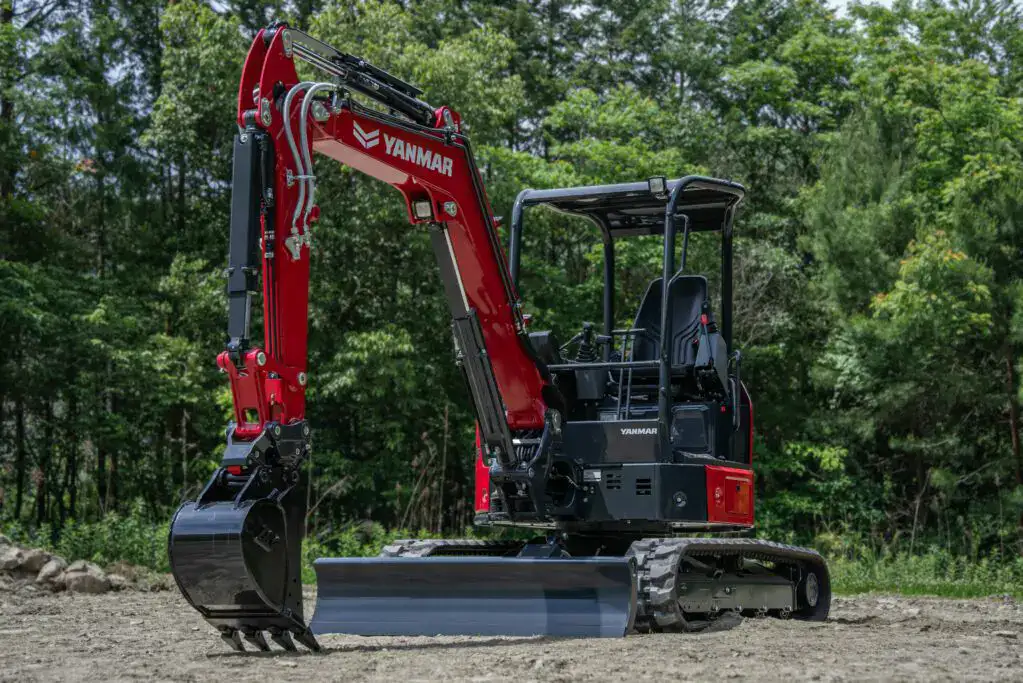
Yanmar offers enclosure and blade choices for this generation. The appropriate package depends on the hours and conditions in which the machine earns its keep. A canopy machine used intermittently in fair weather has a different brief from a contractor’s cab machine working through wet shoulder seasons.
Evaluate visibility, entry and exit, seating and control access in the actual configuration. The display and controls should remain usable with the clothing normally worn for the job. A feature list is less informative than the regular operator completing a representative sequence comfortably and consistently.
For the blade, identify the passes you need to make after digging. An angle option may be useful where it addresses a recurring material-placement requirement, but it cannot repair a site layout that leaves no suitable finishing route. Determine where spoil will lie and how the excavator exits before valuing additional blade movement.
Canadian ownership and transport
Seasonal ground conditions can change the access decision. A dry route may not remain suitable during thaw, and rubber tracks do not establish ground-bearing capacity. Plan for the real surface and supporting conditions rather than applying a summer demonstration to every month.
Use the machine’s documentation for cold-weather fluids, starting and warm-up. Where the work involves frozen material, reassess the attachment and task itself. Ambient-temperature preparation does not make every excavation behave like summer soil.
The brochure weight is a starting reference for transport. Establish the equipped load, including separately carried tools and the trailer, and check the complete vehicle arrangement. A cab, blade option or attachment package can change a comparison that initially looked simple.
For a machine staying on one property, contracted delivery may be worth comparing with maintaining dedicated hauling equipment. For a contractor moving frequently, count loading and tool organisation as part of job time. The most productive excavator on the ground can still be a poor ownership fit if mobilisation is consistently awkward.
Used-machine inspection: preserve the configuration evidence
On a used ViO35-7, photograph the identification plate and record the installed enclosure, blade, tracks, coupler and circuits. Match these to the documents used for the purchase. Do not value optional features until their presence and condition are established.
Inspect the undercarriage, linkage, structure and hydraulic components with a competent evaluator. Include the display, control functions and any stored attachment configuration relevant to the sale. Previous settings are evidence of a past setup, not automatic approval for your tools.
Yanmar describes telematics capabilities, but ownership should include confirmation of the service arrangements actually available to the buyer. Do not assume that a used machine automatically includes the same subscription period or account access advertised for a new sale. Establish transfer and support details through the appropriate provider.
Obtain repair estimates for identified deficiencies and compare machines in equivalent ready-to-work condition. Low hours alone cannot establish the quality of maintenance, attachment compatibility or the completeness of the package.
For attachment storage, label the tools to match the equipment records. A clear identity makes it easier to distinguish two similar buckets or powered tools with different requirements. It also helps prevent an old display setting from being reused after a tool has been replaced or reconfigured.
Comparison questions and FAQ
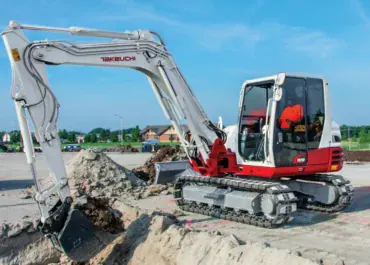
The ViO35-6A guide is useful when considering an older generation. Compare identified equipment rather than assuming that the newer suffix guarantees every desirable option. The Takeuchi TB250-2 provides a larger attachment-oriented reference where the work may justify a different transport and clearance compromise.
Are the five tool settings a universal attachment database?
No. Treat them as configuration aids for correctly matched tools. The installed attachment’s identity and approved requirements still determine the setup.
Does AUX2 come with every ViO35-7?
No. It is an optional circuit. Confirm the complete installation and controls on the offered machine.
Can I add the two flow figures?
Not as a claim of combined attachment delivery. Establish the circuit behaviour for the required simultaneous functions.
Is the cab weight the transport load?
It is a configuration reference. The actual equipped machine, carried tools and trailer must be assessed as a complete load.
What should a purchase demonstration prove?
That the identified package completes your recurring sequence: tool selection, prescribed connection checks, excavation or attachment work, finishing and return to transport. Record unresolved requirements instead of assuming they pass.
Share your experience
Help other Canadian buyers — leave a quick review for the
Yanmar ViO35-7
There are no reviews yet. Be the first one to write one.