Aglist
Equipment
Tractors
Combines
Сompact Loaders
Compact & Mini Excavators
Mowers
Telehandlers
Tillage
Grain Dryers
Attachments
Snow Pushers
Snow Blades
Snow Blowers
Brands
Blog
Tools & Calculators
Contact
Model
Types of Transport
Make
Model
DefaultRating: High to LowRating: Low to High
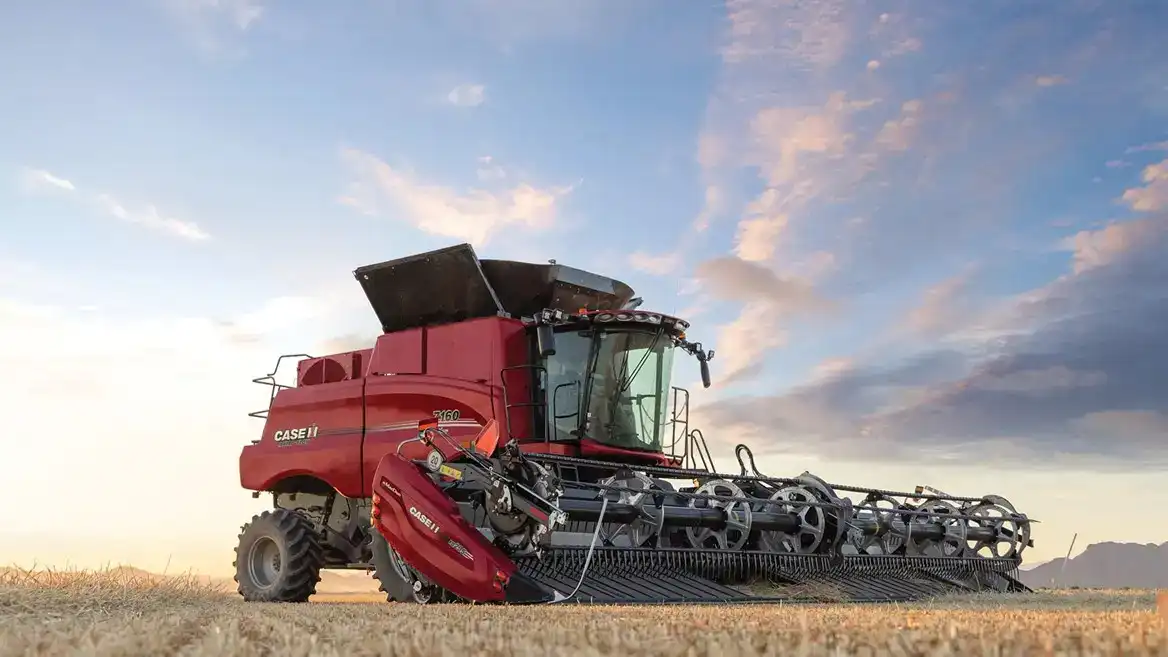
Case IH Axial-Flow 7160 Combine
 Case IH Axial-Flow 7160
Case IH Axial-Flow 6160
 Case IH Axial-Flow 6160
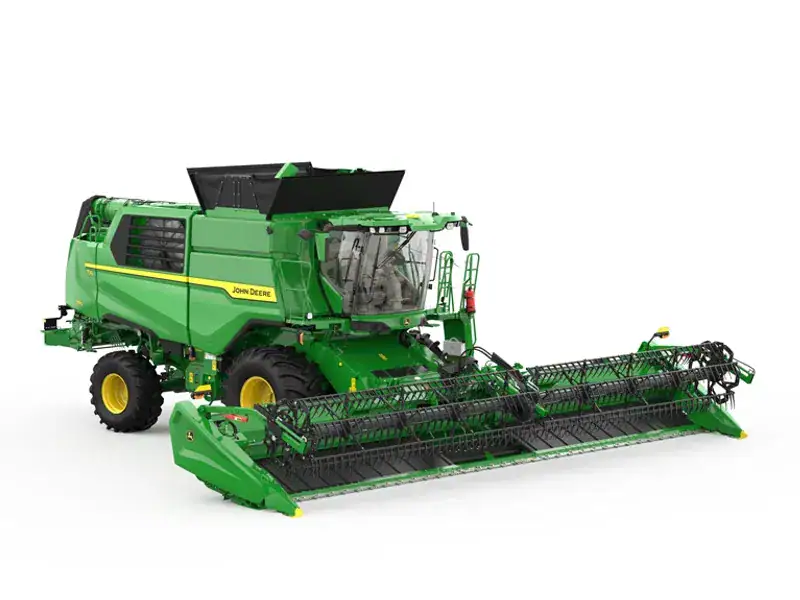
John Deere T6 800
 John Deere T6 800
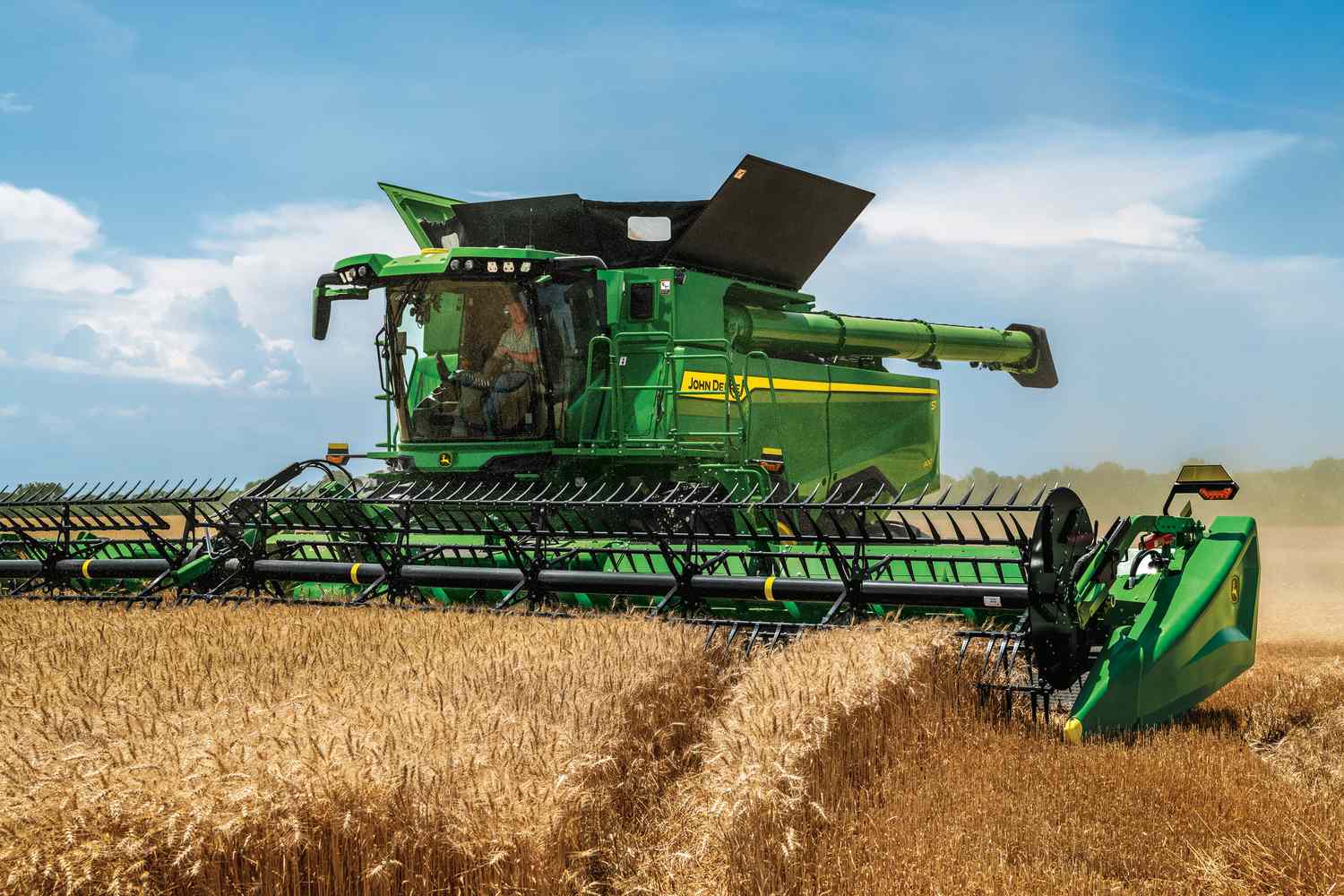
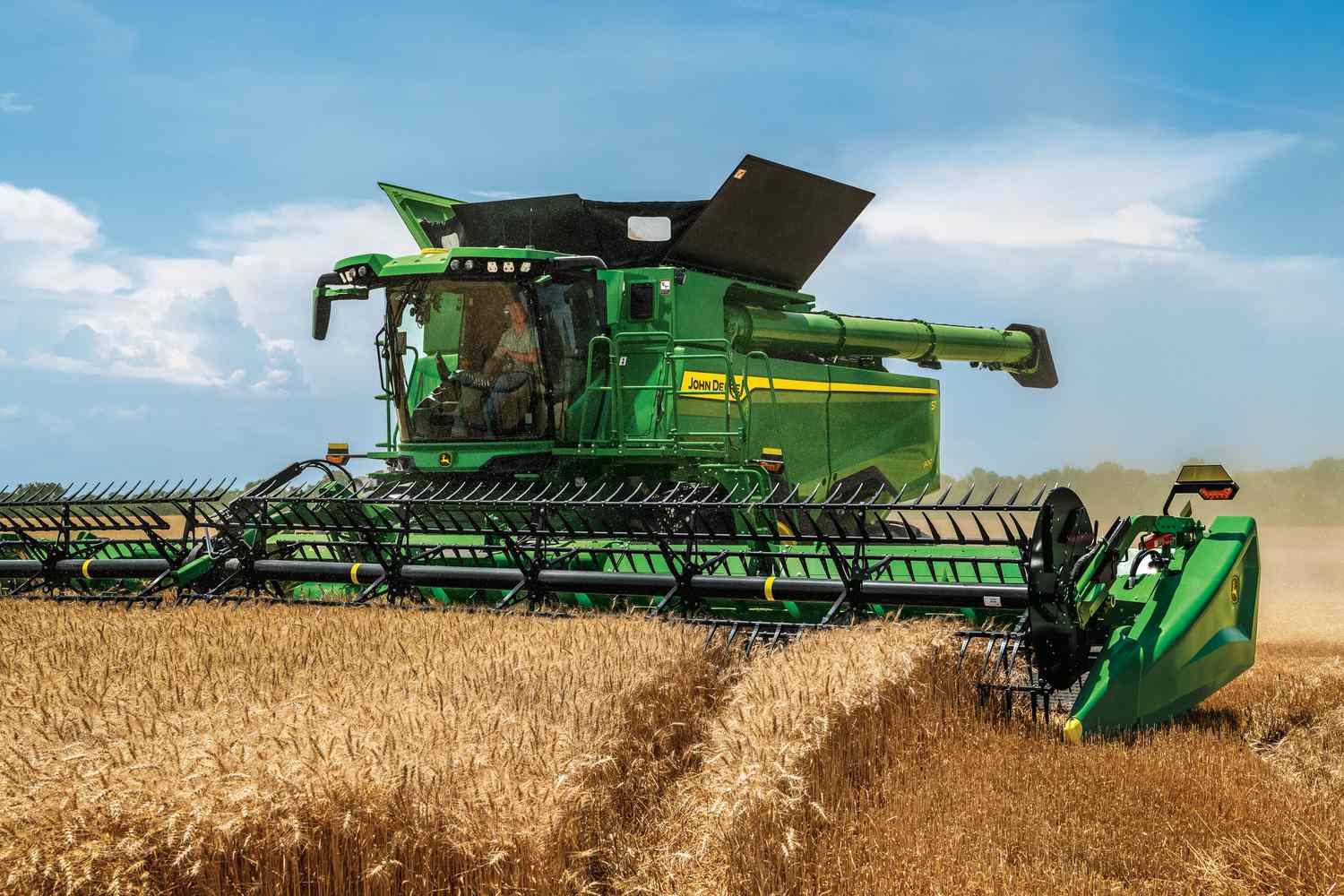
John Deere X9 1100
 John Deere X9 1100
John Deere X9 1000
 John Deere X9 1000
John Deere S7 900
 John Deere S7 900
John Deere S7 800
 John Deere S7 800
John Deere S7 700
 John Deere S7 700
John Deere S7 600
 John Deere S7 600
New Holland CR7.80
 New Holland CR7.80
New Holland CR7.90
 New Holland CR7.90
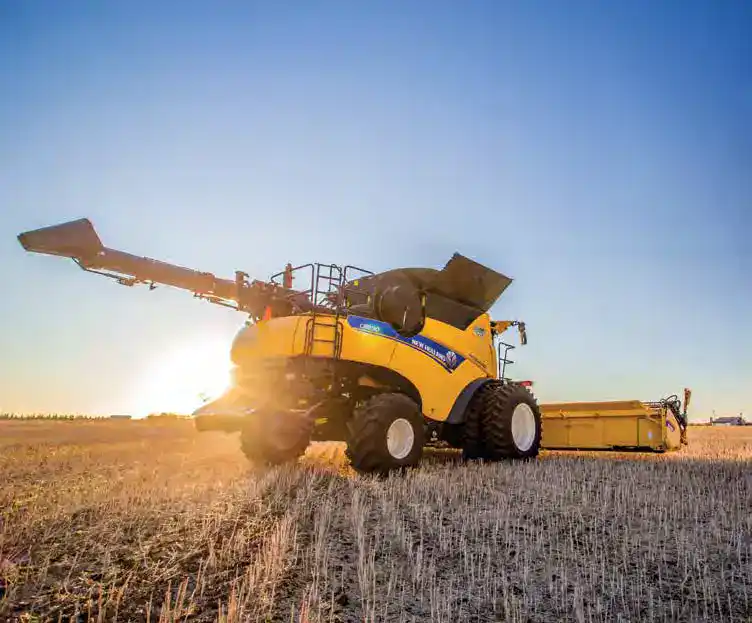
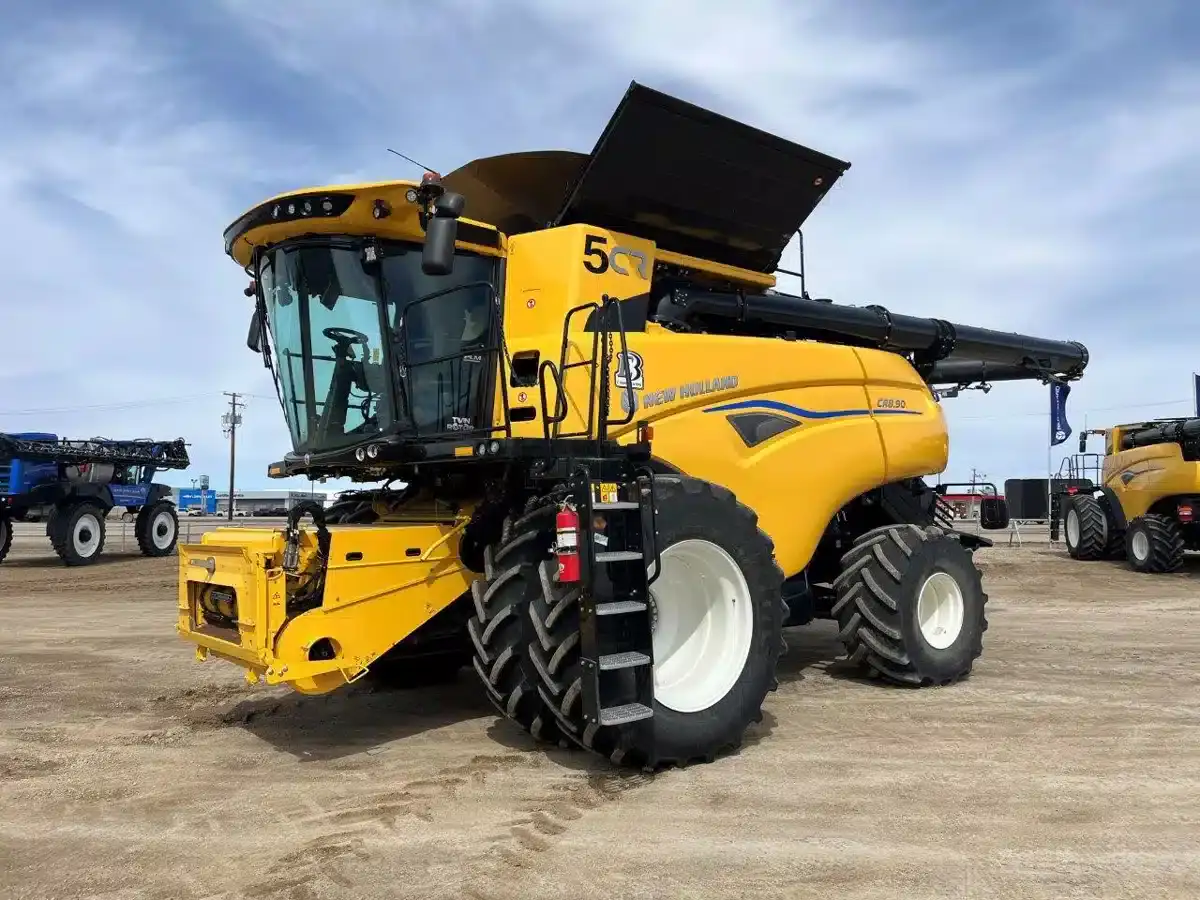
New Holland CR8.90
 New Holland CR8.90
New Holland CR9.90
 New Holland CR9.90
New Holland CR10.90
 New Holland CR10.90
New Holland CX8.80

 New Holland CX8.80

Combine harvesters in Canada

Introduction

The combine is the machine that brings the grain crop off the field, and on a western Canadian farm it is often the single largest equipment investment. A combine reaps, threshes, separates, and cleans grain in one pass, turning a standing crop of wheat, canola, barley, or pulses into clean grain in the tank and residue spread across the field.

For prairie operations in Saskatchewan, Alberta, and Manitoba, the combine and the short harvest window it works in shape the whole season, which is why choosing the right one matters so much.

This guide is the starting point for combines on Aglist. It explains the main types of combine, the differences that matter for prairie grain farming, the major brands, and how to choose by your crops, acres, and how you handle straw.

Rather than pushing one machine or one brand, the aim is to lay out the real decisions so you can find what fits your operation, whether that is a high-capacity rotary for large acres, a conventional machine chosen for straw quality, or a hybrid design that combines elements of both.

Below, the combine types are explained, along with the brands available in Canada and the questions that should guide the choice.

The Three Main Types of Combine

Combines separate grain from the crop in different ways, and the design affects capacity, grain quality, straw condition, power requirements, and how the machine behaves as crop conditions change.

Conventional Combines

Conventional combines, also called straw walker combines, thresh the crop with a cylinder or drum and complete separation over straw walkers.

This is the traditional combine layout, and one of its major advantages is relatively gentle straw handling.

That matters on farms where cereal straw is baled for bedding, feed, or sale after harvest.

Conventional does not necessarily mean small. Modern machines such as New Holland's CX8 Series and some CLAAS and John Deere straw-walker combines can handle substantial acreage while preserving the characteristics that make a conventional design attractive.

For mixed grain and livestock operations, straw quality can be important enough to outweigh the higher peak capacity available from some rotary machines.

Rotary Combines

Rotary combines thresh and separate crop using one or more rotors.

Crop moves around and along the rotor as grain is released and separated. Rotary machines are widely used on large-acre grain operations because the design can process high volumes of material while maintaining good grain quality when the machine is set correctly.

There are different approaches within the rotary category.

Case IH became known for its Axial-Flow single-rotor design. New Holland uses two longitudinal rotors in its Twin Rotor CR combines. Other manufacturers use their own single- or dual-rotor systems.

The main attraction is capacity.

For farms trying to cover substantial wheat, canola, barley, corn, soybean, or pulse acres during a short harvest window, rotary combines are often the natural place to look.

The trade-off is straw.

Rotor action can break straw more aggressively than a conventional straw-walker system, although the actual result depends heavily on crop conditions, rotor settings, and the individual machine.

Hybrid Combines

Hybrid combines combine conventional threshing with rotary secondary separation.

The crop is first threshed through a drum-based system and then passes through rotors for additional separation.

The idea is to combine high throughput with good grain and straw handling rather than relying entirely on either a straw-walker or full rotary layout.

CLAAS LEXION 7000 and 8000 Series combines are a clear current example, using the APS SYNFLOW HYBRID system with ROTO PLUS secondary separation.

Hybrid machines can make sense for large farms that need substantial capacity but still place value on controlled crop flow and straw condition.

The right choice among conventional, rotary, and hybrid depends much more on the operation than on which system sounds best on paper.

Major Combine Brands in Canada

Several major manufacturers compete in the Canadian combine market, and each approaches harvesting somewhat differently.

New Holland offers both rotary and conventional combines. Its established CR Series uses the Twin Rotor design, while the CX8 Series uses conventional threshing and straw walkers. New Holland also has the newer CR10 and CR11 generation for very high-capacity harvesting.

John Deere's current Canadian harvesting lineup includes the S7, high-capacity X9, and T6. The S7 and X9 focus on rotary separation and high-capacity harvesting, while the T6 takes a straw-walker approach for farms that place greater value on straw.

Case IH remains closely associated with Axial-Flow harvesting. Its current range includes established Axial-Flow models as well as the newer AF Series. Case IH still offers single-rotor machines, while the high-capacity AF11 introduces a dual-rotor layout.

CLAAS offers several approaches within the LEXION family. The LEXION 7000 and 8000 machines use APS SYNFLOW HYBRID threshing with rotary secondary separation, while the LEXION 6000 uses straw walkers.

Fendt offers the IDEAL combine family. The IDEAL 7 uses a single Helix rotor, while larger IDEAL models use the Dual Helix twin-rotor processor.

Massey Ferguson and Gleaner are also established names in harvesting equipment.

There is no single best combine brand for every Canadian farm.

Local dealer support, parts availability, crop mix, field conditions, existing headers, operator experience, used-machine availability, and the harvesting system itself can matter as much as the badge on the side of the machine.

How to Choose a Combine

A few questions guide the choice, and they matter more than any single specification.

Start With Capacity for Your Acres

Combine capacity is often described by class, engine power, grain tank capacity, unload rate, header capability, and the amount of crop the threshing and cleaning systems can process.

But none of those numbers should be considered on their own.

The goal is to have enough capacity to finish harvest comfortably inside the normal weather window without paying for a large amount of capacity that the farm rarely uses.

Too little combine can keep harvest running long after ideal conditions have disappeared.

Too much combine creates a different problem: expensive capacity sitting idle.

For large Prairie grain operations, high-capacity rotary and hybrid machines can earn their place because losing several good harvest days can be costly.

For farms with more moderate acreage, a smaller combine that stays busy may be the better economic fit.

Consider Your Crops and Straw

Crop mix changes what you need from the machine.

Wheat, barley, canola, peas, lentils, soybeans, and corn can place very different demands on feeding, threshing, separation, and cleaning.

If straw is baled for bedding, feed, or sale, straw condition deserves more attention.

A conventional straw-walker combine may have an advantage for operations where long straw is valuable.

If grain throughput is the main priority and straw is usually chopped and spread, a rotary or hybrid machine may make more sense.

Tracks or Tires

Tracks spread machine weight over a larger contact area.

That can improve flotation and reduce concentrated ground pressure in soft or wet fields, which is useful when a heavy combine has to keep working through a difficult Prairie harvest.

Tires are generally simpler and less expensive.

On firm ground, a properly equipped tire machine may be all the farm needs.

Tracks become easier to justify when wet conditions, soil compaction, flotation, or transport width are recurring concerns.

Do Not Ignore Dealer Support

Dealer support can become one of the most important parts of the combine decision.

Harvest windows are short.

A specification advantage means very little if the machine sits for two days waiting for a part or qualified service.

Before choosing between two otherwise competitive combines, consider local parts inventory, technician experience, distance to the dealer, after-hours harvest support, and how common the machine is in your area.

For many farms, this matters as much as horsepower.

How Much Combine Capacity Do You Actually Need?

It is easy to compare combines by horsepower and assume the larger machine will automatically finish harvest faster.

Real harvest capacity does not work that way.

The combine is only one part of the system.

If the machine regularly waits for a grain cart, another 100 horsepower will not fix the problem.

If the grain cart is keeping up but trucks cannot move grain away from the field, the truck fleet is the bottleneck.

If trucks are waiting because storage cannot receive grain quickly enough, the combine is not the limiting factor either.

The same applies inside the machine.

Engine load may not be the first limit you reach. Rotor or separator losses, cleaning losses, header feeding, or residue management can become the practical limit before the engine runs out of power.

Before stepping into a larger combine, ask where harvest is actually losing time.

A larger combine makes more sense when:

  • the current machine regularly reaches its crop-processing limit
  • grain losses remain acceptable until the machine is heavily loaded
  • the grain cart can stay with the combine
  • trucks can move grain away quickly enough
  • storage can receive grain at the required rate
  • field size allows the machine to work efficiently
  • additional capacity would genuinely reduce exposure to harvest weather

A larger combine may add little when:

  • the combine spends significant time waiting
  • trucking is already limiting the operation
  • fields are small or widely separated
  • the current machine comfortably finishes inside the normal harvest window
  • header capacity is already the limiting factor
  • much of the extra capacity would remain unused

Two farms with the same number of acres can therefore need very different combines.

Acreage is the starting point, not the answer.

Combine Coverage on Aglist

Aglist is building combine coverage around complete model families rather than isolated specification pages.

The goal is to make it easier to understand not only what each combine is, but where it fits against the models above and below it and against machines using a different harvesting system.

New Holland is currently the first combine brand with a deep model cluster on Aglist.

That does not mean this category is a New Holland category.

John Deere, Case IH, CLAAS, Fendt, Massey Ferguson, Gleaner, and other relevant North American machines can be added here as their model clusters are completed.

New Holland CR Series

The established New Holland CR range currently covered on Aglist includes CR7.80, CR7.90, CR8.90, CR9.90, and CR10.90.

All five use New Holland's Twin Rotor concept, but they cover a wide capacity range and the jumps between neighbouring models are not equal.

Instead of opening five specification pages and trying to work out the differences yourself, start with the New Holland CR Series comparison.

It compares the full CR7.80 through CR10.90 lineup and explains where moving to the next model can actually make sense.

Next-Generation New Holland CR

New Holland also has the newer CR10 and CR11 platform.

These should not be confused with the traditional CR10.90 naming.

The newer machines use a redesigned high-capacity harvesting architecture and sit separately from the CR7.80 through CR10.90 family.

They are aimed at large operations where crop throughput, harvest automation, grain handling, and minimizing time in the field are major priorities.

New Holland CX8 Series

The CX8 family takes a different approach.

CX8.80 and CX8.90 are conventional straw-walker combines rather than Twin Rotor machines.

That makes them particularly relevant for operations that want modern combine capacity but still place substantial value on straw condition.

A mixed farm that bales a large amount of cereal straw may reasonably choose a CX machine even when a larger rotary combine can offer more peak throughput.

That is why comparing combine architecture is often more useful than simply comparing horsepower.

Rotary vs Conventional for a Prairie Farm

There is no universal winner between rotary and conventional combines.

A large grain operation harvesting wheat, canola, barley, and pulses over a short weather window may value the crop-flow capacity of a rotary machine above everything else.

A mixed grain and livestock farm may look at the same decision differently because straw has value after the grain is removed.

That farm may accept less peak throughput to get straw that is easier to bale and use.

There is also a middle ground.

Modern conventional combines can have substantial capacity, and modern rotary machines can produce useful straw when crop conditions and settings are right.

So the choice should not be reduced to:

“rotary is fast” and “conventional is for straw.”

Look at the actual machine, crop mix, acreage, harvest window, and what happens to the residue after harvest.

Frequently Asked Questions

What is the difference between a rotary and a conventional combine?

A conventional combine threshes crop with a cylinder or drum and completes separation over straw walkers. This design is generally attractive where preserving straw for baling matters.

A rotary combine uses one or more rotors for threshing and separation. Rotary designs are widely used for high crop flow and large-acre harvesting.

Actual capacity, grain quality, and straw condition still vary considerably between individual machines and operating conditions.

What is a hybrid combine?

A hybrid combine combines conventional drum threshing with rotary secondary separation.

CLAAS LEXION 7000 and 8000 Series combines are a current example, using APS SYNFLOW HYBRID threshing and ROTO PLUS rotor separation.

The approach is intended to combine high throughput with controlled grain and straw handling.

Which combine brands are available in Canada?

Major combine brands in Canada include New Holland, John Deere, Case IH, CLAAS, Fendt, Massey Ferguson, and Gleaner.

The available model ranges and harvesting systems differ by manufacturer.

The right brand depends on the machine itself, your crops and acreage, dealer support, parts availability, and which harvesting system fits the operation.

What size combine do I need?

It depends on more than acreage.

Consider your normal harvest window, average and high crop yields, header size, crop mix, grain-cart capacity, trucking, storage, field size, and how often the current machine reaches its actual processing limit.

The goal is enough capacity to finish harvest comfortably without paying for a large amount of capacity you cannot use.

Are tracks or tires better on a combine?

Tracks distribute machine weight across a larger contact area and can improve flotation on soft or wet ground.

Tires generally cost less and are simpler to maintain.

Tracks make more sense where wet conditions and compaction are recurring concerns, while tires remain a practical choice for farms that usually harvest on firm ground.

What matters most when choosing a combine?

Capacity for your acres and harvest window, crop and straw handling, grain quality, field conditions, grain-cart and trucking capacity, dealer support, parts availability, and the condition of the individual machine all matter.

There is no single specification that determines the best combine for every operation.

Is a bigger combine always faster?

Not necessarily.

A bigger combine can process more crop when the entire harvest system can support it. If the combine is waiting for grain carts, trucks, storage, or a header that cannot keep it fully fed, the additional capacity may produce little improvement in acres harvested per day.

Which combine type is best if I bale straw?

A conventional straw-walker combine is usually the first type to compare when preserving long straw is a major priority.

Rotary combines can still produce usable straw, but the rotor action generally works the material more aggressively. Crop moisture, settings, and the specific combine all affect the final result.

Explore Combines

  • New Holland CR10 — next-generation Twin Rotor combine below the CR11.
  • New Holland CR11 — high-capacity flagship of New Holland's newer CR generation.
  • New Holland CX8.90 — top CX8 conventional straw-walker combine.
  • New Holland CX8.80 — conventional CX8 option below the CX8.90.
  • New Holland brand page — browse New Holland equipment covered on Aglist.

More combine brands and model comparisons will be added as Aglist expands this category.

Note: We try our best to keep specs and information accurate, but some details can be missing or different depending on model year, configuration, and market. Before you buy, service, or repair equipment, please double-check key specs with the manufacturer, the owner's manual, or your dealer.

About reviews: Reviews on Aglist are written by real users. We moderate them for spam and abuse, but opinions and claims are still personal, so use them as guidance, not as a guarantee.

Note: We try our best to keep specs and information accurate, but some details can be missing or different depending on the source. Before you buy, service, or repair equipment, please double-check key specs with the manufacturer, the owner’s manual, or your dealer.

About reviews: Reviews on Aglist are written by real users. We moderate them for spam and abuse, but opinions and claims are still personal—so use them as guidance, not as a guarantee.

 Privacy Policy

Socials

Facebook
Aglist

Copyright © 2026 powered by Aglist.ca All rights reserved. Sitemap