Overview & Specs
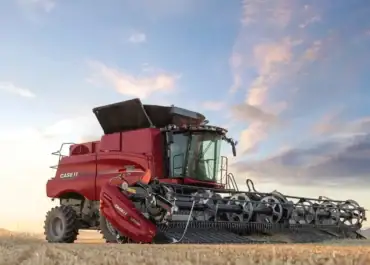
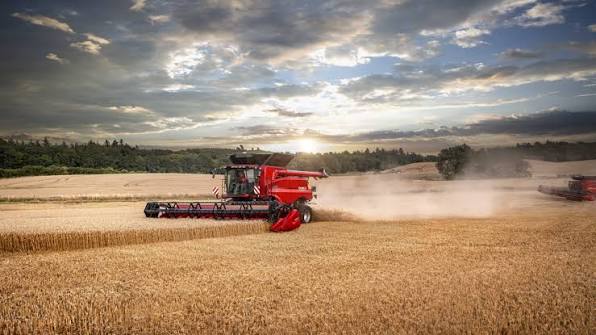
Case IH Axial-Flow 7160 Combine
On This Page
ToggleIntroduction
The Case IH Axial-Flow 7160 is the larger of the two current Axial-Flow 160 Series combines offered in North America.
It uses the same core harvesting philosophy as the smaller 6160: one longitudinal AFX rotor, an 8.7 L FPT engine, Cross Flow cleaning, Harvest Command automation and the current Case IH precision-technology environment.
The difference is capacity.
Case IH rates the 7160 at 375 horsepower at rated engine speed and 442 peak horsepower. Grain tank capacity increases to 350 bushels.
That gives the 7160 a clear role.
It is designed for farms that like the relatively simple single-rotor architecture of the 160 Series but need more engine reserve and more onboard grain capacity than the Case IH Axial-Flow 6160 provides.
For Western Canadian grain farms growing wheat, canola, barley and other crops, that extra capacity can be useful without moving immediately into the larger Axial-Flow 260 Series.
Case IH Axial-Flow 7160 Key Specifications
| Specification | Case IH Axial-Flow 7160 |
|---|---|
| Combine type | Rotary combine |
| Threshing system | Single AFX rotor |
| Engine | FPT diesel |
| Engine displacement | 8.7 L |
| Rated engine power | 375 hp |
| Power rise | 67 hp |
| Peak engine power | 442 hp |
| Unloading Power on Demand boost | 34 hp |
| Grain tank capacity | 350 bu |
| Cleaning system | Cross Flow |
| Preparation system | Six-auger bed |
| Automation | Harvest Command available |
| Operator displays | Dual Pro 1200 |
| Guidance | AccuGuide |
| Machine data sharing | AccuSync |
| Connectivity | Subscription-free on qualifying current machines |
The specification sheet shows that the 7160 remains very much a 160 Series machine.
It does not move to a different rotor concept or dramatically different harvesting system.
It simply gives that platform more capacity.
8.7 L FPT Engine
The Axial-Flow 7160 uses the same 8.7 L FPT engine architecture found in the 6160.
Case IH rates it at:
- 375 rated hp
- 67 hp power rise
- 442 peak hp
There is also a 34 hp Power on Demand boost associated with unloading.
This gives the 7160 another 31 hp of peak output compared with the 6160.
That does not sound like an enormous difference compared with jumps between some combine models, but it can be meaningful when the machine is working close to its practical engine limit.
Heavy crop flow, tough straw, residue chopping and unloading can all create simultaneous power demands.
The extra reserve becomes most useful when those loads overlap.
Why the 7160 Is More Than a Bigger Number
The 7160 is not simply a 6160 with another decal.
The combination of:
- more rated horsepower
- more peak horsepower
- larger grain tank
changes how the machine fits a farm.
A 6160 may have enough crop-processing capacity but fill its 300-bushel tank too quickly for the grain-cart cycle.
A 7160 gives another 50 bushels of buffer.
Likewise, a farm that regularly sees the 6160 operate close to its engine limit in tough crop may benefit from the 7160’s additional reserve.
The important point is that both models remain on the same general harvesting platform.
That makes 6160 vs 7160 a very clean comparison.
Single AFX Rotor
The 7160 uses Case IH’s AFX single-rotor system.
This is one of the defining features of the Axial-Flow family.
Rather than moving crop through multiple major threshing and separation components, material moves into one longitudinal rotor.
As the crop travels around and along the rotor:
- grain is threshed
- grain is separated
- residue continues toward the rear of the machine
The design gives Case IH a relatively direct crop path.
That simplicity has been one of the reasons Axial-Flow has remained relevant across multiple generations.
Why One Rotor Still Works
Modern combine marketing often focuses on bigger separators, additional drums or multiple rotors.
That does not automatically make one rotor outdated.
The important question is whether the entire system can process the crop volume required by the farm.
The 7160 AFX rotor can be configured for different crop and threshing conditions.
That matters on Prairie farms moving between:
- wheat
- canola
- barley
- corn
- soybeans
- other crops
The goal is not to have the most complicated threshing system.
It is to have a system that can be adjusted to the crop while maintaining acceptable grain loss and sample quality.
Harvest Command Automation
Harvest Command is one of the biggest technology features available on the current 160 Series.
Case IH officially supports Harvest Command on the 160 Series for:
- corn
- soybeans
- canola
- barley
- wheat
- rice
That list makes the technology particularly useful in Western Canada.
The operator chooses the harvest objective and operating limits, then the machine manages several adjustments around that target.
Case IH offers modes focused on outcomes such as:
- grain quality
- grain savings
- throughput
- fixed throughput
This can reduce the amount of constant adjustment required during a long harvest day.
Harvest Command in Wheat
Wheat conditions rarely remain constant from afternoon through evening.
Dry straw may feed easily for several hours.
Then humidity rises.
Straw becomes tougher.
Engine load changes.
Separation becomes harder.
A combine travelling at one fixed speed can move from being comfortably underloaded to overloaded surprisingly quickly.
Harvest Command can help the 7160 respond as those conditions change.
That does not mean the operator stops checking grain loss.
Automation is only useful when its target matches what the farm considers acceptable.
Harvest Command in Canola
Canola is another crop specifically supported by Harvest Command on the 160 Series.
This is particularly relevant for Saskatchewan and Alberta.
Canola can change character quickly as conditions become tougher.
Seed loss also matters because the crop is small and relatively easy to lose without noticing from the cab.
Automation can help keep the combine closer to its chosen throughput and loss targets.
But physical loss checks still matter.
The system can tell the operator what the sensors see.
A tray or ground check tells you what is actually leaving the machine.
350-Bushel Grain Tank
The 7160 carries 350 bushels of grain.
The 6160 carries 300.
That extra 50 bushels is one of the clearest practical differences between the two machines.
The larger tank gives the operator more buffer when:
- the grain cart is temporarily busy
- fields are long
- yields are high
- the cart has farther to travel
- one cart services multiple machines
The value depends entirely on the harvest system.
If the cart is always beside the combine before the tank reaches capacity, those extra 50 bushels may matter very little.
If the 6160 regularly has to slow or stop because the cart is late, the 7160 tank can help.
Grain Tank Size Is Not Harvest Capacity
A 350-bushel tank does not mean the 7160 processes crop 17 percent faster than a 300-bushel 6160.
The tank only stores grain after it has already been harvested.
Real combine capacity depends on:
- feeding
- rotor performance
- separation
- cleaning
- engine power
- grain loss
- crop conditions
The grain tank simply changes how long the machine can work before it needs to unload.
That distinction is important when comparing combines.
Power on Demand During Unloading
Case IH lists a 34 hp unloading Power on Demand boost on the 7160.
Unloading on the move creates additional engine load.
At the same time, the combine may still be:
- feeding crop
- threshing
- separating
- cleaning grain
- chopping residue
The unloading system then adds another demand.
The purpose of the boost is to help the combine maintain harvesting performance while the unload auger is operating.
That is particularly useful on farms where unloading on the move is routine.
Grain Handling Updates
Current 160 Series combines include several grain-handling improvements.
Case IH highlights:
- larger clean-grain handling components
- grain tanks up to 350 bushels
- multiple unloading-auger options
- optional pivoting spout
- electrical cross-auger shutoff
The cross-auger shutoff is a small but practical update.
It allows the operator to stop grain entering the unloading tube while letting the tube itself empty.
That can help when topping off a cart and can reduce the amount of grain left sitting in the unloading auger.
Cross Flow Cleaning
The 7160 uses Case IH’s Cross Flow cleaning system.
The system is designed to keep crop material distributed more evenly across the cleaning shoe.
This becomes particularly important on uneven terrain.
Material naturally wants to move toward one side of the machine when the combine operates on a slope.
If that happens, one part of the sieve becomes overloaded while another part is underused.
Case IH uses an in-cab sensor and elliptical cleaning motion to help redistribute material.
Case IH claims the system can improve cleaning productivity by up to 20 percent under its referenced conditions.
That should be treated as a manufacturer claim rather than a guaranteed result.
The important point is that the system is designed to keep more of the cleaning shoe working effectively.
Six-Auger Preparation Bed
Before material reaches the main cleaning area, the 160 Series uses a six-auger preparation bed.
The augers help distribute crop across the cleaning system.
Case IH states that this system can support crop flow of up to 5,000 bushels per hour in the manufacturer’s referenced conditions.
That is not a universal 7160 field capacity.
It should not be used to predict wheat acres per hour in Saskatchewan.
The meaningful part is the design goal.
Even distribution across the cleaning shoe helps prevent one area from becoming overloaded.
That supports both sample quality and grain-loss control.
Cross Flow Fan
The cleaning system also uses Case IH’s Cross Flow fan.
The fan is designed to supply airflow across the width of the sieve.
Airflow matters because cleaning is a balance.
Too little air can leave too much light material in the sample.
Too much air can carry grain out the rear of the machine.
Fan speed therefore needs to match:
- crop
- kernel or seed weight
- material volume
- sieve settings
Automation can help, but the basic cleaning principle does not change.
High-Capacity Feeding System
The current 160 Series uses an updated feederhouse and feeder gearbox designed around smoother crop delivery.
This matters more than it sounds.
A rotor performs best when material enters in a relatively consistent flow.
Large slugs can create:
- sudden engine load
- temporary rotor overload
- inconsistent threshing
- cleaning spikes
- grain loss
Smooth feeding helps the combine maintain a more stable operating condition.
That becomes especially important as power and capacity rise from the 6160 to the 7160.
Dual Pro 1200 Displays
The updated 160 Series uses dual Pro 1200 displays.
The screens allow the operator to keep multiple parts of combine operation visible at the same time.
That can include:
- Harvest Command
- guidance
- machine settings
- harvest data
- grain-quality imaging
- machine information
This is much more useful during harvest than simply having a larger display.
The operator does not need to keep switching between screens to monitor unrelated functions.
Over a long day, reducing those small interactions can reduce fatigue.
Grain Quality Imaging
Case IH also supports high-definition grain-quality imaging through the Pro 1200 environment.
The operator can monitor the harvested sample from the cab.
This does not replace walking around the combine and physically checking grain.
It does provide another way to spot changes quickly.
If cracked grain or foreign material begins increasing, the operator may see the change sooner.
For crops where grain quality directly affects price, that can be useful.
AccuGuide
The 7160 can use Case IH AccuGuide integrated guidance.
With the appropriate correction signal, Case IH states that AccuGuide can provide sub-inch-level accuracy.
That is useful with wider headers.
A small steering error repeated over a long field can leave uncut crop or create unnecessary overlap.
Guidance also reduces operator workload.
During a long harvest day, the operator can spend more attention on:
- header performance
- losses
- grain carts
- field conditions
rather than continuously steering.
AccuSync
AccuSync allows multiple compatible Case IH combines to share guidance lines and coverage information.
This becomes useful when multiple machines work in one field.
Operators can see where other combines have already harvested.
That can improve coordination and reduce overlap.
For a one-combine operation, the feature may have limited value.
For larger farms or custom harvesting crews, it becomes more relevant.
Subscription-Free Connectivity
Current qualifying 160 Series combines include Case IH connectivity without a recurring basic subscription for the life of the qualifying modem hardware.
Connected machine data can be used through Case IH FieldOps.
Depending on configuration and permissions, farms can monitor information such as:
- machine location
- operating status
- field progress
- machine health
- harvest information
The value is not simply having the combine online.
Connectivity is most useful when the farm actually uses the information to improve harvest coordination or machine support.
Improved Sensors
Case IH has updated sensors across the current 160 Series.
The manufacturer specifically mentions monitoring areas including:
- clean-grain auger speed
- cleaning-shoe shake speed
- spreader position
- rotor-drive limits
- unloading-auger position
- rear ladder
- high-temperature conditions
This is an important part of modern combine reliability.
Automation depends on sensors.
A system can only make good decisions if the information coming into it is reliable.
Two-Speed Electric Shift Transmission
The 160 Series uses a two-speed electric shift transmission.
High and low ranges allow the operator to move between field conditions without the traditional inconvenience of manual range shifting.
Case IH also runs pump and separator drives at a lower 2,100 engine rpm.
The company positions this around fuel efficiency and reduced engine wear.
Again, actual fuel use varies significantly.
Crop, terrain, chopping, unloading and machine load all affect consumption.
There is no single useful litres-per-hour figure for every farm.
Residue Management
The 7160 gives operators several ways to handle straw and residue.
Case IH uses:
- rotor discharge deflectors
- chevron-pattern chopper knives
- windrow chute
- hydraulic spreader
This makes it possible to change the approach depending on the crop.
Wheat straw may be windrowed for baling.
Canola residue may be chopped and spread.
That flexibility matters on mixed operations.
Can the 7160 Leave Straw for Baling?
Yes.
Case IH specifically designs the residue system to support windrow formation and long straw for baling.
But the 7160 is still a rotary combine.
Straw has travelled through the AFX rotor before reaching the residue system.
If preserving the longest possible cereal straw is one of the farm’s highest priorities, a conventional combine such as the John Deere T6 800 may still deserve comparison.
The right choice depends on how much economic value the farm assigns to straw.
Axial-Flow 7160 vs 6160
The Case IH Axial-Flow 6160 is the most important comparison.
| Specification | 6160 | 7160 |
|---|---|---|
| Engine | 8.7 L FPT | 8.7 L FPT |
| Rated horsepower | 348 hp | 375 hp |
| Peak horsepower | 411 hp | 442 hp |
| Power rise | 63 hp | 67 hp |
| Unload boost | 34 hp | 34 hp |
| Grain tank | 300 bu | 350 bu |
| Rotor system | Single AFX | Single AFX |
| Harvest Command | Available | Available |
| Dual Pro 1200 | Yes | Yes |
This is a very clean model comparison.
The fundamental harvesting architecture remains the same.
The 7160 adds:
- 27 rated hp
- 31 peak hp
- 50 bushels of grain capacity
That makes the choice relatively straightforward.
Choose 6160 when:
- 411 peak hp is enough
- 300 bushels matches cart logistics
- the farm rarely pushes the machine near its limit
- lower capacity still fits the harvest window
Choose 7160 when:
- tough crop regularly uses more engine reserve
- the extra 50 bushels reduces cart pressure
- higher crop flow is common
- the farm wants more capacity without leaving the 160 Series platform
7160 vs John Deere S7 700
The John Deere S7 700 is one of the most natural cross-brand comparisons.
Both are current single-rotor combines.
John Deere lists the S7 700 at 460 maximum horsepower.
Case IH lists the 7160 at 442 peak horsepower.
Those numbers should not be treated as perfectly identical rating standards.
The more important comparison includes:
- rotor design
- cleaning system
- grain tank
- automation
- dealer support
- precision ecosystem
Case IH uses AFX rotor, Cross Flow cleaning and Harvest Command.
Deere uses its own single-rotor S7 architecture, Dyna-Flo Plus cleaning and Deere automation.
This is exactly the type of comparison where the dealer and crop mix may matter more than the headline horsepower number.
7160 vs New Holland CR7.90
The New Holland CR7.90 provides another strong comparison.
New Holland lists the CR7.90 at up to 460 maximum horsepower.
The Case IH 7160 reaches 442 peak hp.
But the two harvesting systems differ fundamentally.
Case IH uses one rotor.
New Holland uses its Twin Rotor system with two longitudinal rotors.
That makes horsepower only one small part of the comparison.
A farm should also consider:
- separation behaviour
- grain quality
- cleaning losses
- automation
- residue handling
- local support
7160 vs Conventional Straw-Walker Combines
The 7160 is rotary.
That gives it a different crop path from a conventional combine.
If preserving cereal straw is especially important, a straw-walker machine may still be the better fit.
For grain-focused farms where rotary throughput and adaptable crop processing matter more, the Axial-Flow architecture is often a more natural choice.
Neither design is automatically better.
The farm needs to decide what matters after the grain leaves the head.
Where the Axial-Flow 7160 Fits Best
The 7160 makes the most sense for:
- medium-to-large grain farms
- wheat operations
- canola farms
- barley farms
- operations that have outgrown a 6160-sized workload
- farms wanting a 350-bushel grain tank
- operators interested in Harvest Command
- farms already using Case IH precision technology
- operations wanting more capacity without moving into 260 Series
It becomes less compelling when the farm genuinely needs 400-plus-bushel grain handling and much higher crop-processing capacity.
At that point, the 260 Series deserves comparison.
Should You Move to a 260 Series Instead?
This is an important question.
The next major Case IH family is the Axial-Flow 260 Series.
The entry model, 7260, moves into a different capacity level with:
- 402 hp engine rating
- up to 468 hp max output
- 315-bu standard grain tank
- optional 410-bu grain tank
- 4.0 bu/s unloading
That means the step from 7160 to 7260 is not simply another small horsepower increase.
The 260 Series begins to offer much greater grain-handling flexibility and a higher-capacity platform.
For a farm that regularly overwhelms a 7160, that may be a better direction than trying to extract the last bit of performance from the 160 Series.
What to Check on a Used 7160
When inspecting a used Axial-Flow 7160, check:
- engine hours
- separator hours
- FPT engine service history
- AFX rotor
- rotor bars
- concaves
- rotor cage
- feederhouse
- feeder chain
- Cross Flow cleaning system
- six-auger preparation bed
- chaffer and sieve
- grain elevators
- grain tank augers
- unloading system
- residue chopper
- spreader
- transmission
- Pro 1200 displays
- guidance equipment
- Harvest Command hardware
- sensors
- connectivity hardware
- service records
Do not assume every machine has every technology option simply because Case IH offers it on the 7160.
Configuration matters.
Case IH Axial-Flow 7160 Reviews & Ratings
The specification sheet makes the 7160 look like an easy step above the 6160.
Owner experience tells you whether those extra 31 peak horsepower and 50 bushels actually matter.
Useful questions include:
How much difference does the 7160 make in tough wheat?
Does Harvest Command maintain good settings in changing canola?
Is the 350-bushel tank enough?
How does the AFX rotor handle barley?
What is straw condition like?
How well does the cleaning system perform on uneven land?
What components begin showing wear after several seasons?
Those are the details that can make owner reviews more useful than another brochure.
Is the 7160 the Better 160 Series Choice?
For farms that can use the additional capacity, yes.
The 7160 gives you the same general 160 Series architecture but with more engine reserve and a larger grain tank.
That makes it a straightforward upgrade.
But the 6160 remains a valid choice when the farm does not need those extras.
The 7160 should not be chosen simply because it is the larger model.
It should be chosen because:
- 300 bushels is becoming restrictive
- engine load is regularly high
- harvest-window pressure justifies additional capacity
If none of those problems exist, the smaller machine may be enough.
Final Thoughts
The Case IH Axial-Flow 7160 is the higher-capacity version of the current 160 Series concept.
It retains the 8.7 L FPT engine architecture, single AFX rotor, Cross Flow cleaning and Harvest Command technology of the 6160.
The important changes are straightforward:
375 rated horsepower.
442 peak horsepower.
350 bushels of grain capacity.
For Canadian grain farms that like the simplicity and crop adaptability of the Axial-Flow single-rotor platform but need more room than the 6160 provides, the 7160 is the natural next step.
The question is whether that step is enough.
If the operation needs substantially more grain capacity or crop-processing output, moving into the 260 Series may make more sense than stretching the 160 Series beyond its intended role.
Browse more machines in the Aglist combines category or explore more equipment on the Case IH brand page.
Frequently Asked Questions
How much horsepower does the Case IH Axial-Flow 7160 have?
Case IH lists the 7160 at 375 rated horsepower and 442 peak horsepower.
What engine does the Case IH 7160 use?
The current Axial-Flow 160 Series uses an 8.7 L FPT diesel engine.
Is the Case IH 7160 a rotary combine?
Yes. It uses Case IH’s single AFX rotor for threshing and separation.
How big is the Case IH 7160 grain tank?
The 7160 has a 350-bushel grain tank.
What is the difference between the Case IH 6160 and 7160?
Both use the same general 8.7 L FPT and single-rotor 160 Series architecture. The 7160 increases rated power from 348 to 375 hp, peak power from 411 to 442 hp and grain capacity from 300 to 350 bushels.
Does the Case IH 7160 have Harvest Command?
Harvest Command is available on the current 160 Series.
Which crops does Harvest Command support?
Case IH currently lists corn, soybeans, canola, barley, wheat and rice for Harvest Command on the 160 Series.
Does the 7160 have dual Pro 1200 displays?
Yes. The current 160 Series uses dual Pro 1200 displays.
Does the 7160 use Cross Flow cleaning?
Yes. The 160 Series uses Case IH’s Cross Flow cleaning system with a six-auger preparation bed.
Is the 7160 good for wheat and canola?
Yes. Wheat and canola are both officially supported crops for Harvest Command on the 160 Series, and the single-rotor architecture is designed to adapt across crop conditions.
7160 or 6160: which should I choose?
Choose the 7160 when the additional engine reserve and 350-bushel grain tank solve real harvest-capacity or grain-cart constraints. If 6160 capacity already fits the operation, the larger machine may not provide enough practical benefit to justify the step.
Related
- Case IH Axial-Flow 6160 – smaller 160 Series model.
- John Deere S7 700 – current single-rotor Deere comparison.
- New Holland CR7.90 – Twin Rotor competitor in a similar power range.
- John Deere T6 800 – conventional straw-walker alternative.
- Combines – compare combine models and harvesting systems.
- Case IH – browse Case IH equipment on Aglist.
Specifications, technology packages and available equipment can vary by model year and market. Confirm critical specifications for a particular combine with current Case IH documentation, the operator’s manual or your dealer.
Share your experience
Help other Canadian buyers — leave a quick review for the
Case IH Axial-Flow 7160
There are no reviews yet. Be the first one to write one.