Overview & Specs
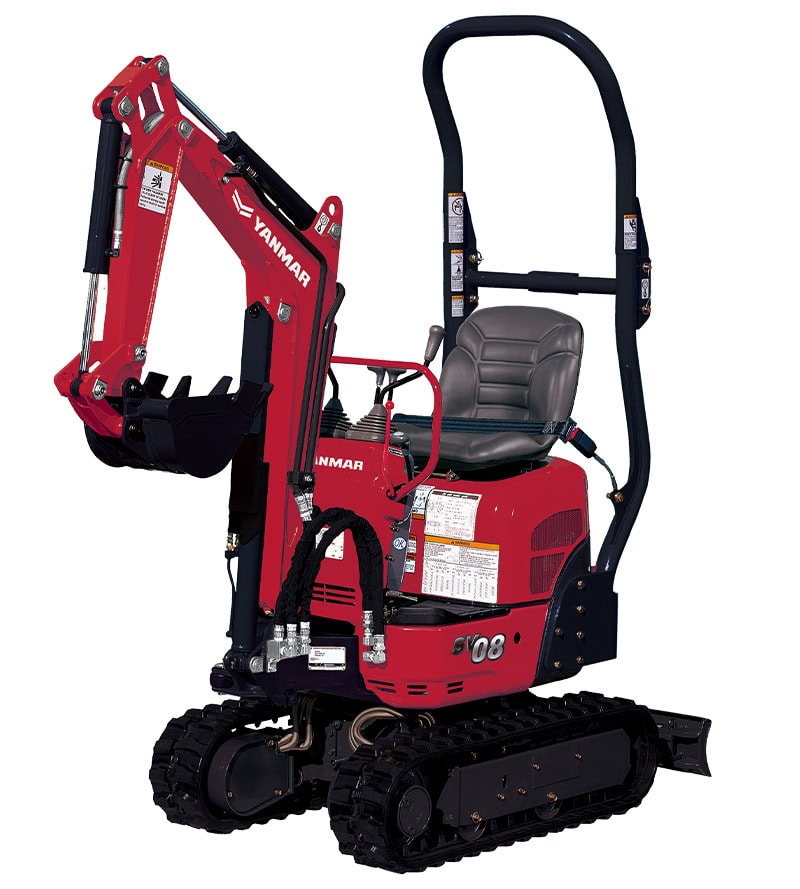
The Yanmar SV08-1D is a specialist access machine. Its strongest buying argument is the ability to bring a small excavator through a route that excludes larger equipment, then carry out modest, carefully planned excavation. For Canadian landscapers and property owners, that can be useful behind established fences or within a tightly arranged yard. It is less persuasive when the site is open and the main requirement is moving substantial quantities of material.
Before choosing it, separate three questions: can the machine reach the destination, can it operate there in the required configuration, and can the excavated material leave? A narrow excavator solves only the first question by itself. This guide covers the North American SV08-1D; earlier SV08 suffixes should not be assigned its specifications without checking their own documentation.
On This Page
ToggleSmall-machine specifications that change the plan
The manufacturer-linked SV08-1D brochure, carrying a July 2020 specification code, provides these references.
| Reference | Published value |
|---|---|
| Engine | 10.3 hp at 2,800 rpm, two-cylinder diesel |
| Rubber-track operating weight | 2,348 lb |
| Retracted / expanded width | 680 / 840 mm |
| Rear radius in brochure drawing | 725 mm |
| Auxiliary hydraulic reference | 19.7 L/min at 2,800 rpm |
| Travel speed | 1.8 km/h |
The current webpage gives a slightly different rear-radius figure. The value above retains its brochure basis; measure the actual package when clearance is critical. The brochure also presents several digging dimensions as ranges without enough explanation to select one universal setup here. Obtain the matching working diagram for the offered machine rather than choosing the largest number from an advertisement.
A 680 mm opening is not a complete access assessment
The undercarriage dimension is unusually useful when screening narrow routes, but nominal gate width is not the same as usable clearance. Hinges, latches, fence posts, uneven ground and the approach angle can change what fits. Measure the entire passage at the relevant heights and identify the widest fitted component in its prescribed travel position.
Then measure the destination. The expanded width is 160 mm greater than the retracted width. That arithmetic does not prescribe a working setup, but it shows why the entry route and excavation area need separate assessments. Follow the machine instructions for undercarriage position; do not assume that entering narrowly authorises working narrowly.
Imagine a garden repair reached through a straight side passage. The excavator may fit, while a wheelbarrow or other material carrier needs the same passage to remove spoil. If the machine blocks that route throughout excavation, work becomes a sequence of interruptions. Decide where material waits and how it leaves before valuing narrow access as a productivity gain.
Also plan the return journey. A machine that reaches the work before excavation may find its exit occupied by materials or a newly opened area. An access sketch should show both arrival and departure, including where the bucket and spare tools will be stored.
Ultra-tight tail does not mean zero tail
The SV08-1D should not be treated as a zero-tail machine. Its compact body still requires rear clearance. This matters because very narrow entrances often lead to equally constrained working areas, where a buyer may mistakenly expect the rear housing to remain inside the track width.
Use the actual rear envelope and the front equipment’s movement to assess the position beside a wall or fence. A small overall machine can still strike an obstacle when the available space is smaller. Include the blade and any attachment projection in the plan.
The Aglist tail-swing guide distinguishes rear layout from the complete working area. For this model, the useful question is whether its narrow travelling package leads to a workable excavation position, not whether it can rotate wherever its tracks fit.
Folding ROPS is an access feature with operating conditions
Yanmar’s SV08-1D product page describes foldable ROPS, a selectable control pattern and foot-operated auxiliary hydraulics. Those features deserve a demonstration during purchase, particularly if several people will operate the machine.
Do not infer that a folded protective structure provides the same protection as its normal operating position. Establish the permitted configuration and procedure from the machine’s instructions, including restoration to the required position. Measure overhead access with the actual arrangement rather than assuming a familiar doorway description guarantees a fit.
The diesel engine creates another important boundary. Physical access through a building opening is not evidence that operation inside that building is acceptable. This guide does not approve indoor or enclosed-space diesel operation. Where a project depends on enclosed access, obtain a competent assessment of equipment and exhaust controls before selecting the machine; an alternative power source may be part of that assessment.
For ordinary outdoor work, the open operator arrangement still needs to fit the season and duration. A machine purchased for brief summer repairs faces a different comfort requirement from equipment expected to work through long cold days. Do not value an improvised enclosure as though it were an approved factory cab.
Choose a small excavation, not simply a small bucket
The SV08-1D makes most sense when the required finished excavation is modest and access is genuinely restrictive. A narrow bucket can limit unnecessary soil removal, but the project still determines the required dimensions. Selecting the narrowest tool merely to reduce effort can leave inadequate space for the intended work.
For a planting or service repair, describe the finished shape and material destination. Check whether the bucket can cut, curl, emerge and empty from suitable machine positions. Maximum depth alone cannot establish that sequence. The dig depth and reach guide explains how to screen the complete envelope.
Consider the material itself. A compact access machine is not automatically a suitable answer to a substantial buried obstruction, large stump or difficult frozen excavation. The size of the property does not determine the resistance of the material. Separate those exceptional tasks from the ordinary repairs that justify ownership.
A useful comparison might be a small owned machine for frequent access-limited jobs plus hired equipment for occasional larger work. The opposite choice can be better where narrow access is rare: hire the specialist small machine and own something that serves the everyday workload. Count actual jobs rather than choosing from a single memorable project.
Hydraulic tools must fit the small carrier
The auxiliary flow reference is not a universal attachment approval. The tool’s accepted flow range, pressure, return arrangement, mounting geometry and mass all need to suit the carrier. A tool marketed for mini excavators may still be inappropriate for this particular machine.
Start with the intended task, then identify a documented compatible tool. For an auger, the required hole and ground conditions matter. For a breaker, the carrier match and intended material matter. Neither selection can be settled by engine horsepower alone.
The foot control described by Yanmar should be included in an operator demonstration. Check that the person who will use the machine can coordinate the intended approved task comfortably, including starting and stopping the auxiliary function. A machine with the correct plumbing can still be a poor practical match if its controls do not suit the work pattern.
Keep attachment storage and delivery realistic. Additional tools have little value if they cannot be brought through the same constrained route or placed where changes can be performed properly. The bucket selection guide helps distinguish a useful tool set from a collection of similar accessories.
Movement around the property can dominate the job
The published travel-speed reference should prompt a look at the distances between tasks. A machine intended for a confined repair may be poorly suited to spending much of the day travelling between widely separated locations. Plan delivery close to the work where appropriate rather than assuming that a compact excavator replaces a transport vehicle.
For illustration, a 300 m route at a constant 1.8 km/h would take ten minutes in ideal arithmetic. Real travel involves positioning, obstacles, conditions and operating restrictions, so that is not a job-time promise. It shows why a seemingly short property route deserves attention when repeated many times.
The operating-weight figure also does not establish that a floor, bridge, ramp or trailer can support the package. Assess the actual equipped machine, load distribution and supporting structure through the appropriate process. A small excavator remains substantial equipment.
For hauling, account for the machine, fitted bucket, spare attachments and trailer without double counting items already included in the reference configuration. Check the complete transport arrangement and applicable requirements. The fact that the excavator looks small beside a pickup is not a rating.
Inspect the features that make this model worth buying
On a used SV08-1D, begin with the retractable undercarriage, folding blade arrangement and protective structure. Have their prescribed operation demonstrated and inspect the relevant hardware and hydraulic components. Missing retaining parts or a mechanism that has not moved for years can undermine the access advantage you are buying.
Then assess the undercarriage as a whole, the front joints, visible hoses and attachment connection. Obtain service records and have uncertain wear evaluated independently. These are inspection priorities, not claims of model-specific defects.
Yanmar describes engine access beneath the seat. Include routine service access in the viewing: identify the relevant checks and whether the machine’s condition permits them to be performed normally. A convenient design offers little benefit if components are damaged, obstructed or missing.
During a suitable demonstration, observe controlled positioning and the intended attachment function after normal warm-up. Avoid judging the machine only from starting noise or a brief travel pass. Record any function not demonstrated so it remains an unresolved purchase item.
A useful acceptance brief includes the measured entry, the expanded working area and the material-removal route. If any of those remains uncertain, record it separately rather than treating a successful pass through a gate as proof that the whole project fits.
Comparisons and purchase questions
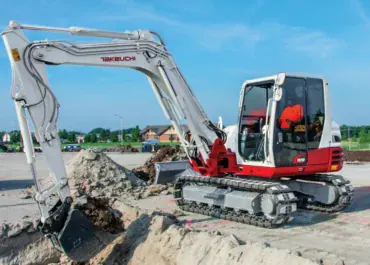
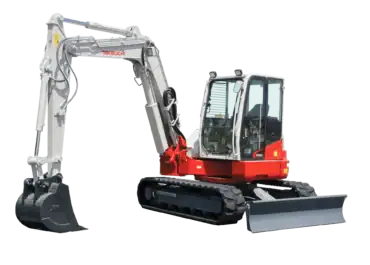
The Takeuchi TB216 and Yanmar ViO17-1E guides provide larger compact-access reference points. Their wider packages may be unsuitable for a route that drives the SV08 decision, while offering a different working compromise where access permits. Compare exact configurations rather than assuming that all small excavators are interchangeable.
Is this a substitute for hand excavation everywhere?
No. Access, services, ground conditions and the required work method still determine whether mechanical excavation is appropriate. The machine’s dimensions cannot establish permission to excavate.
Can it work with the tracks retracted?
Use the manufacturer’s operating requirements for the task. The narrow dimension is an access reference, not a blanket instruction for excavation setup.
Does foldable ROPS make indoor work suitable?
No. Clearance and exhaust exposure are separate questions. A diesel machine fitting through an opening does not establish acceptable enclosed-space operation.
What makes an attachment bundle valuable?
Documented compatibility, useful differences between tools and sound condition. Several unidentified attachments should not be priced as a complete working package.
When should I choose something larger?
When the narrow route is not essential and routine work is limited by the small machine’s practical envelope, material handling or attachment choices. Choose around recurring work and hire for exceptions where that is more sensible.
Share your experience
Help other Canadian buyers — leave a quick review for the
Yanmar SV08-1D
There are no reviews yet. Be the first one to write one.