Overview & Specs
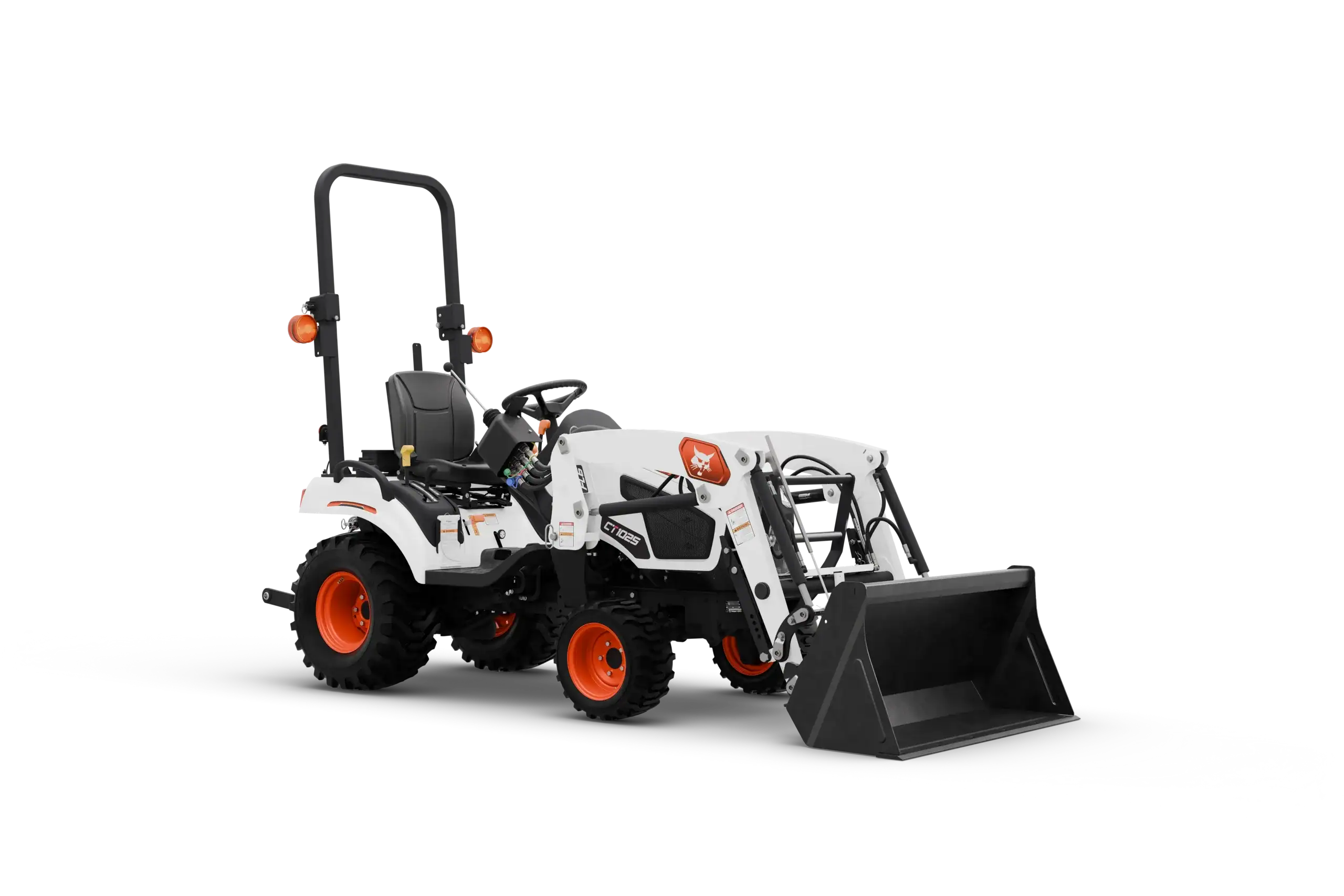
The Bobcat CT1025 is worth comparing when a sub-compact tractor fits the property, but powered mowing or other approved PTO work deserves more attention than the smallest engine option. Its stronger power entry should be evaluated against actual implement requirements. It should not be mistaken for a move into a larger loader or hitch class.
For a Canadian acreage owner, this makes the CT1025 a specific kind of upgrade: potentially more useful power within a small property-maintenance format. The strongest case names the mower, tiller or winter implement that benefits, while retaining the access and storage advantages the buyer needs. If the main limitation is pallet handling or rear-implement geometry, examine a larger platform instead.
On This Page
ToggleCT1025: power and physical capability are separate
| Specification | North American model-page figure |
|---|---|
| Gross engine / PTO output | 24.5 / 18.8 hp |
| Transmission | Two-range hydrostatic |
| Rear / mid PTO speed | 540 / 2,200 rpm |
| Three-point hitch | Limited Category 1 |
| Hitch lift at 24 inches behind lift point | 700 lb |
| Listed front-loader lift at maximum height | 608 lb |
| Bucket pivot height | 72 inches |
| Width / operating weight | 45.7 inches / 1,521 lb |
| Total hydraulic flow | 7.2 US gpm |
Source: Bobcat’s detailed CT1025 page, checked October 3, 2026. These entries describe the manufacturer’s stated configuration, not every used serial or attachment. Total hydraulic flow is not identified here as auxiliary output available to a hydraulic motor.
Identify the job that benefits from the extra power
Begin with the tool that will spend the most time running. Obtain its exact model and its stated tractor requirements. If the manufacturer uses PTO horsepower, compare that with the tractor’s PTO entry. If it uses a different power label, resolve the definition rather than silently substituting one for the other.
The distinction can change a shortlist. A hypothetical tool requiring 18 PTO hp passes an initial numerical screen with the CT1025’s published figure. That does not approve the combination: hitch fit, weight, driveline, shaft speed and duty still matter. Nor does a small difference above a minimum establish performance in every cutting or soil condition.
Describe the hardest regular conditions rather than an exceptional challenge that occurs once in several years. A mower used frequently on maintained grass has a different workload from one expected to reclaim neglected vegetation. Buying a tool outside its intended duty cannot be corrected merely by choosing the larger sub-compact engine.
Keep a realistic work window in the decision. If the owner only has a short period to mow, compare an appropriate complete mowing system and demonstrated output. More power may help a particular task, but obstacle layout and changeover can consume time that power does not recover.
Why this is not automatically a loader upgrade
Bobcat’s CT1021 table carries the same published rear-lift and front-loader summary entries shown here. The meaningful conclusion is that a higher engine number does not itself provide a higher listed handling allowance. The actual loader and attachment documentation still controls the job.
If a pallet is the reason for buying, describe it before choosing between engines. Include goods, pallet, packaging, dimensions, load centre and destination height. The fork assembly and any adapter also belong in the configuration. A front-loader figure without those conditions cannot become a universal pallet capacity.
For bucket work, consider the material and receiving point together. A load of light landscape material and the same-looking volume of dense wet material are different demands. A receiver that the loader can approach closely also differs from one with a setback or tall side.
Use Aglist’s loader lift-capacity guide for the measurement definitions. If the essential load exceeds the approved arrangement, investigate a different machine or unloading method instead of treating engine output as a substitute for capacity.
Choose a mowing system you will actually use
The CT1025’s mid PTO creates a reason to investigate a matched mid-mount mower, while its rear equipment opens other possibilities. The best arrangement depends on the route, not just the width of the cut. Walk the lawn and mark narrow openings, trees, edging and backing areas.
Measure with the mower fitted. A sub-compact tractor that fits comfortably through a gate may require a wider opening with a deck installed. Consider the discharge path and the space needed to turn without contacting landscaping. A rear mower moves differently around obstacles and requires its own assessment.
Then observe installation, removal and storage under the approved procedure. A system that is straightforward on a level prepared surface may be inconvenient if the property has nowhere appropriate to leave the deck. Include any needed stands, supports or connection hardware in the package price.
A hypothetical eight-minute difference in a full equipment change, repeated 30 times annually, totals four hours. This is a planning example, not a CT1025 performance claim. It shows why observed changeover time can be worth considering alongside mowing time.
If mowing dominates and other chores are infrequent, compare a dedicated mower plus hired help for occasional work. The tractor-versus-zero-turn comparison can help separate that ownership choice from a simple engine comparison.
Rear implements need more than enough horsepower
The Limited Category 1 hitch is an important constraint for implement shopping. Verify the complete attachment’s geometry and clearance, including the transport position. Matching pin sizes do not establish that a tool can be carried and operated appropriately.
A quick hitch can simplify parts of the connection routine, but it does not make every implement compatible. It may alter connection distances, which matters for the driveline. Establish the approved setup before delivery rather than treating missing travel or clearance as something to improvise later.
For a tiller, record the intended soil work, tool mass, working width and manufacturer requirements. Do not use a universal horsepower-per-foot rule as an approval. For a blade or scraper, remember that lifting the implement does not establish how effectively the tractor can pull it through the actual surface.
A useful purchase sheet therefore has separate columns for power, hitch fit, clearance, driveline and required configuration. Mark an unresolved column as unresolved. This makes a modest attachment package more dependable than a long list of vaguely described tools.
Hydraulics and PTO are different attachment supplies
A shaft-driven implement obtains power through the PTO. A hydraulic motor needs a suitable hydraulic circuit. A clamp or angle adjustment may need a controlled hydraulic function without being a continuous motor load. Distinguish these needs before adding options.
The model page’s total-flow entry should not be treated as a verified continuous auxiliary supply. For a proposed hydraulic attachment, obtain the appropriate flow, pressure, return and control information for the actual tractor build. Identify the required valve and connection rather than assuming a loader joystick includes every additional function.
This is particularly useful when buying a used bundle. A tractor may have the equipment for its current bucket but lack a function needed by the buyer’s intended grapple or rear tool. Obtain a complete installation quotation before valuing the package as ready for all planned work.
Winter: power is only one part of the package
A snowblower purchase needs the exact drive location, mounting arrangement, shaft speed, controls and power requirements. Standard mid-PTO provision does not certify a particular front attachment. The complete kit matters, including the parts that are easy to omit from a used advertisement.
For a rear blower, consider the operator’s viewing routine and the clearance available for manoeuvring. For a blade, assess where the snow will accumulate. For a bucket, count the carrying cycles and receiving space. These are different solutions, not interchangeable tools selected solely by width.
Aglist’s snowblower fitment guide provides a useful checklist. Evaluate the actual operator environment as well: wind, exposure, visibility and time in the seat can govern suitability for Canadian winter work.
Prepare seasonal service from the correct manual. Do not adopt a fluid grade, starting-temperature promise or additive routine from another tractor’s owner report. The engine and fitted equipment need their own maintenance information, especially on an older machine.
Compare a small tractor with a larger chassis honestly
The John Deere 1025R and Kubota BX2680 are useful sub-compact alternatives to investigate with the same task list. Compare exact attachment packages and operator controls using primary specifications, rather than carrying a dimension or lift rating from one brand to another.
If the buyer keeps finding restrictions in rear-tool geometry or loader work, broaden the shortlist to a compact such as the John Deere 3025E. That is a platform decision, not an automatic gain in every category. Its mowing arrangement, storage and access may suit the property differently.
The sub-compact versus compact guide helps organise this boundary. Choose the format that meets the frequent jobs, while considering another service or machine for exceptional work.
Used CT1025 inspection and ownership planning
Verify the tractor serial number, mower identity, loader and installed controls. Inspect each attachment independently. A worn deck, incomplete mounting kit or missing driveline guard can change the value of a bundle substantially even when the tractor presents well.
Have a competent inspection assess drive operation, PTO engagement, hitch movement, loader mounts, hydraulics, front axle and repair evidence. Review records against the correct service requirements. These are due-diligence priorities, not claims of a known CT1025 failure pattern.
Build a Canadian ready-to-work budget with equipment, setup, delivery and essential accessories separated. Include service access and somewhere suitable to store and change tools. For transport, use the actual combined load with loader, attachments and ballast rather than the tractor’s operating-weight entry alone.
A sensible upgrade decision should survive a simple question: which regular job improves, and how will that improvement be observed? If the answer is a compatible powered tool doing the required work in a small package, the CT1025 has a clear purpose. If the answer is only a larger number on the hood, revisit the equipment list.
Keep a simple first-season task log: attachment used, approximate operating time, changeover time and any unmet requirement. This provides evidence for the next equipment purchase and helps distinguish a power limitation from an inconvenient storage layout or a tool that does not suit the job.
CT1025 FAQ
Does 24.5 engine hp mean 24.5 hp at the implement?
No. Use the separately published PTO rating when the implement requirement refers to shaft power.
Does more power mean more front-loader capacity?
No. Loader ratings and configuration must be evaluated independently.
Can one mower handle every type of vegetation?
Choose the tool for its documented duty and the actual conditions. Lawn mowing and rough vegetation management are different jobs.
Is the mid PTO enough to approve a front snowblower?
No. The mount, drive kit, controls, speed and exact attachment compatibility must also match.
Who benefits most from this model?
A buyer whose approved powered implements benefit from its PTO output while the sub-compact’s physical limits still fit the property.
Share your experience
Help other Canadian buyers — leave a quick review for the
Bobcat CT1025
There are no reviews yet. Be the first one to write one.