Overview & Specs
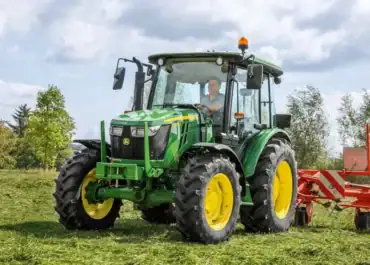
The John Deere 5090E is worth evaluating when a farm needs a four-cylinder utility tractor for a defined set of hay, PTO and hydraulic tasks. Its purchase case should start with those implements and their connections. A tractor that has enough shaft power but lacks the required control circuits, travel speeds or handling package is not yet a complete working solution.
This guide uses the Canadian 5090E specification table checked in October 2026. It distinguishes the machine from smaller three-cylinder 5E models and from similarly named specialty tractors. Some feature text on the current webpage refers to 5EN orchard equipment; those statements are not treated here as 5090E specifications.
On This Page
ToggleCore specifications with the correct definitions
The Canadian 5090E table supplies these references.
| Item | Published reference |
|---|---|
| Engine | 4.5 L, four-cylinder diesel |
| Rated engine / PTO output | 90 / 75 hp at 2,400 rpm |
| Transmission | 12F/12R PowrReverser; optional 24F/12R Hi-Lo |
| Drive | MFWD |
| Pump total / single rear SCV flow | 85.1 / 60.1 L/min |
| Rear SCVs | Two standard; three optional |
| PTO | 540/540E standard; 540/1000 option |
| Rear hitch | Category 2, convertible to Category 1 |
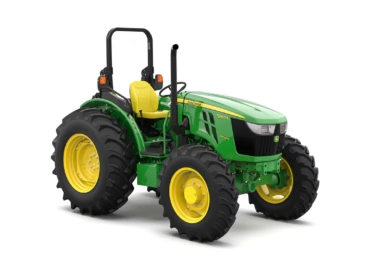
Open station and cab packages are listed. The table identifies DOC/SCR aftertreatment; do not transfer a smaller 5E model’s emissions-equipment description to this tractor. Conflicting webpage statements about creeper equipment and ambiguous lift references are not used as purchase promises in this guide.
Make an implement connection sheet before comparing tractors
For each mower, rake, baler or other tool, record its exact model and version. Add PTO speed and power, hitch or drawbar arrangement, hydraulic functions and electrical requirements. A general phrase such as hay equipment leaves too many important differences unresolved.
Then distinguish mandatory functions from conveniences. A required independent circuit cannot be replaced by a favourable impression of cab comfort. A tool that needs a particular PTO arrangement does not become compatible because the engine output is adequate.
Keep the evidence with the quotation. If an implement or tractor configuration changes during negotiation, the sheet reveals what needs reassessment. This is especially useful when buying a used bundle in which the seller’s tools were not all operated by the same tractor.
A simple three-column result works well: confirmed, not suitable or unresolved. Do not average away an unresolved mandatory item with several attractive optional features. Resolve the complete working combination before assigning value to convenience.
Seventy-five PTO horsepower is the relevant power starting point
The 90 engine-hp rating is not an implement-drive allowance. Where a tool specifies PTO horsepower, compare it with the applicable 75-hp rating and the required operating conditions. If a hypothetical implement requires at least 80 PTO hp, this rating does not meet that minimum.
If the minimum is lower, the comparison is still incomplete. Crop, terrain, intended work rate and the implement’s configuration can affect the operating decision. Minimum power is not a guarantee of baling or mowing output under every condition.
Retain maximum limits as well as minimums. A gearbox rating, recommended tractor range and minimum PTO requirement are different entries. Use the implement manufacturer’s wording rather than combining them into one horsepower number.
The PTO rating guide explains the distinctions. In the 5090E purchase, the useful outcome is a documented match to the tools that earn the tractor’s place on the farm.
Two standard remotes are not automatically enough
Count functions rather than hoses. One tool may need an occasional positioning movement while another needs sustained hydraulic supply or several separately controlled actions. Identify how the functions are used together, not just how many couplers appear on the tractor.
The table separates the combined pump output from flow available at one rear selective control valve. Use that distinction when screening a hydraulic tool. The larger total cannot simply be advertised as delivery through a single connection.
Pressure, return conditions, valve behaviour and cooling requirements can matter alongside flow. A tool with a continuous demand needs an appropriate documented installation, not just connectors that fit. Where simultaneous movements are essential, establish the relevant capability for the actual combination.
The optional third rear SCV may be relevant to a tool list, but it should be identified in the quotation and physically verified on a used unit. The hydraulic-controls guide helps separate independent remotes from other arrangements.
Write down electrical provisions as well. A PTO-driven machine can still need a controller or other connection. A seller’s statement that the tractor ran a similar implement does not establish the equipment needed by yours.
PTO speed options should follow the existing fleet
The table lists standard 540/540E and an optional 540/1000 arrangement. Treat the actual installed system as a purchase item. Do not assume every PTO mode is available simultaneously or that a used tractor can be converted with a generic adapter.
Economy operation maintains the specified shaft speed under a different engine-speed relationship where the load suits it. It does not give every implement the tractor’s full rated output at any engine setting. Use the exact manual for the mode and the tool’s required conditions.
If several implements use different speeds, include the approved change procedure and required hardware in the handover. Identification and storage of components matter when more than one operator uses the tractor. A familiar-looking shaft should not substitute for checking the intended drive.
For infrequent work needing a different PTO arrangement, compare the complete conversion or equipment cost with hiring a suitable package. The value of an option depends on how often it solves a real task.
Evaluate the Hi-Lo option at working speed
The standard and optional transmission choices should be compared in the actual work range. Additional ratios can be useful when they provide a better pace at the required PTO speed. They are less valuable if the task already fits a convenient standard ratio.
Give the demonstrator a representative field task and the intended implement. Observe the available pace as conditions change, including how the operator adjusts travel. Separate direction selection from gear and range changes and follow the correct procedure for each.
For mixed loader and field use, the reverser may matter during yard work while ratio spacing matters in the field. Do not let a short loading demonstration settle both questions. The transmission guide explains why those are separate operating needs.
The webpage’s creeper references are inconsistent between feature text and the specification table. This guide therefore does not assume creeper availability. If exceptionally slow travel is mandatory, resolve it for the exact offered configuration before proceeding.
Hay capability and bale handling are separate requirements
A tractor that powers the selected hay equipment is not automatically approved to lift every bale produced. Establish actual load mass, attachment, load centre and placement height. The appropriate loader documentation and prescribed ballast determine the handling package.
For a farm building, sketch the complete movement from pickup to placement. Include the doorway, approach, turning room and where the operator needs to see. A permitted load can still be impractical to place in an unsuitable layout.
Do not substitute a rear-hitch lift figure for a front-loader rating. A rear-mounted carrier also requires its own documented arrangement. The loader-capacity guide helps distinguish the measurement points and attachment effects.
If loading is the dominant task, compare a dedicated handling machine as well as tractor-loader alternatives. A mixed-use tractor can be economical, but versatility should not be used to force it into a task outside its intended package.
Hitch and drawbar geometry can decide compatibility
The hitch category identifies part of the mounting interface. A heavy or long mounted implement needs a carrying assessment that preserves the manufacturer’s rating position and actual configuration. A convertible category does not establish universal fit or load suitability.
A trailed implement introduces different drawbar geometry and vertical-load conditions. The attachment position matters. Do not use a three-point rating or an unqualified towing claim to approve it.
Check the PTO driveline through the permitted movement of the actual combination. A changed hitch or adapter can alter the arrangement. Have length, guarding and operating geometry assessed from the relevant manuals rather than copied from another tractor.
For a farm retaining older implements, document needed modifications or replacement parts before assigning them full retained value. An unresolved connection should remain an unresolved cost, not disappear inside a broad tractor trade-in calculation.
Cab, service and the Canadian work calendar
Evaluate the operator station against the hours that cannot be postponed. Winter feeding, a narrow harvest window or a long exposed mowing route can make comfort and visibility important even when annual hours are moderate.
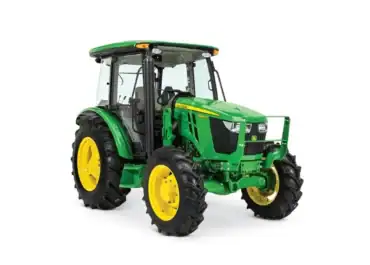
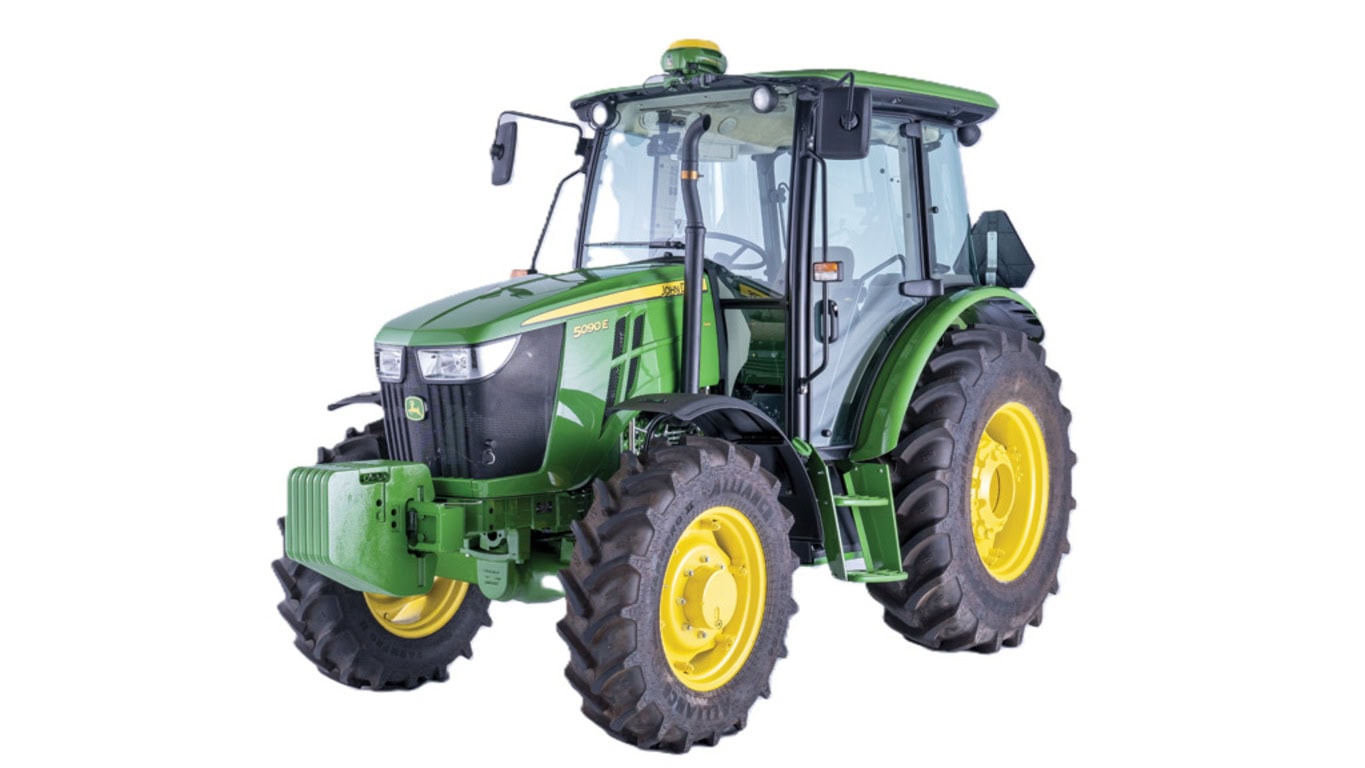
For a cab, inspect glazing, doors, seals, climate functions and sightlines to the actual attachments. For an open station, assess exposure and approved protective equipment. Compare the offered features item by item rather than transferring specialty-cab claims from unrelated webpage text.
The aftertreatment system should be understood from the exact tractor manual and service history. Establish required fluids and maintenance, and investigate warning indications through competent diagnosis. This guide makes no claim of a recurring emissions fault or a particular operating-cost penalty.
Identify practical support in your location and a backup plan for essential work. No universal parts lead time or reliability ranking is assumed. A documented service arrangement is more useful than an unsupported promise that a familiar brand never causes downtime.
Used 5090E inspection and full ownership cost
Record serial identity, transmission option, operator station, PTO arrangement and hydraulic equipment. Identify the loader and implements separately. Match each to its own documentation before treating the bundle as ready for work.
Have the engine, drive system, PTO, steering, brakes and hydraulic functions assessed appropriately. Inspect structural repair evidence, linkage wear, guards, tyres and attachment locks. Review maintenance records and price identified corrective work from actual estimates.
For transport, use the complete equipped mass and loading arrangement. Tractor shipping references do not include every attachment, ballast or carried tool. Delivery and any hauling changes belong in the purchase comparison from the start.
The KIOTI RX7320 and New Holland Workmaster 70 provide smaller utility reference points. They help test whether the recurring work truly needs the 5090E’s package; they are not direct equivalents or substitutes for current specifications.
Frequently asked questions
Does 90 engine hp mean 90 PTO hp?
No. The cited table gives 75 rated PTO hp. Match the implement against the correct rating and conditions.
Can one rear outlet deliver the whole pump total?
The table lists a separate single-SCV flow. Use the relevant circuit data rather than the combined total.
Does every used 5090E have three rear remotes?
No. The third is listed as optional. Inspect the actual installation and required valve functions.
Are all three PTO modes guaranteed together?
No. Confirm the installed arrangement and approved options; the table distinguishes standard and optional packages.
What is the strongest purchase case?
A farm with a verified implement list that needs the documented power, circuits and travel arrangement, plus an independently suitable handling package and a realistic service plan.
Share your experience
Help other Canadian buyers — leave a quick review for the
John Deere 5090E
There are no reviews yet. Be the first one to write one.