Overview & Specs
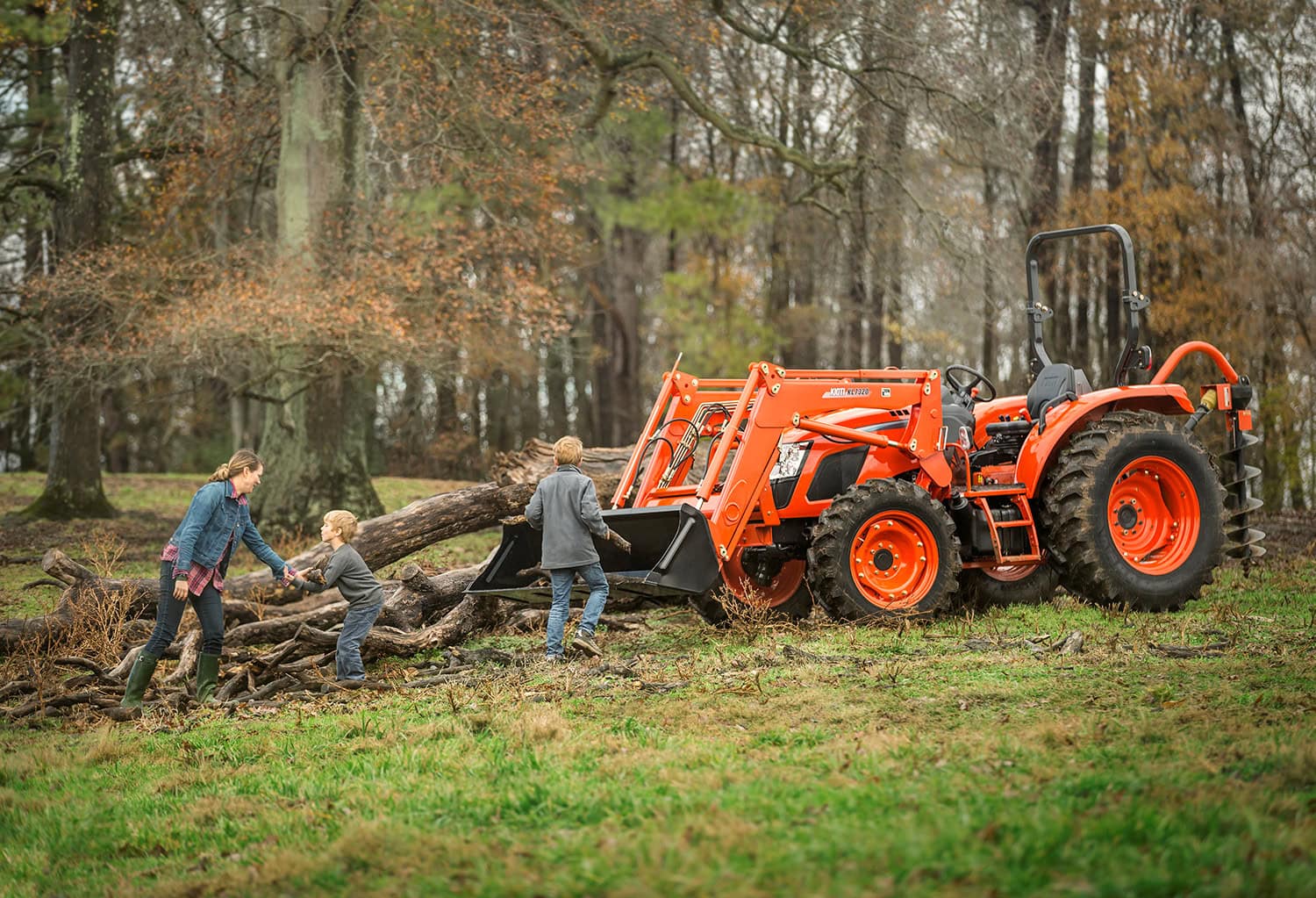
The KIOTI RX7320 is a utility-tractor choice for a farm that needs to assess PTO work, hay equipment and material handling as separate requirements. Its 73 gross engine hp and 63 PTO hp place the power discussion beyond many smaller compact tractors, but those figures do not establish what bale it can lift, which baler it can operate or whether its controls suit a full day of loading.
This guide covers the base open-station RX7320 with synchronized shuttle transmission. RX7320P, cab versions and the later RX40 family must not be treated as interchangeable specifications. For a used buyer, identifying the exact version is the first useful step.
On This Page
ToggleRX7320, RX7320P and RX7340 are not one specification
The Canadian RX7320 page identifies the base model. The manufacturer’s currently linked combined RX brochure includes different generations; its RX20 specification section is dated July 2018. This guide uses the RX7320 column in that section, not the RX40 tables near the beginning.
Within RX20, the base synchronized-shuttle tractor differs from the P power-shuttle versions. Cab and creeper configurations also have separate columns. A listing that says only “RX73” leaves too much unresolved for a meaningful equipment comparison.
| Item | Base RX7320 reference | Why it matters |
|---|---|---|
| Gross engine output | 73 hp | Engine rating, not loader allowance |
| PTO output | 63 hp | Use for driven-implement screening |
| Transmission | Synchro shuttle, 12F/12R | Different operation from power-shuttle variants |
| Rear PTO | Independent; 540 rpm application reference | Match actual equipment and implement speed |
| Hitch category | II | Check implement geometry and carrying conditions |
| Brochure hitch lift | 3,898 lb at 24 inches aft of hitch | Retain the load-reference location |
| Wheelbase | 83.9 inches | Useful platform dimension |
| Weight with agricultural tyres | 5,589 lb | Not a fully equipped transport weight |
The website contains conflicting rear-hitch entries. The figure above comes from the explicitly located RX20 brochure rating. Do not mix it with an unqualified lift number or apply it to a different generation. Verify the applicable documentation for the actual serial number and fitted equipment before making a carrying decision.
Build the purchase around the hay tools, not the horsepower class
For a farm with existing hay equipment, begin with those implements. Record the exact mower, rake, baler or other tool, along with its required power, PTO speed, hitch or drawbar arrangement, hydraulic functions and electrical needs. The phrase “small hay tractor” is too broad to settle those details.
The 63 PTO-hp specification is the relevant power reference where an implement manufacturer states PTO horsepower. If a hypothetical implement requires at least 65 PTO hp, the 73 engine-hp label does not demonstrate compliance. If the stated minimum is lower, the other requirements still need to be checked.
Working conditions matter after the compatibility screen. Crop density, terrain, desired work rate and implement configuration influence how the combination must be operated. Avoid converting a minimum horsepower match into a guaranteed acreage-per-hour claim.
Aglist’s PTO horsepower guide explains the terminology. For the actual purchase, keep the implement’s own requirements attached to the comparison so that an apparently similar replacement tool does not silently change the decision.
Bale handling needs a separate assessment
A tractor can have sufficient power for a hay implement without being approved for every bale-handling task on the farm. Establish the actual bale mass, attachment type, load position and placement height. Do not estimate all bales from one familiar dry example.
A bale carried on a front attachment creates a different loading arrangement from a rear-mounted tool. The attachment’s own mass and the distance of the load from the loader reference points matter. A rear-hitch rating cannot be used as a front-loader rating.
Describe the complete movement: pickup location, travel route, doorway or feeding area, and final placement. A requirement to reach across an obstacle can be more demanding than simply raising the same load close to the tractor. Keep people clear and use only the approved equipment and operating procedure.
Have the loader, carrier, attachment and prescribed ballast identified in writing. Aglist’s loader capacity explanation shows why pivot-pin figures and real attachment loads are not interchangeable. Do not accept an engine-power comparison as a substitute for this assessment.
If the essential handling job remains outside the documented package limits, compare a different tractor-loader combination or another equipment class. Buying the RX7320 for its PTO suitability does not require forcing it to serve every loading role.
The base shuttle deserves a realistic demonstration
The RX7320’s synchronized shuttle and the RX7320P’s power shuttle are distinct arrangements. A used listing should not present the P model’s operating convenience as though it were standard on the base tractor. Identify the controls and follow the applicable clutch and direction-change procedure.
For field work, assess the available speeds while maintaining the implement’s required PTO operation. Find a useful normal gear and the alternatives needed when the material or conditions change. Twelve forward gears are a specification; their suitability for your task is a demonstration question.
For feeding or loading, consider the number of reversals in a typical session. A conventional control routine may be acceptable for occasional handling and more tiring during continuous cycles. Include the regular operator in that assessment rather than allowing a short sales demonstration to decide the issue.
The Aglist transmission guide explains the distinctions. It does not replace a comparison of the exact RX versions being offered, including their condition and equipment.
Rear hitch, drawbar and hydraulics are different interfaces
The Category II three-point hitch is relevant to mounted implements. A trailed implement introduces its own drawbar geometry and loading requirements. Do not transfer a three-point lift figure into an assumption about trailer or implement towing capacity.
For a mounted tool, retain the brochure’s 24-inch rating location and assess the complete attachment arrangement. A long implement can place its mass differently from a compact one of the same weight. Any quick hitch or adapter also becomes part of that geometry.
The RX20 brochure describes position, draft and mixed hitch control. Their use should be explained in relation to the actual ground-engaging implement. These controls do not eliminate the need to set up the tool correctly or establish suitable operating conditions.
Hydraulic functions need their own inventory. A baler or other trailed implement may require several operations even though its main drive is mechanical. Count the functions that need independent control, identify whether they are occasional cylinder movements or continuous hydraulic demands, and match the installed valves accordingly.
The brochure distinguishes standard and optional remote equipment, including configuration restrictions. On a used tractor, inspect what is actually installed. Do not infer available functions from a photograph of several couplers or from the equipment fitted to a neighbouring RX variant.
Farm access: check the larger package where it actually works
The RX7320 is a different physical proposition from a small acreage tractor. Its listed minimum-tread width is 77.2 inches, while the base open-station height is listed at 107.5 inches. These are reference dimensions, not a guarantee that a tractor with different tyres, accessories or attachments clears a particular opening.
Measure feed passages, gates, doorways and turning areas. Include the loader and any rear attachment, and consider where the operator needs to see during the manoeuvre. A route that accommodates the tractor alone may not accommodate the work package.
Soft surfaces and yard condition should also be considered through the actual tyre and ballast setup. Avoid choosing tyres by appearance or a general claim that one tread is best everywhere. Evaluate the surfaces used most often and the compromises between field work, hard yards and sensitive areas.
For transport, obtain an equipped weight and a suitable loading plan. The 5,589 lb brochure reference does not include every loader, attachment and ballast combination. Confirm trailer, ramp and tow-vehicle suitability for the actual arrangement rather than treating tractor-only mass as the transport load.
Open-station ownership in Canada
The base RX7320 exposes the operator to the weather. That may be an acceptable trade-off for seasonal field work and short yard tasks, but prolonged winter feeding or snow work can change the preference. Evaluate the longest recurring exposure, not only a comfortable demonstration day.
Cab versions should be compared as separate packages with their own equipment, dimensions and condition. A used cab also introduces inspection items such as glass, doors, seals and climate-control operation. The cab versus open-station guide helps make that trade-off explicit.
Plan starting and seasonal maintenance from the applicable manual. Do not rely on an unsupported promise of a particular cold-start temperature or fuel-use rate. Approved equipment, correct fluids, service history and practical storage arrangements are more useful purchasing evidence.
Downtime planning matters when the tractor is needed for daily livestock work. Identify local service arrangements, parts access and a realistic backup plan. These are questions about your operation and available support, not claims that the RX7320 is more or less reliable than another model.
What to inspect on a used RX7320
Begin by matching serial information and confirming the transmission and platform. Identify the loader separately and obtain documentation for the attachments being sold with it. An advertisement can combine photographs, terminology or specifications from different versions.
Have a competent inspection assess the engine, clutch, shuttle, gears, brakes, steering, PTO and hydraulic functions under appropriate conditions. Review service records and investigate leaks, abnormal behaviour or undocumented repairs. These are general inspection areas, not a list of alleged model-specific weaknesses.
Pay particular attention to equipment used for carrying: loader structure, pins, attachment locks, hitch components and evidence of modification. A fresh coat of paint or a successful unloaded lift does not establish the condition of the loaded system.
Inspect tyre condition and compatibility, guards, lighting and the completeness of any hydraulic or electrical installation. Missing components can affect both readiness and value. Obtain real corrective-work estimates before comparing the package with a more complete machine.
Compare the RX7320 with the job that remains unresolved
The New Holland Workmaster 70 offers another utility-tractor reference for a buyer comparing conventional farm packages. Use it to organise a shortlist, then verify the exact configuration and manufacturer requirements for each candidate. Similar engine classes do not establish equal lift, controls or equipment.
If cab comfort is the concern, compare cab configurations directly. If repeated loader reversals dominate, compare the relevant transmission options. If the tractor is too large for essential access, reconsider the work split rather than assuming the extra PTO output will compensate.
Make the final quote describe a complete working combination: tyres, loader, attachments, ballast, hydraulic circuits, electrical connections, delivery and agreed repairs. That is the basis for an honest cost comparison.
Frequently asked questions
Is every RX7320 a power-shuttle tractor?
No. The base model uses synchronized shuttle; P versions have a different transmission specification.
Does 73 hp mean it suits a 70-PTO-hp implement?
No. The listed PTO output is 63 hp. Compare the implement requirement with the correct rating.
Can the hitch figure be used for bale-loader capacity?
No. It is a rear three-point rating at a stated location, not a front-loader allowance.
Does the current combined brochure describe only RX7320?
No. It includes multiple generations. Use the RX20 section and the exact model column.
What is the strongest reason to choose this tractor?
A verified match to the farm’s PTO implements and handling package, with controls and dimensions that suit the daily routine. That is more useful than buying by horsepower class alone.
Share your experience
Help other Canadian buyers — leave a quick review for the
KIOTI RX7320
There are no reviews yet. Be the first one to write one.