Overview & Specs
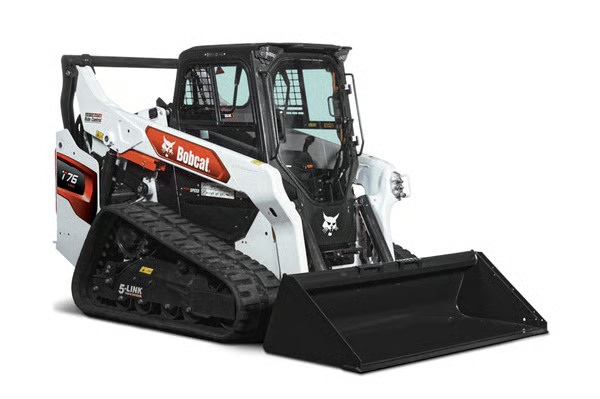
The Bobcat T76-2 is a compact track loader to consider when the job requires a larger handling and hydraulic envelope than a smaller tracked machine can provide, without choosing by engine horsepower alone. In the North American range, that last point matters: two loaders can share an engine-output headline while offering materially different capacity, flow and lift dimensions.
For a Canadian buyer, the T76-2 question is usually practical. Will it handle the actual material, work with the selected attachment and load the receiving truck while remaining manageable on the site and trailer? This guide works through that decision for the T76-2 Pro. It is based on manufacturer specifications and original planning examples, not a hands-on test or a reliability rating.
On This Page
ToggleWhat changes when you move into this size of loader?
Start with the task that is forcing the change. A landscape operation may be spending too much time splitting material into smaller approved loads. A contractor may need a hydraulic attachment beyond the current carrier’s capability. A farm may need a better fit with the geometry of its receiving equipment. Each is a valid reason to investigate another loader, but each demands different evidence.
Do not use a larger model as a substitute for identifying the constraint. If the route is inefficient, changing the staging area may improve the cycle. If the attachment is unsuitable, more loader capacity may not fix the finish or control problem. If the required load arrangement is outside the approved envelope, however, a different machine or handling method may be necessary regardless of how rarely it causes inconvenience.
North American T76-2 specification snapshot
| Item | Published specification |
|---|---|
| Engine output | 74 hp |
| ROC, solid / torsion undercarriage | 2,900 / 2,800 lb |
| Tipping load | 8,285 lb |
| Operating weight | 9,592 lb |
| Auxiliary flow, standard / optional high flow | 23.3 / 30.3 US gpm |
| Hydraulic system pressure | 3,500 psi |
| Width / cab height | 73.5 / 81.9 in. |
| Hinge-pin height | 128.3 in. |
Source: Bobcat’s North American T76-2 page, checked September 29, 2026. The Pro loader brochure identifies vertical lift and the 35% basis for the headline CTL capacity. Figures from European T76-2 pages should not be substituted into this North American comparison.
T76-2 versus T66-2: the engine number misses the point
Bobcat’s North American T66-2 page also lists 74 hp, but its solid-undercarriage ROC is 2,400 lb, standard flow is 17.6 US gpm and hinge-pin height is 120 inches. Those differences make this a capacity, hydraulic and geometry comparison rather than a simple horsepower step.
For the buyer, the implication is to test the specific capability that matters. If the target tool needs a different flow range, compare both machines against its documentation. If loading height is the constraint, examine the bucket and receiver together. If handling capacity is the constraint, obtain the approved information for the attachment and load arrangement. None of those checks can be replaced by noting that the engines have the same headline output.
The larger platform also creates a reason to remeasure the route and revisit transport. Treat these as part of the capability purchase, not administration after choosing the machine. A loader that improves the working cycle but creates a new daily transport problem may still be worthwhile, but the comparison needs to show both effects.
Build the handling plan from real loads
A useful load register contains more than a description such as “feed,” “pavers” or “soil.” Record the full weight, packaging or container, attachment used, expected load centre and placement height. For pallet work, include the pallet itself and establish the applicable fork and machine limits. For loose material, record the bucket and a defensible loaded weight rather than assuming volume is equivalent to mass.
A simple hypothetical example illustrates why this matters. A handling task involving 1,500 lb of goods on a 100 lb pallet starts with a 1,600 lb load. That arithmetic does not establish that the T76-2 may perform the task: the fork attachment, load centre, height and approved configuration still decide. The example is a method of assembling the load information, not a capacity recommendation.
Keep solid-undercarriage and torsion specifications separate in the worksheet. Do not choose the desired suspension and then retain the higher ROC from a different build. Aglist’s ROC and tipping-load explanation provides the terminology; the operating and attachment documentation governs the actual handling plan.
Truck loading: measure the bucket at discharge
The T76-2’s vertical-lift arrangement makes loading geometry a central comparison point, but the lift-path description is not a clearance guarantee. Measure the receiver’s upper edge, side extensions, required discharge position and the available approach. Establish where the loader will stand during normal work, including any setback caused by tyres, barriers or the shape of the receiving body.
Then use the selected bucket’s dimensions and approved geometry information. Hinge-pin height is not dump clearance. Bucket shape, tilt position and attachment projection affect whether material clears the side and lands in the intended area. A different bucket can change the outcome without changing the loader model.
An authorised demonstration should include the complete cycle with a representative receiver or suitable mock-up. Observe the view of the edge, control of discharge and ability to withdraw without awkward repositioning. If the job cannot be demonstrated, keep the unresolved dimension in the purchase checklist rather than filling it with an assumption from a photograph.
Evaluate cycle time without inventing productivity
Break the work into approach, filling or pickup, travel, positioning, discharge and return. Time a representative sequence only under appropriate operating procedures. Note the material, distance, surface and operator so that a later comparison has meaning. A single quick cycle is not a reliable estimate of shift production.
For illustration, assume a job needs 30 identical, approved cycles and a site-layout change reduces each cycle by 20 seconds. The theoretical difference is 600 seconds, or 10 minutes, before other delays. Those are invented planning assumptions, not a T76-2 performance claim. The calculation shows why eliminating a repeated manoeuvre can matter alongside machine capacity.
Use the same logic when deciding whether a larger loader is justified. If it changes the number of necessary cycles within approved limits, measure that advantage. If it only looks faster during an unloaded demonstration, you have not yet established a business case. Keep observations separate from predictions about fuel consumption or annual savings.
The hydraulic package should follow the attachment list
Compare the exact tool’s permitted flow and pressure with the installed machine package, then check returns, drains where required, electrical controls, mounting and carrier approval. Bobcat’s attachment-matching resource explains why hydraulic selection is separate from basic loader selection.
A hypothetical tool needing 22–25 US gpm raises a different configuration question from one requiring 28–32 US gpm. The ranges are examples, not endorsements of real attachments. In both cases, matching flow is only the first screen. A pressure mismatch, an absent connection or an unapproved carrier arrangement can still rule out the combination.
For continuous-duty work, agree on a representative demonstration with the equipment provider and use the relevant manuals. Record the operating conditions and any warning or limitation that appears. Do not infer thermal performance or usable output over a shift from a brief no-load run. Aglist’s hydraulic-flow guide provides a fuller compatibility worksheet.
Site fit in Canadian farm and contractor work
Material yards and landscape deliveries
Work backwards from the delivery arrangement. Identify where pallets or bulk material arrive, where they must be placed and how often the loader crosses finished surfaces. Check the attachment envelope through the entire route. If a narrow gate or turning area is the controlling dimension, additional machine capability may not be usable at that site.
Farm loading and yard maintenance
Include both daily handling and seasonal work in the assessment. The machine must suit the routine load and receiver, but it also needs an appropriate plan for buildings, storage and surface conditions. A farm demonstration should resemble the actual sequence of jobs, including attachment changes and the operator’s view around the working area.
Winter work
Evaluate the actual track and snow-attachment combination. A tracked platform’s behaviour on a soft summer site does not prove its suitability on ice or packed snow. Check cab visibility, heating and defrost, lighting and the room available after snow storage reduces the original route. Keep claims about winter productivity tied to evidence from the intended setup.
Why the S76-2 is a useful but imperfect comparison
The Bobcat S76-2 is a relevant wheeled alternative where firm yards, tyre-based operation or a different transport arrangement suit the business. Similar model names and headline capacities do not make the machines interchangeable. The rating basis and ground-contact system need to remain visible in the comparison.
For older tracked candidates, examine the T650 and T770 as separate machines with their own specifications and condition. Do not transfer a feature or an owner report from one generation to the T76-2. A used loader’s undercarriage and attachment condition may change its effective purchase cost substantially.
The broader skid steer versus track-loader comparison is useful when the fundamental platform choice remains open. Choose that platform from the work and surfaces before treating one model number as the automatic answer.
Inspecting the machine and pricing ownership
Confirm serial identity, installed undercarriage, hydraulic package and attachment equipment. Have a qualified inspection address tracks, rollers, sprockets, idlers, suspension components where fitted, lift linkage, coupler, hydraulics and any structural repairs. These are general inspection priorities, not a claim of recurring T76-2 defects.
Request itemised estimates for identified repairs and wear items. Review service records rather than relying on a clean appearance or an hour-meter photograph. Inspect any included attachment separately, including its identification and compatibility documentation. The value of a package depends on both assets being suitable for the intended work.
Build the transport calculation from the actual configured loader and everything carried with it. Compare that load with the available payload and ratings of the whole towing combination, then verify the final arrangement appropriately. The brochure operating weight should not be treated as a complete loaded-trailer figure.
For the annual budget, separate purchase and finance costs, scheduled service, undercarriage wear, attachment wear, transport and downtime. Test the estimate at expected hours and at a lower-use scenario. Use local quotations and your records; there is no defensible single Canadian price or fuel-use promise that can replace those inputs.
T76-2 questions that deserve a clear answer
Why consider it if the T66-2 also has 74 hp?
Because engine output is only one part of the machine. The published capacity, hydraulic supply and lift dimensions differ. Investigate the capability that your work actually needs.
Does the torsion version retain the solid-undercarriage ROC?
The current North American page lists separate ratings. Match the capacity information to the installed configuration and then to the approved attachment arrangement.
Can the ROC be used as a pallet-fork rating?
Not by itself. The actual load, fork attachment, load centre and placement requirement need the applicable approved information.
Will the listed hinge-pin height clear my truck?
That figure alone cannot answer the question. Check bucket dump clearance and reach against the actual receiver and approach.
What would rule this model out?
An unresolved attachment mismatch, inadequate approved handling capability, unsuitable site access or an impractical transport plan. Resolve those issues before comparing comfort options or negotiating a final price.
Share your experience
Help other Canadian buyers — leave a quick review for the
Bobcat T76-2
There are no reviews yet. Be the first one to write one.