Overview & Specs
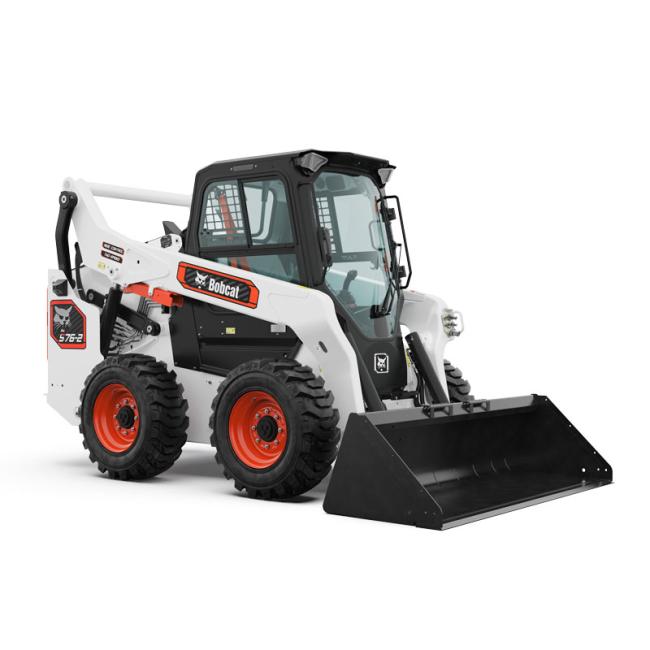
The Bobcat S76-2 belongs on a shortlist when a compact loader will spend much of its day moving material, loading trucks and switching between powered attachments. Its 2,900 lb rated operating capacity and optional high-flow hydraulics make it a different proposition from buying the smallest machine that fits through a gate. The important question for a Canadian buyer is whether that extra working capacity solves a real problem on the farm or jobsite.
A grain operation loading material into trucks, a livestock farm handling feed and bedding, and a contractor running a snow blower may all consider the same model for different reasons. One needs reach, another needs manoeuvrability, and the third needs the correct hydraulic package. This guide separates those decisions, explains the S76-2 specifications, and identifies the checks that belong on a dealer quote or used-machine inspection.
On This Page
ToggleBobcat S76-2 key specifications
| Specification | North American specification |
|---|---|
| Engine power | 74 hp |
| Rated operating capacity | 2,900 lb / 1,315 kg, at 50% of tipping load |
| Tipping load | 5,800 lb / 2,630 kg |
| Lift path | Vertical |
| Operating weight | 8,014 lb / 3,635 kg |
| Height to bucket hinge pin | 128.3 in / 3,259 mm |
| Width with bucket | 74 in / 1,880 mm |
| Height with cab | 81.9 in / 2,079 mm |
| Standard auxiliary flow | 23.3 US gpm |
| Optional high flow | 30.3 US gpm |
| Auxiliary system pressure | 3,500 psi |
Sources: Bobcat’s North American S76-2 page and Pro loader specification brochure. Published comparison figures do not replace the operating information for the exact machine and attachment.
What its lifting capacity means for farm work
The S76-2’s ROC is half of its published tipping load: 5,800 × 0.50 = 2,900 lb. That does not make 5,800 lb an alternative working limit. Nor does it establish the capacity of every fork, grapple or bale attachment that can be fitted to the loader.
For example, a buyer regularly receiving a pallet whose contents alone weigh close to 2,900 lb should not treat this specification as a complete answer. The pallet, attachment, load position, lift height and the manufacturer’s applicable restrictions still matter. A load that projects forward on long forks is a different handling problem from material held in the specified bucket.
Build the purchase decision around your heaviest routine load, not the lightest task used during a demonstration. Record the load’s weight and dimensions, where it must be collected, and where it must be placed. Ask the dealer to confirm an approved combination that completes that entire job. Aglist’s ROC and tipping-load guide explains why loader weight, breakout force and lifting capacity are separate measurements.
Vertical lift, truck loading and pallet placement
Bobcat identifies the S76-2 as a vertical-lift machine. Its published hinge-pin height helps compare loading geometry, but a truck body lower than that figure is not automatically within reach. The attachment’s shape, dump angle and forward clearance determine what happens at the truck’s side.
For truck loading, take the actual sidewall height and loading arrangement to the demonstration. For pallet placement, describe both the height and the distance the load must reach. These checks are especially useful when replacing an older loader: a taller hinge pin does not guarantee an easier job if the attachment or approach angle has changed.
Also evaluate the complete loading cycle. Can the operator approach squarely, see the relevant edges and reverse without an awkward turn? A machine that saves seconds during lifting but needs repeated repositioning may deliver less improvement than the specification table suggests. That is a reason to test the S76-2 on a representative layout, rather than judging it by a single lift in an open dealer yard.
Standard flow or high flow?
The S76-2 lists 23.3 US gpm of standard auxiliary flow and 30.3 US gpm with the high-flow option. The latter is about 30% more published flow, calculated from those figures. It is not a promise of 30% more attachment productivity: the attachment’s approved operating range and the rest of the system determine the result.
If your work is mostly buckets and pallet forks, buying high flow simply because it is available may not address your main limitation. If a snow blower, planer or other continuously powered tool is central to the business, its exact hydraulic requirements should shape the loader purchase from the start.
Use an attachment list with separate columns for flow range, pressure, drainage requirements, electrical controls and approved carrier. A physically compatible mounting plate does not settle those questions. Ask for the hydraulic package to appear explicitly on the invoice; a model name alone does not confirm an optional feature on a used or dealer-stock machine.
For the wider principle, see Bobcat’s loader and attachment matching guide. The useful comparison is between a particular attachment and a particular configuration, not between the words “standard” and “high” in two advertisements.
Engine, cooling and operator controls
Bobcat advertises the S76-2 with a non-DPF engine. Its engine and cooling overview describes the Pro range’s integrated premium cooling system, including a variable-speed fan and high-capacity radiator. These are concrete equipment features, not evidence that maintenance or heat management can be ignored.
During a purchase demonstration, ask to see routine service access and the maintenance instructions that apply to the machine. For a loader that will spend long periods powering an attachment, include that intended duty in the discussion rather than judging the hydraulic package by peak flow alone.
Bobcat’s controls guide lists SJC as standard and hand-and-foot controls as optional for the S76-2. Its Pro drive modes adjust response. Confirm the fitted controls, then assess low-speed positioning and repeated loading with the operators who will actually use the machine. A preferred control pattern should be a written configuration choice, not an assumption made from a model photograph.
How the S76-2 fits different Canadian jobs
| Your main work | What to evaluate first | What could change the choice |
|---|---|---|
| Truck loading and pallet handling | Approved capacity, reach and the full loading cycle | Heavy or forward-projecting loads may justify a different carrier |
| Livestock-yard chores | Access routes, attachment changes and visibility | Narrow buildings or the working surface may dominate the decision |
| Snow contracting | Exact blower or pusher, hydraulic package and cab equipment | The attachment’s needs can outweigh the loader’s headline horsepower |
| Landscaping and site work | Material handling, access and transport arrangements | Frequent work on difficult ground may favour a tracked alternative |
Snow removal
Start with how snow leaves the site. Pushing it to a storage area, loading it for removal and blowing it away from an access route are different jobs. A blower purchase raises hydraulic questions; a pusher purchase raises questions about attachment size, visibility and the available working area. Do not choose a loader package from clearing width alone.
For winter quotes, list the cab and comfort equipment you actually require. Ask to see the door opening, heater and demisting controls, rear visibility and attachment controls in the quoted machine. If several operators share it, have each try the entry, seating and control layout. A specification that looks generous on paper can still leave a daily inconvenience undiscovered.
Farm and acreage work
Walk the route from storage to the job before choosing the machine. Include the narrow door, the feeder corner, the place where a truck parks and the area used to change attachments. The S76-2’s bucket width is meaningful in that route planning; buying enough capacity does not remove the need to fit the site.
For occasional ownership, compare a larger machine’s usefulness against the actual mix of jobs. If the heavy task occurs a few times a year, price a rental or contractor alternative alongside ownership. If it occurs every day and constrains the operation, extra capacity may be much easier to justify. These are different purchasing cases even when the annual acreage is identical.
S76-2 versus the older S76
The suffix matters. Bobcat’s non-current S76 specifications list 8,615 lb operating weight, compared with 8,014 lb in the S76-2 brochure. Both list 74 hp and 2,900 lb ROC. Shared horsepower and capacity figures therefore do not prove that two advertisements describe the same generation.
When comparing listings, obtain the serial number, identification-plate photograph and original or current equipment specification. Keep generation differences separate from options and condition. A newer model with the wrong attachment package can still be a poorer match for your work than a properly specified older machine.
Do not transfer an older S76 service interval, component description or fault history to the S76-2 without checking applicability. Likewise, a discount between two used examples cannot be interpreted sensibly until hours, condition, attachments and included support are known.
S76-2 versus S650, S770 and John Deere 330 P-Tier
The Bobcat S650 and S770 are useful Bobcat alternatives to put on the same quote sheet. Ask what each complete package changes in your daily work: the approved load, attachment capability, access, transport weight and price. A larger model is useful only when that added capability answers a requirement.
The John Deere 330 P-Tier provides a particularly instructive comparison. John Deere Canada lists 2,950 lb ROC and 5,900 lb tipping load, which is also a 50% relationship. Its listed operating weight is 9,930 lb. Similar headline ROC therefore does not mean similar machine weight or identical attachment performance.
Do not apply a rule that one whole brand uses 35% ROC and another uses 50%. Compare the actual wheeled or tracked model and its stated basis. Then move beyond the capacity number: hydraulic configuration, operator fit, dealer support and your loading geometry can decide between otherwise credible candidates.
Transport planning and the Canadian purchase quote
The published operating weight is a starting point for planning, not a ready-made trailer recommendation. Prepare a transport list containing the loader, every attachment travelling with it, any added equipment and the trailer itself. Confirm the complete combination against the actual vehicle and trailer ratings before arranging collection.
A useful Canadian quote separates the base machine, options, attachments, freight and preparation. Ask which items are installed, which are dealer additions and which are merely shown in promotional photographs. Keep financing terms separate from equipment price so that competing offers describe the same purchase.
This guide does not assign a Canadian market price without dated local evidence. For a real comparison, request matching written quotes and record their date, currency and included equipment. A US starting price or a monthly payment alone is not a substitute for that comparison.
What to inspect on a used S76-2
- Identity and records: match the serial number to the invoice, service records and applicable manuals. Check recorded work as well as hours.
- Attachment interface: have a qualified person inspect the mounting system, pins, hoses and couplers. Include the attachment you intend to use in the assessment.
- Controls and cab: test the fitted functions during a dealer-supervised demonstration. Confirm that advertised options are present and operational.
- Working demonstration: assess the intended loading or attachment task within approved limits, not just travel around an empty yard.
- Condition-related costs: obtain an independent inspection and written repair estimates where needed. Use those findings in the comparison with a new quote.
These are inspection priorities, not a claim that the S76-2 has particular recurring faults. Aglist has not established a verified model-specific failure pattern or performed a hands-on durability test.
Frequently asked questions
Is the Bobcat S76-2 the same as the S76?
No. Treat them as distinct generations. Several headline specifications overlap, while published weight differs; identify the exact machine before using specifications or shopping for parts.
Does every S76-2 have high flow?
No. High flow is an option in the published specifications. Verify the installed package and its compatibility with the intended attachment rather than relying on a listing photograph.
Can it handle every pallet weighing 2,900 lb?
The headline ROC alone cannot answer that. Use the applicable loader and fork ratings, load dimensions and placement requirements. The pallet-handling setup must be approved for the complete task.
Should I buy the S76-2 or a compact track loader?
Make the working surface and access requirements part of the comparison. If you are evaluating tracked alternatives, the Kubota SVL75-3 page is one starting point. Compare the published rating basis and actual equipment configuration, rather than treating similar engine power as equivalence.
Who should keep the S76-2 on their shortlist?
A buyer who can identify a recurring material-handling or attachment job that requires this level of machine, and who has checked the access, transport and operating configuration. If those details are still unknown, define them before choosing between model numbers.
Share your experience
Help other Canadian buyers — leave a quick review for the
Bobcat S76-2
There are no reviews yet. Be the first one to write one.