Overview & Specs
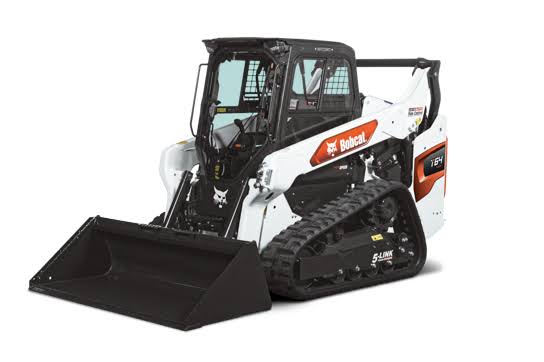
The Bobcat T64-2 is worth examining when a compact loader’s ability to reach and work around the site matters as much as its engine rating. For a landscape business, acreage or farm, the attraction is a tracked platform with a relatively compact working envelope. The buying trap is to treat it as a wheeled loader with extra traction and overlook the different undercarriage, capacity configuration and transport calculation.
This guide concerns the North American T64-2 Pro. It uses published specifications and a practical purchasing framework, not an owner survey or a claim of hands-on testing. An older T64 advertisement, or a specification from another market, should not be substituted for the machine described here.
On This Page
ToggleStart with the reason you need tracks
Write down the jobs your present equipment cannot reach or complete satisfactorily. Is the obstacle a soft approach, narrow access, surface damage, loading height, insufficient approved capacity or an incompatible attachment? These problems require different solutions. Tracks may be relevant to the ground-contact problem, while doing nothing to solve a doorway, hydraulic requirement or unsuitable loading geometry.
A site diary is useful before a purchase. For several representative jobs, record the ground conditions, access dimensions, attachment used and reason for delays. Include work you declined. This creates a more defensible buying case than the general impression that a track loader would be more capable. Aglist’s wheel-versus-track guide can help organise that comparison, but the final decision should follow your actual sites.
Key T64-2 specifications, with the configuration separated
| Item | North American published figure |
|---|---|
| Engine output | 68 hp |
| ROC, solid undercarriage | 2,300 lb |
| ROC, torsion suspension | 2,200 lb |
| Published tipping load | 6,571 lb |
| Operating weight | 8,440 lb |
| Standard / optional high-flow hydraulics | 17.6 / 26.9 US gpm |
| Hydraulic system pressure | 3,500 psi |
| Width / height | 67.8 / 80.5 in. |
| Hinge-pin height | 120 in. |
Source: Bobcat’s North American T64-2 page, checked September 29, 2026. The Pro brochure identifies vertical lift and a 35%-of-tipping-load basis for the headline CTL rating. Verify the complete installed configuration; do not combine the most favourable figures from different builds.
Solid or torsion: compare the actual job, not a comfort label
The separate capacity entries make undercarriage selection more than a ride-preference question. If a recurring approved handling task is close to the chosen configuration’s limit, even a modest rating difference deserves attention. Do not assume the capacity stated at the top of an advertisement applies to every suspension option shown lower down.
A useful demonstration route includes the surfaces that occupy most of your working day. Ask to compare low-speed positioning, travel over representative uneven ground and controlled material placement. Use the same attachment and an appropriate authorised load arrangement for each configuration. Record what the operator actually finds easier or harder rather than presuming that the optional setup must be better for every job.
Comfort has an operational value, but it should be described honestly. Less unwanted movement may help an operator maintain concentration or place material more consistently; that is a reason to evaluate the machine, not a guaranteed productivity improvement. If several people share the loader, involve the regular operators before specifying a package around one person’s brief demonstration.
Ground contact: useful capability, real ownership work
Bobcat’s compact-loader buying guidance describes flotation and traction as reasons to consider a track undercarriage. That does not mean every tracked machine is suitable for every soft or fragile surface. Turning method, attachment, load and site condition remain part of the decision.
The T64-2 product page presents differing ground-pressure figures in different fields. This guide therefore does not select a single pressure value or use it to promise turf protection. For a sensitive property, evaluate the proposed track configuration and the actual work route. A published average ground-pressure number alone is not a prediction of rutting, scuffing or whether the ground can support the job.
Plan how the undercarriage will be inspected and cleaned after work in mud, debris or freezing conditions, following the machine’s manual. Include the time and suitable workspace in your ownership plan. If the loader will move between sites, consider how accumulated material will be managed before transport and storage. These routine arrangements can affect the practicality of owning tracks as much as the first demonstration.
Use an access map before choosing a bucket
A narrow loader is not necessarily a narrow working combination. Draw the tightest route with the selected bucket or other attachment installed. Mark the gate opening, posts, offset turns, parked equipment and any place where the operator needs to reverse. Measure usable clearance rather than relying on the nominal size of a gate or building door.
For work between buildings, think about where material will be placed after entering. A loader can pass through an opening yet lack the room to approach the stockpile, turn or dump. A simple scaled sketch, followed by a supervised site demonstration where appropriate, can expose this before delivery.
Overhead dimensions also need two checks: travel clearance with the machine in the correct travel position, and the space needed for the planned loading operation. The hinge-pin figure does not describe the lowest part of a tipped bucket or guarantee clearance over a truck. Identify the receiving body and the bucket together when evaluating lift geometry.
Attachments that should shape the specification
Divide the proposed attachment list into handling tools and powered tools. Buckets and forks create load, geometry and interface questions. A powered attachment adds a hydraulic and control compatibility question. Treating all attachments as interchangeable because they fit the coupler leaves too much unresolved.
For each powered tool, obtain the allowed flow range, pressure requirement, return and drain instructions, control connections and carrier approval. Bobcat’s attachment selection guide makes compatibility an explicit part of selecting the loader. Aglist’s hydraulic-flow guide explains the questions in more detail.
For example, a hypothetical tool needing 30 US gpm cannot be justified by pointing to this loader’s engine horsepower. Its requirement would trigger a different carrier or tool investigation. Conversely, a modest-flow attachment should not be supplied the maximum available flow without checking its permitted range. These are screening examples; approval requires the actual tool documentation.
Attachment weight also belongs in the handling assessment. A specialised tool may project farther forward or weigh more than the bucket used for a headline specification. For pallet work, use the approved fork information and the actual load centre. The ROC explanation is useful background, but a general capacity number is not a substitute for that assessment.
Three work patterns to evaluate
Landscape installation with restricted access
The T64-2 can be shortlisted when the route and ground-contact requirements point towards a compact tracked carrier. Structure the trial around moving material from the delivery point to its final location. Include the return journey and the turning areas. If protecting a finished surface is essential, establish an acceptable operating method and evaluate the result rather than assuming tracks will leave it untouched.
A farm with seasonal soft approaches
Compare the jobs that occur during difficult ground conditions with the work done on hard surfaces during the rest of the year. The seasonal need may be important enough to determine the purchase, but it should be quantified. If the difficult task happens only briefly, rental or a change in material staging may also deserve consideration. If it occurs daily, a machine chosen only for dry-yard performance may be the wrong compromise.
An acreage with snow and occasional construction work
Separate snow handling from summer excavation or material movement. Track suitability for a soft summer site does not establish winter grip. Evaluate the actual tracks, snow attachment, visibility, heating and defrost arrangement. Keep the intended storage and warm-up procedures consistent with the supplied manuals; do not infer cold-weather readiness from the model name alone.
Compare the T64-2 against a wheeled machine and older tracks
The Bobcat S64-2 is a useful wheeled alternative to examine where firm surfaces, transport and routine yard work dominate. Similar-looking headline capacity numbers do not make wheeled and tracked loaders interchangeable. Their rating bases, machine mass, ground contact and ownership requirements need separate treatment.
For a used-machine budget, the Bobcat T595 and T450 are distinct candidates worth understanding rather than treating as direct predecessors with identical specifications. The T650 may enter a broader comparison where the task calls for a different capability envelope. Compare actual equipment and condition; a used machine’s remaining undercarriage life can materially change the quotation you thought you were comparing.
A good shortlist contains a written reason for each candidate. “Fits the route,” “matches the attachment” and “meets the documented handling requirement” are useful reasons. “Bigger number” and “tracks should be better” are not enough to settle the purchase.
Used-machine inspection: make the undercarriage visible
Inspect a clean machine with a qualified person who can evaluate tracks, rollers, sprockets, idlers, tensioning components and the fitted suspension. Ask for an itemised estimate for work identified during inspection. A single statement that the tracks have a certain percentage remaining does not describe the condition or likely cost of the entire system.
Verify serial identity, operating hours and service documentation. Examine the coupler, attachment interface, lift linkage, hoses and any structural repairs. These are general inspection priorities, not a list of known T64-2 defects. Any claim of a recurring fault should be supported by model-specific evidence before it influences your valuation.
Follow with an authorised operational assessment using the correct procedures. Check the functions relevant to your work, including the installed hydraulic mode and cab equipment. If the sale includes an attachment, inspect it as a separate asset and establish compatibility rather than assigning it value merely because it is bundled with the loader.
Transport and the ownership budget
Prepare a transport manifest before assuming the existing trailer will work. Include the actual configured machine, bucket, additional attachments and carried equipment. Compare the total with the available payload and all relevant ratings of the towing combination. The published operating weight helps screen options; the final loaded arrangement needs its own verification.
For budgeting, separate scheduled service, undercarriage wear, attachment wear, transport, storage and downtime. Ask for local written quotations instead of inserting an unverified Canadian purchase price. Run your estimate at both expected annual use and a quieter year. That reveals whether a track loader is solving a regular operational problem or an expensive occasional inconvenience.
T64-2 questions buyers often need to resolve
Does torsion suspension keep the headline capacity?
The current North American page lists different ROC figures for solid and torsion configurations. Use the rating applicable to the purchased machine and the approved attachment arrangement.
Will it leave lawns undamaged?
No specification establishes that guarantee. Surface condition, turns, load and the chosen track arrangement need assessment on the intended work.
Is two-speed travel definitely standard?
The current page’s promotional wording and feature labels are not fully consistent. Obtain the machine’s build specification instead of making that assumption from the website alone.
Should high flow be included for an unknown future tool?
Price the option, but identify likely tools before deciding. An unspecified future attachment cannot establish the required flow, pressure or controls.
What is the strongest reason to choose this model?
A documented fit between the tracked platform, your access route, the approved load requirement and the attachment plan. If one of those remains unresolved, completing that check is more valuable than comparing another brochure headline.
Share your experience
Help other Canadian buyers — leave a quick review for the
Bobcat T64-2
There are no reviews yet. Be the first one to write one.