Overview & Specs
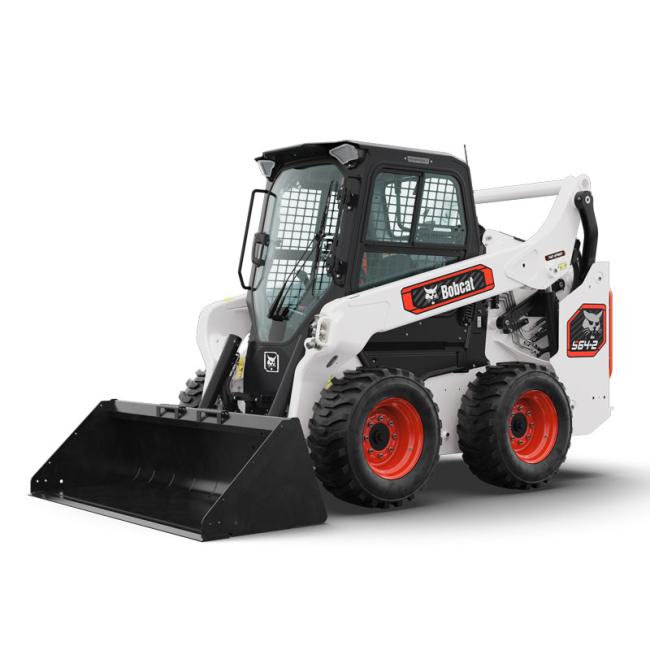
The Bobcat S64-2 is worth considering when a loader needs to fit the property as well as the workload. A machine can have enough lifting capacity and still be frustrating to own if the bucket barely clears a doorway, the attachment is wrong for the available hydraulics, or every trip through the yard requires extra manoeuvring. Those details matter particularly on established livestock farms, acreages and landscaping sites where the working area was not designed around a new loader.
With 68 hp, 2,300 lb rated operating capacity and a listed overall width of 64.6 inches, the S64-2 offers a useful starting point for that discussion. It also has optional high-flow hydraulics, so the choice is more involved than selecting a horsepower figure. This guide explains the specifications, distinguishes the current S64-2 from the earlier S64, and helps Canadian buyers assemble a realistic machine-and-attachment package.
On This Page
ToggleBobcat S64-2 specifications at a glance
| Specification | North American value |
|---|---|
| Engine power | 68 hp |
| Rated operating capacity | 2,300 lb / 1,043 kg, at 50% of tipping load |
| Tipping load | 4,600 lb / 2,086 kg |
| Lift path | Vertical |
| Operating weight | 6,855 lb / 3,109 kg |
| Overall machine width | 64.6 in |
| Width with standard bucket | 68 in / 1,727 mm |
| Height with cab | 80.5 in / 2,045 mm |
| Height to bucket hinge pin | 120 in / 3,048 mm |
| Standard auxiliary flow | 17.6 US gpm |
| Optional high flow | 26.9 US gpm |
| Auxiliary system pressure | 3,500 psi |
Sources: Bobcat’s S64-2 specifications and North American Pro loader brochure. Check the exact serial number, configuration and attachment when applying these comparison figures to a machine.
Will the S64-2 fit through your doors and gates?
Start with the width of the working combination. The listed machine width is 64.6 inches, but the standard bucket is 68 inches wide. That difference is easy to overlook when shopping from a compact-loader advertisement. A gate that admits the bare machine may not admit the attachment that makes it useful.
Measure the narrowest point with the doors or gates in their normal working positions. Include projecting hardware, the approach angle and the space needed beyond the opening. Then measure or obtain the specification for each proposed attachment, not just the supplied bucket. A grapple, snow tool or fork arrangement can change the envelope.
Height needs the same treatment. The listed cab height is a comparison dimension, not a guarantee of clearance under a particular beam or door. Ask the dealer to verify the actual machine on its fitted tyres and equipment. Where clearance is close, arrange a site assessment instead of relying on a rounded advertisement figure.
This exercise often clarifies the shortlist faster than comparing horsepower. If an important route rules out the proposed setup, either change the route, change the attachment or consider a different machine. Discovering that constraint before purchase is much cheaper than working around it every day.
Is 2,300 lb ROC enough for your jobs?
The S64-2’s published ROC is 50% of its tipping load. It is a rated load figure under specified conditions; it is not an interchangeable number with operating weight, hydraulic force or the load that a machine might momentarily move.
Make a list of actual loads: bedding, feed, gravel, pallets and any other materials the machine will handle. Record known weights instead of estimating from visual size. For a pallet job, include the load’s dimensions and its destination. For bucket work, consider the actual material and the attachment specified for it.
A useful buying question is whether the machine can perform your regular work with an approved configuration and appropriate operating margin. It is less useful to ask whether it might manage the heaviest load once. If your routine pallet already approaches the headline ROC before the rest of the handling setup is considered, have the dealer evaluate a larger carrier as well.
The Aglist guide to ROC and tipping load explains attachment weight, load centre and rating bases in more detail. Do not assign a rating percentage to an entire brand, or turn a calculated comparison figure into a new operating limit.
Vertical lift and the 120-inch hinge-pin height
Bobcat’s brochure identifies a vertical lift path and a 120-inch bucket hinge-pin height. Those figures are relevant to loading and placement work, but the hinge pin is not the bottom edge of a tipped bucket or the top of a pallet. The attachment changes the geometry of the task.
For a farm trailer or truck, note the side height and where the material must land. For storage work, note the placement height and reach. Ask for a demonstration of the complete cycle using an approved attachment, including approaching and leaving the loading position.
Visibility is part of that evaluation. Can the operator judge the bucket edge or fork position from the normal seat setting? Is there room to align without repeated turning? A practical demonstration answers these questions more directly than choosing the machine with the tallest published lift dimension.
17.6 gpm standard flow versus 26.9 gpm high flow
The optional hydraulic package is a substantial specification change: 26.9 US gpm compared with 17.6 US gpm. The difference is 9.3 US gpm, or about 53% more published flow. That arithmetic describes the oil-flow figures; it does not promise an equivalent increase in working speed or output.
Start with the exact attachment you want to buy or already own. Obtain its approved flow range, pressure requirements, drainage arrangement and control requirements. Compare those with the particular S64-2 configuration. A mounting plate that fits does not establish hydraulic compatibility.
For a hypothetical attachment approved for 15–20 US gpm, the standard-flow figure falls inside the stated range while the high-flow figure does not. For a different hypothetical tool requiring 24–30 US gpm, the reverse is true. These examples illustrate a screening method only; the attachment manufacturer still needs to approve the complete combination.
This is why high flow should be specified for an identified job. A buyer mostly using buckets and forks may have other priorities. A buyer whose business depends on a continuously powered attachment should select the hydraulic package before committing to a machine. Bobcat’s attachment-matching guide is a useful starting point.
Controls matter when space is limited
Bobcat’s operator-controls guide lists Selectable Joystick Controls as standard and hand-and-foot controls as optional on the S64-2. The Pro range offers four response modes: Balanced, Agile, Dynamic and Charged.
That makes a careful demonstration more useful than simply asking whether the machine has joysticks. Try the fitted controls in an appropriate supervised exercise involving slow positioning and attachment alignment. If multiple people use the loader, find out how settings are changed and how each operator will receive the required instruction.
The useful result is a configuration your operators can work with consistently. Do not interpret a more responsive mode as a higher lifting rating or as permission to work beyond the operating instructions. For this model’s likely access-focused buyer, predictable positioning can matter more than selecting the most aggressive response.
Where the S64-2 makes sense on a Canadian property
Livestock buildings and established yards
Here, the important purchase constraints may be access, sightlines and attachment changes. Sketch the route between bedding storage, the working area and the unloading point. Include the narrow turn that is inconvenient today, not just the wide entrance used for delivery.
Bring that sketch and your attachment list to the dealer. A loader that works well in the open can feel quite different around feed equipment, walls and doors. Ask to try the relevant manoeuvres in a suitable demonstration area before deciding whether the machine’s size is a good fit.
Acreage maintenance
Separate frequent chores from occasional projects. Moving materials each week, maintaining an access route and completing one landscaping project are different reasons to own equipment. List the attachments needed for each, and decide which would be bought, rented or supplied by a contractor.
This avoids a common shopping trap: choosing a loader for a single impressive attachment and discovering that the rest of the ownership package costs much more than expected. Compare the complete plan, including storage, delivery and local servicing, with other ways of doing the work.
Snow work
Decide whether you need to push, carry or blow snow. Then select the actual attachment and verify its compatibility. A snow blower question cannot be answered from loader horsepower or clearing width alone; a pusher presents a different set of requirements.
For a Canadian winter quote, identify the cab, heating, visibility and control features you want to use during long shifts. Have the dealer demonstrate what is included in that exact package. Avoid treating every comfort feature visible in a promotional image as standard equipment.
Landscaping and material deliveries
Access and the size of delivered loads deserve equal attention. A smaller working envelope can be valuable at an established property, but it does not make an oversized pallet manageable. Discuss whether deliveries can be arranged in suitable units or whether the job calls for a different carrier.
If the working surface is central to the decision, compare a tracked loader on its own merits. Aglist’s Kubota SVL75-3 overview and SVL lineup comparison provide additional context. Keep the different rating bases and machine sizes visible in that comparison.
S64-2 versus the earlier S64
Bobcat lists the S64 as a non-current model. Its published operating weight is 6,974 lb, compared with 6,855 lb for the S64-2. The listed 68 hp and 2,300 lb ROC overlap, so those numbers alone cannot identify the generation.
When reading a used listing, check the model plate and serial number. Keep the generation, fitted options and mechanical condition as separate comparison items. Do not assume that parts information or a maintenance instruction for an S64 applies to an S64-2 simply because the model names look similar.
A well-documented older machine and a newer machine without a clear equipment list pose different ownership questions. Ask for the service history, included attachments and an inspection before deciding that one advertised price represents better value.
Which alternatives belong on the shortlist?
The Kubota SSV65 and John Deere 318G are useful additional pages to consult when exploring wheeled-loader choices. They are not automatically equivalent to the S64-2: compare the exact generation, current specifications, configuration and condition of each machine offered locally.
Within Bobcat, add the S650 when your workload suggests that a different size class may be appropriate. Instead of asking which model is universally better, put the same job description in front of each dealer and compare the proposed complete packages.
| If this is your main constraint | Prioritise this comparison |
|---|---|
| Narrow entrances | Actual machine-and-attachment dimensions and turning space |
| Heavy routine deliveries | Approved capacity for the exact load and placement task |
| Powered attachment work | Verified flow, pressure, controls and carrier compatibility |
| Frequent travel between sites | Complete transport arrangement and loading practicality |
| Seasonal use | Total ownership plan compared with rental or contracted work |
Canadian pricing: compare complete quotes
There is no defensible single Canadian transaction price in the sources used for this guide. Request a dated Canadian-dollar quote listing the machine, hydraulic package, cab equipment, attachments, freight, preparation and applicable taxes. Record which items are included and which are optional.
For a used machine, add inspection findings and any immediate work to the comparison. An apparently cheaper loader can become the more expensive package if it needs the attachment, hydraulic option or repairs that the other quote already includes. Keep payment terms separate from the equipment comparison.
Transport also belongs in the budget. The 6,855 lb operating-weight specification does not certify a towing combination. Have the actual loader, travelling attachments and trailer assessed against the ratings of the equipment used to move them.
Used-machine inspection and ownership questions
Before paying a deposit, arrange a qualified inspection and a demonstration suited to the intended work. Request service records tied to the serial number, confirmation of fitted options and identification of the included attachments. Ask the local service provider about parts availability and maintenance requirements for that specific machine.
During the demonstration, assess operator entry, seat adjustment, attachment visibility and control familiarity. Ask the inspector to evaluate condition rather than assuming a low hour reading tells the entire story. If an option is central to the purchase, have its presence and operation confirmed in writing.
These are buying priorities rather than a list of proven S64-2 defects. This page is based on published specifications and purchase analysis; it does not claim an Aglist durability test, owner survey or verified model-specific failure rate.
Frequently asked questions
Is the S64-2 64.6 or 68 inches wide?
Both figures describe different measurements in Bobcat’s specifications: overall machine width and width with the standard bucket. For access planning, use the complete fitted configuration and allow the clearance required for the actual route.
Is high flow necessary for a snow blower?
It depends on the exact blower and motor option. Obtain the approved operating range before choosing the loader package. Neither the word “snow blower” nor a matching attachment width establishes the answer.
Can I compare the S64 and S64-2 using horsepower?
Horsepower alone will not distinguish them. Both list 68 hp, while other information differs. Confirm the generation, serial number and fitted equipment.
Is the S64-2 a good first skid steer?
It is a candidate if its approved capacity, dimensions and attachment capability match your work. A first-time buyer should also arrange suitable training, understand the operating instructions and compare the complete ownership package before choosing a model.
When should I consider a larger loader?
When a defined, recurring task exceeds the approved capability or geometry of the proposed S64-2 setup. A bigger model is less compelling when the real problem is access, an incompatible attachment or an ownership plan built around infrequent work.
Share your experience
Help other Canadian buyers — leave a quick review for the
Bobcat S64-2
There are no reviews yet. Be the first one to write one.