Overview & Specs
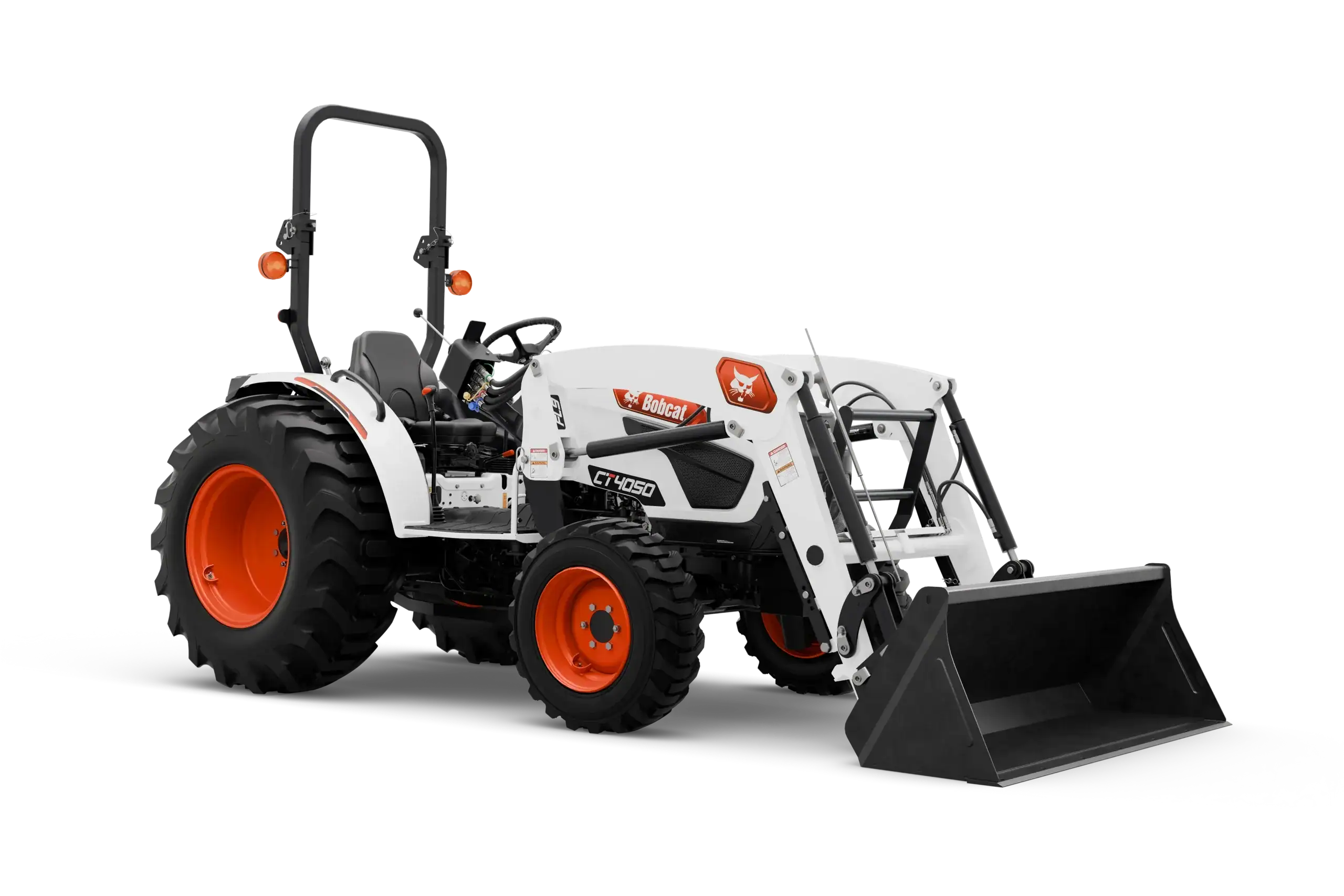
The Bobcat CT4050 is a compact tractor to investigate when rear-implement work and repeated property chores require a more substantial equipment package than a small acreage machine can provide. Its purchase case may involve a suitably matched mower, ground-working tool or material-handling arrangement, but the model name alone does not identify the right version.
Bobcat describes hydrostatic and manual synchro-shuttle choices. The detailed specification table reviewed for this guide identifies the manual 8×8 version. That boundary matters: a buyer should not assemble an imaginary tractor from the manual version’s PTO rating and the hydrostatic version’s attachment options. For Canadian ownership, decide the transmission, tools and operator environment as one package.
On This Page
ToggleCT4050 specifications for the identified manual configuration
| Item | North American detailed table |
|---|---|
| Gross engine / PTO power | 50.3 / 45.6 hp |
| Engine description | Turbocharged diesel |
| Transmission | Manual 8×8 synchro |
| Hitch | Category 1 |
| Hitch lift, 24 inches behind lift point | 2,716 lb |
| Implement / steering flow | 9.6 / 4.5 US gpm |
| Rear PTO speed | 540 rpm |
| Width / operating weight | 70.3 inches / 3,745 lb |
| Ground clearance | 15.3 inches |
Source: Bobcat’s CT4050 page, checked October 3, 2026. Its overview separately describes HST availability and a mid-PTO option on HST. The figures above should not be transferred to that alternative without its own documentation or applied indiscriminately to older serial numbers.
Begin with the rear implement, not the engine class
A tractor approaching this power level can invite a broad list of imagined jobs. Narrow that list to the implements that will actually be used. Identify each model, its power definition and range, hitch requirement, mass, driveline and any hydraulic functions.
For powered equipment, compare the required PTO output with the correct tractor version. For ground-engaging tools, the ability to lift the implement does not establish the ability to pull it effectively through the intended surface. For either type, the tractor and implement instructions must support the complete arrangement.
Use the normal demanding job as the first screen. An essential daily task should not be traded away for a favourable price, while one unusual annual job may be better served through another arrangement. This keeps a larger tractor purchase tied to productive use rather than a vague desire for reserve capacity.
Write the intended working duration and site alongside the tool. Repeated open-area passes, frequent manoeuvring near buildings and short intermittent jobs can favour different controls and equipment. The CT4050 should be evaluated within that routine.
Manual synchro shuttle needs its own driving assessment
The manual transmission label should not be confused with a hydraulic power shuttle or continuously variable hydrostatic travel. Establish the permitted direction-change, gear-change and range-change procedures from the exact manual. A convenient shuttle arrangement does not imply every shift can be made without a clutch or at any speed.
For steady implement work, examine the available ground speeds at the required PTO operating conditions. The number of gears is less useful than whether a suitable ratio exists for the regular job. A tractor that travels too quickly in the relevant working setup can be a poor match even when its power is adequate.
For loader work, evaluate a full collection-and-placement sequence. Observe how often the operator changes direction and adjusts speed, and how comfortably the controls can be used after familiarisation. Compare the actual sequence with an appropriate HST candidate rather than deciding from a transmission stereotype.
Aglist’s transmission guide explains the broader distinctions. Keep the tested configuration recorded. A favourable impression of one version is not evidence for every tractor sold under the same model name.
Mid-PTO requirements can decide the version first
Bobcat’s PTO feature page identifies an exception for manual-transmission 4000 Platform tractors in its mid-PTO availability description. This makes an attachment-led purchase especially important. A buyer needing a particular mid-driven system must resolve that requirement before selecting a transmission.
Do not assume a front-mounted tool is automatically powered from a front shaft or that every front tool uses the same drive arrangement. Obtain the actual mount, drive and control requirements. A compatible loader bracket does not approve a front snowblower or mower.
If a used advertisement includes a loose attachment, establish whether all required components are present and whether they fit that tractor. A seemingly inexpensive tool can become unusable if the required configuration is unavailable or the kit belongs to another version.
For Canadian winter work, the snowblower fitment guide is useful for separating these questions. A different transmission may solve an attachment requirement, but its PTO rating and controls then need their own review.
Rear lifting: preserve the measurement distance
The hitch number is measured 24 inches behind the lift point. That label matters when comparing a long implement with a compact one. A tool’s mass distribution and geometry influence the configuration; a single weight entry does not describe every handling condition.
Record the implement’s transport position, overall length and connection arrangement. Include a quick hitch if one will be used. The driveline must remain suitable for the actual geometry, and required ballast must follow the equipment instructions rather than an improvised weight rule.
Access matters at the rear as well as the front. A long implement can sweep beyond the tractor during a turn, and its storage position may require more space than expected. Draw the turn into the shed with the whole package rather than the tractor alone.
Where several older implements are being retained, inventory them individually. Standardised hitch terminology does not certify every old tool’s geometry, condition or modifications. A verified smaller tool collection is more useful than assuming everything already on the property will transfer.
Hydraulic options should follow a function list
The model table separates implement flow from steering flow. Preserve that separation when evaluating an attachment. The combined total is not a promise of continuous flow at every outlet.
Create a function list for the intended equipment. A rear blade may need angle or offset adjustment. A grapple needs controlled clamping. A hydraulic motor has permitted flow, pressure and return requirements. Each request should identify the circuit, connection and operator control that will perform it.
Rear hydraulics are listed as optional. Verify the fitted valves and controls on the exact machine, especially used. A quotation that says “hydraulic ready” is less useful than an equipment list identifying what will actually operate the tool.
If a necessary function is missing, price the full approved installation. A single component price does not include every hose, bracket, control and setup step. This can materially change the comparison between a lightly equipped used tractor and a more complete package.
Loader work: separate power from load placement
The CT4050’s engine output is not the deciding measure for a pallet or bale-handling job. Describe the complete load, its dimensions and mass distribution, the attachment and the required placement height. The appropriate loader information must cover that arrangement.
For bulk materials, select the bucket around the material and receiver. A light-material bucket used for a different dense product can create a substantially different load. Filling by appearance is not a substitute for the equipment’s documented operating conditions.
Measure the receiving edge and nearest approach. Bucket-pivot height is not dump clearance, and vertical clearance alone does not establish enough reach. An otherwise capable loader can be poorly matched to one essential trailer or bin.
Aglist’s loader-capacity explanation gives the measurement framework. Obtain the correct loader, carrier, attachment and ballast information before treating any summary lift entry as usable payload.
If material handling occupies most working hours, compare another equipment arrangement for that job. A tractor can remain valuable for PTO and ground work while a separate handling solution better serves repeated loading. The choice should follow the full workload, including ownership of any machine that will remain necessary.
Open station and Canadian working seasons
An open station can be convenient for intermittent jobs involving repeated entry and exit, but it also exposes the operator to the environment. Assess the regular work duration, dust, wind and weather instead of calling the arrangement universally comfortable or inconvenient.
Winter makes this especially important. A brief yard cleanup is different from a long exposed route that must be cleared before other work begins. If an enclosed heated station is essential, it belongs among the mandatory purchase requirements rather than the optional extras considered at the end.
For summer mowing or ground work, assess visibility to the implement and the operator’s repeated viewing movements. Try the actual seat and controls with normal work clothing. Comfort over a representative session provides better evidence than a brief parked inspection.
Plan seasonal preparation from the serial-specific manual. This guide does not infer an emissions system, fluid schedule or reliable starting temperature from another tractor with similar horsepower. Those details need the actual machine’s documentation.
Is the larger package earning its space?
Measure the route with front and rear equipment fitted. Include gate openings, turns beside stored equipment and overhead clearance. The tractor’s width is only one part of the working envelope.
Transport planning also changes with the complete configuration. Add loader, implements, ballast and other carried items to the actual hauling plan. The published operating-weight figure does not establish trailer suitability or a complete loaded combination.
For an equipment visit, bring three required tasks and mark each as essential or occasional. Record evidence that the proposed configuration meets each essential task. Do not average away a failed requirement by giving high scores for power or appearance.
A hypothetical convenience saving of ten minutes per work session, across 40 sessions annually, totals six hours and forty minutes. This is an illustration of how frequency affects value, not a measured CT4050 benefit. Use observed changes and actual quotations before assigning an equipment premium a financial return.
Alternatives, inspection and the final quotation
The John Deere 4044M and Kubota MX5400 are other arrangements to investigate for substantial compact-tractor work. Compare exact transmission, PTO, hitch, operator station and attachment equipment from current primary documents. Their guide pages help organise questions without proving equivalent capability.
A used CT4050 inspection should begin with serial identity and build details. Have a qualified assessment cover drive and clutch behaviour, PTO operation, hydraulics, hitch, front axle, loader mounts and repair evidence. Match records to the correct service information. These are inspection priorities, not allegations of a recurring model defect.
Inspect every included implement separately. Worn working parts, missing guards and incomplete mounting equipment can affect both suitability and cost. Price identified repairs rather than relying on a seller’s general assurance that the entire bundle is ready to work.
Request itemised Canadian quotations with tractor, transmission, loader, tools, hydraulic functions, ballast, setup and delivery. Keep financing terms separate. Include service access, transport and storage changes in the ownership decision, particularly when comparing different-sized packages.
CT4050 FAQ
Can I use the manual PTO rating for HST?
No. Obtain the figure for the actual version being purchased.
Does synchro shuttle mean hydraulic power shuttle?
Do not infer that. Verify the exact transmission and its operating procedures.
Is mid PTO available regardless of transmission?
Bobcat describes the option for HST and excludes manual 4000 Platform models in its feature information. Confirm the proposed attachment package accordingly.
Does the rear lift rating establish front-loader capacity?
No. The rear hitch and front loader have different geometry and rating conditions.
Who should consider the CT4050?
A buyer with recurring implement and property work that justifies its complete configuration, with suitable space and an operator environment that fits the working season.
Share your experience
Help other Canadian buyers — leave a quick review for the
Bobcat CT4050
There are no reviews yet. Be the first one to write one.