Overview & Specs
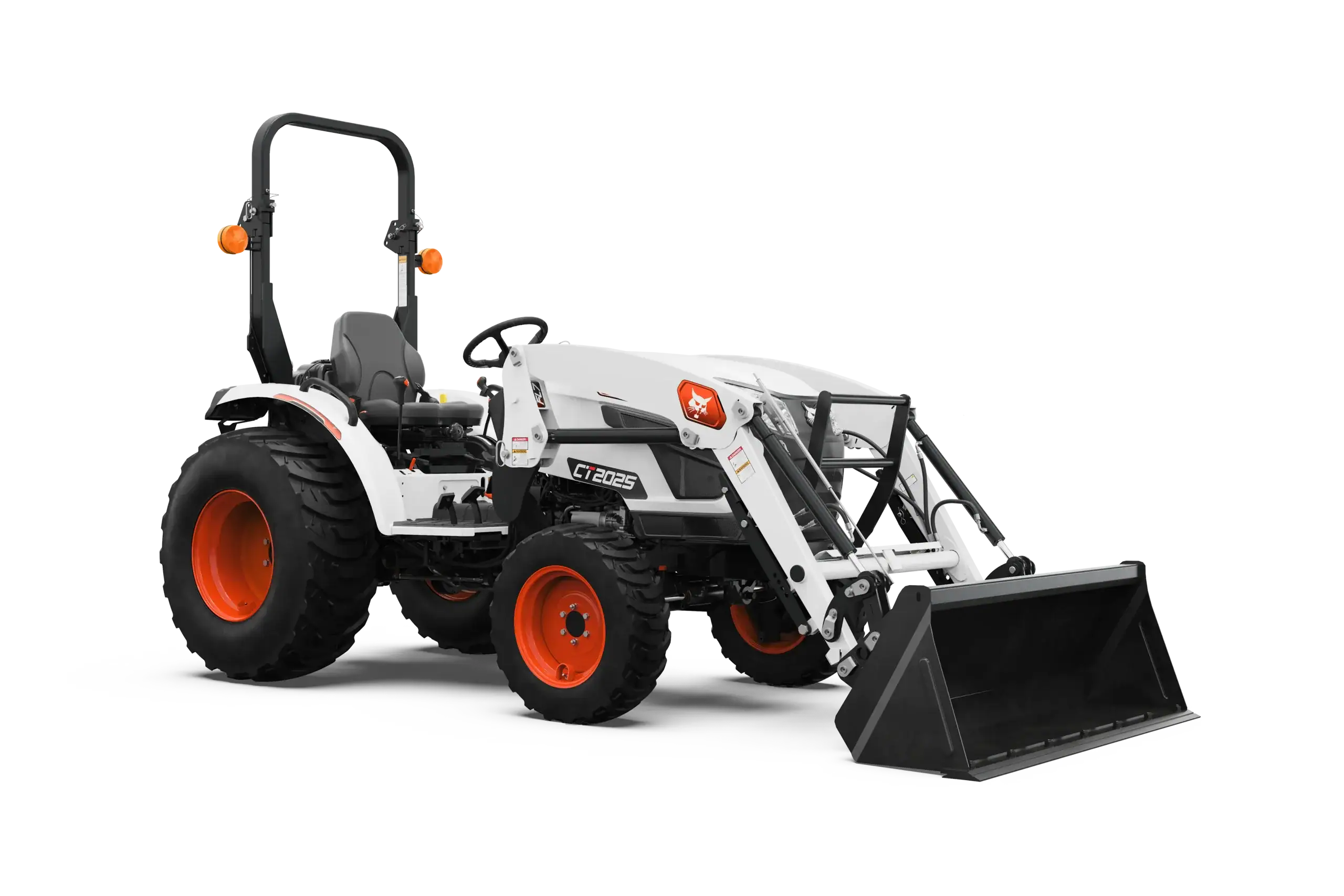
The Bobcat CT2025 is worth a close look when a buyer wants a compact tractor’s rear-implement arrangement and working footprint without choosing from engine horsepower alone. Its gross power sits in familiar sub-compact territory, but that number does not describe its chassis, hitch or attachment plan. For Canadian acreages, the useful question is whether the larger format fits regular lane maintenance, material chores and appropriately matched PTO work.
This model also requires a clear transmission choice. Bobcat’s detailed table separates hydrostatic and manual versions, including their PTO ratings. A quotation that merely says CT2025 leaves an important part of the purchase unresolved. Choose the actual tractor configuration and implements together.
On This Page
ToggleCT2025 specifications: preserve the two versions
| Item | Hydrostatic | Manual |
|---|---|---|
| Gross engine power | 24.5 hp | 24.5 hp |
| PTO power | 21.8 hp | 22.2 hp |
| Transmission | Three-range HST | 9 forward / 3 reverse |
| Hitch lift, 24 inches behind lift point | 1,631 lb | 1,631 lb |
| Width | 62.4 inches | 62.4 inches |
| Operating weight | 2,634 lb | 2,634 lb |
| Implement / steering hydraulic flow | 6.9 / 4.5 US gpm | 6.9 / 4.5 US gpm |
Source: Bobcat’s North American CT2025 table, checked October 3, 2026. The Category 1 hitch and rear PTO form the implement basis. Use serial- and configuration-specific information for used equipment. A published operating weight is not a loaded transport manifest.
Similar horsepower does not mean the same tractor
A property owner moving beyond lawn equipment may first compare models by engine size. That can conceal the reason to investigate the CT2025: the complete compact-tractor format. Begin instead with the implements, surface and working clearances required by the property.
A gravel lane, rough mowing area and regular material-storage job suggest a different equipment arrangement from a lawn with occasional garden work. The rear tools may need a different hitch geometry and the loader may need a different receiving envelope. Neither requirement follows automatically from an acreage total.
Draw the working route with the intended front and rear tools. Include turning near buildings and the approach to implement storage. A larger format can meet a tool requirement while becoming less convenient around landscaping. That tradeoff should be visible before the purchase rather than discovered after delivery.
Aglist’s sub-compact versus compact comparison explains the broader decision. For this model, put the essential rear tool and loading job at the top of the worksheet, then verify that the tractor fits the property around them.
Choose HST or manual from the repeated movements
For loader chores, count the approaches and reversals in a normal cycle. A hydrostatic configuration deserves a demonstration where the operator frequently changes travel speed and direction. Assess control reach and smooth positioning with the regular operator, not only a straight drive across a yard.
The manual version needs a different review. Examine the ratios, direction-selection procedure and the slowest suitable working pace at the required PTO conditions. Nine forward and three reverse speeds describe the available arrangement, not permission to perform every shift in the same way.
A useful comparison holds the task constant. Have the provider explain the approved controls for each configuration, allow familiarisation, and assess the complete sequence. An operator’s experience with one type can influence the first impression, so avoid deciding from the first few moments in an unfamiliar seat.
Do not select the manual version solely for its slightly higher PTO entry. That difference matters if a particular requirement makes it relevant; otherwise the working routine may be more influential. The transmission guide provides a fuller explanation of how controls and attachment requirements interact.
Rear tools: separate carrying, pulling and powering
Three questions belong beside every rear implement. Can the tractor carry it in the approved configuration? Can it supply the specified power or hydraulic functions? Does the complete combination suit the intended ground work? Passing one question does not answer the others.
A rear blade or box scraper may not require a PTO shaft, yet its working demand depends on the surface and adjustment. A tiller needs power and an appropriate driveline as well as a suitable hitch. A mower adds clearance, cutting duty and the rate at which material enters the tool.
The hitch figure is measured at a stated distance behind the lift point. Retain that label when comparing tractors. Do not treat it as a guarantee that any implement below the number can be carried, because geometry, required ballast and the tractor’s operating limits remain relevant.
For used implements, document the model and condition before assuming an existing collection transfers. Check hitch dimensions, any quick-hitch arrangement, driveline fit and missing hardware. The most useful package is a verified set of tools, not the longest attachment list in an advertisement.
PTO power can decide between apparently similar packages
Imagine a hypothetical implement specifying at least 22 PTO hp. The two model-table entries fall on different sides of that initial screen. This is an illustration of why version labels matter, not an endorsement of an unnamed tool or a recommendation to choose a marginal match.
First establish whether the tool actually means PTO horsepower. Some sales tables say only “tractor horsepower,” and the definition must be resolved from the manual or manufacturer. Then review the complete compatibility requirements and expected conditions.
A numerical minimum is not a promised work rate. Vegetation density, soil condition and desired finish affect the job. A suitable demonstration should represent the regular workload and use an approved combination. Slower travel can change how quickly material reaches a tool, but it cannot rewrite a minimum requirement.
Keep PTO location and availability explicit as well. A specification for a mid-PTO shaft is not proof that every used tractor has the required equipment fitted. If a particular attachment depends on it, identify the installed system and complete mounting kit in writing.
The hydraulic total contains steering flow
The table is especially useful because it separates implement and steering circuits. Adding those values produces the total, but that does not make the total a supply available to an attachment. This distinction matters when a powered hydraulic tool is being considered.
For a grapple, blade adjustment or rear hydraulic function, begin with the job the circuit must perform. Identify the required valve, control and connection. A loader joystick does not establish that an additional clamp function is installed, and a rear outlet visible in a photograph does not describe every capability.
For a hydraulic motor, collect permitted flow, pressure, return and case-drain requirements where applicable. Have the actual carrier arrangement assessed against them. Do not use a tractor’s total pump figure as a shortcut to compatibility with a skid-steer attachment.
Bobcat lists rear hydraulics as optional on the model page. That is a reason to inspect the build, especially used. Price the complete addition of a necessary function before comparing an unequipped tractor with a package that already includes it.
Loader selection starts at the receiving point
For material work, write down where each load ends up. Loading a low bin differs from discharging into a high-sided trailer. A front-loader summary number does not describe bucket clearance in the dumping position or the reach needed to place material inside the receiver.
Prepare a side-view sketch showing the receiving edge, target position and nearest permitted tractor approach. Identify the loader model, carrier and selected attachment. This produces a specific configuration question rather than a vague request for “enough lift.”
Fork work requires actual load information: gross weight, dimensions, load centre and placement height. Include the attachment and required ballast according to the manufacturer’s instructions. The loader measurement guide explains why pivot and forward measurements cannot be interchanged.
If occasional deliveries are the only difficult handling job, compare unloading arrangements separately. A supplier service may allow the tractor purchase to remain focused on frequent property tasks rather than an exceptional load.
Canadian seasonal work and the open station
The CT2025’s open operator arrangement deserves an honest assessment for the working season. Frequent short summer jobs may suit one owner well. A long exposed snow-clearing route creates a different comfort and visibility requirement, even if the mechanical task is within the equipment’s capability.
Choose the snow-handling method before buying an attachment. Pushing, carrying and blowing need different site arrangements. Include storage or discharge areas, later-season banks and the space available near parked equipment.
A rear snowblower also changes the driving and viewing routine. Check the exact power, hitch and driveline requirements, then assess the operator’s ability to perform the complete task. The snowblower fitment guide helps organise these separate checks.
Do not assume an aftermarket enclosure is equivalent to a factory cab. Establish documented fit, protective-structure compatibility and the actual heating and visibility provisions before making it part of the year-round purchase case.
Compare complete packages and inspect used equipment
The Kubota L2502, John Deere 3025E and New Holland Workmaster 25 are useful compact alternatives to investigate against the same attachment list. Similar gross power should not obscure differences in PTO rating, loader arrangement, controls and equipment availability.
For a used CT2025, verify transmission, serial identity, loader and fitted hydraulic functions. Have a qualified inspection cover drive and PTO operation, hitch, front axle, loader mounts, leaks and evidence of repairs. Review the maintenance records for that machine rather than a generic platform schedule.
No recurring defect or reliability ranking is implied by those checks. An identified concern needs diagnosis and an estimate. The hour meter, appearance and seller’s description should be considered alongside records and observed condition.
Price the tractor, tools, required controls, ballast, setup and delivery separately in Canadian dollars. Add storage, service access and transport if relevant. A complete transport load includes the configured tractor and everything carried with it; the published operating weight alone does not answer that question.
Finally, separate essential capabilities from future possibilities. A named implement with known requirements is a purchase input. An unspecified plan to add “something bigger” later is not enough to justify a different transmission or hydraulic package.
At handover, retain the fitted-equipment list with the manuals. This helps future attachment decisions use the actual tractor configuration rather than a generic model description.
CT2025 FAQ
Is it equivalent to every other 25-hp tractor?
No. Chassis, hitch, PTO output and attachment arrangements need separate comparison.
Which PTO figure should I use?
Use the entry for the actual transmission and confirm the particular build or serial documentation.
Can an attachment use the full total hydraulic flow?
Do not assume that. The table separates steering from implement flow, and an attachment needs its own circuit assessment.
Does Category 1 mean every tool is suitable?
No. It identifies an interface; geometry, weight, power and the complete operating configuration still matter.
When is this model a strong candidate?
When a verified compact-tractor attachment package fits the regular property work without needing a larger engine, cab or different handling platform.
Share your experience
Help other Canadian buyers — leave a quick review for the
Bobcat CT2025
There are no reviews yet. Be the first one to write one.