Overview & Specs
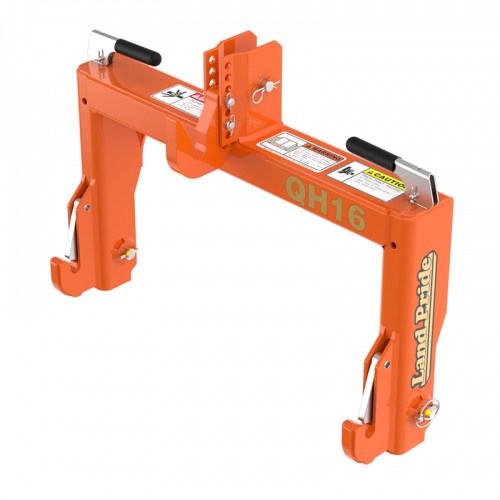
The Land Pride QH16 is a Category 1 quick hitch for a tractor owner who wants an adjustable upper hook and a documented system for repeatedly connecting compatible implements. Its strongest buying case is a mixed attachment collection that fits correctly after an implement-by-implement assessment. The adjustable hook offers useful flexibility, but it does not make every older Category 1 attachment compatible.
This guide uses Land Pride operator manual 320-003M dated August 15, 2023. It addresses the North American QH16 rather than transferring the lighter QH05’s limits or the larger QH20’s bushing requirements. The tractor’s own capabilities remain independent of the quick hitch’s rating.
On This Page
ToggleEvaluate the implement collection before the hitch
List the tools that actually change during a season, including model identity and any altered connection hardware. Separate the frequently changed attachments from equipment that stays on the tractor for months. The benefit of a quick hitch depends on connection events and correct fit, not simply on the number of implements owned.
Then identify what must still be connected manually. A PTO shaft, hydraulic hoses or an appropriate floating top-link arrangement can remain part of the changeover. A quick hitch may simplify alignment and the structural connection without making the entire process a seat-only operation.
This fleet-level approach can reveal the best purchase before comparing prices. If one frequently used attachment cannot fit through an approved arrangement, the owner needs to understand that exception. Buying the hitch first and treating every mismatch as a fabrication project reverses the decision.
The QH16 limits and dimensions
| Manual reference | What to retain |
|---|---|
| 20–60 tractor hp | The stated tractor range, alongside the tractor’s own requirements. |
| 7/8-inch Category 1 lower pins, without bushings | Do not import another hitch’s bushing prescription. |
| 2,000 lb at 24 inches behind the implement’s lower hitch pins | The reference point belongs with the capacity figure. |
| 70 lb without floating top link | Hitch weight must be accounted for. |
| Adjustable upper hook | Adjustment addresses specified geometry, not universal compatibility. |
| 9-inch overall length | The installed combination has a different geometry from direct mounting. |
The manual requires subtracting quick-hitch weight from the maximum allowed implement weight. Using the listed figures gives 2,000 minus 70, or 1,930 lb, before an optional assembly and any lower tractor or implement limit. The optional floating link is listed at 3 lb, which would reduce that simple subtraction to 1,927 lb.
These calculations are screening arithmetic at the stated reference condition. They are not a new tractor lift rating or permission to carry that mass at any distance. The lowest applicable limit and the complete tractor setup still govern the combination.
What an adjustable upper hook can solve
Upper-point position can be one reason an otherwise plausible attachment does not engage a quick hitch correctly. The QH16 provides a documented adjustment range for its top hook. That gives the buyer a useful configuration feature compared with a fixed-hook arrangement.
However, the hook also needs a clear path to the intended connection. Bracing, bolt heads, plate shape and other parts of an implement can obstruct it. Moving the hook vertically cannot resolve every interference or an incorrect lower-point arrangement.
Assess the actual implement rather than a nominal category label. An old attachment may have been repaired or converted since it left the manufacturer. Record the hardware fitted now, including sleeves or improvised spacers, and establish the correct arrangement before assigning compatibility.
A useful acceptance demonstration shows all intended points engaging and the lower locks securing correctly under the manufacturer’s procedure. Lifting an implement that happens to rest in the hooks is not equivalent to verifying the connection.
Why lower-pin bushings are not an automatic purchase
The QH16 specification describes the Category 1 lower connection without bushings. Other quick-hitch designs can use different hook dimensions and hardware. A generic video recommending sleeves for every Category 1 tool is therefore not a reliable shopping list for this model.
Inspect the pins on each implement and distinguish original parts from previous adaptations. Hardware that suited a different hitch may need assessment rather than being carried over automatically. The objective is the documented engagement and locking relationship, not simply eliminating visible clearance with additional metal.
Keep the correct hardware information with each attachment’s record. This is especially helpful when several operators use the tractor or when implements are bought and sold over time. A successful fit with one tool does not establish the correct arrangement for the next purchase.
Added distance changes the tractor-side question
A quick hitch sits between the linkage and implement. That changes the position of the attached equipment and can affect carrying behaviour and clearances. Do not assume that a tractor’s lift figure at the linkage ends applies unchanged to a load located farther behind it.
Obtain the tractor’s guidance for the actual arrangement, including ballast and attachment restrictions. The QH16’s own capacity cannot increase the tractor’s capacity. Equally, a powerful tractor does not justify exceeding the quick hitch’s limits.
Consider two implements with the same scale weight but very different rearward projection. Their effects on the complete tractor can differ. This is why an acceptance sheet should include configuration and geometry as well as mass, rather than reducing compatibility to a single subtraction.
PTO tools need a second compatibility assessment
The QH16 connects the hitch structure; it does not automatically connect or correctly size a PTO driveline. A mower or tiller used successfully in direct mounting needs assessment with the quick hitch fitted.
The relevant checks include the driveline’s required overlap, compressed clearance, operating angles and guarding through the prescribed range of movement. A shaft that reaches in one parked position can still be unsuitable elsewhere. Do not solve the problem by guessing how much shaft to cut or by borrowing another tractor’s measurement.
The RCR1260 guide illustrates why a powered attachment’s complete configuration matters. Its own hitch and floating linkage must be respected along with the quick-hitch and tractor instructions. Frame connection convenience does not waive the remaining setup.
Floating movement is different from hook adjustment
The optional floating top link addresses a compatible implement’s required movement. The adjustable hook addresses connection geometry. Those are separate questions, and a buyer should not treat the floating accessory as a universal cure for a poor fit.
A mower may need an approved articulation arrangement to follow contours, while a ground-engaging implement may need a different working relationship. Follow the applicable implement instructions rather than choosing whichever connection looks most rigid or easiest to attach.
Include the correct accessory, its weight and its connection routine in the package if required. A quotation that omits a necessary link can appear cheaper while describing an incomplete working system.
Build three acceptance groups
| Group | Assessment focus |
|---|---|
| Simple non-powered implements | Geometry, locking, mass, working movement and transport. |
| PTO implements | All structural checks plus complete driveline fit and guarding. |
| Hydraulically adjusted implements | All structural checks plus hoses, movement and correct hydraulic connections. |
For each tool, record a result of compatible, unresolved or unsuitable in the proposed arrangement. Do not average an unresolved tool into an otherwise successful collection. If that tool is used frequently, its exception can materially change the value of the hitch.
Photographs of the verified setup can help preserve the assessment. They should accompany identification and instructions rather than replace them. If a component changes later, reassess the relevant combination instead of assuming the original approval remains complete.
QH16 versus QH05
The Land Pride QH05 is a smaller reference with a stationary upper hook and different documented limits. Its lower weight can be useful on an appropriate small tractor, while the QH16’s adjustment and capacity can matter for another collection.
The comparison should not become “buy the higher rating just in case.” Match the tractor range, actual implements and geometry. A larger hitch is not an upgrade if it introduces an inappropriate combination or adds weight without solving a recurring need.
For the broader fitting process, see Aglist’s Category 1 quick-hitch guide. The QH16-specific decision remains whether the adjustable-hook design fits the actual collection within all applicable limits.
Canadian seasonal changeovers
Many owners alternate between summer maintenance tools and winter equipment. Plan parking locations that remain firm, accessible and suitable for each implement’s prescribed supports. A quick hitch cannot reliably compensate for attachments stored tilted in soft ground or blocked by other equipment.
Before the next seasonal connection, inspect hooks, locks and pins for damage, wear or obstruction. Storage does not prove that a latch will move and secure correctly. Follow the specified care and verification procedure rather than forcing a reluctant mechanism and assuming it is locked.
If more than one person operates the tractor, demonstrate the actual connection checks for each attachment. Familiarity with the hitch frame can otherwise encourage the mistaken assumption that every tool needs the same remaining connections and movement.
Used QH16 inspection
Identify the model and inspect the frame, hooks, upper-hook adjustment hardware and both lower locking mechanisms. Look for deformation, missing components or repairs that need competent assessment. These are condition checks, not a claimed model-specific failure history.
Verify that adjustment and locking components belong to the documented assembly. An aftermarket hook or modified bracket should not be valued as an improvement without establishing its suitability. The actual interface is what must carry and secure the implement.
Include the cost of fitting the implement collection, not just the used hitch price. Missing hardware or an unresolved powered-tool driveline can dominate the completed cost. Compare a documented ready-to-use arrangement with another complete option rather than comparing isolated frames.
Quantify convenience without inventing savings
Suppose a verified routine saves an assumed three minutes on each of forty annual changes. That represents two hours per year. At ten changes, it is only thirty minutes. These are illustrative inputs, not measured QH16 performance.
Convenience can still matter when the cash value of time is modest. Easier alignment and a more repeatable routine may be worthwhile to the owner. Keep those preferences explicit rather than claiming that the hitch will pay for itself through an unsupported labour saving.
A demonstration with the frequently used implements is the best final buying step. It should establish correct fit, manageable remaining connections and a workable parking routine. That evidence is stronger than the general promise of faster attachment changes.
Frequently asked questions
Does the adjustable hook fit every Category 1 implement?
No. Lower geometry, hook clearance, locking and working movement must also fit.
Is 2,000 lb the tractor’s lift rating?
No. It is the hitch’s stated reference figure, with the manual’s weight deduction and any lower equipment limits still applicable.
Should I fit lower-pin bushings automatically?
No. The referenced QH16 specification accepts its Category 1 lower pins without bushings. Verify the actual hardware.
Does it connect the PTO?
No. The shaft remains a separate connection and needs a fit assessment with the hitch installed.
What should settle the purchase?
A documented match with the tractor and the implements used most often, including the full working and storage routine.
Source
Specifications and capacity conditions were checked against Land Pride manual 320-003M, August 15, 2023. Arithmetic examples explain screening and convenience; they do not establish new equipment ratings or measured time savings.
Share your experience
Help other Canadian buyers — leave a quick review for the
Land Pride QH16
There are no reviews yet. Be the first one to write one.