Overview & Specs
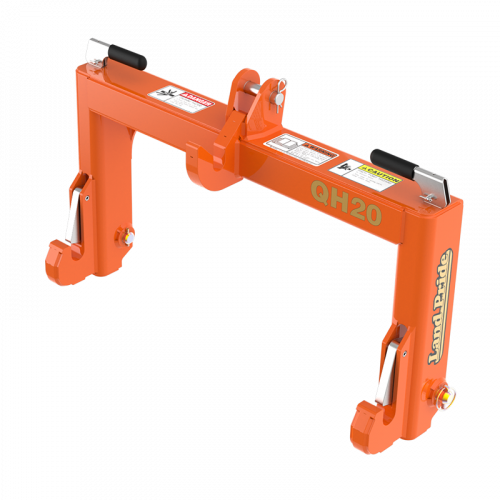
The Land Pride QH20 is a Category 2 quick hitch for an owner standardising a compatible implement collection. It is not simply a heavier QH16. The lower-pin bushing arrangement, fixed upper hook and different tractor range make it a separate fitting decision, particularly on a farm where smaller Category 1 tools and larger implements share storage space.
The strongest buying case is frequent changeover among tools that have been checked individually. The weakest is purchasing the hitch first and assuming every attachment can be made to fit later. This guide uses the North American QH20 documented in Land Pride operator manual 320-003M, dated August 15, 2023.
On This Page
ToggleStart with the implements that change most often
Create an inventory of the actual tools, including model, serial identification and modified hitch hardware. Put the most frequently changed equipment first. A tractor with six implements used once annually presents a different convenience case from one alternating between two attachments several times each week.
For each tool, separate the structural hitch connection from everything else required. PTO shafts, hydraulic hoses, transport arrangements and any approved floating linkage may remain manual tasks. A quick hitch can simplify the frame connection without making the full changeover a seat-only operation.
Also identify exceptions before purchase. If a frequently used implement cannot fit through an approved arrangement, the owner may repeatedly remove the quick hitch to use it. That does not automatically make the purchase wrong, but the exception belongs in the time and convenience comparison.
The QH20 reference figures
| Manual specification | QH20 |
|---|---|
| Tractor range | 40–110 hp |
| Hitch | Category 2; 1⅛-inch lower pins with bushings |
| Maximum stated lift reference | 3,600 lb at 24 inches behind the implement’s lower hitch pins |
| Weight without floating top link | 120 lb |
| Upper hook | Stationary |
| Overall width and length | 40 inches; 8⅞ inches |
The manual calls for subtracting quick-hitch weight from its maximum implement-weight figure. The simple subtraction is 3,600 minus 120, or 3,480 lb. With the listed five-pound optional floating link, it becomes 3,475 lb. These are screening calculations at the stated reference condition, not new tractor capacities or approval for every load shape.
Keep the reference point attached to the number. A capacity stated behind the implement’s pins is not interchangeable with a tractor figure measured at its own linkage ends. The complete combination remains governed by its applicable limits and setup requirements.
Bushings are part of the specified interface
The QH20 table explicitly describes its Category 2 connection with bushings. This differs from the QH16’s documented lower-pin arrangement. Do not transfer hardware advice from a smaller hitch simply because the frames look similar or the same manufacturer sells both.
Inspect what is already on each implement. A previous owner may have installed sleeves for another hitch, replaced pins or altered brackets. Identify the correct approved arrangement before adding more hardware. The goal is proper seating and locking, not merely filling visible space around a pin.
Include required hardware in the equipment record and purchase total. On a collection of several implements, seemingly small omissions can create repeated changeover problems. A complete quotation should identify which attachments are ready and which still require a documented solution.
A fixed upper hook makes geometry central
The QH20’s stationary upper hook is an important distinction. Assess the implement’s upper connection position and clearance together with the lower points. A nominal category label does not prove that bracing, bolt heads or plate shapes leave the required approach path.
Do not interpret a tool briefly hanging in the lower hooks as a completed fit check. The intended connection points must engage and the locking arrangement must secure correctly under the prescribed procedure. The assembly also needs its required working movement, transport clearance and freedom from interference.
When an attachment does not fit, record the actual reason. Upper-point interference, incorrect lower geometry and an unapproved conversion are different issues. A vague conclusion that the implement is “almost compatible” is not useful acceptance evidence.
Category 1 tools are not automatically upgraded
A mixed collection deserves an attachment-by-attachment review. The QH20’s larger rating does not convert a Category 1 implement into a Category 2 tool. Nor does fitting a sleeve establish that the rest of the geometry and structure are appropriate.
The QH16 guide describes a different connection system with an adjustable upper hook. That can be useful context when deciding whether one tractor and one hitch arrangement should serve the entire collection or whether some equipment needs a separate documented setup.
A practical inventory can use three outcomes: verified compatible, unresolved, and unsuitable in the proposed arrangement. Keep unresolved tools out of the assumed convenience benefit. If the owner depends on one of them during a busy season, its solution should be established before the hitch is ordered.
The tractor still has to carry the implement
The QH20 adds its own mass and places an interface between the tractor and implement. That changes the installed geometry from direct mounting. The tractor’s relevant lift, balance, ballast and attachment instructions must therefore be assessed for the actual arrangement.
Do not subtract the hitch weight from a tractor’s advertised capacity and declare the result approved. The tractor figure may use a different reference point, and the implement’s centre of mass may sit much farther behind. A long implement and a compact one of equal weight can create different demands.
Likewise, an attachment with a hopper or retained material needs its working load considered. Empty machine weight does not describe every operating condition. Record what the tractor will actually carry rather than using the lightest convenient specification in the comparison.
PTO compatibility remains a separate assessment
A powered implement requires more than an engaged frame. Adding the hitch changes the relationship between the tractor’s PTO and the implement. Check the applicable driveline length, overlap, compression clearance, angles and guarding through the prescribed movement using the exact tractor and attachment.
A shaft that reaches when parked may still be unsuitable elsewhere. Do not infer the required adjustment from another owner’s tractor or from the hitch’s overall length alone. The correct procedure concerns the complete installed geometry, not one nominal dimension.
This distinction is especially important when moving a familiar mower or tiller from direct mounting. Previous successful use establishes some history for that earlier setup, not automatic approval of the new one. Treat the quick-hitch installation as a configuration change that needs verification.
Floating linkage serves a different purpose
The optional floating top link addresses an approved implement’s movement requirement. It should not be treated as a universal adapter for an upper hook that cannot engage correctly. Fitting geometry and permitted articulation are separate questions.
Some implements need movement as they follow the ground, while others use a different working relationship. Follow the implement and hitch instructions together rather than making every assembly rigid for convenience or adding float because it appears to cure an interference.
Include the correct accessory and its connection routine in the demonstration when required. The time spent handling it belongs in the total changeover, and its weight belongs in the relevant load assessment. An offer omitting a necessary component describes an incomplete system.
Build an acceptance sheet around real tools
| Tool group | Evidence to record |
|---|---|
| Non-powered ground tools | Engagement, locking, weight, working movement and transport clearance |
| PTO equipment | All structural checks plus complete driveline verification |
| Hydraulic attachments | All structural checks plus connections and hose movement |
| Loaded implements | Permitted operating load as well as empty mass |
Use exact model identities in the sheet. “Box blade fits” is less useful than identifying the particular blade, pins and approved arrangement. The BB3584 illustrates why the implement’s own category and operating requirements remain part of the decision.
Photographs can preserve the verified arrangement, but should accompany the written identity and procedure rather than replace them. If a pin, bracket, shaft or tractor changes later, reassess the affected combination. Compatibility is a property of the assembled system, not a permanent label earned by one demonstration.
Parking determines whether convenience survives winter
Plan support and access for every implement. Firm, suitable parking positions make the next approach more predictable. A quick hitch cannot compensate for a tool leaning in soft ground, trapped behind other machinery or stored on inappropriate supports.
For Canadian seasonal changeovers, inspect the connection components before the next use. Obstruction, damage or reluctant lock movement should be resolved under the prescribed procedure rather than forced and forgotten. A mechanism that worked before storage still needs its normal verification.
If several operators share the tractor, demonstrate each attachment’s remaining connections and checks. Familiarity with the QH20 frame can otherwise encourage an assumption that every implement needs the same final steps. A short equipment-specific record helps preserve the differences.
Measure convenience without inventing a payback
Suppose a verified complete routine saves an assumed four minutes per change. At 60 changes annually, that is four hours; at 15 changes, it is one hour. These are illustrative inputs, not QH20 test results. Include any occasions when the hitch itself must be removed for an incompatible tool.
For example, if those exceptions add an assumed ten minutes on six occasions, an hour of the estimated annual saving disappears. The arithmetic does not determine whether the hitch is worthwhile, but it prevents a large implement inventory from being mistaken for a large convenience benefit.
Easier alignment and a more manageable routine can matter even when monetary savings are modest. State those preferences directly. Avoid assigning an unsupported labour rate, resale premium or guaranteed changeover time merely to produce an attractive financial result.
Inspect a used QH20 as a load-carrying assembly
Confirm identity and examine the frame, hooks, locks and connection hardware. Look for deformation, wear, missing parts and repairs requiring competent assessment. These are inspection priorities for the offered unit, not claims of a recurring model failure.
Check that the hardware corresponds to the documented assembly. An altered hook or welded modification should not automatically be valued as a compatibility upgrade. Establish the suitability of the actual load path and locking system before including the machine in a working package.
Compare complete costs: the hitch, necessary implement hardware, any approved floating connection, tractor-specific setup and identified repairs. A cheap frame with unresolved fit across the collection may be less useful than a fully documented alternative. Current Canadian price and availability are not assumed here.
Frequently asked questions
Is QH20 just a stronger Category 1 hitch?
No. It is a Category 2 system with its own geometry and hardware requirements. A higher capacity does not establish compatibility with smaller-category tools.
Does its upper hook adjust like QH16?
The cited QH20 specification identifies a stationary upper hook. Check the actual implement geometry before purchase.
Does 3,600 lb become the tractor’s new capacity?
No. The reference condition, hitch-weight deduction and all lower applicable tractor or implement limits remain relevant.
Will it connect the PTO shaft automatically?
No. The driveline remains a separate connection and requires verification with the hitch installed.
What is the best final buying test?
A documented demonstration with the implements changed most often, including the full connection, operating-clearance and parking routine.
Reference
Land Pride manual 320-003M, August 15, 2023, checked November 13, 2026. Capacity deductions and time examples explain screening; they are not new equipment ratings or measured savings.
Share your experience
Help other Canadian buyers — leave a quick review for the
Land Pride QH20
There are no reviews yet. Be the first one to write one.