Overview & Specs
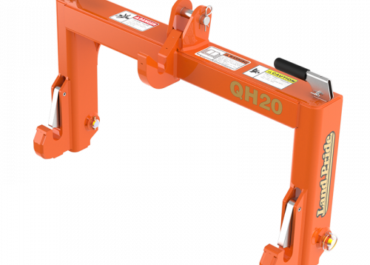
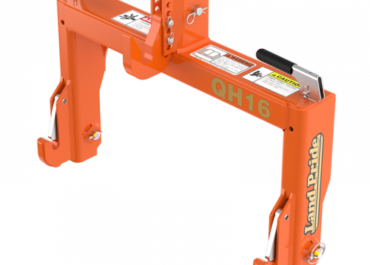
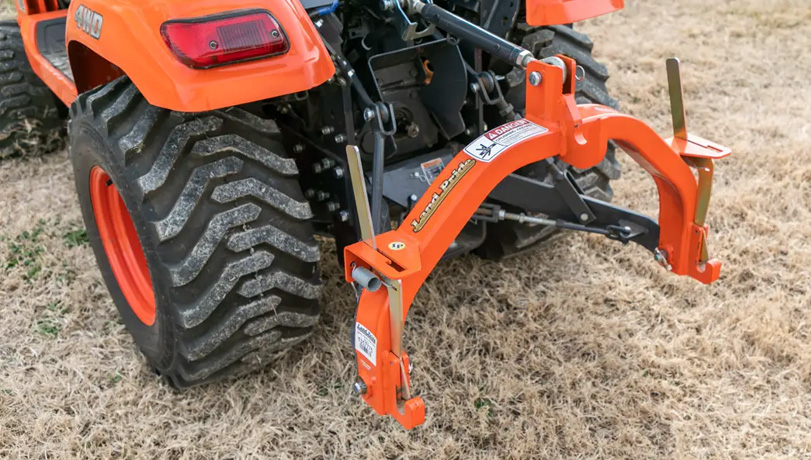
The Land Pride QH05 is a small Category 1 quick hitch for owners who change compatible rear implements often enough to benefit from a repeatable connection. Its appeal is low attachment weight and a straightforward hook-and-latch arrangement. Its main limitation is equally concrete: the upper hook is stationary, so an implement that does not present the correct geometry cannot be made compatible merely by raising the tractor’s hitch.
Before buying, treat the QH05 as a conversion of your implement collection. A satisfactory match with a box scraper does not establish a satisfactory match with a mower, tiller or an older attachment from another manufacturer. The purchase is strongest when the equipment used most often fits correctly, including its working movement, PTO shaft where present and parking arrangement.
On This Page
ToggleWhat the QH05 specification actually says
Land Pride’s August 15, 2023 quick-hitch manual covers several models. The following figures are specifically for the QH05, checked November 4, 2026.
| Item | QH05 | Why it matters |
|---|---|---|
| Tractor power ceiling | 28 hp | A maximum, not a minimum purchase target |
| Lower implement pins | 7/8-inch Category 1, without bushings | Do not copy another hitch’s bushing prescription |
| Listed capacity reference | 700 lb at 24 inches behind implement lower hitch pins | Reference location matters |
| Hitch weight without floating link | 37 lb / 17 kg | Weight must be included in the combination |
| Upper hook | Stationary | Implement geometry must match |
| Overall length | 7⅜ inches / about 19 cm | Complete assembly is not geometrically neutral |
The manual expressly requires subtracting quick-hitch weight from the maximum allowed implement weight. Using its listed figures, 700 minus 37 is 663 lb before considering an optional link and any lower tractor or implement limit. This arithmetic is a screening check, not a new universal lifting rating. A different load position is not automatically covered by the same number.
Three checks before the convenience argument
First establish that the tractor is an appropriate host under both manufacturers’ requirements. Second establish that the implement connects correctly. Third establish that the complete combination can work and move through its required range without interference or another mismatch. Only after these checks does it make sense to compare the time saved at each change.
This order avoids a familiar purchasing trap: observing that the tractor can raise an implement and treating that as proof of suitability. Raising a parked attachment says little about required clearances at another hitch position, an implement’s permitted weight or the tractor’s balance in transport. Keep the complete equipment combination in view.
For broader background, Aglist’s Category 1 quick-hitch compatibility guide explains the distinction between nominal category and a complete fit. The QH05 adds two model-specific questions to that discussion: does the fixed upper hook match, and does the small hitch’s documented capacity leave sufficient allowance?
The stationary upper hook is a buying filter
An adjustable upper hook can accommodate certain differences within its permitted arrangement. The QH05’s documented upper hook is stationary. That does not make it defective or unsuitable for its intended implements; it means the buyer needs to establish the correct geometry before delivery.
Record each implement’s identity and serial number, then compare the actual connection with the applicable drawings and compatibility information. The hook needs a clear path to the intended upper connection while both lower pins enter their hooks correctly. Bracing, bolt heads and the implement’s upper structure can matter as much as the nominal pin dimensions.
Do not approve a combination from the phrase “Category 1” in a used advertisement. Nor should a modified connection be assumed equivalent to the original design. If an implement needs an undocumented alteration to fit, that is a separate engineering and compatibility question. It should not be hidden inside a quote for an otherwise simple convenience accessory.
A useful purchase condition is a demonstration with the actual high-use implements. If those attachments are stored at home, supply clear photographs and measurements first, then arrange a proper fit assessment. Testing a different implement of roughly similar size answers a weaker question.
Lower-pin bushings: follow this hitch, not a generic video
The QH05 is documented to accept the relevant Category 1 lower pins without bushings. Other quick hitches can use different hook dimensions and require different hardware. Advice that is correct for a neighbour’s hitch may therefore be wrong for this one.
Inspect the pins actually installed on a used implement. The original specification may no longer describe its hardware after repairs or previous conversions. Identify any sleeves, spacers or improvised parts and determine whether the arrangement is correct for the QH05. A loose or obstructed fit should be resolved from the applicable documentation, not disguised by adding whatever hardware happens to be available.
The same principle applies to the latch. An attachment resting in a hook is not the same as a fully secured connection. The manufacturer provides the engagement and verification procedure; use that complete procedure rather than inferring security from the implement lifting off the ground.
Added distance affects more than the storage footprint
A quick hitch sits between the tractor linkage and implement. That changes the complete arrangement and can move implement mass farther behind the tractor. Do not assume that a tractor’s published lift figure at one measuring location remains available at every new location.
The useful information is the tractor’s capacity and attachment guidance for the actual setup, alongside the QH05 and implement requirements. A catalogue number at the hitch ends is not interchangeable with a figure measured farther back. Likewise, a nominally light attachment can have a long rearward projection that makes its geometry important.
Consider two hypothetical implements of equal mass: one compact and close to the hitch, the other extending much farther behind it. Their equal scale weights do not establish equal loading effects on the tractor. This is why a mass-only shopping list is incomplete. Record the attachment’s actual form and intended configuration as well as its weight.
Do not attempt to approve a marginal combination with a simple homemade lever calculation. Such arithmetic can explain why distance matters, but it does not supply the tractor’s missing capacity information or authorize a configuration outside its instructions.
PTO implements need their own fit assessment
The QH05 connects the three-point structure. It does not automatically connect a PTO shaft or make an existing shaft length suitable. A tiller that worked correctly when attached directly needs assessment with the quick hitch installed.
That assessment includes the driveline manufacturer’s required overlap, compressed clearance, operating angles and guarding across the prescribed range of motion. These are linked dimensions; a shaft that reaches while parked can still be unsuitable elsewhere in the range. Use the complete tractor, implement and driveline instructions and competent setup assistance where required.
The RTA1258 guide illustrates another reason to examine the implement separately: some tiller arrangements have conditions affecting offset when used with a quick hitch. Do not assume that connection convenience preserves every adjustment available in a direct-mounted configuration.
For a mixed implement collection, keep a record for each powered attachment. Identify its shaft and approved setup rather than treating all shafts as interchangeable. The time saved connecting the frame does not justify shortcuts on the remaining connections.
Floating top link: solve the correct movement problem
Land Pride lists an optional floating top link for the QH05. Its purpose belongs to compatible implements that require the relevant movement; it is not a universal remedy for an upper hitch point that does not fit.
Distinguish attachment geometry from working articulation. Geometry determines whether the attachment connects correctly. Articulation concerns how it must move while working. An implement may need a particular permitted top connection to follow contours, while another requires a different controlled relationship. The correct arrangement follows the implement’s instructions.
Include the optional assembly and its mass in the complete assessment if it is required. Also include the manual work involved in connecting it. “Quick hitch” does not mean every component on every implement can be attached without leaving the seat.
Build an implement-by-implement acceptance sheet
| Record | Question to close |
|---|---|
| Model, serial and actual hardware | Does documentation match what is installed? |
| Upper and lower engagement | Do all points engage and lock correctly? |
| Mass and load position | Are all relevant limits satisfied? |
| Working movement | Is any required floating arrangement present? |
| Powered connections | Has the driveline been checked for this setup? |
| Parking and reconnection | Can the implement be stored and reattached properly? |
This sheet is especially useful when buying several used implements over time. A later purchase should receive its own assessment rather than inheriting approval from the first attachment. Keep photographs of the correct setup with the records so missing or changed hardware is easier to identify.
How much convenience will your routine actually gain?
Count connection events, not just the number of implements owned. An owner with five attachments who rarely changes them has a different need from someone alternating between two tools each weekend. Include any attachment that still requires manual PTO, hose or floating-link work.
As a hypothetical example, suppose a verified routine saves four minutes per change and there are 30 changes annually. That is 120 minutes, or two hours, per year. At six changes it is only 24 minutes. These are invented planning inputs, not measured QH05 performance or a promise that your changes will be equally fast.
Time is not the only consideration. Easier alignment may make appropriate attachment changes less burdensome. However, the benefit should be judged after correct parking and safe connection have been established. A quick hitch cannot reliably compensate for implements stored tilted in soft ground or obstructed by other equipment.
Outdoor storage and a Canadian seasonal routine
Choose firm, suitable parking locations using each implement’s prescribed supports. Leave enough approach space to align the tractor, and keep connection points visible. A carefully arranged implement row can improve the routine even before a quick hitch is installed.
Before a seasonal change, inspect the latch mechanisms and connection areas for contamination, corrosion, damage or obstruction. Winter storage should not be treated as proof that a mechanism will move and lock correctly in spring. Follow the specified care instructions; do not force an uncertain latch and then assume it has secured the attachment.
If another operator uses the tractor, show the correct verification for each attachment. A familiar frame can encourage an assumption that every implement behaves the same way. Clear identification and setup records are more useful than relying on the memory of the person who performed the original fitting.
Used QH05 inspection and alternatives
Inspect the frame, welds, hooks, pins and both locking mechanisms. Look for bending, excessive wear, repairs or missing components. These are condition checks, not a model-specific failure history. Any questionable structural repair deserves competent assessment before the hitch is used to carry an implement.
Compare the complete used package with a correctly specified alternative. Missing hardware and the cost of fitting the implement collection can outweigh an apparent purchase saving. A different hitch may be preferable if its documented geometry suits the fleet better, but a higher rating on that hitch does not increase the tractor’s capacity.
Frequently asked questions
Does QH05 fit every Category 1 attachment?
No. The category alone does not confirm hook clearance, upper-point geometry, working movement or complete tractor compatibility.
Is its 700-lb figure a tractor lift rating?
No. It is a hitch specification at a stated reference position, with the manual’s weight deduction. The tractor can impose a lower limit.
Should I automatically buy lower-pin bushings?
No. The QH05’s documented Category 1 lower connection is without bushings. Verify the actual implement hardware and correct arrangement.
Will it connect my PTO shaft?
No. The shaft remains a separate connection and requires assessment with the quick hitch installed.
Who should shortlist it?
An owner with a suitable small tractor and frequently changed compatible implements, especially when the fixed hook geometry and modest weight suit the whole collection. Compatibility established one implement at a time is the basis for useful convenience.
Share your experience
Help other Canadian buyers — leave a quick review for the
Land Pride QH05
There are no reviews yet. Be the first one to write one.