
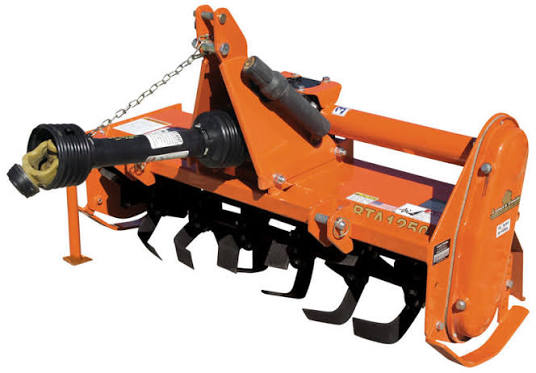
Overview & Specs
The Land Pride RTA1258 is a forward-rotation rotary tiller whose 58-inch working width makes it relevant to garden and planting-area preparation behind a compatible compact tractor. Its most important buying details are less obvious than width: the serial-specific specification, the tractor’s PTO rating, the intended bed layout and whether a quick hitch prevents the offset you expected to use.
For a Canadian acreage owner, this is a tool to evaluate around a defined soil-preparation job. Preparing an established garden, opening a previously unused area and maintaining narrow beds are not identical tasks. The tiller may be useful in more than one situation, but the starting condition and desired result determine whether the complete tractor-and-tiller package makes sense.
On This Page
ToggleIdentify the specification generation first
This guide uses the RTA1258 column in Land Pride’s April 17, 2024 specification sheet for serial number 884765 and later. The RTA table is separate from the RTR reverse-rotation table in the same document.
| Item | Documented RTA1258 |
|---|---|
| Recommended tractor PTO horsepower | 20–50 hp |
| Weight | 448 lb / 203.2 kg |
| Width between end plates | 58 inches / 1.47 m |
| Overall width | 63 inches / 1.60 m |
| Rotor | Forward rotation; seven flanges, four tines per flange |
| Hitch | Category 1 |
| Offset | Up to seven inches; centred with quick hitch |
| PTO operating speed | 540 rpm |
The older December 6, 2013 sheet lists 419 lb and a 20–40 PTO-hp range for its RTA1258. Those figures should not be mixed into the later configuration. Record the actual serial number and obtain the applicable manual and parts identification before approving a used purchase.
The current RTA12 product listing is useful for identifying the family, but a current sales page does not replace serial-specific documentation. This guide does not claim that every RTA1258 ever built has identical components.
PTO horsepower is the relevant power label here
The cited later table explicitly identifies tractor power-take-off horsepower. Compare that with the published PTO rating for the actual tractor transmission and configuration. An engine number on the hood is not the same measurement.
The Aglist PTO horsepower guide explains that distinction. It matters especially near the lower end of the range, where a tractor described casually as “25 horsepower” may have a materially different shaft rating.
Power is only one part of the match. Carrying the tiller, maintaining the required shaft speed, controlling suitable forward travel and accommodating the driveline all need to work together. A gearbox’s separate component rating does not override the tractor range or approve an otherwise unsuitable combination.
Within an approved combination, work rate still depends on the soil and intended depth. Do not convert a minimum power figure into a guaranteed speed through every garden. A representative demonstration should show the desired result at a manageable pace, not merely a rotor turning in the air.
Forward rotation identifies the machine, not an automatic winner
RTA and RTR are different series names. The RTA1258 discussed here is the forward-rotation machine. An advertisement that uses a photograph or specifications from the reverse-rotation model needs clarification before its weight, components or performance claims are accepted.
The direction of rotor rotation affects how the machine works the material, but it does not make one label universally superior for every soil and task. Evaluate the actual model, soil condition and required finish. Avoid choosing solely from a claim that a rotation direction always produces a better seedbed.
The practical question is whether the tiller leaves the area suitable for the next operation without unnecessary passes. If the intended work includes a particular residue condition or demanding soil, describe it explicitly when arranging a demonstration. A result in a clean, previously worked plot may not answer that question.
Working width, tyre tracks and the quick-hitch tradeoff
The 58-inch working width is not the same as the 63-inch outside width. The former matters for the strip being prepared; the latter matters for access, storage and clearance. Neither alone tells you whether the tractor’s tyre tracks will be covered in the planned sequence.
Measure the tractor’s actual outside tyre width and the proposed bed layout. With a centred tiller, consider both sides. With an offset arrangement, consider which track is covered and how the next pass will be made. Do not assume that an offset simply adds seven inches of new working width.
The documented ability to offset is conditional: the tiller must be centred when used with a quick hitch. That is a real buying tradeoff. If your plan depends on offsetting to cover a tyre track along an edge, adding a quick hitch can change the plan even though both products are individually described as compatible.
For example, a hypothetical tractor measuring 60 inches across its tyres is wider than the 58-inch nominal working strip. That two-inch difference does not automatically rule the combination in or out, but it means that pass layout and permitted offset deserve attention. The exact geometry should be assessed, not hidden by rounding both dimensions to “about five feet.”
Aglist’s quick-hitch compatibility guide covers the broader geometry questions. Here, the useful decision is whether easier attachment changes are worth giving up an offset arrangement required by the property.
Depth and soil texture are separate outcomes
A tiller can produce a fine-looking surface without achieving the desired preparation below it. Equally, working deeper than needed can add load and time without improving the intended planting operation. Define the target condition before deciding how many passes constitute success.
The operator manual describes adjustment of the skid shoes for depth and the rear tailgate and travel pace for the resulting texture. It warns against wet tilling and turning or backing with the tines engaged in the ground. Follow the complete setup and shutdown procedures rather than using this buying guide as an operating manual.
During a suitable demonstration, inspect a small section after the first pass. Examine depth, remaining clods, residue distribution and whether another pass is actually needed. The goal is a usable result for the next task, not the finest possible appearance for a photograph.
For an established garden, the recurring job may be relatively limited. For a new area, debris removal and other preparation may be necessary before the tiller is appropriate. Do not ask a rotary tiller to discover buried objects or remove obstacles that should have been identified first.
Seven flanges mean a complete tine set to inspect
Seven flanges with four tines each give 28 tines in the documented arrangement. That arithmetic is useful when inspecting a used machine: count the supplied cutting components and identify whether they match the correct parts specification.
Uneven wear, missing tines or mixed replacement parts deserve investigation. A machine can appear complete from above while having an inconsistent working assembly beneath it. Inspect only with the equipment shut down and supported as prescribed; never reach into an assembly that could move.
Assess the rotor, mounting areas, guards and evidence of wrapping or impact with competent help. These are general used-equipment checks, not claims that the RTA1258 has a particular recurring defect. The condition of the actual machine should drive the repair estimate.
When pricing replacement tines, include the correct fasteners and any related work identified by inspection. A low purchase price can become less attractive if the advertised machine needs a substantial portion of its working set restored before a fair demonstration is possible.
Garden size is less useful than the layout
A large open rectangle and several narrow separated beds can have the same total area but create different equipment needs. The tractor needs room to approach, work, exit and reposition. The tiller cannot be evaluated independently of that manoeuvring space.
Map the plot boundaries, permanent plants, paths and available headlands. Identify where the tractor can travel without undoing the desired result. A tiller that is nominally narrow enough for a bed may still be impractical if the complete combination cannot line up or turn appropriately.
Consider the repeated pattern over several seasons. If beds are likely to remain small and constrained, a different preparation method may be easier. If broad areas need regular work and the tractor is already available, the RTA1258’s width may fit a more efficient routine.
Do not enlarge a garden solely to justify the implement purchase. Start with the planting and maintenance plan, then select equipment that serves it.
A coverage calculation with honest assumptions
Suppose a hypothetical job achieves 1.35 metres of effective width after overlap at an appropriate 2 km/h travel speed. Straight-line coverage is 1.35 × 2,000 = 2,700 square metres per hour. At an assumed 60% field efficiency, that becomes 1,620 square metres per hour.
A 600-square-metre plot would then require about 22 minutes for one working pass. If the desired result needs two comparable passes, the working portion becomes roughly 44 minutes, before attachment, inspection, turns not already represented and cleanup. These are planning assumptions, not measured RTA1258 performance or recommended settings.
The calculation shows why the number of necessary passes matters. A faster first traversal may not save time if it leaves a result requiring additional work. For a small plot, connection and preparation may also exceed the time spent actually tilling.
Use an observed suitable pace and real pass count when comparing ownership with rental or a service. Avoid claiming hourly productivity from catalogue width without accounting for the intended result.
Canadian seasonal use: readiness before the working window
If the tiller is used only a few times each year, arrange inspection and maintenance before the intended planting period. Discovering missing guards, a questionable driveline or worn tines when the soil is ready can be more disruptive than the repair cost itself.
Prepare a storage location that keeps the parked implement stable and allows a practical connection routine. Follow the manufacturer’s storage and support instructions. A machine that is difficult to connect may be avoided even when it would otherwise be useful.
Keep flexibility in the schedule. Soil condition, not the calendar date alone, determines whether the planned operation is appropriate. If the first available weekend is unsuitable, forcing the job to fit that date can produce a worse result than waiting.
Used purchase and complete-package cost
Record model and serial number, then inspect the hitch, stand, rotor, tines, driveline, protection assembly, gearbox and chaincase for the actual configuration. Look for leaks, damage, missing parts and undocumented changes. Have uncertain findings assessed before treating them as minor service items.
Request the maintenance history and identify which instructions apply to the fitted slip clutch and drive components. The presence of a protection device does not establish that it has been maintained correctly. Restoration and proper setup should be included in the comparison with another machine.
A complete quotation includes delivery, required hitch or driveline work and identified repairs. If a quick hitch is proposed, include the effect on offset as well as the price. Convenience that prevents the planned bed-working pattern is not a useful saving.
For infrequent use, compare rental availability and a local service with ownership. The tractor’s existing role matters: an attachment for an already justified tractor is a different financial decision from buying the entire tractor primarily for a small garden.
Frequently asked questions
Why do advertisements show different weights?
The official older and later documents differ. Identify the serial range and actual configuration instead of combining the most convenient figures.
Can I offset it while retaining a quick hitch?
The cited later specification requires the tiller to be centred with a quick hitch. Plan the pass pattern around that condition.
Is engine horsepower enough for matching?
No. The cited range is explicitly PTO horsepower. Check the exact tractor’s shaft rating and the remaining compatibility requirements.
Does more tilling always improve the result?
No. Judge depth and texture against the next operation. Extra passes should answer an identified need rather than serve as a routine measure of thoroughness.
When is the RTA1258 a convincing choice?
When the documented configuration fits the tractor, the working width and permitted offset fit the plot, and recurring preparation work justifies the storage and maintenance. A correct serial match and a representative result are stronger evidence than a generic horsepower recommendation.
Share your experience
Help other Canadian buyers — leave a quick review for the
Land Pride RTA1258
There are no reviews yet. Be the first one to write one.
