Overview & Specs
The John Deere 4052R is worth examining when the tractor changes jobs often and the operator’s working environment is part of the purchase decision. A Canadian property may need a mower one day, a rear blade the next, then a loader and snow equipment as the season changes. In that routine, attachment handling, travel control and a suitable cab can matter as much as the engine’s place in the range.
The useful question is not whether the R badge is more desirable. It is which recurring inconvenience the quoted configuration removes. This guide focuses on that decision, with particular attention to eHydro-specific features, cab selection and the difference between a convenient hitch system and a fully compatible implement.
On This Page
Toggle4052R: the configuration behind the model name
| Item | Current Canadian model-page entry |
|---|---|
| Gross engine output | 37.9 kW / 50.8 hp / 51.5 PS |
| PTO output | 40.8 hp PowrReverser; 39.1 hp eHydro |
| Implement hydraulic flow | 42.3 L/min |
| Rear hitch | Category 1; 1,135 kg at 24 inches behind link arms |
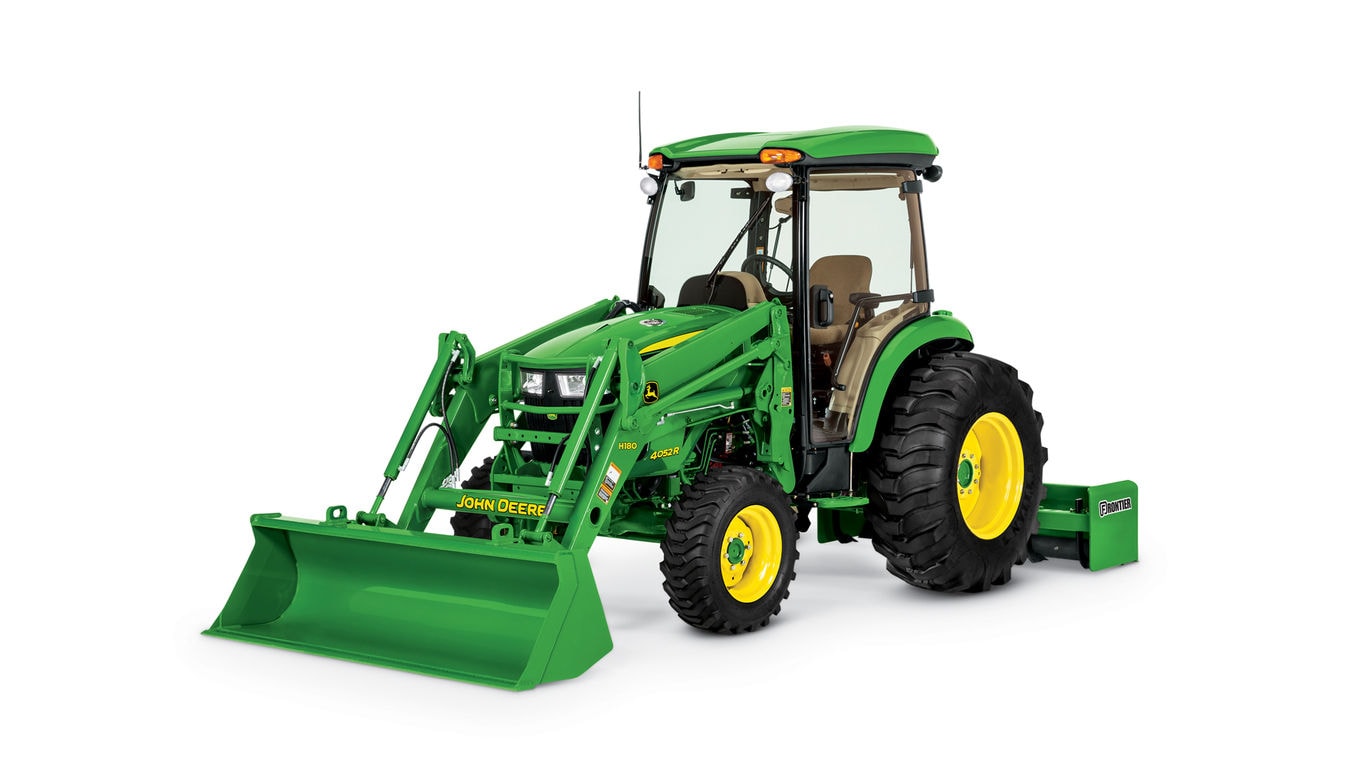
| Station choices | Open station; ComfortGard cab described for eHydro |
| Attachment-assistance features | Hitch Assist and auxiliary hitch control described as base equipment on 4R eHydro models |
Source: John Deere Canada’s 4052R specifications and feature descriptions, checked October 1, 2026. Do not combine equipment from different transmission or station descriptions into an assumed universal specification. A used machine needs its own build and serial documentation.
Map the changes between jobs
Start with a normal week. If the tractor moves from mowing to grading, then to loader work, write down each change of attachment and where it happens. The connection procedure may take only a small part of the day, but an awkward storage arrangement can make short jobs disproportionately troublesome.
Now identify the source of the inconvenience. Is it lining up the tractor, adjusting the hitch, connecting a driveline, handling hoses or finding enough space? Different features solve different problems. A positioning aid does not remove the need to connect a PTO shaft. A quick hitch does not organise a crowded shed. This breakdown helps decide whether an equipment premium will actually be used.
A hypothetical time calculation can make the discussion concrete. If an improved, approved workflow saves eight minutes on each of 60 annual changes, the total is 480 minutes, or eight hours. That is an illustration, not a measured 4052R result. Substitute your observed changeover times and frequency before assigning financial value.
The exercise also exposes simpler improvements. Better implement stands or a level storage area may solve a problem regardless of tractor model. Compare those changes with the convenience offered by the quoted tractor rather than attributing every improvement to a badge.
Hitch assistance is useful, but implement fit still comes first
The attachment-assistance features are a reason to inspect an eHydro configuration carefully. Have their approved operation demonstrated with the relevant manuals and interlocks. This guide does not replace the procedure for operating controls from outside the seat, and such equipment should never be treated as permission to stand in an unsafe position.
Before evaluating speed of hookup, check the implement itself. Record hitch geometry, pin sizes, any required bushings, mass and overall length. For a powered attachment, check driveline compatibility with the selected hitch arrangement. An attachment that connects easily is not necessarily suitable for the tractor.
Consider mixed implement collections. A buyer who already owns several older tools should inventory them individually instead of assuming all will work with one quick hitch. Some may need documented compatible hardware; others may be better left out of the package. Resolve this while comparing equipment, not after delivery.
There is also a storage question. Can the tractor approach each implement squarely, and is there enough space for the approved connection procedure? Convenient controls cannot compensate for a layout that forces repeated manoeuvring or leaves inadequate access.
Cab selection: evaluate a real winter work session
A cab can be central to the 4052R purchase for an owner who expects frequent winter work. Evaluate it from the operator’s position with the intended attachment in view. Look at the area near the front tool, the rear working zone and the route used to approach a building. Good visibility in an empty tractor is only part of the assessment.
For snow clearing, identify the method before the equipment. A blower, blade and bucket each create a different viewing routine and discharge or storage requirement. A rear attachment may require sustained looking behind. Try that movement in the seat rather than assuming that an enclosed station automatically resolves operator fatigue.
Check heating, defrost, wipers and door operation on the machine being purchased. On used equipment, include seals, glazing and the function of the installed controls in the inspection. A cab has practical value when it works properly; its presence in a photograph does not establish condition.
Measure the storage entrance and include clearance for the actual configuration. Do not plan to modify protective structures to make a tractor fit. If the machine cannot use the existing building, a different storage arrangement belongs in the total purchase cost.
PTO requirements can influence the station decision
Because the cab description is associated with eHydro, decide the operator-station requirement before assuming the larger of the listed PTO figures applies. This is a configuration decision, not just a preference for one control layout.
Suppose a hypothetical attachment requires at least 40 PTO hp. The two published entries do not provide the same initial answer. If the cab is essential, do not use the alternative transmission’s rating to approve the intended package. Establish a documented compatible tool or reconsider the tractor configuration.
After power, examine tool weight, hitch connection, driveline and operating requirements. For mowing, access and finish can be as influential as width. For tilling, the attachment’s compatibility instructions and the work conditions should guide selection. The Aglist tractor-size guide helps organise these requirements without reducing them to acreage alone.
Loader work: resolve the complete 440R specification
Deere markets the 440R for this family and describes its removable design. However, the public specification table checked for this guide contains inconsistent metric and imperial lift entries. This guide therefore does not turn the largest visible number into a verified 4052R fork payload.
Request the load information for the actual tractor, loader, carrier, attachment and required ballast. For pallet work, include complete goods and packaging weight, load centre and placement height. For bucket work, include the receiving body’s height and the clearance needed when the bucket tips.
This is a practical purchasing requirement, not a reason to abandon the model. A written, configuration-specific answer allows meaningful comparison with another package. A vague assurance that the loader will “lift roughly a tonne” does not answer a job involving a long pallet placed at height.
When removal is part of the routine, assess the parking location and the approved connection procedure. Ask which stands, couplers and equipment are included. A removable loader only contributes convenience when the property provides somewhere suitable to leave it.
Choose hydraulic functions from the tools
Create a function list alongside the implement list. A grapple’s clamp, a rear blade’s adjustments and a hydraulic motor are different demands. Identify the control, supply and return arrangement for each, including any special requirements in the tool documentation.
Then inspect what the quoted machine actually has. A general statement about available remotes is not confirmation that the required valves are installed. Likewise, a total flow figure should not be treated as the output available at every connection under every operating condition.
For a used tractor, adding functions can affect the economics. Obtain a complete parts-and-installation quotation for necessary equipment rather than pricing a single valve and assuming the remaining work is trivial. The best-value package is the one that meets the attachment plan at a known total cost.
Three property scenarios
Frequent short jobs with several rear implements
Prioritise hookup workflow, storage layout and control familiarity. The 4052R’s eHydro attachment-assistance equipment merits a demonstration, but measure its value against the exact steps that currently slow the work. A tidy attachment area may be as valuable as an additional tractor feature.
Winter access plus summer mowing
Start with the cab requirement and the two principal implements. Verify both combinations, then examine changeover between seasons. The snowblower fitment guide helps distinguish mounting, power and control questions. Do not buy a tractor first and discover later that the desired snow arrangement is incomplete.
Mostly material handling
Make the heaviest normal load and placement geometry the first screening criteria. If the loader package does not meet them, convenience equipment cannot compensate. Consider a different handling system even if the 4052R remains attractive for the other property tasks.
Alternatives, condition and total cost
A John Deere 3039R may deserve comparison where a different-sized platform already meets the work. The Kubota L5070 and New Holland Boomer 50 can help broaden the shortlist. Use current primary specifications and complete quotations for the exact versions.
Compare the feature premium against recurring benefits. If the cab supports work the operator otherwise cannot comfortably complete, that may be a compelling reason. If hitch convenience solves a frequent changeover problem, it may also matter. If neither is relevant, a simpler tractor with better implements may be the stronger purchase.
On a used 4052R, verify installed features and their operation rather than valuing them from the current brochure. Inspect the tractor and loader mechanically, review serial-specific service records, and have faults assessed before purchase. These are general inspection priorities; no recurring defect or reliability ranking is claimed here.
Include delivery, setup, essential tools, future service access and storage in the budget. Keep equipment price separate from financing. A monthly payment is only comparable when deposit, term and included equipment are comparable too.
For a useful comparison visit, bring a written sequence of three attachment changes you perform regularly. Have the provider explain which steps the quoted equipment changes and which remain manual. Record missing hardware and the storage space each tool needs. This makes the value of the convenience features visible without assuming a time saving before you have observed the workflow.
4052R FAQ
Are all advertised R-series features fitted to every 4052R?
No. Equipment depends on transmission, station, build and options. Verify the actual machine.
Does Hitch Assist remove all manual attachment work?
No. Positioning assistance does not connect every hose, driveline or implement component. Assess the complete approved workflow.
Can I use a PowrReverser PTO rating for a cab eHydro quote?
No. Use the output and equipment information for the version being purchased.
Why is there no simple pallet capacity here?
The load must be assessed for the complete arrangement, and the public loader table contains inconsistencies that need resolution before operational use.
Who benefits most from considering this tractor?
An owner whose recurring work justifies the operator environment and attachment-change features, and whose implements fit the documented configuration.
Share your experience
Help other Canadian buyers — leave a quick review for the
John Deere 4052R
There are no reviews yet. Be the first one to write one.