Overview & Specs
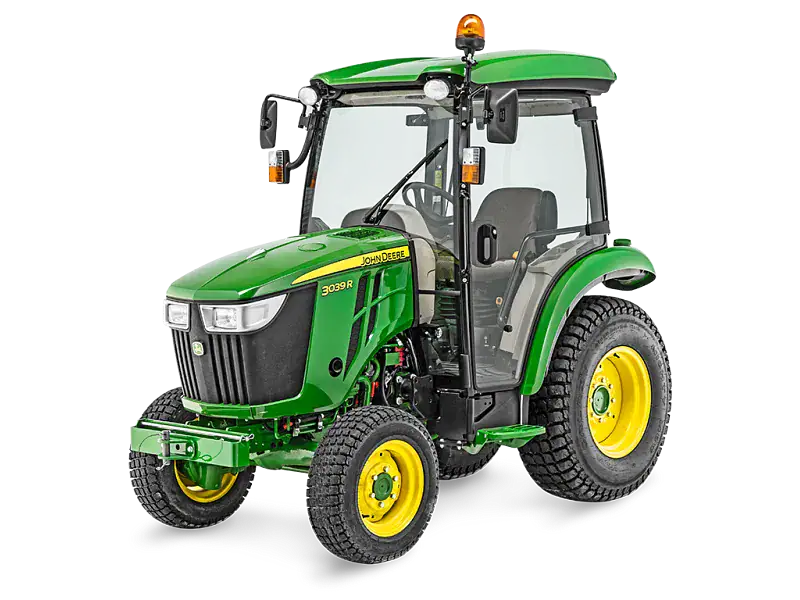
The John Deere 3039R is a compact tractor whose transmission choice can change the attachment plan as well as the driving experience. A buyer comparing quotations should decide early whether the work calls for PowrReverser or eHydro, then confirm the operator station and PTO equipment available with that choice. Treating every 3039R as one interchangeable specification can lead to buying the wrong configuration.
For a Canadian acreage or small farm, this model is worth examining when operator features, rear-implement capability and a more adaptable equipment package matter alongside engine output. Its appeal is not simply a larger number on the hood than an economy compact. The useful comparison is what the complete configuration lets you do through the year.
On This Page
Toggle3039R specifications: show both transmission versions
| Item | John Deere Canada specification |
|---|---|
| Gross engine output | 28.5 kW / 38.2 hp |
| Engine | Approximately 1.57 L, three-cylinder turbocharged Yanmar diesel |
| PTO output, PowrReverser | 24.4 kW / 32.8 hp |
| PTO output, eHydro | 22.2 kW / 29.8 hp |
| Transmissions | 12 forward / 12 reverse PowrReverser; optional three-range eHydro |
| Implement hydraulic flow | 34.3 L/min / 9.1 US gpm |
| Category 1 hitch lift | 995 kg / 2,194 lb at 24 inches behind link arms |
Source: John Deere Canada’s 3039R page, checked September 30, 2026. It lists cab models with eHydro and a mid-PTO option for eHydro, not PowrReverser. Confirm the actual build; the table is not a claim that every listed feature is installed on every tractor.
Choose the transmission before the attachment package
The first question is how ground travel changes during your normal work. Repeated loader approaches, short manoeuvres and variable feed into a PTO implement create a different control requirement from long, consistent passes. Both transmission types deserve assessment in the work they will actually perform.
A hydraulic shuttle changes the direction-selection experience without making the transmission infinitely variable. A hydrostatic arrangement offers continuously adjustable travel within a selected range. The appropriate choice depends on the work and operator, rather than a claim that one system is universally easier, stronger or cheaper to own.
There is also a configuration consequence. A buyer planning an attachment that depends on a mid-PTO should establish that requirement before choosing the tractor. It is not a detail to discover after negotiating an attractive PowrReverser offer. Likewise, a buyer who wants a cab should compare the documented cab-and-transmission package instead of combining preferred features from unrelated advertisements.
A useful quotation starts with the required tasks and explicitly lists the transmission, operator station, PTO equipment and hydraulic functions. That gives the equipment provider a configuration to verify and gives you a clear basis for comparing offers.
PTO power: compare the version you will own
The separate ratings in the table are why a generic “3039R horsepower” search does not settle implement selection. Use the output for the transmission being quoted, then compare it with the implement manufacturer’s stated requirement. Check whether that requirement refers to engine output or PTO output.
For a hypothetical implement requiring at least 31 PTO hp, the two published transmission versions do not pass the same initial power screen. That does not approve either complete combination; hitch, implement mass, driveline, ballast and the intended duty still need assessment. It demonstrates why a configuration detail can matter more than a small difference in the headline engine number.
Do not turn the rating difference into a universal fuel-efficiency percentage. Rated PTO output is not a measurement of fuel consumed on your property. A useful economic comparison would need a comparable task, operating conditions and measured fuel or credible task-specific data.
Rear implements: lift capacity is only one checkpoint
The stated hitch rating uses a measurement point behind the link arms. Keep that location attached to the number when comparing tractors. A capacity measured directly at the links describes a different test condition and should not be placed in the same comparison column without explanation.
For each implement, record its weight, overall length, connection geometry and power requirement. Establish the manufacturer’s tractor and ballast instructions. A long rear implement can change clearance, turning and balance even when its mass initially looks acceptable against a hitch specification.
Think about the route from storage to work. Can the complete tractor-and-tool arrangement enter the gate, turn into the shed and avoid the obstacles on the actual route? If a quick hitch is proposed, confirm compatibility with the implement and driveline arrangement rather than assuming Category 1 terminology guarantees a complete fit.
The broader Aglist tractor buying guide is useful for building the task list. For the 3039R, the important next step is to make that list specific enough to choose between its configurations.
The 320R loader needs its own configuration check
Deere identifies the 320R loader as compatible with the 3R family and describes its Quik-Park removal system. However, the same public page’s detailed table identifies a different tractor, the 4105, and does not align cleanly with the headline lift figure. This guide therefore does not present that table as a verified 3039R load chart.
Obtain the loader information for the actual tractor, tyres, ballast, attachment carrier and tool. For forks, include the full load, attachment weight, load centre and required placement height. A headline loader capacity is not the permissible goods weight for every pallet arrangement.
For bucket work, examine the receiving body and discharge geometry. Maximum pivot height is not dump clearance, and the bucket shape affects where material lands. Measure the real trailer or container and include any obstruction that limits the approach.
Loader removal can matter if the tractor frequently changes from material work to mowing or other jobs. Evaluate the approved parking process, the surface and storage space it needs, and whether the regular operator can use the system comfortably. A convenient removal feature has little value if there is nowhere suitable to park the loader.
Cab or open station: make the choice from the working season
A cab can be a major part of the purchase case where winter clearing or extended exposed work occupies substantial time. Evaluate the actual heating, defrost, visibility and controls of the quoted machine. The relevant question is whether the operator can perform the expected work comfortably and see the task, not simply whether the tractor has glass around the seat.
Check the attachment in the working position. A front tool can change the view ahead; a rear implement can require frequent looking behind. Assess that movement from the seat with normal work clothing. Include entry and exit, storage clearance and access to the controls used most often.
An open-station configuration may fit a different workload and budget. Compare the conditions in which it will be used, rather than treating a cab as automatically necessary for every Canadian owner or as a luxury for every buyer. The hours and season of actual work should lead the decision.
Hydraulic equipment: distinguish pump flow from installed functions
A larger implement-flow figure can be relevant to the work, but it does not identify which valves, connections or controls are installed. List the hydraulic functions required by the loader and rear tools, then specify the equipment that operates each one.
For a grapple, the mounting interface and clamp-control supply are separate compatibility checks. For a rear implement needing more than one function, identify how each circuit will be controlled. Also establish the required return arrangement and pressure limits from the attachment documentation.
Do not add the steering and implement flow figures and present the total as available flow at a remote. The connection being used and the actual hydraulic arrangement matter. A good delivery check demonstrates each quoted function with the correct tool or an appropriate verification procedure.
How the 3039R fits a Canadian work plan
Regular mowing with frequent manoeuvring
Start with the mowing system, route and desired finish. If the intended tool needs a particular PTO location, make that a mandatory configuration requirement. Then compare travel control, operator visibility and changeover time. Avoid selecting a transmission first and trying to redesign the mowing plan around it later.
Mixed loader and rear-implement work
Build a weekly sequence rather than a collection of isolated attachment claims. Identify where tools are stored, which functions they need and how often the tractor changes tasks. This exposes whether a more convenient connection or control arrangement would solve a repeated inconvenience.
Winter clearing
Choose the snow-handling method and discharge or storage plan first. Verify the exact blower or blade package, including mounting and power supply. Aglist’s snowblower fitment guide helps organise those questions. Include later-season snowbanks when measuring the route, because the available working space can change substantially.
Compare a complete 3039R with complete alternatives
The John Deere 2038R is worth examining where a different compact platform and attachment arrangement may better suit the property. The Kubota L3902 offers another task-led comparison, while the Workmaster 35C can enter a value-oriented shortlist.
Use current primary specifications for the actual versions being quoted. Compare PTO requirements, loader documentation, rear-tool suitability and operator station before discussing price. Similar gross power is not proof that the same attachments, cab choices or functions are available.
When a more expensive configuration wins the comparison, write down the recurring task it improves. That makes the premium reviewable. If the explanation is only a list of features with no connection to your work, the purchase case needs more thought.
Used-machine inspection and ownership planning
Record serial identity and installed equipment before inspecting a used 3039R. Establish which transmission and PTO arrangement it actually has. Have a qualified inspection cover relevant drivetrain operation, hydraulics, loader mounting and pivots, hitch, tyres and repair evidence. Check cab functions where fitted.
Review service history against the correct manuals and obtain estimates for identified work. These are general inspection priorities, not allegations of recurring model defects. Assess included implements separately, including their guards, wear parts and compatibility.
For the ownership budget, separate equipment price, financing, delivery, required setup, service and implement wear. Include transport changes and storage needs. Use the actual configured weight and everything carried with the tractor when assessing a hauling arrangement; an open-station shipping figure cannot stand in for a cab tractor with loader and ballast.
3039R configuration questions
Can I choose PowrReverser now and assume a mid-PTO later?
No. Deere’s published configuration information makes that a transmission-dependent compatibility issue. Establish the attachment plan before ordering.
Is the PTO rating identical on both versions?
No. Use the transmission-specific figure in the current documentation, not a generic model summary.
Does hydraulic shuttle mean all gear changes are clutchless?
Do not make that inference. Direction selection, gear changes and range changes can have different procedures; use the manual for the exact transmission.
Can I use the public 320R table as my fork rating?
Not without resolving its configuration and measurement conditions. Obtain the approved information for the actual tractor, loader and fork arrangement.
What is the clearest reason to choose this model?
A verified combination of transmission, operator station and attachments that fits recurring work better than simpler alternatives. The configuration is the purchase, not just the model name.
Share your experience
Help other Canadian buyers — leave a quick review for the
John Deere 3039R
There are no reviews yet. Be the first one to write one.