Overview & Specs
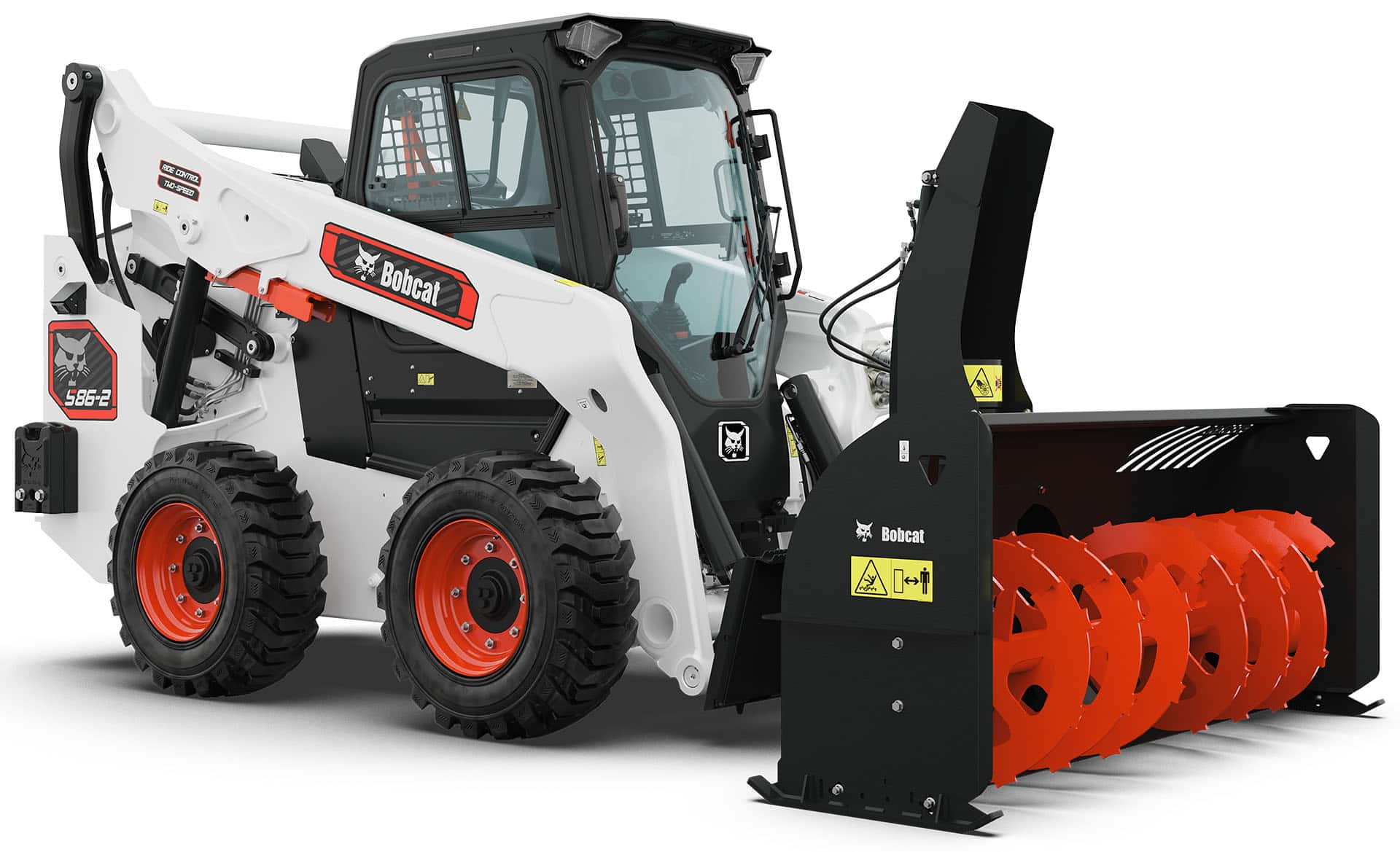
The Bobcat S86-2 is a wheeled skid steer to investigate when the attachment or loading job is already defining the machine purchase. Its appeal is not simply that it sits above smaller models: it combines a high-output hydraulic option with a tall lift arrangement. Those advantages matter only if the selected tool, receiving truck, site and transport setup can use them.
For a Canadian contractor, the most useful first question is: which paying task is currently constrained by the loader? If the answer is a hydraulic tool that needs a different carrier, the S86-2 merits a detailed compatibility study. If the answer is occasional bucket work around an acreage, the ownership case needs considerably more scrutiny. This is a North American specification-based guide to the S86-2 Pro, not a field test or a review of the earlier S86.
On This Page
ToggleThe specifications that define the decision
| Item | North American S86-2 |
|---|---|
| Engine output | 115 hp |
| Rated operating capacity / tipping load | 3,500 lb / 7,000 lb |
| Standard auxiliary flow | 23 US gpm |
| Optional high flow | 36.6 US gpm |
| Optional super flow | 42 US gpm |
| Pressure, standard and high flow / super flow | 3,500 psi / 4,061 psi |
| Hinge-pin height | 144 in. |
| Machine width / cab height | 72 in. / 83.1 in. |
Source: Bobcat’s North American S86-2 specification page, checked September 29, 2026. The Pro loader brochure identifies vertical lift.
Weight needs configuration-specific confirmation. The product page lists 10,098 lb operating weight; the brochure lists 9,960 lb. These sources do not establish a single reconciled figure for every build. Use the actual machine’s documented configuration and scale weight for transport planning rather than silently selecting the lighter number.
Buy the hydraulic package around a named attachment
The S86-2 can be considered for attachments that would make a smaller carrier unsuitable, but “super flow” is not a specification for the tool. Bobcat’s hydraulic-options guide describes standard, high-flow and super-flow choices. The machine offered for sale must actually have the required package; the existence of an option in a brochure does not establish that it is installed.
Build the purchase around the full attachment identity, including its motor option. Similar-looking tools may be sold in different hydraulic versions. Ask for the manufacturer’s carrier requirements and compare flow range, permitted pressure, return requirements, case drain where specified, electrical controls, mounting interface and protective equipment. Save the compatibility documents with the quotation so that everyone is evaluating the same combination.
A useful hypothetical example is a tool specified for 35–40 US gpm at an approved operating pressure. A buyer should investigate the appropriate flow mode and control arrangement, not assume that the largest available flow setting is best. A second hypothetical tool requiring 40–45 US gpm raises a different compatibility question. Those example ranges are not recommendations for a real cutter, planer or blower; the point is that more output is useful only inside the tool’s permitted operating envelope.
Do not size a tool from a calculated hydraulic horsepower figure alone. Such a calculation cannot tell you whether the carrier has the correct cooling capacity for the proposed duty, whether the attachment motor accepts the supplied pressure or whether the complete combination is approved. For the broader process, see choosing standard and high-flow skid steer attachments.
A demonstration should resemble a working shift
For an attachment-led purchase, a short run with an empty bucket leaves the central question unanswered. Agree on an authorised demonstration using the intended attachment and representative material, within the equipment manuals and site procedures. Identify beforehand what will count as a successful result: acceptable finish, controllability, output over a measured interval and no unresolved operating warnings.
Record conditions as carefully as results. Material type, moisture, cut depth, ground condition and operator familiarity can all make two demonstrations unequal. Avoid judging one loader in light work against another in difficult work and calling the difference a machine advantage. Where a direct comparison is unavailable, keep the result as an observation of that particular setup rather than a general ranking.
Include the less glamorous parts of the cycle: connecting the tool, checking settings, manoeuvring into position, seeing the work, clearing the area and changing attachments. A powerful carrier can still be a poor operational match if its size, visibility or setup process makes the actual job awkward. These observations are particularly valuable when more than one operator will use the machine.
Loading height is useful only with clearance and reach
The tall hinge-pin specification attracts buyers loading trucks and other high-sided receivers. It should start a geometry check rather than end it. The bucket must clear the receiving edge and discharge in a useful position without requiring an unsuitable approach. Hinge-pin height is not bucket dump clearance, and vertical lift does not mean every point on an attachment travels along a perfectly vertical line.
Measure the receiver in its working position. Include side extensions, the width of the upper edge, any obstruction near the approach and the surface on which the loader stands. Compare those measurements with the selected bucket’s geometry. A different bucket may change reach and clearance enough to alter the decision, even though the loader model has not changed.
For forks, use the approved capacity information for the particular attachment and load arrangement. A load carried well forward of the attachment frame is not equivalent to one close to it. The ROC and tipping-load guide explains the rating terminology; it should not be used to invent a permissible fork load. The load and placement task need their own documented assessment.
Where a large wheeled loader makes sense in Canada
Contracting with a demanding hydraulic tool
The strongest ownership case begins with repeat work that the complete machine-and-tool package can perform. List the expected jobs, access requirements, working hours and transport movements. Then compare ownership with renting a suitable carrier for concentrated periods. A large annual revenue estimate is not persuasive if it assumes work that has not been secured or ignores days lost to transport and setup.
Frequent truck loading and material handling
Where truck turnaround is a recurring constraint, evaluate the complete load cycle. A higher lift arrangement is valuable if it solves a real clearance problem, but the receiver position, travel distance and staging of material may be equally important. A site trial can distinguish a machine limitation from a layout problem that could be corrected more cheaply.
Winter work with restricted snow storage
A hydraulic snow tool may justify looking at the S86-2, especially when snow must be moved beyond a simple pushing route. Specify the actual tool and inspect the winter operating environment. Check sightlines with the attachment installed, the space available as snowbanks grow, cab defrost performance and the suitability of the fitted tyres. Do not transfer a dry-surface demonstration result to icy conditions or promise output in snow that has not been tested.
The size penalty belongs in the quotation
Before requesting a price, map the tightest route the machine will regularly use. Check the attached tool’s width, not just machine width, and include the turning space required at building corners or between parked equipment. Verify overhead clearance with the actual cab and installed accessories. A larger loader that cannot reach the work is not a productivity upgrade.
Transport deserves a separate calculation because this machine may move the purchasing decision beyond the trailer and tow vehicle already owned. Prepare a manifest containing the actual configured loader, each transported attachment and the other equipment carried. Compare it with the ratings and available payload of the complete combination. Obtain a loaded scale check when establishing the final arrangement; do not resolve the published weight discrepancy by choosing whichever figure fits the existing trailer.
Also plan where the machine and attachments will be stored, cleaned and serviced. A hydraulic tool can bring a substantial parts and maintenance requirement of its own. Treat its hoses, wear components and consumables as part of the operation, rather than burying them inside a vague loader maintenance allowance.
Compare capability, not just model position
The Bobcat S76-2 is a useful alternative to examine if the normal job does not need the S86-2’s output and lift envelope. Write down the task that the smaller option cannot complete satisfactorily. If that task is rare, compare hiring an appropriate machine for that work with carrying the larger loader’s ownership and transport requirements all year.
The Bobcat S770 is relevant to a used-equipment shortlist, but it is not simply an older version of this specification sheet. Compare the actual generation, fitted hydraulic package, condition and service documentation. A used offer with the desired attachment can be attractive, yet the attachment’s condition and compatibility still require independent inspection.
If the principal limitation is ground access rather than output, reconsider the wheel-versus-track decision. Aglist’s comparison of skid steers and compact track loaders provides context. Tracks are not a universal answer to winter traction, and a wheeled model’s large engine does not settle its suitability for soft sites.
Inspecting an S86-2 before purchase
Verify the machine’s identity and installed equipment against the sale documents. For hydraulic work, obtain a competent assessment of the system using procedures appropriate to this machine. A label or extra coupling alone is insufficient evidence that a used loader has the advertised capability. Investigate any discrepancies before valuing an expensive option.
Have the lift linkage, coupler, attachment frame, tyres, hoses and evidence of structural repair inspected. Review service records and any available machine history. These are general used-equipment checks, not a claim that the S86-2 has particular recurring defects. Avoid turning isolated reports about another generation into a reliability verdict on this one.
During the authorised inspection, check operation of the relevant displays, controls, heating, defrost and visibility aids. A camera may improve information but does not remove blind spots or replace a safe site layout. The operator should be able to identify the selected attachment settings and explain the normal start, stop and disconnection process using the supplied documentation.
A financial comparison you can actually update
Request matched quotations for the loader, required hydraulic package, tool, protection and delivery. Keep financing separate from the equipment price. Add transport changes, scheduled service, tyre and attachment wear, insurance quotations where relevant, and a realistic downtime allowance. Canadian taxes and financing depend on the actual transaction; use your own accountant’s and lender’s figures instead of an invented national price.
For a simple sensitivity test, compare the annual estimate at your expected productive hours and again at half that use. This does not predict the future, but it shows how dependent the purchase is on utilisation. If a particular contract is the reason for buying, calculate the remaining ownership case without it before committing.
S86-2 buyer questions
Does every S86-2 have super flow?
No. It is an available hydraulic configuration. The written build specification and inspection of the actual machine must establish what is fitted.
Can a standard-flow tool run on this machine?
Potentially, with a compatible configuration and the correct permitted operating mode. Confirm the tool’s requirements; do not apply the machine’s maximum output simply because it is available.
Which published operating weight should I use?
Neither should replace configuration-specific documentation for a transport decision. The current product page and brochure disagree, so establish the weight of the machine being purchased and everything transported with it.
Is the highest-capacity model automatically the best farm loader?
No. An operation that prioritises tight access, occasional use or modest attachment demands may gain little from the larger package. Identify the recurring task that justifies its extra requirements.
What information is still missing from a specification review?
Your local quotation, installed equipment, attachment approval, actual loading geometry, site demonstration and service support arrangements. Those inputs decide whether this high-output loader is a useful business tool for your operation.
Share your experience
Help other Canadian buyers — leave a quick review for the
Bobcat S86-2
There are no reviews yet. Be the first one to write one.