Overview & Specs
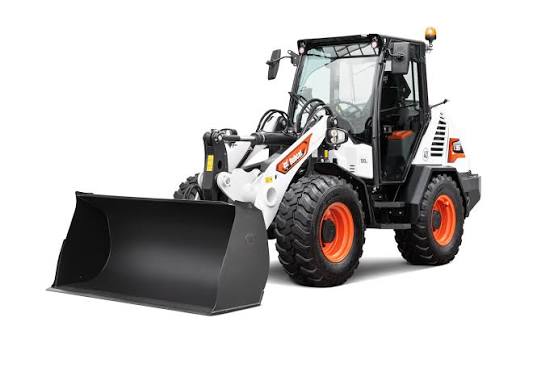
The Bobcat L95 is worth investigating when a loader spends much of its day moving material between work areas, loading receivers or alternating between forks and powered attachments. Its appeal is the complete compact-wheel-loader package rather than one large specification. The machine still needs to fit the route, the load arrangement and the operator’s routine.
For Canadian farm and contractor work, the buying case should identify a recurring constraint: too much travel in a material cycle, an unsuitable loading arrangement, insufficient attachment capability or an operator environment that does not suit the shift. The L95 should solve a documented problem. Buying the larger model simply because the budget allows it can leave the original problem unchanged.
On This Page
ToggleL95 specifications for comparing complete packages
| Item | North American model-page entry |
|---|---|
| Engine output | 74 hp |
| Bucket ROC, straight / articulated | 3,981 / 3,335 lb |
| Fork ROC, straight / articulated | 4,860 / 4,127 lb |
| Operating weight | 11,993 lb |
| Standard / high auxiliary flow | 19.9 / 27.3 US gpm |
| High travel-speed specification | 24.9 mph |
| Hinge-pin height | 128.9 inches |
| Width with listed bucket / cab height | 74.8 / 99.3 inches |
Source: Bobcat’s North American L95 page, checked October 2, 2026. It also describes emissions compliance without DPF or SCR and control of engine and travel speed separately in attachment mode. Verify the actual build and approved tool settings; the table is not a universal payload or working-speed instruction.
Transport within the worksite: examine the whole cycle
A high maximum travel-speed entry can attract buyers moving between several piles, sheds or loading areas. Its practical value depends on how much of the route permits appropriate travel and how much requires slow manoeuvring, yielding or placement. The brochure maximum should not be inserted directly into a loaded productivity calculation.
Divide a typical cycle into pickup, loaded travel, placement, return and waiting. Time representative cycles under suitable conditions, with the intended attachment and operator. Then identify which segment actually needs improvement.
For a hypothetical operation, suppose a cycle takes four minutes, of which two are travel and two are loading and placement. Reducing travel time by 20 percent would save 24 seconds per cycle, or 10 percent of the total. This is illustrative arithmetic, not a measured L95 result. It shows why a speed advantage should be applied only to the part of the job it changes.
Also assess route layout. Moving a storage point closer to the receiver may eliminate distance rather than requiring faster travel. Compare that possibility with the machine upgrade before assigning a financial return to a specification.
Fork capacity: describe the actual delivery
The fork ratings give a different comparison basis from the bucket entries. Keep both the attachment and steering condition visible. A straight pickup followed by a turn and raised placement is not adequately described by the highest straight rating.
Obtain gross load weight from the supplier where possible. Include pallet, packaging and container, and identify the load dimensions and centre of gravity. An irregular item can place its mass farther forward than a uniformly stacked pallet of equal weight.
Match that description to the exact fork assembly, carrier and machine documentation. A fork frame with its own large rating does not increase the loader’s permitted capability. Likewise, an adapter can change the arrangement and should not disappear from the assessment.
For recurring supplies, retain the load information with the equipment records. If order size or packaging changes, review the handling plan. A successful previous delivery is not proof that the next one is the same load.
Bucket selection and receiving geometry
Bulk handling begins with the material. A bucket chosen for bulky light material may not be suitable when filled the same way with dense aggregate. Establish the attachment’s mass, intended use and approved pairing, and follow the applicable loading instructions.
Then measure the receiver. Hinge-pin height describes the pivot, not clearance under the dumping bucket. Reach, bucket shape and the nearest position the loader can occupy determine whether material can be placed usefully.
For a farm or contractor loading several different bodies, make a small receiver schedule with height, approach and target discharge area for each. The most restrictive essential receiver should remain visible in the shortlist. Do not let a successful trial on an easier container stand in for every loading job.
The Aglist lift-geometry guide explains the distinction between pivot height, clearance and reach. Its skid-steer examples are not L95 specifications, but the measurement discipline is useful when preparing the site drawing.
Hydraulic attachment work: separate travel speed from tool supply
For a powered attachment, the appropriate tool speed and the appropriate ground travel may be different requirements. The L95’s described attachment-control arrangement merits a demonstration with the intended tool, rather than assuming that maximum engine or travel settings provide the best result.
Start with the attachment’s permitted flow and pressure range, return requirements, electrical interface and mounting approval. Include the motor variant. A tool available with multiple motor packages cannot be matched from its commercial name alone.
A hypothetical implement rated for 20–25 US gpm illustrates the issue: neither a standard-flow label nor the largest high-flow number establishes the correct approved setup. The operating mode, control range and complete compatibility information must answer it.
Use Aglist’s hydraulic attachment guide to build the checklist, then verify the L95-specific configuration. Do not infer compatibility just because a coupler fits or another Bobcat carrier operates a similar attachment.
Engine and maintenance expectations
The manufacturer’s aftertreatment description is relevant to ownership planning, but it should not become a claim that the machine has no emissions-related components or cannot experience an engine fault. Service requirements still follow the correct manual and actual equipment.
Prepare the maintenance plan from the machine’s serial information and expected duty. Identify daily access points, scheduled service, attachment maintenance and who performs each task. A feature that simplifies one part of servicing does not eliminate the rest of the work.
For used equipment, review records rather than relying on a seller’s general statement that it has been serviced. Have warnings and operating concerns assessed by someone qualified to inspect the machine. Avoid assuming a future repair cost from anecdotes about another generation.
Keep attachment wear separate in the budget. A broom, cutter or other powered tool can create substantial service work of its own, and hiding that inside one loader allowance makes comparisons less useful.
Canadian winter and operator environment
Assess the operator station with the intended snow tool fitted. A bucket, pusher and blower create different sightlines and work patterns. Check heating, defrost, wipers and visibility on the actual machine rather than assuming a cab automatically resolves the operating environment.
Choose where snow will go before choosing tool width. A yard with generous storage asks a different question from a site where snow must be moved or discharged beyond a narrow route. Later-season banks can also restrict visibility and turning room.
Tyres and surface condition belong in the assessment. A dry demonstration cannot establish performance on packed snow or ice. Compare the documented equipment and a suitable site plan, avoiding broad promises that one steering layout solves every winter traction problem.
The snow attachment guide provides a starting point for the tool decision. Confirm approval and requirements for the exact loader-and-attachment combination.
Space and transport are part of the upgrade
Map the complete machine envelope, including the selected attachment and load projection. Check the narrowest entrance, the turn after it and overhead clearance. A larger cab and bucket can fit an open yard yet conflict with one essential storage or loading route.
If the machine works at several locations, prepare a transport manifest. Include the actual configured loader, every attachment and other carried equipment. Assess the complete hauling arrangement against its ratings and requirements; the published operating weight is not a complete trailer load.
Transport frequency can influence the purchase as much as jobsite performance. A machine well suited to a central yard may be less convenient for numerous short visits elsewhere. Compare appropriate hired hauling or keeping some equipment at the remote site before buying supporting equipment unnecessarily.
For storage, allow space for safe attachment changes and maintenance access. A loader parked so tightly that routine service becomes awkward creates an avoidable ownership problem. Plan the work area alongside the machine.
Compare against a different platform when the task calls for it
A high-output skid steer such as the Bobcat S86-2 may deserve attention where a particular hydraulic attachment dominates the job. That is a different purchase case from frequent bucket-and-fork transport. Compare the tool requirements, access and complete operating cycle before choosing a platform.
For reach-led work, the JCB 525-60 offers a telehandler concept to investigate. Use its own load chart and configuration information rather than comparing one maximum capacity with a wheel-loader ROC.
If difficult ground is central, consult the skid-steer versus track-loader guide and assess a suitable tracked candidate. A large engine and articulated steering do not independently settle flotation or site-access requirements.
Used L95 inspection and purchase economics
Verify serial identity, fitted hydraulic equipment, tyres, attachment carrier and cab features. Arrange a qualified inspection of drive and steering operation, articulation and oscillation areas, lift linkage, coupler, hydraulic system and repair evidence. Inspect each included attachment separately.
Those priorities do not establish a recurring model defect or a reliability ranking. Use the actual condition, service records and estimates for identified work to assess a particular offer.
Request itemised Canadian quotations and keep financing terms separate from equipment price. Include required attachments, setup, delivery, transport changes and service arrangements. Compare annual ownership at the expected workload and at a lower-use scenario, especially if one prospective contract is the main justification.
The L95’s premium is easiest to defend when the chosen package solves a frequent, documented constraint. If a smaller or simpler arrangement meets the same work, the difference may be better spent on an attachment, site improvement or service provision.
Define the threshold for an upgrade
Before comparing quotations, write down what an acceptable improvement would look like: completing a recurring route within an available work window, using a required attachment or handling a documented delivery configuration. Keep that threshold separate from optional conveniences. A trial can then confirm or reject a clear requirement instead of producing a vague impression that the larger loader feels more capable.
L95 FAQ
Can the largest fork number be used for all pallet work?
No. Preserve steering condition, load centre, height, attachment and configuration requirements.
Does no DPF or SCR mean no engine maintenance?
No. The published aftertreatment arrangement does not remove normal service or diagnostic requirements.
Will the maximum travel speed cut cycle time proportionally?
No. Only part of a cycle may involve travel, and the actual route sets appropriate operating conditions.
What should a powered-tool demonstration prove?
That the approved combination produces an acceptable result with suitable control over a representative complete task.
Who should put it on the shortlist?
A buyer with recurring material or attachment work that uses the L95’s capabilities and can accommodate its complete space, transport and ownership requirements.
Share your experience
Help other Canadian buyers — leave a quick review for the
Bobcat L95
There are no reviews yet. Be the first one to write one.