Overview & Specs
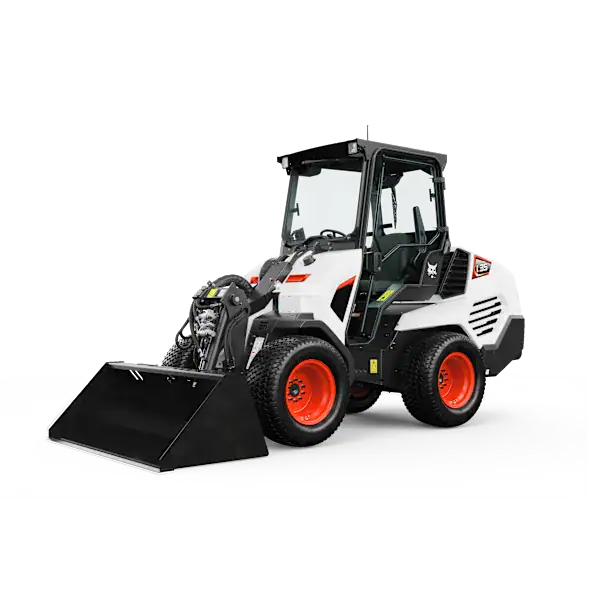
The Bobcat L35 sits in an interesting purchasing space: a small articulated loader with a more substantial powered-attachment proposition than the smaller machines in its family. It is worth evaluating when narrow-site work has grown into a regular workload involving hydraulic tools, repeated material placement and longer operating sessions. The extra capability also brings a larger machine envelope, so it should be bought for a named task rather than as an automatic upgrade.
For a Canadian contractor or acreage operation, the central question is whether the required tool, route and working season fit one coherent package. A high-flow option, telescoping arm and cab can each be useful, but they solve different problems. Decide which of them the work actually needs before comparing prices.
On This Page
ToggleThe L35’s useful specification boundaries
| Item | North American model-page entry |
|---|---|
| Engine output | 57 hp |
| ROC, straight / articulated | 2,072 / 1,695 lb |
| Operating weight | 6,012 lb |
| Standard / optional high auxiliary flow | 18 / 25.3 US gpm |
| Hinge-pin height, retracted / extended | 88.2 / 114.8 inches |
| Width over tyres / with listed bucket | 52.4 / 54 inches |
| Cab height | 82.2 inches |
| Cab enclosure, heat and air conditioning | Listed as optional |
Source: Bobcat’s North American L35 page, checked October 2, 2026. The detailed page lists a different tyre-width figure from the family-page summary; this table uses the model-specific entry. Confirm dimensions on the actual tyre and attachment configuration.
Choose the hydraulic tool first
A buyer considering the L35 for a blower, cutter, broom or other hydraulic implement should begin with the exact attachment identity. Record the motor version and manufacturer’s carrier requirements. Different versions of an apparently similar tool may need different supply ranges.
Compare flow, permitted pressure, return arrangement, case drain where specified, controls and mounting compatibility. Include required protective equipment and approval for the proposed carrier. A hydraulic connection that physically couples together does not establish an approved operating combination.
Consider a hypothetical attachment requiring 20–24 US gpm. The standard-flow entry would not satisfy that numerical range, but the optional maximum is not automatically an acceptable operating setting either. The buyer must establish an approved configuration and control setting for the tool. This example is not a recommendation for a real attachment; it demonstrates why “more flow” is an incomplete answer.
Put the selected hydraulic equipment into the written quote. On a used L35, verify what is installed rather than assuming the high-flow option follows from the model badge. Aglist’s attachment hydraulics guide explains the broader compatibility process, although the L35 needs its own model documentation.
The larger envelope has to earn its place
When moving up from a smaller carrier, draw the restrictive route again. Include the front tool and the space needed to turn, rather than adjusting only the tyre-width measurement on an old worksheet. A machine can remain in a “small loader” category while no longer fitting a particular jobsite conveniently.
For landscaping work, the decisive restriction may be a corner between a house and a fence. For an acreage, it may be the approach to a storage building. For a contractor, it may be the loading arrangement on the trailer. Each deserves a separate pass/fail check before performance features are scored.
Use a site visit or suitable demonstration to establish the complete route. Record any obstacle that was removed for the demonstration but will normally be present. A favourable trial on an artificially open site does not represent the daily job.
The extra envelope may be entirely justified when a required attachment fits and produces the needed result. The point is to make that tradeoff explicit. Additional capability is valuable only if the machine can reach and work in the intended area.
Telescoping placement: assess geometry and capacity together
The difference between retracted and extended lift measurements is useful for screening loading arrangements. It does not mean the same load is permitted throughout the extension. Use the applicable manufacturer information for arm position, attachment, load centre and configuration.
Measure the receiving edge and target position. A bucket needs useful discharge clearance, while forks need a suitable placement position. Hinge-pin height describes neither task completely. A receiver that can only be approached from one side may make reach more important than maximum height.
For a recurring job, prepare a side-view sketch and include the nearest acceptable machine position. That allows the equipment provider to evaluate the arrangement before a demonstration. It also makes competing quotations more comparable: each supplier is answering the same placement requirement.
A feature should not be credited with a time saving until it changes the actual cycle. If the operator still needs the same repositioning after every load, a more impressive maximum reach may have little effect on completion time.
Articulation changes the capacity question
The straight and articulated ROC entries should remain separate in the purchase plan. Most property routes involve turns, so the loading task cannot be described only at the straight pickup position. A higher straight rating is not permission to ignore the rest of the move.
Start from the complete load: product, pallet or container, packaging and dimensions. Then account for the attachment according to the manufacturer’s rating method. Do not subtract a guessed attachment weight from a headline number and treat the result as a complete load assessment.
For irregular materials, shape and mass distribution also matter. A compact load held close to the carrier differs from a long load projecting forward. Establish an approved tool and operating arrangement rather than treating both as equivalent because a scale shows the same mass.
The Aglist rating guide helps separate rated capacity from tipping load. Keep this articulated loader’s own conditions; a percentage used for a tracked or skid-steer machine is not a replacement rating.
Build the Canadian winter configuration deliberately
If winter work is a principal reason for buying the L35, specify the operator environment at the start. A machine advertised with cab options is not necessarily equipped with all of them. Inspect the actual enclosure, heating, visibility and defrost arrangements offered in the package.
Choose the snow-handling strategy from the site. Pushing needs storage room; blowing needs a suitable discharge plan and compatible powered equipment; carrying requires a workable route and loading arrangement. The machine’s winter value depends on that complete system.
Consider the season after several clearing events. Snowbanks can restrict sightlines and reduce the width available near buildings. A tool that fits an empty summer lane may be awkward later. Mark the intended storage areas before evaluating attachment width.
Use Aglist’s snow attachment guide to organise the choices. Verify the exact L35-compatible attachment separately; a general guide cannot certify a particular blower or pusher.
A demonstration plan for an attachment-led purchase
Agree on the task, representative material and acceptable result before arranging the trial. For a powered tool, an empty-bucket demonstration is not sufficient. The provider should establish that the proposed combination and operating conditions are appropriate.
Record the time spent working, repositioning and changing attachments separately. That distinction helps identify whether the carrier, tool or site layout is limiting output. A faster hydraulic tool may provide little overall improvement if most time is spent staging material.
Include the regular operator, after suitable familiarisation. Assess view of the working edge, reach to controls, repeated turns and visibility at placement. The goal is a repeatable acceptable result, not a single fastest cycle.
Save the configuration used in the trial. Tyres, hydraulic equipment and attachment versions matter. If the final quote differs from the demonstrated machine, establish the effect of that difference before treating the trial as evidence for the purchase.
Which alternative belongs beside it?
A Bobcat MT120 is worth investigating when frequent on-and-off work or a different access envelope dominates. A Bobcat S64-2 provides a skid-steer comparison where the attachment plan and turning requirements lead in another direction. These are different platforms, not substitutes selected by engine output alone.
For largely soft-ground work, use the wheel-versus-track comparison to decide whether a tracked shortlist is necessary. Articulated turning and flotation address different aspects of surface performance. Neither label guarantees undamaged turf or access in every wet condition.
If the main task is repeated bulk handling with room to manoeuvre, compare a larger compact wheel loader as well. Its attachment arrangement, transport requirements and working envelope may produce a different ownership case. The L35 should win on the combined requirements, not simply because it sits between smaller and larger machines.
Used-machine inspection and the complete budget
Confirm serial identity and fitted options, especially the hydraulic package and operator station. Have a competent inspection address articulation, extension guidance, lift pivots, coupler, drive operation, hoses and evidence of repairs. Review records against the correct maintenance information.
These are inspection priorities based on the layout, not allegations of recurring failures. Do not assign a reliability score or future repair bill from a general description. Identified issues need diagnosis and an estimate appropriate to the actual machine.
For a used package, value attachments independently. A powered implement can have substantial wear and service needs of its own. Its condition, motor specification, guards and compatibility should be established before the bundle is described as ready for work.
Request a Canadian equipment quotation with the loader, options, tools, delivery and setup separated. Add the transport arrangement and service access required for your operation. Published operating weight is only part of the hauling plan; include everything carried and verify the actual complete configuration.
Finally, test the ownership case at a lower utilisation assumption. If anticipated attachment work falls by half, would the purchase still make sense? This is a sensitivity question, not a prediction. It reveals how much the decision depends on work that may not yet be secured.
Separate essential options from future possibilities
Build two equipment lists: what the present workload requires and what would support a specifically identified future task. Put the chosen attachment model beside every hydraulic option. Put the expected operating season beside each cab requirement. This connects spending to work instead of assembling an expensive package from unrelated features.
For a future tool, obtain a compatibility assessment before assigning it value in the purchase decision. An unspecified plan to add “a bigger cutter later” is too vague to justify a particular hydraulic package. Define the work, tool and carrier combination first.
L35 questions to resolve before ordering
Does every L35 have high flow?
No. The manufacturer lists it as optional. Verify the build and the approved settings for the intended tool.
Can I use maximum lift height as dump clearance?
No. The bucket and its discharge position require a separate geometry check.
Why use the detailed model width?
The family summary differs. Keep the source identified and measure the actual fitted tyres and attachment before making an access decision.
Is it a direct replacement for a skid steer?
Only where the complete task, attachment, route and operating requirements fit. Steering layout and equipment capability need their own comparison.
What is the strongest buying case?
A recurring attachment-and-placement workload that uses the L35’s additional capability while still benefiting from its small articulated format.
Share your experience
Help other Canadian buyers — leave a quick review for the
Bobcat L35
There are no reviews yet. Be the first one to write one.