Overview & Specs
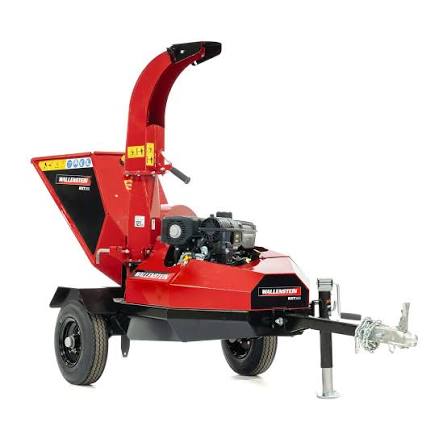
The Wallenstein BXT36S is an engine-powered, towable gravity-feed chipper for owners who want to process suitable branches without committing a tractor PTO or skid-steer hydraulic circuit to the job. Its strongest advantage is independence. Its main tradeoff is owning and moving another complete powered machine, including an engine, belt drive, running gear and hitch.
Choose it around the normal branch stream and the places where it will work. A self-contained chipper can be convenient for scattered property maintenance, but towability does not guarantee access to every worksite or approval for every road journey. The complete towing and operating arrangement still needs to fit.
This guide uses the Canadian product page and October 2023 BXT36S manual for serial numbers 1101388 upward, checked in October 2026. Older machines should be identified separately before applying engine, cutting-system or parts information.
On This Page
ToggleIndependence is most useful when another machine has work to do
A tractor-mounted chipper occupies the tractor while operating. If that tractor is also needed to gather branches or move the resulting chips, the work may involve staging and attachment changes. The BXT36S can change that scheduling problem because its cutting power comes from its own engine.
The benefit depends on the labour available. One operator still performs many tasks sequentially. With an appropriate crew and operating plan, independent equipment may permit a different sequence, but it does not justify people working inside the chipper’s exclusion areas or feeding it outside the manual’s routine.
Compare the PTO-powered BX52S as a complete alternative, including the tractor it needs. A different nominal capacity does not by itself decide between them. The relevant question is which arrangement completes the property cleanup with fewer impractical changes and suitable material handling.
Current documented engine and cutting system
| Specification | BXT36S, documented configuration | Buying implication |
|---|---|---|
| Engine | Vanguard 14 hp, 408 cc | Verify the actual engine and serial range, especially used. |
| Feed | Gravity/manual | Independent engine power does not add feed rollers. |
| Round-material capacity | 3.5 inches | Branch form and suitable preparation still matter. |
| Rotor opening | 3.6 by 10 inches | Separate from the receiving hopper dimensions. |
| Hopper | 19 by 19 inches | Not a nineteen-inch cutting capacity. |
| Drive | Centrifugal clutch and belt | Include clutch and belt condition in a used inspection. |
The manual lists two knives on a twenty-five-inch rotor weighing 145 pounds. These identify the cutting assembly, not a guaranteed production rate. Knife condition, material and the way suitable branches arrive remain important to the result.
The engine speed is listed at 3,600 rpm and the rotor speed at 1,620 rpm. Those are different components with different speeds. Do not describe the engine number as rotor speed or attempt to increase either setting to obtain more capacity. Use the manufacturer’s operating and service instructions.
Evaluate the branch pile before choosing a chipper
Separate a representative pile into straight stems, forks, fine material and pieces better directed elsewhere. Measure the awkward junctions as well as the main stems. A machine may handle a suitable straight piece within its nominal diameter while a fork of smaller stems still needs preparation.
For routine pruning or trail maintenance, the manageable recurring material may be more relevant than one unusually large branch. Buying around the largest exceptional piece can produce a machine that is inconvenient for the work performed most often. Conversely, constantly preparing nearly every branch to fit is evidence that the normal workload deserves another comparison.
The feed-system guide helps separate feeding choices from power sources. The BXT36S remains gravity-fed despite having its own engine. A buyer whose principal difficulty is controlled branch advance should evaluate that requirement directly.
A chipper is not automatically a shredder
Independent power and a large hopper do not make the BXT36S a general-purpose processor for every garden material. Use only the material and methods permitted by its manual. Do not assume that a towable chipper has the separate shredding mechanism found on a chipper/shredder.
The BXM32 illustrates why that distinction matters: its two processing functions have separate requirements. If the property regularly produces both woody branches and material intended for shredding, compare the actual functions rather than choosing by hopper count or advertised engine power.
Sorting also improves the purchase demonstration. Ask to observe suitable representative material, not a collection of whatever happens to be nearby. A meaningful demonstration confirms the machine’s intended job; it should not become an improvised test of unsuitable waste.
Towable does not mean universally road-ready
The October 2023 manual specifies a two-inch ball coupler, 4.80-by-8 tires, 773-pound machine weight and a seventy-five-pound tongue-weight figure. Those specifications help identify the physical package. They do not replace the towing vehicle’s limits, the machine’s transport instructions or the requirements applicable to the proposed route.
The Canadian page lists a light kit as an accessory. Do not assume lighting is included on every offered machine. A photograph of a suitably equipped unit is not proof that the quoted base package has the same equipment.
For a used purchase, inspect the hitch, running gear and identification as well as the chipper. A machine can cut branches satisfactorily while still needing work before it can be moved in the intended way. Price that work before comparing offers.
Within the property, consider the surface, turning room and the space needed to place the machine in its approved operating condition. A narrow overall width can be useful, but it does not prove suitability for a slope or soft track.
The discharge plan affects the whole cleanup
The listed discharge height is sixty-two inches, with 284 degrees of chute rotation. Plan where the chips should finish before feeding begins. A convenient inlet position is not enough if the output blocks the next access route or must be moved again immediately.
The total listed dimensions are 111 by 43 by 62 inches. The work area needs more than that rectangle. Include the feeding space, discharge zone, towing vehicle access and room for material waiting to be processed.
The feed hopper folds for transport and storage as described by the manufacturer. Use the approved sequence and locks rather than assuming every protruding component can simply be moved out of the way. Confirm the actual stored envelope when fitting the chipper into a shed or arranging collection.
Measure the complete session
Suppose a hypothetical cleanup takes twenty-five minutes gathering suitable branches, fifteen preparing them, thirty chipping and twenty moving the chips. The total is ninety minutes. A different power arrangement that avoids a twelve-minute attachment change could matter more than a small change in the cutting segment.
On another property, towing the chipper out of storage and preparing it may take longer than attaching an existing PTO machine. The advantage can reverse. These are planning possibilities, not measured BXT36S results, which is why actual setup and finish conditions should be recorded.
Do not convert rotor speed or engine horsepower into an invented cubic-yard-per-hour claim. The piece-by-piece material stream and handling method can dominate the session. A useful ownership decision needs observed complete-job performance with suitable material.
Owning another engine changes seasonal preparation
The engine needs its own maintenance and storage routine. Use the engine’s identification and documentation for oil, fuel, filters and service procedures. The chipper model name alone is not a safe way to order every engine part, particularly if an older unit has been repowered.
Plan readiness before a seasonal cleanup window. A self-contained chipper is convenient when it starts, operates correctly and has a serviceable cutting system. Independence offers little benefit if old fuel, a neglected belt or missing guards delay the work.
Operate in the environment permitted by the manual. Poor weather does not justify moving an engine-powered chipper into an enclosed shed. For Canadian seasonal work, choose an appropriate outdoor work period and footing, and store the machine correctly between sessions.
The listed fuel capacity is 1.59 US gallons, or six litres. That does not establish a runtime without verified consumption under defined conditions. Use actual experience or manufacturer data for the specific workload rather than inventing an hours-per-tank figure.
Used inspection: three systems instead of one
Assess the engine, the cutting/drive assembly and the towing structure separately. A clean engine bay does not prove good knives, and a freshly sharpened set of knives does not prove the running gear is ready.
With the machine safely shut down and isolated, inspect the hopper, housing, discharge components, guards and frame. Have knife, ledger, rotor and bearing condition assessed correctly. Look for damage or repairs that affect alignment or containment.
The centrifugal clutch and belt drive deserve attention. Identify correct components and service history, and have questionable wear or adjustment evaluated rather than accepting a claim that a slipping drive merely needs more engine speed. These are inspection priorities, not allegations of a common BXT36S defect.
A suitable demonstration should include starting, normal operation with representative permitted branches and complete shutdown. Confirm the engine model, controls and supplied equipment. Never accept removed guards as a way to make inspection or operation more convenient.
Finally, inspect the coupler, tires, wheels and any fitted lights or transport accessories. Include required repairs and delivery in the ready-to-use cost. A lower asking price can be misleading if it excludes necessary towing equipment or substantial cutting-system service.
Frequently asked questions
Does the BXT36S need a tractor to run?
The documented model uses its own Vanguard engine for cutting power. A suitable means of moving it is still needed, and its towing and setup requirements must be followed.
Is it hydraulically fed?
No. The cited configuration uses gravity/manual feeding. The independent engine and belt-driven rotor do not imply powered feed rollers.
Are 3,600 rpm and 1,620 rpm contradictory?
They describe engine and rotor speed respectively. Keep the labels with the values and use the approved settings rather than treating either as an adjustable performance target.
Can I assume the light kit is standard?
No. The Canadian page lists it as an accessory. Identify the actual supplied equipment and verify that the complete transport arrangement suits the intended use.
When does independent power justify the extra engine?
When avoiding host-machine commitment or simplifying the actual work sequence provides recurring value, and the owner can maintain and store the complete chipper. Compare those benefits with the ready-to-use PTO or hydraulic alternatives already available.
A good purchase is one that matches the normal branch material, the approved towing arrangement and the property’s complete cleanup routine. The BXT36S is most compelling when independence solves a specific scheduling or access problem rather than simply adding another machine to store.
For a machine that will travel between properties, compare the entire arrival routine: where it can be parked, how suitable branches reach it and how the chips leave. Independence is most useful when those arrangements are known in advance rather than negotiated after unloading equipment.
Sources
Share your experience
Help other Canadian buyers — leave a quick review for the
Wallenstein BXT36S
There are no reviews yet. Be the first one to write one.