Overview & Specs
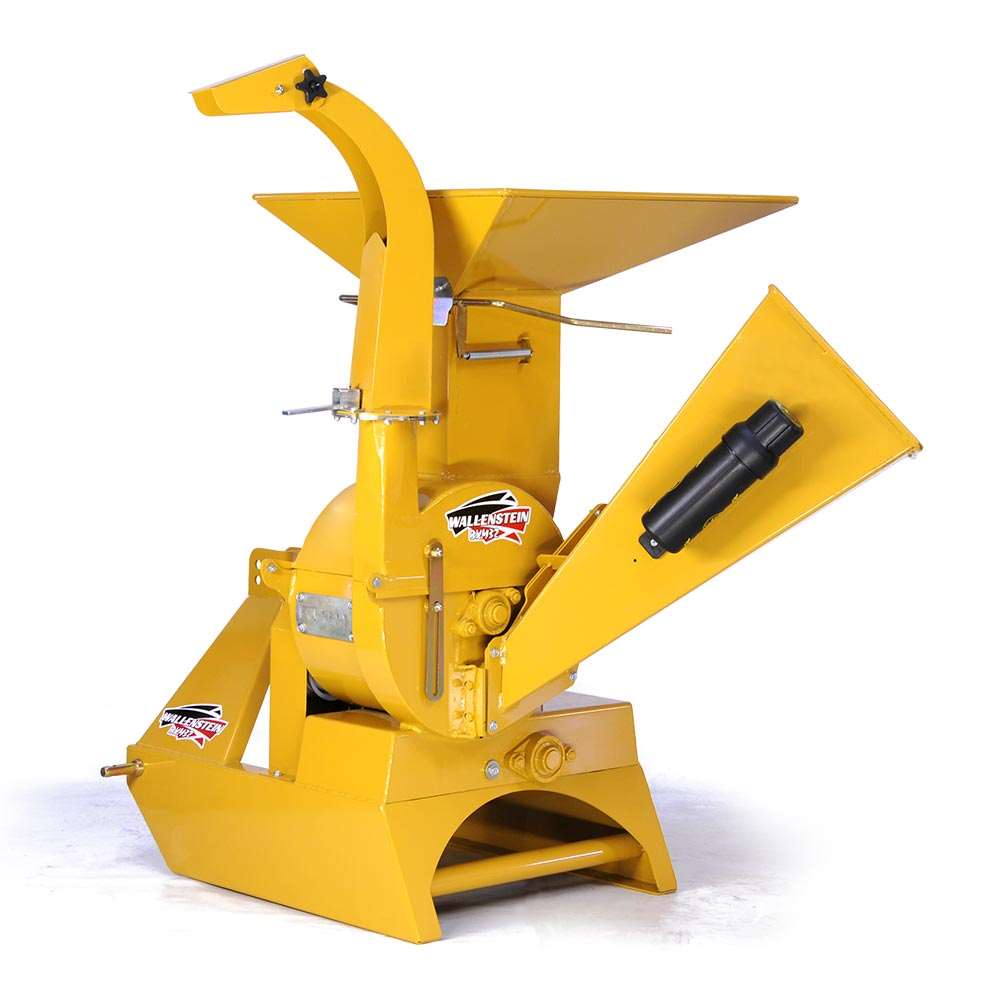
The Wallenstein BXM32 makes sense when a property produces two recurring kinds of cleanup material: branches suited to chipping and smaller material suited to shredding. Its value is the combination of those processes behind a compatible tractor. It should not be chosen simply as a compact substitute for a larger wood chipper, because the chipper and shredder have different limits and different inlets.
For Canadian acreage owners, the first decision is whether both processes will actually be used. An attractive all-in-one description can hide a poor match if nearly every job is large branch processing. Conversely, buying a dedicated chipper may leave much of a garden-oriented cleanup stream needing another method. Begin with the material you generate repeatedly, then assess the machine.
On This Page
ToggleTwo working mechanisms, two capacity limits
The Canadian BXM32 page describes gravity feeding, a disc chipper and a hammer-mill shredder driven through a PTO belt arrangement. It lists three-inch chipping capacity but only one-inch shredding capacity. The chipper inlet is 3 by 6 inches; the much larger shredder receiving hopper does not raise the shredder’s material limit.
The listed engine range is 12–35 hp, with a 445-lb machine weight and Category 1 mounting. The rotor carries two chipper knives, while the shredder has 27 knives. Those are different service inventories, not competing descriptions of one cutting assembly.
A sensible buyer writes the two material limits separately on the comparison sheet. Otherwise, the headline three-inch figure can easily become an incorrect assumption about everything entering the machine. Use the manufacturer’s permitted-material instructions as well as the diameter figures; neither inlet turns the machine into a general waste grinder.
Start with a material sorting trial
Before spending money, review a representative cleanup day. Divide the material conceptually into suitable chipper feed, suitable shredder feed and material requiring a different process. Include contamination and material condition in that assessment. The goal is to discover the recurring proportions, not to force everything into the two useful categories.
Consider a hypothetical property that generates several tidy branch bundles and a much larger volume of small garden debris. If the latter is suitable for the documented shredder duty, the second mechanism may be valuable. Now consider another property where almost every piece is a substantial woody limb: the extra shredder system may contribute little to the real work.
Sorting effort is part of this decision. If material is already separated during pruning and cleanup, maintaining two streams may be straightforward. If everything is dumped together, separating it again can consume time that a purchase comparison overlooks. Plan collection with the eventual processing method in mind.
Never use the large hopper as a reason to accept mixed debris without inspection. Stones, metal and other foreign objects require exclusion. A routine based on unidentified material is a different problem from the controlled garden and branch work being considered here.
The PTO and rotor do not turn at the same speed
The February 2025 BXM manual specifies a 540-rpm tractor PTO and a 1600-rpm BXM32 rotor. The belt drive establishes that relationship. Do not read the rotor number as a tractor shaft setting or transfer a different chipper’s speed range to this model.
This is a practical used-buying issue as well as an operating distinction. A changed pulley, substituted belt or undocumented drive alteration needs assessment against the correct configuration. A machine that turns is not necessarily a machine that retains the intended drive relationship.
The manual’s troubleshooting text contains a broader speed reference that conflicts with its model-specific specification. This guide retains the 540-rpm BXM32 specification, also stated on the Canadian product page. Do not treat that inconsistent troubleshooting line as approval for 1000-rpm input.
For a prospective tractor, obtain its actual PTO information. The engine range should not be relabelled as a PTO output range. Aglist’s PTO horsepower explanation helps separate the two measurements without applying a guessed conversion percentage.
Why the shredder changes the ownership calculation
The second mechanism provides another way to process suitable material, but also adds components to inspect and maintain. That is not a criticism of the design; it is the cost of buying a genuinely different function. Evaluate whether the function removes enough separate work to justify its presence.
For example, a property owner might otherwise arrange separate disposal for small material after finishing the branches. If the BXM32 handles the permitted portion appropriately, the avoided handling and travel could be valuable. On another property, that material may already have a satisfactory destination and need no machine processing.
Ask for a demonstration of the shredder using representative suitable material, not merely a chipper demonstration beside an unused hopper. Look at the resulting material and whether it serves the intended destination. The existence of a shredder does not establish a uniform finished particle size or an automatic ready-to-use product for every purpose.
The output plan should be specific enough to evaluate: a collection area, a subsequent handling method and an intended use. This guide does not prescribe compost recipes or claim that every processed mixture is suitable around every plant. Those decisions require their own material and site assessment.
Build a work area around both inlets
Two feeding points affect where incoming material is staged. A layout convenient for branches may be awkward for smaller material if the operator must repeatedly cross the work area. Establish the approved operator positions and clearances first, then arrange the piles around those requirements.
The discharge stream needs its own space. Keep it away from incoming material, people and the working route. If chips or shredded material must be moved during the session, include the interruption and the equipment needed. A tractor attached to the BXM32 may be unavailable for that handling task until processing stops.
Compare a fixed processing location with moving the equipment between suitable work areas. The former may simplify setup and collection; the latter may reduce material transport. Neither is inherently better. A long narrow property and a compact yard can produce opposite answers even with the same total amount of debris.
For seasonal work, consider where equipment and material will be stored before the planned session. The useful footprint includes connection access and inspection space, not just the machine’s parked outline. Avoid a storage plan that requires moving several unrelated implements every time a small cleanup job arises.
Check lift, hitch and shaft as one package
The BXM32’s documented weight belongs in the tractor assessment along with the actual attachment position and any connecting equipment. Horsepower does not establish rear carrying capability, steering behaviour or an acceptable transport configuration. Use the tractor’s applicable limits and ballast guidance.
The advertised quick-hitch compatibility is helpful, but it does not remove driveline checks. Verify the complete assembly with the proposed hitch fitted. The Aglist quick-hitch guide explains why hook engagement is only one part of a successful connection.
A used shaft may have been configured for another tractor. Record its identity and have the fit checked through the permitted movement and operating positions. Do not assume that a seller’s successful use proves suitability for the buyer’s machine.
If the tractor also powers other seasonal equipment, compare changeover effort. A tool that is easy to store but awkward to connect may be used less often than planned. That can shift work toward fewer, larger sessions and change the material-storage requirements.
Compare complete sessions rather than isolated feeding speed
Use a worksheet with separate rows for gathering, sorting, setup, chipping, shredding and final handling. Record combined labour as well as elapsed time when more than one person is involved. This identifies whether buying a second processing function addresses a real bottleneck.
As an invented example, assume a mixed cleanup takes 25 minutes sorting, 20 setting up, 30 chipping, 35 shredding and 20 clearing the output. That totals 130 minutes. If collecting the two material streams separately reduces later sorting by 15 minutes, the total becomes 115 minutes without any change in cutting capacity.
Suppose instead that a different machine saves ten minutes in chipping but provides no suitable shredding function. The comparison is incomplete until the remaining material is dealt with. Add the alternative disposal or processing step before declaring the dedicated chipper faster for the whole property.
These numbers are planning assumptions, not BXM32 test results. A short representative trial supplies better inputs than a guessed annual volume. The most useful result is a repeatable routine that handles the actual material and leaves the property in the intended condition.
When a dedicated chipper is the better comparison
| Material pattern | Buying implication |
|---|---|
| Regular permitted small material plus modest branches | Evaluate both BXM32 mechanisms in a representative trial |
| Almost entirely substantial branches | Compare dedicated chipper capacity and feeding method |
| Mixed unidentified waste | Resolve sorting and disposal before choosing a processor |
| One temporary cleanup project | Compare a service or rental with the likely future workload |
The Land Pride WC1504 illustrates a dedicated tractor-chipper alternative already covered by Aglist. Its different capacity and requirements should be assessed independently. Do not compare the BXM32’s shredder hopper size with another machine’s cutting inlet as if they represented the same measurement.
A combined machine is most persuasive when both functions remove recurring tasks. It is less persuasive when the second function exists mainly as a possible future use. Keep confirmed work and speculative work on separate lines of the purchase sheet.
Used inspection: account for two cutting systems
Have a competent inspection cover the chipper knives and ledger arrangement, the shredder assembly, belt drive, guards, housing, hitch and shaft. Follow the manufacturer’s complete isolation and stopped-motion procedure before access. The assessment should identify both missing components and wear requiring service.
A machine with satisfactory chipper knives can still need substantial attention elsewhere. Ask for a complete parts-and-labour estimate rather than pricing only the most visible cutting edges. Confirm that replacement components correspond to the serial-specific arrangement.
Inspect the feed controls and protective components for alterations. An improvised change intended to make feeding easier can create an unacceptable machine even when the paint and bearings appear sound. Repair scope and correct configuration must be established before evaluating the apparent bargain.
Retain the machine manual and service records with the tractor setup information. That makes future knife, belt and driveline purchases less dependent on memory and helps another operator understand which configuration was verified.
Frequently asked questions
Can the shredder take the same diameter as the chipper?
No. The documented limits are three inches for chipping and one inch for shredding. Keep the material routes and their instructions separate.
Is the 1600-rpm number a PTO setting?
No. It is the specified rotor speed. The documented tractor PTO input is 540 rpm.
Does the second hopper make this a larger chipper?
No. It adds a shredding process for suitable material. Its benefit should be measured by work removed from the cleanup routine, not by adding unrelated opening dimensions together.
What should a used-machine quote include?
The cost of restoring both processing systems and the drive to the correct condition, plus the complete tractor connection. A low price for the machine alone can miss the largest readiness costs.
Who should shortlist the BXM32?
An owner whose recurring material genuinely needs both documented processes and whose tractor, work area and output plan suit the package. A branch-only workload should be compared carefully with a dedicated chipper before paying for a second mechanism.
Share your experience
Help other Canadian buyers — leave a quick review for the
Wallenstein BXM32
There are no reviews yet. Be the first one to write one.