
Overview & Specs
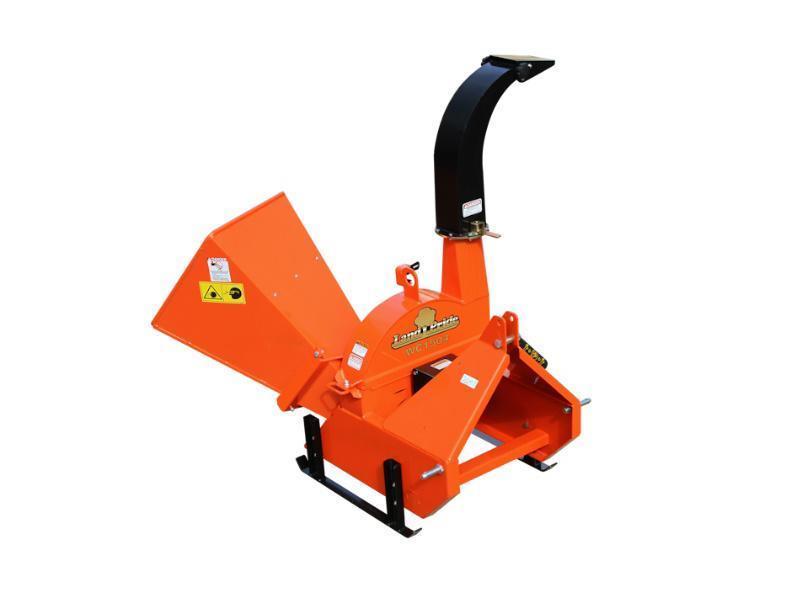
The Land Pride WC1504 is a PTO-driven, self-feeding wood chipper for processing suitable branches into chips with a correctly matched tractor. Its four-inch stated capacity is a boundary to understand, not a promise that every irregular branch of that diameter will pass easily or that a particular pile will disappear at a predictable hourly rate.
The strongest buying case is recurring material that fits the machine’s documented duty, an appropriate tractor already available, and a practical destination for the chips. If the real problem is one large clearing project, mixed debris or material outside the permitted size and type, compare a suitable service before buying around an exceptional job.
On This Page
ToggleFour inches, four knives and direct drive
The November 3, 2025 manual lists 450-lb weight, a Category 1 hitch, a four-inch chip capacity and four reversible, replaceable knives. The rotor is directly driven at 540 rpm. The tractor-requirements section states a 20–50-hp range and specifically requires at least 35 PTO hp for maximum capacity.
The same table distinguishes a 20-by-20-inch hopper opening from a 10-by-4-inch chipper inlet. The large receiving opening therefore does not establish that an equally large object can pass through the cutting system.
The drive includes shear-bolt protection. Correct driveline setup and the specified protection components are part of the working package, not accessories that can be ignored when comparing the chipper’s advertised price.
Capacity should be compared with a branch inventory
Before shopping, describe the material generated in a normal season. Record representative branch diameters, lengths, forks, bends and the amount of preparation needed before material can be handled appropriately. A pile’s outside volume alone gives a poor picture of the work.
Separate material intended for chipping from other waste. Do not assume that anything made partly of wood belongs in this machine. Use the exact manufacturer’s permitted-material instructions, including exclusions and inspection requirements.
Forked or crooked branches can create a different feeding question from straight pieces of similar maximum diameter. The hopper’s generous opening does not remove the narrower cutting inlet. A useful demonstration uses representative suitable material rather than only ideal straight branches.
Count preparation and movement as part of the job. If much of the session is spent bringing material to the machine or preparing it through another appropriate process, increasing chipper capacity may have less effect than reorganising the work area.
Self-feed is not a hydraulic feed system
The WC1504’s stated self-feed arrangement should not be confused with a powered hydraulic feed system offering its own controls. Those are different designs and can lead to different ownership expectations.
Evaluate the actual feeding method under the manufacturer’s training and operating requirements. Do not buy on the assumption that the machine has controls shown on a different chipper or that a feature can be improvised later.
The operator’s task includes presenting suitable material correctly and maintaining the required working position and clearances. This guide is a selection aid, not a substitute for the complete feeding and shutdown instructions.
During a competent demonstration, observe the whole routine: preparation, presentation, processing and movement to the next piece. The most useful result is a manageable repeated process, not a single dramatic branch being consumed.
Preserve the PTO horsepower qualification
The manual’s maximum-capacity requirement explicitly uses PTO horsepower. An engine figure on the tractor’s hood is not interchangeable with that rating. Use the actual PTO output for the tractor and transmission configuration being considered.
Aglist’s engine versus PTO horsepower guide explains the distinction. A universal percentage deduction from engine output is not an adequate substitute for documented tractor information.
Being within the broad tractor range does not establish identical performance throughout it. The specific maximum-capacity qualification is important for a buyer expecting to work regularly near the stated material limit.
Do not respond to uncertain capacity by increasing shaft speed beyond the requirement. The direct-drive rotor and specified PTO speed are part of the machine’s design. More rotational speed is not an approved shortcut to a larger chipper.
Hitch and driveline geometry must be checked together
The tractor must carry and operate the equipped implement correctly. Review the actual rear carrying arrangement, ballast guidance, clearance and the driveline through the permitted positions. A common hitch category does not answer every fitment question.
The manual describes adjustable support arrangements to establish the working relationship with the tractor output. Setup should follow the applicable procedure for the actual combination. A shaft used successfully on the seller’s tractor may be unsuitable on another.
If a quick hitch is proposed, include it from the start. The quick-hitch guide explains why added geometry and driveline length need assessment together. Do not approve the connection merely because the hooks engage.
For a chipper shared between tractors, keep separate verified setup records. Similar PTO splines do not guarantee identical distances or operating positions. Price any additional required equipment before treating shared use as a saving.
Organise the worksite around material flow
Choose a suitable work area with room for the prescribed operator positions, incoming material and discharged chips. Keep the loading side and chip destination from interfering with each other. A tidy sequence can reduce unnecessary handling without changing the machine.
Decide whether branches will be brought to a fixed worksite or whether the equipment will be repositioned between suitable locations. Each approach has setup and travel consequences. Compare the actual property layout instead of assuming one arrangement is always faster.
Identify where chips will accumulate and how they will be moved or used afterward. A pile that blocks the work area can interrupt a session even when the chipper itself is performing well.
The attachment-selection guide can help organise separate gathering and handling tasks. A grapple and a chipper perform different stages; neither should be expected to solve the other’s part of the process.
Discharge placement is a purchase requirement
The cited specification lists an adjustable discharge arrangement, but the actual destination still needs to be evaluated. Direction and height must be suitable for the intended worksite and consistent with the operating instructions.
Do not assume that a particular trailer or container can be loaded just because it appears lower than the discharge in a photograph. Distance, opening, positioning and the permitted discharge path all matter.
A useful demonstration should show the intended receiving arrangement when it can be assessed appropriately. If the real plan is to leave chips in a ground pile, include the space needed as that pile grows and the later handling method.
Keep people, animals and property out of the discharge zone as required by the manual. The fact that chips are a useful product does not make their discharge harmless or remove the need for a planned destination.
Estimate labour around the cutting operation
Do not infer an hourly processing rate from the maximum diameter. Material shape, preparation, handling and operator workflow can dominate total time. This guide does not claim measured WC1504 throughput.
As an invented work-study example, suppose a session includes 45 minutes of gathering and preparation, 30 minutes of appropriate processing and 15 minutes of cleanup. Total time is 90 minutes. Even a hypothetical one-third reduction in the processing portion saves only ten minutes overall.
If instead a better material layout reduces the gathering portion by fifteen minutes, that is a larger assumed saving without changing the cutting mechanism. These numbers are examples for recording one’s own work, not equipment performance promises.
Use a representative trial to identify the real bottleneck. If most time is spent handling oversized or unsuitable material, the answer may be a different service or preparation plan rather than attempting to push the chipper harder.
Knife condition changes the used-buying assessment
Inspect the complete knife and rotor system through the manufacturer’s secured procedure with competent assistance. Correct parts, condition and installation matter; the fact that a machine produces chips does not establish that it is ready for continued use.
Reversible knives can offer another serviceable edge when the applicable requirements are met. That does not make worn or damaged components free of repair cost. Obtain an assessment and price the complete work rather than assuming every used set can simply be turned over.
Check the housing, inlet, discharge components, supports, guards, hitch and driveline as well. Look for missing parts, deformation, corrosion and undocumented modifications. These are inspection priorities rather than claims of model-specific failure trends.
Ask for maintenance records and identify the fitted protection parts. A seller’s stronger replacement bolt or altered guard should be treated as a problem to resolve, not evidence of an improved machine.
Interruptions require diagnosis, not stronger protection parts
A designed shear component is intended to respond under specified overload conditions. Replacing it with a stronger arbitrary fastener can remove the intended protection. Keep the correct part identified in the machine records.
Repeated protection activation should lead to investigation of material, setup, condition and the underlying cause. A pile that must be finished does not justify bypassing a protection point.
For clearing, maintenance or inspection, follow the complete shutdown, isolation and stopped-motion requirements in the manual. A chipper rotor can remain hazardous after drive input is disengaged. Do not reach into the mechanism or improvise a clearing method.
Resolve readiness before the seasonal work window. Required parts, service appointments and correct documentation are easier to arrange in advance than during a partly completed cleanup project.
Compare ownership with a complete service
A service quotation may include gathering, processing and removal or placement of chips. Compare that scope with the entire owner-operated routine, including the tractor, labour, preparation and subsequent handling.
For an invented financial example, assume CAD 3,600 of net ownership cost allocated over six years plus CAD 150 annual maintenance. That is CAD 750 per year before tractor costs, storage, financing and labour. At five suitable sessions it is CAD 150 per session; at one it is CAD 750.
Those are not market prices, predicted repair bills or resale estimates for this chipper. Replace them with actual offers and realistic use. Timing and independence can justify ownership even when the direct cost comparison is close, but they should be stated plainly.
If the material comes from a one-time major project, avoid assuming the same annual workload will continue indefinitely. Recurring pruning and exceptional clearing are different ownership cases.
Frequently asked questions
Does the hopper opening define chip capacity?
No. The receiving hopper and cutting inlet are different dimensions. The cited capacity is four inches within the documented material duty.
Is 35 engine horsepower enough for maximum capacity?
The manual specifically says at least 35 PTO hp for maximum capacity. Use the actual tractor PTO rating and complete requirements.
Does self-feed mean hydraulic feed?
No. Do not assume the controls or behaviour of a different feed architecture.
Can a stronger shear bolt improve productivity?
No. Use the specified protection component and investigate the reason for repeated activation.
Who should shortlist the WC1504?
An owner with recurring suitable branch material, a verified tractor setup and a practical chip-handling plan. The complete workflow should justify the purchase.
Share your experience
Help other Canadian buyers — leave a quick review for the
Land Pride WC1504
There are no reviews yet. Be the first one to write one.