Overview & Specs
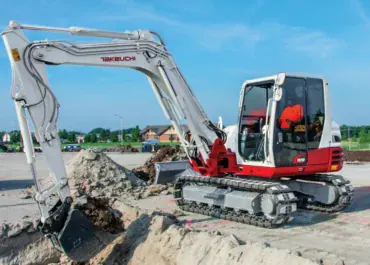
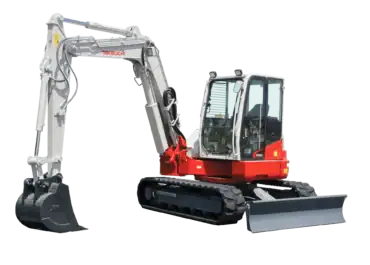
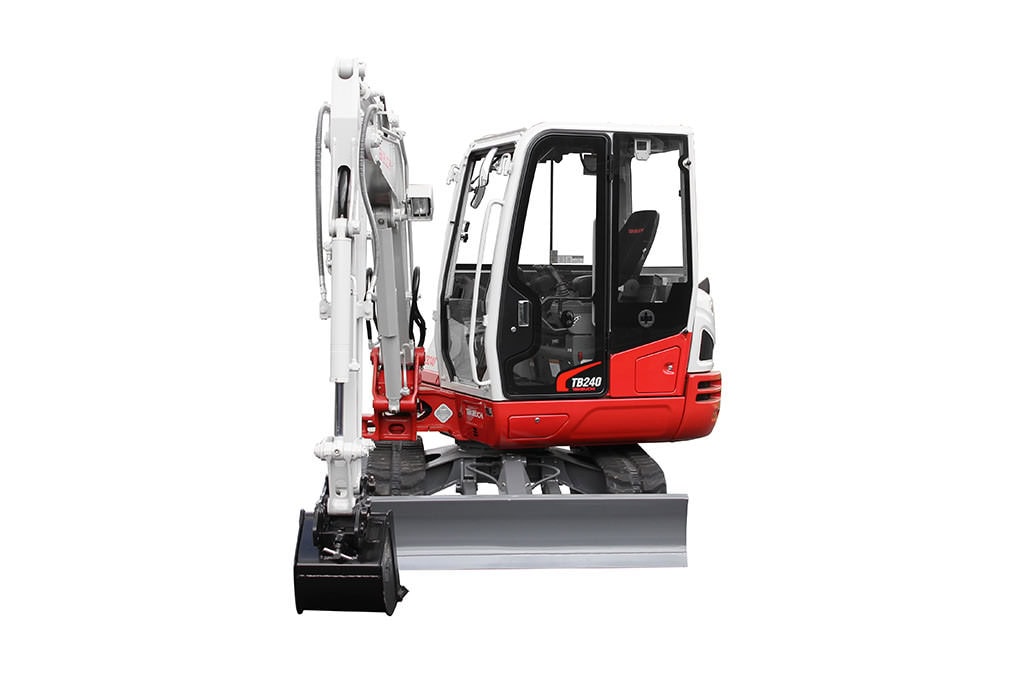
The Takeuchi TB240 is worth evaluating when excavation, backfilling and site finishing need to work as one sequence. Its conventional rear layout, documented long-arm arrangement and optional angle blade make it a different buying proposition from a very small machine selected mainly for a narrow entrance. For Canadian property contractors and farm owners, the question is whether the complete package reduces awkward transitions between stages of the job.
That does not mean an angle blade replaces every grading tool or that more engine output guarantees faster completion. Access, material destination, attachment suitability and operator technique still determine how useful the machine is. A good comparison tests the finished result, including the work remaining after bulk excavation.
On This Page
ToggleTB240 references and configuration
The source basis is the North American TB240 page and the April 2017 brochure linked from it. The dated brochure identifies serial starting points for its reference. Verify that the relevant information applies to the offered machine, especially when comparing used equipment.
| Item | Brochure reference | What to compare |
|---|---|---|
| Engine output | 35.8 hp at 2,200 rpm | Keep separate from attachment capability |
| Operating mass, canopy / cab | 3,890 / 4,080 kg | Use the actual equipped arrangement |
| Undercarriage width | 1,740 mm | Check the entire access route |
| Maximum depth | 3,465 mm | Evaluate the complete working envelope |
| Ground-level reach | 5,425 mm | Not horizontal reach at maximum depth |
| Auxiliary flow | 64.9 L/min | Match the circuit supplying the tool |
The website and older brochure differ slightly in their rounded imperial mass figures. The metric references above are explicitly tied to the brochure. A ready-to-work machine with coupler, thumb and additional tools should not be assigned a transport mass solely from either headline entry.
Why the blade choice belongs in the buying brief
The brochure lists a standard blade with float and an optional power angle blade with float and a bolt-on cutting edge. Establish which arrangement is actually fitted. A photograph of the front of the machine may not show enough to identify all functions or the condition of the installation.
The potential benefit is in the work sequence. If backfilling and directing loose material consume a meaningful part of the day, an appropriate blade arrangement may reduce repositioning or separate cleanup steps. If a supporting machine already handles that work efficiently, the option may add less value.
Describe the finished surface and material movement required before the demonstration. Ask for the relevant approved task to be shown with the proposed setup. Do not assume a blade option can deliver every grading tolerance, replace compaction equipment or eliminate the need for another tool.
For used equipment, inspect the blade, pivots, cylinder arrangement and cutting components with a competent evaluator. Establish the cost of correcting wear or missing parts. The value of an optional feature depends on it being serviceable and useful to your work.
Compare excavation and finishing together
A useful job estimate divides the work into access preparation, digging, material removal, backfilling and restoration. The TB240 should be evaluated against those stages rather than against a stopwatch on one bucket movement.
Consider a hypothetical job with two hours of digging, one hour of material handling and 45 minutes of finishing. A ten-percent reduction in digging time saves 12 minutes. Removing 20 minutes of unnecessary repositioning during finishing saves more. Those assumptions do not describe measured TB240 output; they show why the option package should target the actual bottleneck.
Record both useful output and time. Moving a larger quantity of material because the cut was unnecessarily wide is not automatically a productivity gain. Likewise, leaving more restoration for another machine can make the excavator stage look fast while increasing the full project time.
For repeat contracting, collect this information across several normal jobs. It helps distinguish a feature that regularly earns its cost from one that is impressive during a demonstration but rarely used afterwards.
Conventional tail and access width
The 1,740 mm undercarriage width is a starting access dimension. Check the blade, carried attachment, turns and overhead restrictions as well. The machine must reach the work area in a suitable arrangement, not merely pass a measured opening on paper.
At the destination, the brochure lists a 1,365 mm rear radius. Rear rotation is a separate constraint from track width. Mark the front tool’s movement, spoil position and receiving equipment on the site sketch so that the full operating cycle can be assessed.
Do not turn a compact-excavator label into permission to work against a structure. An open excavation site and a confined farmyard can require different layouts even when the digging task is similar. If rear clearance repeatedly determines machine position, include alternative tail configurations in the shortlist.
The arm and the useful digging zone
The cited arrangement uses a 1,600 mm arm. Its range drawing is more informative than the largest depth figure alone. A useful working zone must accommodate the cut, bucket curl, extraction and discharge with the intended attachment installed.
Plot the recurring work points relative to suitable machine positions. A bucket reaching the deepest point does not establish that it can fill and return efficiently throughout the excavation. Changes in standing elevation and receiving-vehicle position can also alter the practical arrangement.
The Aglist depth and reach guide explains these measurement distinctions. Keep the equipment comparison separate from excavation design and ground-support decisions; those cannot be derived from a machine brochure.
If the task is close to the published envelope, obtain a more specific demonstration or consider another configuration. Avoid treating a small arithmetic remainder as a comfortable working margin. The complete movement matters more than one maximum tooth position.
The engine differs from the TB235-2
The TB240 brochure identifies DOC and DPF exhaust after-treatment. This matters when cross-shopping a TB235-2, whose cited engine description is different. Do not apply a no-DPF statement across the brand or assume similar-looking compact machines have identical service requirements.
For purchase planning, review the actual operating and service documentation and determine how the work schedule fits it. This guide does not prescribe regeneration procedures or infer a repair pattern from the presence of a filter. Maintenance requirements and machine condition need their own evidence.
On used equipment, confirm that the installed system matches the documented configuration and have relevant warnings or service history assessed by a qualified technician. An unexplained fault indication is an unresolved purchase issue, not a reason to guess at a repair cost.
Canadian seasonal use also requires the applicable fuel, fluid, starting and warm-up provisions. Cold weather and frozen material affect different parts of the problem. A machine suitable for summer excavation should not automatically be assigned the same output in every winter task.
Hydraulic tools and quoted equipment
The brochure lists 115.8 L/min total hydraulic flow and 64.9 L/min auxiliary flow. The attachment comparison begins with the latter circuit-specific reference, then adds the required pressure, return, control and mounting checks.
For a hydraulic tool central to the purchase, obtain a complete installation scope. Identify the tool, hoses, connections, controls and commissioning. An attachment-only price should not be compared directly with a fully installed and demonstrated package.
Adjustable flow and stored attachment settings can support repeatable setup where the documented configuration provides them. Keep each setting associated with a known approved tool. A display selection does not itself certify that the tool is suitable.
A thumb also needs to work with the actual bucket and coupler. The thumb guide separates mounting, contact and stowed clearance. Handling ability does not replace the carrier’s lifting information.
Cab, tracks and the ownership package
The cab and canopy references differ by 190 kg in the cited metric table. Choose the enclosure around the season and working hours, then account for the corresponding equipment in transport planning. Inspect climate and visibility equipment on the actual machine.
The brochure also lists rubber tracks and an optional steel-track arrangement. Do not choose solely from an assumption about durability. Consider the surfaces, travel pattern, site requirements and the exact approved setup. The right comparison includes the cost of surface restoration or transport where those affect the job.
Have the regular operator assess seating, control reach, sightlines and entry. A practical operator station supports consistent work, but comfort claims are best checked by the person using the machine. Record any missing or damaged components in a used-equipment assessment.
Transport and lifting are separate checks
Use the applicable load chart for a lifting task, with the correct radius, height, direction, blade condition and equipment assumptions. Digging force and engine output cannot substitute for that information. An optional blade feature does not establish a new universal lifting rating.
For transport, identify the actual machine mass and every carried tool. Determine what the reference already includes, then assess the complete hauling arrangement and applicable requirements. Trailer deck length alone cannot establish suitability.
Where the machine rarely leaves one property, compare delivery with owning a dedicated hauling setup. Where it moves daily, include loading, securement and travel in the operating plan. The same excavator can support very different ownership economics under those two patterns.
Used TB240 assessment and final comparison
Start with the serial identity, enclosure, tracks, blade, arm and hydraulic equipment. Reconcile them with the documents used for the quotation. A used machine may have changed considerably since its original sale.
Have the undercarriage, linkage, structure, hydraulics and engine systems evaluated by a competent inspector. Observe representative operation after the appropriate checks. Price identified repairs, missing equipment and initial service before comparing the offer with a more complete machine.
These are condition checks, not claims that the TB240 has a particular failure frequency. No guaranteed service life, resale value or annual maintenance cost is established by the sources used here.
The Bobcat E42 and Kubota KX040-5 guides can help form comparison questions. Verify the exact generations and equipment, then evaluate the same excavation and finishing sequence.
Keep the final equipment sheet with the machine after delivery. If a different blade, coupler or attachment is fitted later, review the measurements and weight assumptions used for the original decision. That small recordkeeping step prevents an outdated sales specification from becoming the basis of a new site or transport plan.
Frequently asked questions
Is an angle blade standard?
The cited brochure lists it as optional. Confirm the offered machine and the functions included in the quote.
Does the TB240 share the TB235-2 emissions arrangement?
Do not assume so. The TB240 brochure specifies DOC and DPF after-treatment; use its own engine documentation.
What makes the blade option worth paying for?
A demonstrated improvement in recurring approved tasks, such as useful material placement or fewer repositioning steps. Price the benefit across the actual work schedule.
Can auxiliary flow alone determine attachment suitability?
No. Pressure, return, controls, mounting, mass and carrier approval remain part of the match.
What should acceptance cover?
The exact equipment package, representative excavation and finishing, important attachment functions, operator accommodation and a practical delivery or transport arrangement.
Share your experience
Help other Canadian buyers — leave a quick review for the
Takeuchi TB240
There are no reviews yet. Be the first one to write one.