Overview & Specs
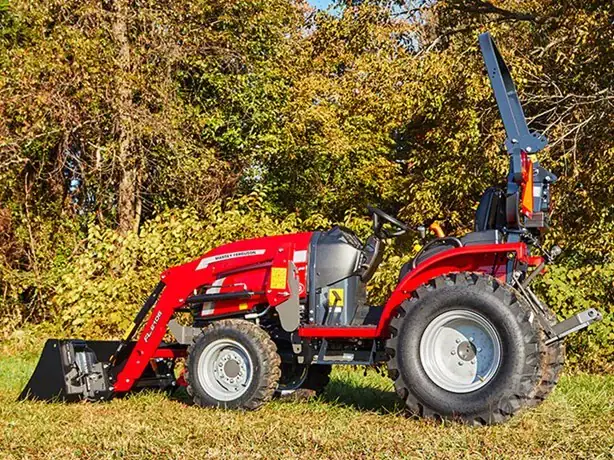
The Massey Ferguson 1M.40 is a power upgrade within the current 1M compact range, rather than a reason to assume a larger loader or a different working footprint. That distinction is central to buying it well. If your mower, tiller or snowblower benefits from the additional shaft output, the model deserves a place on the shortlist. If your unsolved problem is a heavy pallet, a narrow gate or an absent hydraulic function, extra engine output may leave the problem untouched.
For Canadian owners, the most useful comparison is therefore between two equipped packages doing the same work. Start with the implements and operator station, choose a transmission, and then decide whether the 1M.40’s additional power changes the result enough to justify the actual quoted difference.
On This Page
ToggleWhat the current 1M.40 specification establishes
| Power or configuration | Published specification |
|---|---|
| Engine output | 39.4 hp at 2,600 rpm |
| PTO output | 30.0 hp mechanical; 27.9 hp HST |
| Transmission | 12×12 power shuttle or three-range Servo-HST |
| Rear linkage | Category 1 |
The 1M technical sheet groups the 1M.35 and 1M.40 under the same dimensions, implement-flow entry and FL2611 loader table. It does not show a loader-capacity increase for the larger engine. The Canadian M Series page identifies these as current models, separately from previous-generation 1800M tractors. Sources checked October 11, 2026.
Where the additional power can change the decision
The first case is a clear implement requirement. Suppose a hypothetical tool calls for at least 29 PTO hp. The mechanical 1M.40 clears that initial numerical threshold; its HST version does not. That is not approval of a real attachment, and it does not mean the mechanical version should be bought without assessing operating conditions. It demonstrates why “about forty horsepower” is too imprecise for matching a driven tool.
The second case is a recurring task that can use more power while retaining an appropriate attachment and operating setup. This deserves a representative demonstration, with the desired finish or result defined in advance. The relevant question is whether the extra output changes a bottleneck in your work. A brochure cannot establish the speed at which a particular patch of wet grass or difficult soil can be worked.
The third case is future equipment that has already been identified. If a planned implement has a known model, mounting arrangement and documented requirements, it can legitimately influence today’s purchase. A vague possibility of “something bigger later” is a weaker reason to spend more, particularly when the future tool might require a different hitch, platform or loader rather than another increment of engine power.
Make mowing comparisons with time, not width alone
A wider suitable mower can reduce the number of passes across an open area. It can also change access, turning room, overlap and how close the tractor can work to obstacles. Those effects deserve their own assessment before the engine upgrade is credited with a time saving.
Consider two entirely hypothetical, already-approved mowing combinations. An effective width of 1.5 m at 4 km/h gives a theoretical 6,000 m² per hour. A 1.8 m effective width at 3.3 km/h gives 5,940 m² per hour. Both calculations exclude turning, setup and stops. The wider tool is not automatically the faster system when its assumed working pace is lower.
These are planning examples, not measured 1M.40 performance or recommended mowing speeds. Substitute observations from your own suitable demonstration. Include a representative awkward section as well as a straight pass, and judge finish consistently. If the bottleneck is repeatedly reversing around trees, control convenience and implement shape may matter more than the nominal cutting width.
For the implement-power definitions behind the comparison, use Aglist’s PTO versus engine horsepower guide. It helps prevent an attractive engine number from replacing the attachment manufacturer’s requirement.
HST or shuttle: settle the trade-off before comparing prices
The 1M.40 allows two different buying arguments. A buyer concentrating on repeated positioning can value hydrostatic travel control. A buyer spending more time in consistent passes may prefer the power-shuttle package. Both should be evaluated with the controls and tasks that the regular operator actually uses.
During an HST demonstration, try the permitted approach and retreat sequence for a typical loader task, then a suitable steady pass with the intended implement type. During a shuttle demonstration, assess direction selection and the available working speeds. Record how the operator reaches the loader control while maintaining a clear view of the task.
Do not assume that all shifts are made the same way or that a shuttle label removes the need to learn the transmission. The manual and handover should explain the exact operating procedures. Similarly, do not translate the difference in PTO ratings into a fixed fuel-saving percentage: neither rating measures litres consumed on your property.
The broader HST, gear and shuttle comparison is useful before a demonstration. A transmission preference made after trying the work is more reliable than one made from a feature name.
Do not spend engine money to solve a loader problem
List what needs lifting and where it must go. For occasional bagged products, the complete pallet and fork arrangement matters. For bucket work, material weight, attachment geometry and the receiving container matter. For every case, use the approved tractor, loader, tool and ballast information.
There is a documentation discrepancy to resolve: the Canadian overview’s forward-capacity heading does not agree with how the FL2611 technical table labels its pivot and forward measurements. This guide therefore does not turn the overview’s single number into a goods-weight allowance. Obtain the configuration-specific information for the proposed attachment.
Compare pickup height, placement height and reach as separate questions. A load may start on level ground yet need to clear a high trailer side. A machine’s ability to begin raising it cannot prove that the full placement cycle is suitable. The loader rating guide explains why that full cycle is essential.
If material handling is the main reason to buy a larger tractor, compare actual loader packages or another equipment class. Choosing the 1M.40 solely because its engine rating exceeds the 1M.35’s would not address the documented loader distinction.
What belongs in the attachment quotation
For a rear mower or tiller, specify the tool’s identity, connection geometry, mass, driveline and required ballast. Include a quick hitch only after checking the complete arrangement. Its convenience does not eliminate the need to assess shaft overlap, movement and guarding using the applicable instructions.
For a grapple, distinguish the mechanical carrier from the clamp-control circuit. For a rear blade with powered adjustments, count the functions that need operating and identify how each is supplied. “Hydraulics included” is not an adequate description if the offered package supplies only some of the intended movements.
Where multiple tools share the tractor, sketch the changeover sequence. Which attachment is removed first? Where is it parked? What must be reconnected? A modest equipment option can be valuable if it removes a recurring inconvenience, but that value should be tied to the actual routine rather than an unsupported promise of instant tool changes.
Winter use: evaluate the station and attachment together
The cab decision can dominate the experience of owning a compact tractor through a Canadian winter. Yet an enclosed station is only useful when the driver can see the working tool, enter comfortably and operate the necessary controls. Evaluate the quoted cab and equipment together, not separately in different brochures.
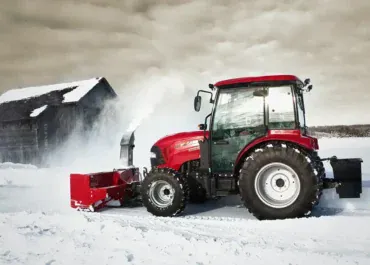
A rear snowblower makes rearward visibility and the operator’s position central questions. A front arrangement creates its own mounting, drive and sightline requirements. A loader bucket used for snow creates a storage-and-cycle problem. Decide which method suits the property, then verify the exact package through the snowblower fitment questions where relevant.
Inspect the working route as it will exist later in the season. Snowbanks can change turning space and the available approach to a shed. Stored implements can occupy the area that looked clear during an autumn visit. A written plan for discharge or storage is more useful than buying extra horsepower and hoping it covers every winter problem.
Is it too much tractor for the property?
Acreage alone cannot answer that. A small property can have demanding lifting or snow-clearing work, while a larger property may involve mostly light maintenance. The important measures are the tasks, access and completion window.
Check gates using the actual tyre setting and attachment width. Check storage using the highest installed component, including lights or other options. Check turning with the longest rear implement. The brochure’s base dimensions do not describe every equipped combination.
There are also differences between the overview and PDF base-weight entries. Do not select whichever makes an existing trailer appear adequate. Establish the configured mass with loader, ballast and implements, then assess the complete hauling arrangement against its ratings. A storage or transport change should appear in the purchase budget before it becomes a delivery-day surprise.
Alternatives and the equipped-price comparison
Compare the 1M.35 first if every necessary implement already fits that model. The money saved, if the actual quotations show a saving, may be more valuable in a properly specified attachment or operator option. Conversely, the 1M.40 earns consideration where its additional output answers a demonstrated requirement.
The John Deere 3038E and 3039R provide different compact-tractor comparison points. Use their guides to identify questions, then compare current primary specifications for the exact packages. Similar horsepower is not proof of equivalent loader, station or transmission choices.
Ask for a line-item comparison with the same essential tools and delivery scope. Separate required equipment from optional convenience items. This makes the premium understandable and prevents an apparently cheaper tractor from winning simply because its quotation omits part of the job.
Buying used or keeping the tractor long term
Verify identification and installed equipment before valuing a used package. Service records should correspond to that machine, and a qualified inspection should assess operation, hydraulic response, loader and hitch wear, tyre condition, repair evidence and any unresolved warnings. Inspect each included attachment independently.
Establish the exact engine aftertreatment and maintenance procedures from the appropriate manual. An older 1840M document is not automatically the service reference for a current 1M.40. Budget from actual service requirements and inspection findings, not invented failure rates or an assumed lifetime for major components.
For long-term ownership, retain the implement list and original configuration records. When a new job appears, compare it with those records instead of assuming the tractor can do it because a smaller previous task went well. This is particularly useful for new delivery sizes or a replacement attachment with a different centre of gravity.
Frequently asked questions
Does the 1M.40 have forty PTO horsepower?
No. The separately published PTO figures depend on the transmission and are lower than the engine figure.
Does it have a stronger loader than the 1M.35?
The reviewed technical sheet uses the same FL2611 table for both. Do not infer an increased load allowance from the engine upgrade.
Is the HST version unsuitable for mowing?
No general conclusion follows. Match the actual mower and evaluate travel control, finish and operating conditions.
Can a cab be treated as an accessory to decide on later?
Only after confirming the exact available package and compatibility. Decide the necessary operator environment before comparing complete quotations.
What is the strongest reason to choose the 1M.40?
A recurring implement task that uses its extra output while the rest of the tractor package still fits the property and operator.
Share your experience
Help other Canadian buyers — leave a quick review for the
Massey Ferguson 1M.40
There are no reviews yet. Be the first one to write one.