Overview & Specs
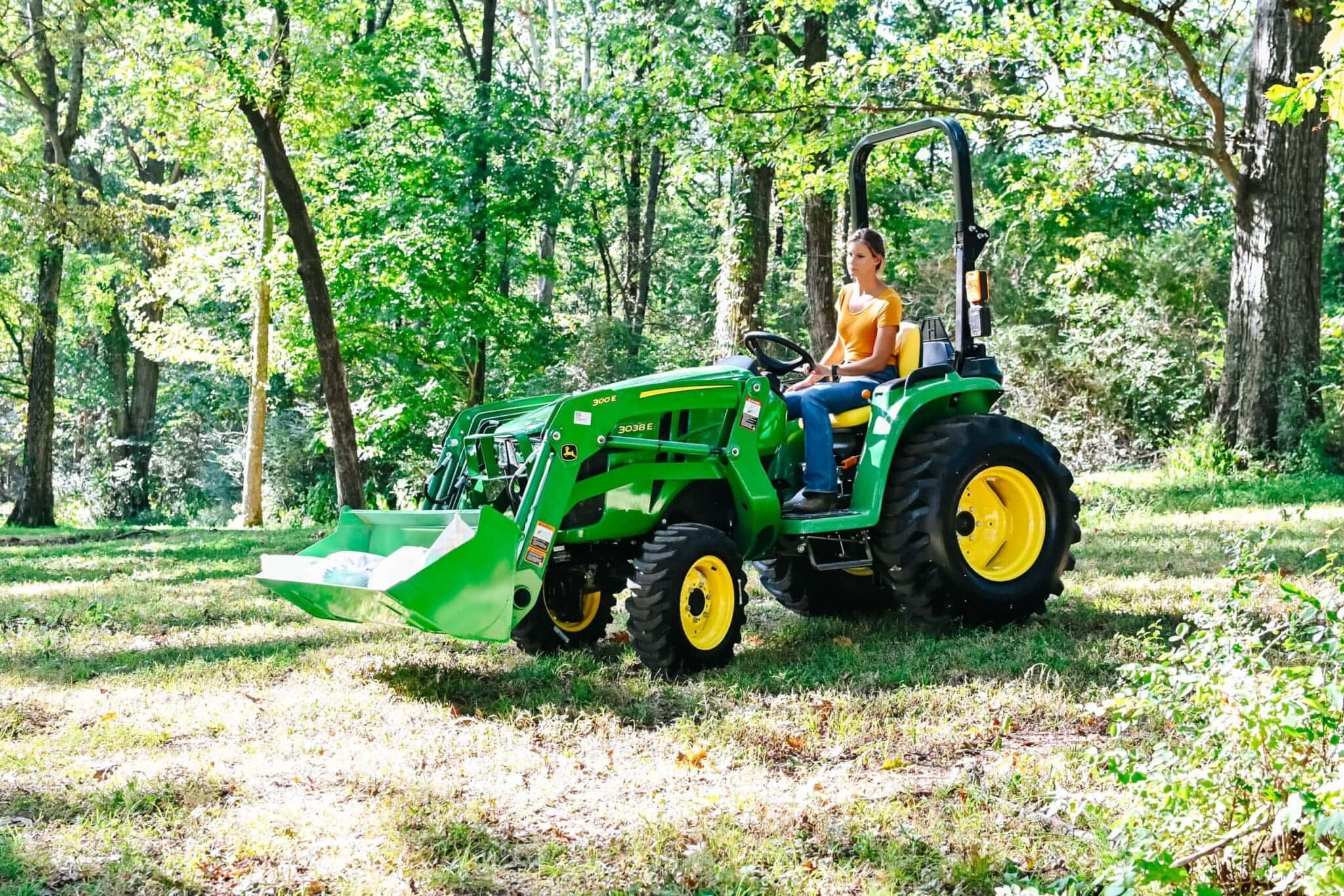
The John Deere 3038E is a compact tractor to shortlist when rear-PTO work is important but you still want an open-station machine with a relatively straightforward equipment package. Its extra engine output is most meaningful when a compatible mower, tiller or other driven implement can use it. It should not be interpreted as an automatic increase in loader capacity, hydraulic connections or operator amenities.
That distinction makes the 3038E an interesting Canadian acreage choice. A buyer may prefer to spend on the power needed for recurring vegetation or soil work while keeping the tractor’s specification focused. Another buyer doing long winter shifts may place greater value on a different operator station or attachment arrangement. This guide works through those choices using John Deere Canada’s information checked on September 30, 2026.
On This Page
Toggle3038E specifications for the Canadian-market comparison
| Item | Published figure or configuration |
|---|---|
| Gross engine output | 27.4 kW / 36.7 hp |
| PTO output | 22.4 kW / 30 hp |
| Engine | Approximately 1.57 L, three-cylinder turbocharged Yanmar diesel |
| Transmission | Two-range hydrostatic with Twin Touch controls |
| Implement hydraulics | 20.2 L/min / 5.3 US gpm |
| Category 1 hitch lift | 615 kg / 1,356 lb, measured 24 inches behind link arms |
| Approximate open-station shipping weight | 1,210 kg / 2,668 lb |
Source: John Deere Canada’s detailed 3038E page. The table separates gross and PTO power and uses the model page rather than differently labelled family summaries. Shipping weight excludes the assumption of a complete working loader, ballast and implement package.
Make the power increase answer a specific implement requirement
Begin with the attachment that occupies the most hours or rules out your current tractor. If it is a mower, obtain its stated tractor requirements and identify whether the power figure refers to the engine or PTO. If it is a tiller, include weight, hitch geometry and the conditions it is designed to work in. If it is another driven tool, use that tool’s own documentation rather than a recommendation borrowed from a mower.
A hypothetical implement requiring a minimum of 28 PTO hp would pass the initial power screen against the published figure above. That is only a screen: mounting, weight, shaft compatibility, ballast and the permitted operating arrangement still need to match. A second tool requiring 35 PTO hp would not pass that same screen. Neither example describes a particular commercial attachment.
This is the useful reason to investigate the 3038E’s output. “More power is always better” is a much weaker purchasing argument. If the whole implement list already fits a less powerful candidate, establish whether the additional output changes a regular task enough to justify the actual quotation.
Rough cutting: plan the whole pass
For vegetation management, describe the material to be cut, the desired finish and how often the area will be maintained. A frequently maintained field edge and neglected growth are not the same duty. Select the implement from its intended use and manufacturer requirements, then evaluate the tractor-and-tool combination under representative conditions.
Travel speed determines how much area is presented to the implement over time. It should be selected within the operating instructions while maintaining the required PTO conditions. A hydrostatic tractor allows travel adjustment within its selected range, but it does not convert an unsuitable implement into a suitable one or justify exceeding its intended duty.
A useful demonstration includes both an open pass and the awkward part of the route. Watch the finish, turns and visibility of the rear tool. The fastest straight-line pass may tell you little about a property with trees, fences and repeated short sections. Record what was demonstrated so that an attractive impression does not become an unsupported acres-per-hour promise.
Soil work: power, traction and implement mass remain separate
For a rotary tiller, the tractor must both carry the implement and supply the required PTO power. For a ground-engaging tool, it must also work appropriately with the available traction, soil and ballast arrangement. Passing one requirement does not establish the others.
The rear hitch figure in the table has a stated measurement position. Compare it with the implement’s actual mass and geometry using the applicable instructions, not simply with a number quoted at a different point on another tractor. A long implement can create a different handling requirement from a compact one of similar mass.
Before buying, draw the intended work sequence: move the implement from storage, attach it using the correct procedure, travel to the work and turn at the end. A tool may look attractive on an open field yet be inconvenient to handle in the available shed or around a small garden. The complete sequence is part of suitability.
The engine upgrade does not replace a hydraulic specification
Keep three items distinct on the quotation: engine output, implement hydraulic supply and installed hydraulic connections. More engine output does not establish that a tractor has more remote valves or that an attachment can use the combined steering-and-implement pump total.
For a hydraulic attachment, obtain the required supply and return arrangement, pressure limits, control functions and approved mounting. A grapple needs an appropriate way to operate its clamp as well as a compatible attachment interface. A rear implement with several hydraulic functions can require a different valve arrangement from a basic loader bucket.
Write the complete control package into the offer. If the equipment provider proposes a particular valve or connection kit, identify it and the attachment it serves. This turns “ready for a grapple” or “ready for rear implements” into something that can be checked at delivery.
Loader work: evaluate the 300E as a separate system
John Deere’s 300E loader page includes the 3038E in its tractor compatibility list. Its capacity information specifies measurement positions and the attachment setup. Use that information for the proposed combination rather than estimating a new load rating from the tractor’s higher horsepower.
For a pallet, identify the entire load and where its centre sits relative to the fork attachment. For a bucket, identify the material and an appropriate load. Rear ballast, tyres and the complete tractor configuration must follow the relevant instructions. A demonstration should not use the point where the rear becomes light or the hydraulics stop as a way to discover a working limit.
Check the receiver as well as the load. A trailer side, bin opening or storage platform presents a height-and-reach problem. The bucket’s discharge clearance differs from the loader pivot height. Use the actual bucket and receiver geometry to decide whether the cycle works.
If the essential job is frequent heavy material handling, consider whether a different loader package or machine class better addresses it. Aglist’s tractor size and horsepower guide helps separate engine selection from the wider capability decision.
Where the open-station package fits—and where it may not
The 3038E is worth investigating for an owner who expects recurring PTO work and mixed loader chores, with the operator environment judged suitable for the conditions. The case is less straightforward if most work happens in blowing snow, persistent dust or long exposed shifts. A larger engine cannot change that operator-station decision.
For Canadian winter use, first decide whether snow will be pushed, carried or blown. Then match the exact attachment and drive arrangement. A PTO blower’s requirements must fit the tractor, while a front attachment may need additional mounting and drive equipment. The snowblower fitment guide provides a starting checklist.
Assess tyre choice, lighting, visibility and storage as part of the winter package. Do not assume a tyre that works well for one summer task has proven performance on every winter surface. Any enclosure proposal should be evaluated for documented compatibility rather than described as equivalent to a factory cab by default.
3038E versus a more equipped compact tractor
The John Deere 2038R is a useful comparison when the buyer is interested in a different attachment and operator-feature arrangement at a similar engine-output level. Compare the actual mowing system, loader, implement changes and available options. Do not assume that “3 Series” automatically means the better tractor for every job than “2 Series.”
The Kubota L3902 and New Holland Workmaster 35C can also enter a task-led shortlist. Each quotation needs its own current transmission-specific power and attachment information. Similar advertised horsepower is only a reason to investigate, not proof that the packages are equivalent.
Compare the equipment you will actually own. Include the tractor, loader, tools, ballast, hydraulic connections and delivery. If one offer includes a rear implement and another does not, separate that value before comparing the tractor price or monthly payment.
Used 3038E inspection: identify the engine and attachments first
Deere’s 3E filter and service reference distinguishes serial ranges, including later 3038E DPF equipment. This prevents a single model name from being treated as a universal parts or maintenance specification.
Obtain the matching manual and inspect the machine with a qualified person. Review maintenance records, warning history where available and evidence of repair. Check relevant drivetrain and hydraulic functions using appropriate procedures, along with the loader mounting, linkage, front axle, hitch and tyres.
For exhaust-equipped examples, follow the serial-specific instructions and have unresolved warnings assessed. Do not infer that a general online regeneration procedure applies to this exact tractor. Nor should an unverified story about another machine become a prediction that this one will fail.
Inspect included implements separately. Wear parts, guards, driveline condition and identification can change the value of a package materially. A useful sale agreement lists what is included and any identified work, rather than relying on a photograph containing several tools.
Budget the complete working arrangement
Begin with written local quotations. Separate purchase price, finance terms, delivery, required setup and attachments. Add scheduled service, implement wear items, storage and transport. This guide does not invent a Canadian transaction price or a fixed fuel-consumption figure to make the ownership calculation appear complete.
Test your utilisation assumption. If the tractor is expected to work 200 hours a year, also examine a 100-hour scenario. A fixed annual cost divided by half as many hours doubles its cost per hour, before considering variable expenses. This arithmetic does not decide the purchase, but it shows why occasional use deserves a different financial discussion from regular work.
Finally, measure the working envelope with attachments and check the transport plan with ballast and carried equipment included. A tractor can fit the intended job yet exceed an existing storage or hauling arrangement. Discovering that before purchase makes the comparison much more useful.
3038E questions before signing
Is the model number its PTO horsepower?
No. Use the separately published PTO rating and the implement manufacturer’s requirements.
Does the turbocharged engine prove lower fuel cost?
No fixed saving follows from that feature alone. Compare actual duty, operating records or a properly documented test before making a fuel-cost claim.
Will it lift a heavier pallet than a smaller 3E?
Do not infer that from engine output. The loader, fork arrangement, load centre, height and approved tractor setup determine the assessment.
Is it the best choice if mowing is the main job?
That depends on the type of mowing and complete attachment arrangement. Compare the route, required finish, compatible tool and changeover process.
When is a more equipped tractor worth considering?
When a different operator station, attachment system or control arrangement improves a recurring part of the work. The 3038E’s power-led appeal should not obscure a requirement that extra engine output cannot solve.
Share your experience
Help other Canadian buyers — leave a quick review for the
John Deere 3038E
There are no reviews yet. Be the first one to write one.