Overview & Specs
The Case IH Farmall Compact 50C is a middle choice within the larger 45C, 50C and 55C compact C group. Its purchase case is strongest when a recurring powered implement benefits from its output, while the underlying compact-tractor package already suits the property’s carrying, access and loading requirements. It is less convincing as an automatic upgrade for a buyer whose real problem is loader geometry or transport capacity.
For Canadian buyers, the useful question is what the 50C changes compared with a suitable 45C, and what it leaves unchanged. This guide separates those issues, explains the transmission-dependent PTO figures and develops a practical way to compare complete packages without inventing fuel savings, repair patterns or market prices.
On This Page
ToggleThe Canadian 50C specification
| Item | Published Canadian information |
|---|---|
| Engine power | 50 hp |
| PTO power | 42.5 hp gear; 40 hp hydrostatic |
| Transmission choices | 16×16 mechanical shuttle or three-range HST |
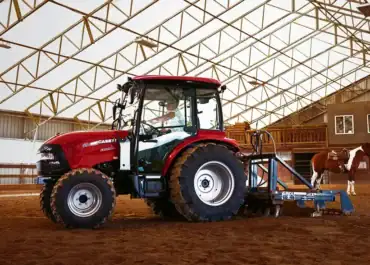
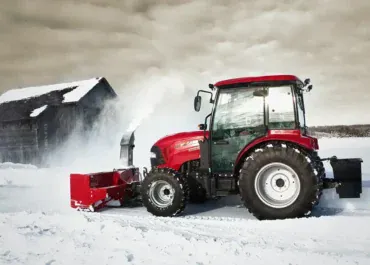
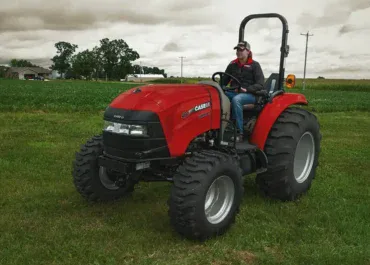
| Operator station | Cab or non-cab |
| Traction | MFD |
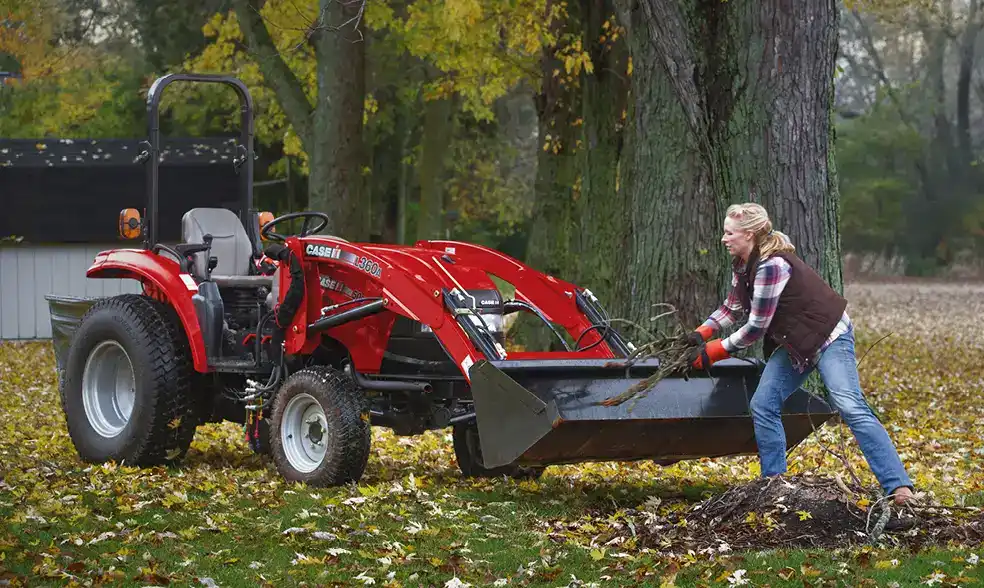
| Listed loader | L360A |
Source: the Canadian Farmall Compact 50C page, checked October 20, 2026. Identify the actual tractor and its equipment before using these figures in a purchase. An older advertisement mentioning another transmission or an abbreviated Farmall name is not sufficient evidence that it describes this configuration.
Where the extra power has a reason to exist
Start with the implement that occupies the most demanding recurring part of the workload. Record its exact model, configuration, minimum and maximum requirements, intended material and the finish expected. A mower, tiller or blower should be selected for that assignment before its requirements are compared with the tractor.
The current 50C ratings provide an initial power screen. They do not promise that a tool will maintain a particular work rate in every condition. A buyer maintaining vegetation regularly has a different task from one dealing with long-neglected growth. Likewise, a flexible garden project and a necessary winter clearing route create different priorities for the available work window.
Do not assume that additional engine output matters equally to every task. If most time disappears into travel between small areas, connecting implements or manoeuvring through gates, more power may leave those delays largely untouched. Measure the limiting portion of the work before assigning a financial value to the upgrade.
What the shared chassis information does not promise
The manufacturer’s linked 2022 Farmall Compact brochure CIH22041801 groups the 45C, 50C and 55C with the same 31 L/min implement-pump flow and the same 1,250-kg rear-lift entry at 24 inches behind the pins. That dated comparison shows why moving upward in engine output should not automatically be described as an increase in every capability.
For a machine covered by that documentation, the power choice can change while the cited hydraulic and hitch entries remain the same. A newer or differently equipped tractor still needs its applicable documentation. Do not silently apply an older table to an unidentified used example.
The practical buying lesson is to state the required improvement. If a rear tool creates an unsupported carrying arrangement, a higher engine number alone does not establish a solution. If a loader cannot place the load at the required height and reach, investigate that complete system directly. A power upgrade should answer a power-related need.
Gear or HST: the implement and driver both matter
The 42.5-hp gear and 40-hp HST PTO figures must stay attached to their respective versions. An implement described as needing a particular PTO output should not be matched to the 50-hp engine headline. Nor should a fixed percentage be deducted from engine power to invent an alternative rating.
For illustration, imagine a tool whose documentation requires at least 41 PTO hp. The published gear figure clears that initial numerical screen, while the HST figure does not. This is a hypothetical requirement, not approval of an actual attachment or a recommendation to work with minimal margin. The rest of the implement requirements remain necessary.
Even in that example, choosing the gear tractor is not the only possible response. A different suitable tool or tractor may fit the driver and workload better. The objective is a coherent combination, not forcing a preferred implement onto a tractor that only satisfies one line of its requirements.
Assess the mechanical version’s useful ratios and prescribed shifting sequence. For HST, assess fine travel control, range selection and repeated manoeuvres. The transmission guide helps compare the actual operating routine. The PTO guide explains the power terminology.
A work-window calculation for the middle engine option
Suppose, purely as a planning exercise, that a suitable smaller package completes the productive portion of a recurring task in 120 minutes and requires another 30 minutes for preparation and interruptions. Total time is 150 minutes. Assume a different approved package reduces productive time to 105 minutes while the other work remains unchanged. The total becomes 135 minutes.
The assumed saving is 15 minutes per session. Over 20 sessions it becomes five hours annually. These numbers are not measured 45C or 50C performance. They show why a purchase comparison should use the whole session and a defensible estimate of how often the benefit occurs.
If the actual task is not power-limited, the assumed reduction may never appear. A demonstration should therefore investigate the part of the job expected to change. Keep observations separate from estimates, and do not convert a horsepower difference directly into a percentage reduction in completion time.
Rear implements: carrying, connection and control
A rear tool needs more than adequate shaft power. Evaluate mounting geometry, configured mass, rearward projection, transport position and the tractor setup required by the relevant documentation. A hitch rating stated at a particular measuring point cannot be treated as a general permission to carry any lighter implement.
If a quick hitch is planned, include it in the connection and carrying assessment. Recheck the driveline where fitted, because the geometry changes. A shaft reaching the PTO stub while parked does not establish correct operation throughout permitted movement. Aglist’s quick-hitch guide develops those checks.
List hydraulic functions individually. An implement may use the PTO for its main task while requiring a cylinder for adjustment. The installed remote controls must match those functions. The pump-flow figure does not tell the buyer how many controls are present or whether the complete circuit suits an unspecified attachment.
The L360A needs a load and receiver description
The Canadian page lists the L360A for this tractor. Before comparing loader quotations, describe what is being handled and where it must be placed. Include attachment mass, load centre, height and reach, then assess the permitted complete configuration and required tractor setup.
For a bucket job, check discharge clearance into the actual receiver. For forks, include the goods, packaging and pallet as well as the fork assembly. An empty loader reaching above a trailer is not proof that the loaded task is suitable.
Compare workflow too. If the tractor spends most of the cycle travelling between locations, improving the layout may be more relevant than selecting more engine power. The loader capacity explanation separates lift measurements from other specifications and helps prevent an engine upgrade from being mistaken for a handling approval.
Cab and open station should be quoted as complete alternatives
The 50C offers both station types on the cited page. Record the installed equipment rather than assuming that every cab includes the same controls, climate functions or visibility features. For winter-led work, inspect the view toward the chosen attachment and the operator’s posture as well as the enclosure itself.
An open station may suit work that can be scheduled for favourable conditions. A cab may deserve priority where the operator must complete recurring tasks in less comfortable weather. Neither conclusion follows from acreage or total annual hours alone. Count the sessions in which the station materially changes the ability or willingness to do the job.
Include summer work in a winter-led purchase. Verify the proposed equipment for warm-weather sessions and test entry, exit and control reach with the regular driver. The station comparison provides a broader framework for that assessment.
Storage and transport can decide between otherwise suitable offers
Measure the exact machine with its tyre arrangement, attachments and high points. Include the space needed to turn and to park or connect the rear tools. A tractor that fits through the shed entrance may still make every attachment change inconvenient if the interior layout was not considered.
For hauling, determine the complete load rather than using tractor-only mass. Station, loader, tools, ballast and other transported equipment must be included before assessing the trailer and towing arrangement. A similar-looking compact tractor is not a reliable weight substitute.
If the tractor moves between properties, include loading and unloading in the work-window comparison. A package that saves a few minutes in the field can lose that advantage through awkward transport logistics. The appropriate purchase is the one that fits the whole ownership routine.
Used 50C inspection and a complete cost comparison
Confirm serial identity, transmission and station first. Match the correct manuals and review service records. Have a competent inspection assess drive and hydraulic operation, hitch condition, loader mounting, tyres, repairs and warning history. These are purchase priorities, not allegations of recurring model defects.
Inspect included implements separately. A tractor price that includes a worn or incomplete tool is not equivalent to a ready-to-work package. Obtain estimates for identified work and missing controls, then compare the completed cost with other offers.
Separate tractor, loader, essential tools, required setup, delivery and immediate service in the budget. Avoid assuming that the middle engine option has a particular resale premium or fuel advantage without evidence. The comparison with the Farmall Compact 45C should explain which actual recurring requirement the 50C improves.
Keep a written acceptance list for delivery: exact transmission and station, identified loader, required attachment controls, supplied manuals and the equipment demonstrated. Checking the list against the delivered machine is more reliable than trying to remember which features appeared on a display tractor during an earlier visit.
Frequently asked questions
Does the 50C have 50 PTO horsepower?
No. The current Canadian page lists 42.5 hp for gear and 40 hp for HST. Keep engine and shaft power separate.
Does upgrading from 45C automatically increase rear lift?
The cited 2022 table gives the same condition-specific rear-lift entry across 45C, 50C and 55C. Verify the actual configuration rather than inferring lift from engine size.
Should I choose the mechanical version solely to clear a power threshold?
Check all implement requirements and the driver’s routine. Another suitable tool or tractor package may provide a better overall result.
Can the cab choice wait until after the implements are ordered?
Plan them together. The exact station, controls, access and attachment arrangement need to form one compatible package.
When does the 50C make the strongest sense?
When its verified power and equipment meet recurring work that matters, while the rest of the compact package already fits access, carrying, loading and ownership requirements.
Share your experience
Help other Canadian buyers — leave a quick review for the
Case IH Farmall Compact 50C
There are no reviews yet. Be the first one to write one.