Overview & Specs
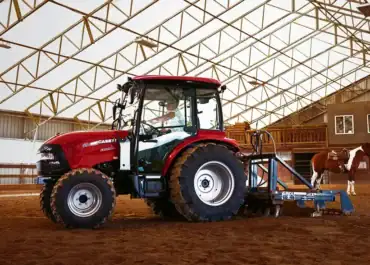
The Case IH Farmall Compact 40C deserves a close look when an enclosed operator station is part of the equipment requirement rather than a late addition to the wish list. The current Canadian model page identifies a cab tractor with 40 engine hp and a choice of mechanical-shuttle or hydrostatic transmission. For an acreage owner, its strongest purchase case can be a documented year-round package that supports essential winter work as well as summer implements.
A cab does not make every attachment suitable or eliminate the need to assess visibility, access and working posture. This guide focuses on the complete 40C configuration: what the Canadian specifications establish, how the station changes the buying process, and what a used example must demonstrate before its enclosed seat earns a premium.
On This Page
ToggleCanadian model identity and core specifications
| Item | Farmall Compact 40C |
|---|---|
| Engine power | 40 hp |
| PTO power | 34 hp gear; 32 hp hydrostatic |
| Transmission | 12×12 mechanical shuttle or three-range HST |
| Operator station | Cab |
| Traction | MFD |
| Compatible loader listed | L350A |
Source: the Canadian Farmall Compact 40C page, checked October 19, 2026. The linked 2022 Farmall Compact brochure CIH22041801 gives matching engine, PTO and transmission entries and lists two rear remotes for the covered cab configuration. A quotation or used-machine inspection must still establish the actual equipment supplied.
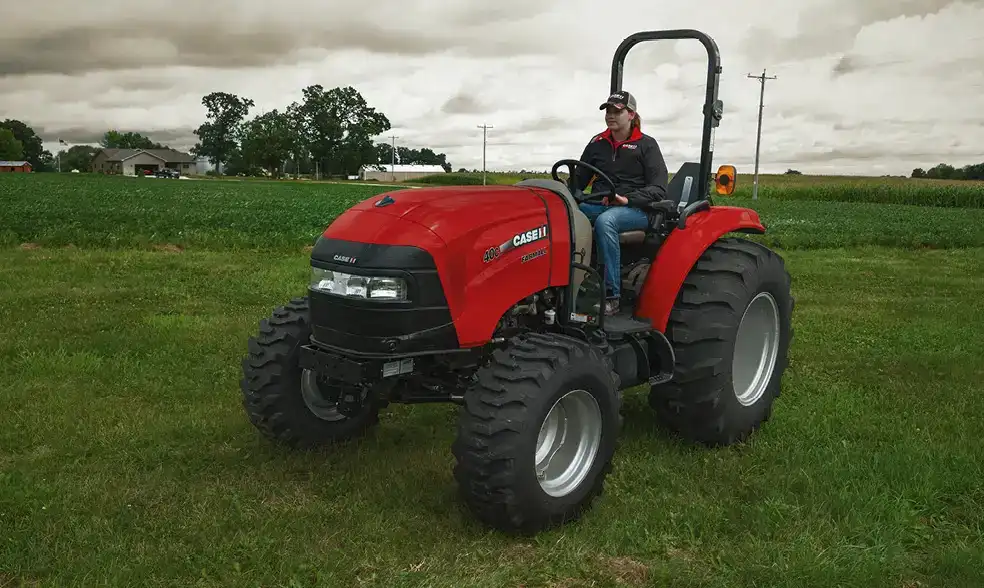
Do not treat a 40A, 35C or 45C advertisement as a substitute for 40C documentation. Similar names conceal differences in station, transmission and other equipment. Record the full model and serial identity, then the loader, tyres and attachments as separate parts of the package.
Begin with the winter job that cannot be postponed
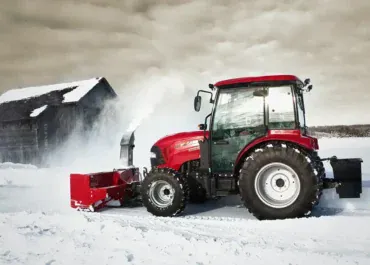
A tractor that clears a household’s only access before a morning departure faces a different requirement from one used for optional weekend projects. Write down the necessary clearing window, route and destination for snow. Include the areas that become difficult after banks accumulate, not only the space available before the first storm.
Then choose the method. A bucket, blade and blower each create a different sequence and place the operator’s attention in different directions. The cab can improve the working environment, but the complete arrangement must still fit the driveway and the chosen tool. Buying enclosure first and discovering an incompatible attachment later reverses the sensible order.
For a rear blower, assess the repeated viewing posture from the actual seat. For a front arrangement, verify the complete mounting, drive and controls for the exact tractor. The availability of a rear PTO does not establish compatibility with an unspecified front system. Aglist’s snowblower fitment guide helps structure that equipment check.
Inspect the cab as working equipment
Start with entry and exit while wearing normal winter clothing. Check the steps, handholds, door opening and space available beside the stored tractor. A comfortable seat is only part of the experience if the operator repeatedly climbs in and out to open gates or change tools.
Next identify the glass areas needed for the planned attachment. Evaluate the installed cleaning, clearing and lighting equipment rather than assuming that “cab” guarantees every visibility feature. Inspect controls and their reach from the normal seated position. The important question is whether the driver can monitor the work in the approved arrangement.
For a used machine, test the actual climate equipment through appropriate procedures and have faults assessed. A working heater, damaged seals and an inoperative cooling system represent different purchase implications. Price the findings separately. Do not assign a fixed cab premium without knowing the condition of the equipment that creates its value.
A pleasant autumn demonstration cannot prove performance during a severe winter morning. Record what has been checked and what remains dependent on documentation or further evaluation. That is more useful than converting an untested expectation into a favourable conclusion. The cab buying guide develops the broader station comparison.
Summer work should remain part of a winter-led purchase
A snow-focused buyer can overlook how the tractor will be used during the rest of the year. List mowing, garden, grading and material tasks before finalising the package. Confirm the required cooling and ventilation equipment, sightlines and attachment compatibility for those sessions as well.
For mowing, the 34-hp gear and 32-hp HST PTO figures are more relevant to a shaft-power requirement than the 40-hp engine headline. Choose a tool for the vegetation and finish, then confirm the entire combination. Do not use the lower travel speed available with one transmission as permission to ignore a minimum implement requirement.
For repeated short chores, observe whether doors and access complicate the routine enough to matter. That does not invalidate the cab’s winter value. It simply gives the buyer a complete picture of the trade-off rather than evaluating the tractor in only its most favourable season.
Transmission choice changes the operating routine
HST is worth evaluating where snow conditions or loader positioning repeatedly call for small ground-speed adjustments. Test the actual pedal arrangement, range selection and control response after appropriate familiarisation. Include normal footwear, because winter boots can change how the controls feel compared with a summer visit.
The mechanical shuttle should be assessed for suitable ratios and the prescribed reversing sequence. A long predictable pass may create different priorities from repeated manoeuvres around parked equipment. Do not interpret the shuttle label as a universal description of how gears and ranges may be changed.
Compare both with a documented suitable implement. A difference in PTO rating is part of the equipment match, not a direct percentage prediction of productivity or fuel use. Aglist’s transmission guide helps distinguish those questions before choosing a preferred control style.
Rear attachments need more than the correct horsepower
Check hitch category, carrying geometry, transport clearance, required PTO arrangement and hydraulic functions. The tractor may satisfy one requirement while failing another. A long rear tool can create a different balance and clearance problem from a short tool of similar mass, even when both connect to the same category of hitch.
For hydraulic adjustments, identify which functions must be operated independently and what the installed valves support. The brochure’s remote count is useful background, but the actual tractor and implement still need a matched connection plan. A PTO-driven attachment may also require hydraulic or electrical controls for secondary functions.
If a quick hitch is included, reassess the complete geometry and driveline. Do not assume the tractor-side connection solves every implement-side detail. A successful purchase should arrive with these compatibility questions answered, not with an assortment of parts that each looked plausible in isolation.
Loader work: keep the cab and capacity decisions separate
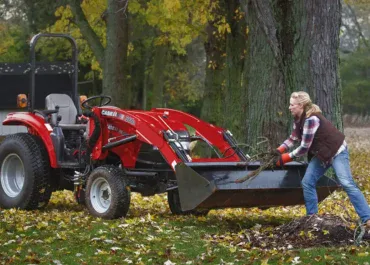
The Canadian 40C page lists the L350A. Evaluate it against the actual bucket or fork job, including attachment mass, load position, receiving height and reach. The cab’s convenience does not change the need for a verified lifting arrangement and prescribed tractor setup.
Observe the view of the working tool and receiving point. A parked cab demonstration cannot establish visibility through a whole lift-and-place sequence. Use an appropriate permitted demonstration and the correct load information rather than improvising a test with unknown material.
For a property receiving occasional heavy deliveries, separate unloading from later distribution. Another unloading arrangement may leave the 40C well suited to the routine chores without asking it to exceed its verified capability. The loader capacity guide explains why headline maximums cannot be treated as general pallet ratings.
Measure storage before committing to the enclosure
Record the highest installed point and the actual clear opening, including door hardware and the approach surface. Measure width with mirrors and attachments, then consider the space needed to open the door and exit normally. A tractor that barely passes through an opening may still be inconvenient to use inside the building.
Do not assume that the cab must be taller than every open-station alternative. Compare the actual configurations rather than the category names. Tyres and accessories can affect the result, and a brochure dimension is not a clearance guarantee for a particular delivered machine.
If transport is required, account for the complete package in the hauling assessment. The station, loader, implements and ballast belong in the load information. Tractor-only mass is not the same as a ready-to-haul combination. Obtain reliable measurements or weights and use the hauling equipment’s applicable requirements.
Put the cab premium against the hours when it matters
Use matched local quotations rather than an invented market price. For illustration only, suppose a suitable enclosed package costs CAD 6,000 more than a suitable alternative, and the owner considers six years of use. Ignoring financing, repairs and resale, that assumed difference is CAD 1,000 per year.
If there are 40 hours annually when enclosure materially improves the required work, the illustrative capital difference is CAD 25 per relevant hour. At 80 such hours it is CAD 12.50. These are planning assumptions, not 40C prices, measured time savings or a complete ownership-cost model.
The point is to make the preference understandable. Comfort during essential work can justify a premium without a claim that every job gets done faster. Add actual equipment differences, service expectations and financial terms when comparing real offers. Do not count a better included attachment twice as both a tractor-price advantage and a separate saving.
Alternatives and used-machine priorities
The 35C is not an equivalent cab quote simply because it sits beside the 40C in the range. The 40A also creates a different station and equipment discussion. Compare a documented complete configuration that meets the essential requirements before weighing the price.
The Massey Ferguson 1M.35 guide offers another station-and-implement comparison. When comparing brands, keep actual PTO output, required controls, cab equipment and attachment compatibility visible. Model numbering alone is not a reliable way to match packages.
For a used 40C, combine a normal tractor inspection with a separate cab assessment. Review service evidence, drivetrain and hydraulic operation, linkage, loader mounting, tyres and repairs with competent help. Assess glass, seals, doors, controls and climate equipment individually. These are inspection priorities rather than claims of common 40C faults.
Prepare the offer after pricing identified work and missing equipment. A low advertised figure can become less attractive once essential visibility or attachment components are included. Keep the final configuration and supporting manuals with the purchase records so later equipment decisions start from the tractor actually owned.
Frequently asked questions
Is the 40C covered here a cab model?
Yes. The current Canadian page identifies the operator area as cab. Verify the exact machine and included equipment when purchasing.
Does the cab make a rear blower comfortable for everyone?
No. Weather protection and repeated rearward viewing are separate issues. Assess the operator’s posture with the proposed attachment.
Can the HST version use the gear model’s PTO rating?
No. The cited ratings are 32 hp HST and 34 hp gear. Use the appropriate figure and the full implement requirements.
Does enclosure increase the permitted loader payload?
Do not infer a load approval from the station. Use the complete tractor-loader attachment documentation and required setup.
What makes the 40C a convincing purchase?
A verified year-round attachment package, an operator station that supports essential work, practical storage access and a total cost that includes the equipment needed from the first day.
Share your experience
Help other Canadian buyers — leave a quick review for the
Case IH Farmall Compact 40C
There are no reviews yet. Be the first one to write one.