Overview & Specs
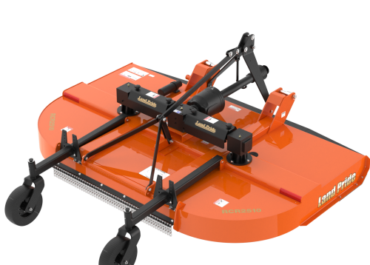
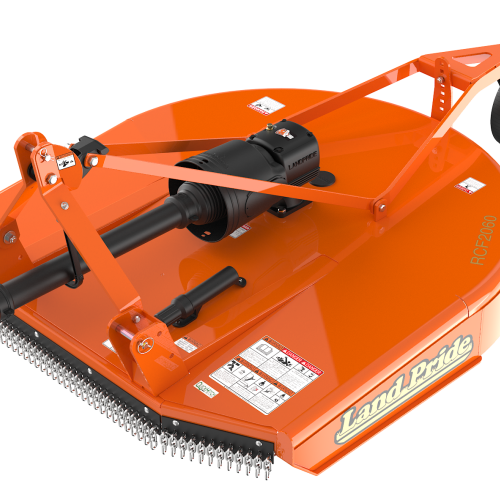
The Land Pride RCF2060 is a five-foot rotary cutter for a buyer who needs rough-vegetation capability without moving to a six-foot deck. Its useful distinction is a documented two-inch cutting-capacity class in a comparatively narrow working width. That can suit maintained farm margins and acreage grass with recurring light brush, provided the tractor, terrain and complete mounted package are appropriate.
This guide uses the North American RCF2060 in Land Pride manual 326-459M dated April 15, 2026. It does not transfer specifications from an older RCR cutter or from the wider RCF2072. Current Canadian stock, purchase prices and warranty eligibility for an individual used machine are not established here.
On This Page
ToggleChoose the vegetation duty before the deck width
A five-foot cutter can serve very different jobs. Regular grass control around a farm is not the same task as reclaiming an abandoned area containing unknown debris. Before shopping, divide the property into maintained grass, visible woody regrowth and areas that need investigation or initial clearing. The machine should be chosen for identified work rather than used to discover hidden obstacles.
The manufacturer’s two-inch cutting statement is a capacity boundary for the intended vegetation. It does not authorize contact with stones, wire, substantial stumps or concealed objects. Stem diameter also does not describe density: isolated stems and a crowded patch can create different working demands even when their largest visible diameters match.
This makes the RCF2060 an interesting candidate when access favours five feet but the recurring vegetation calls for more than the smaller-duty cutter being considered. It is not automatically the best choice for established lawn, where the desired finish may point toward a finish mower.
The configured specifications
| RCF2060 reference | Buying implication |
|---|---|
| 60-inch cutting width; 65-inch overall width | Measure the complete machine at gates and storage entrances. |
| 98-inch overall length | Allow for rear overhang and turning space. |
| 620 lb configured weight | Includes laminated tailwheel, slip-clutch driveline, front rubber guards and rear metal band. |
| 20–65 recommended tractor hp | Preserve the manufacturer’s rating label; this is not a substituted PTO-power range. |
| Category I; 540-rpm PTO | Check hitch, shaft and tractor requirements together. |
| 1½–12-inch cutting-height range | Select a permitted working setup for the actual surface and result. |
A bare advertisement that gives only “620 pounds” loses useful information. Different supplied driveline, tailwheel or guarding equipment can change the actual package. Inventory a used machine and ask what a new quotation includes before comparing weight or price.
Likewise, the horsepower range is only the first screening step. A tractor must carry and control the rear-mounted implement, accommodate the driveline and satisfy its own attachment and ballast instructions. Keeping the cutter turning on a favourable patch is not a complete compatibility demonstration.
Five feet of cut does not mean five feet of clearance
The difference between working and overall width is five inches in the referenced table. An opening that appears generous for the cut can therefore be restrictive for the attachment. Alignment, uneven ground and the tractor’s own dimensions also matter. Leave an appropriate operating margin rather than treating a tape measurement as permission to squeeze through.
Length becomes important when turning beside buildings or shelterbelts. The cutter’s rear follows a different path from the tractor’s front, and the tailwheel extends the working package. Sketch the intended route with the entire combination, including the approach to its parking location.
A narrow deck can earn its keep on divided paddocks or obstacle-rich acreage even if a wider cutter would cover a large rectangle faster. Count the trimming, backing and repositioning that the actual property requires. Nominal width alone does not predict the time needed to finish the whole job.
Floating linkage is part of the working design
The RCF2060 has a floating top-link arrangement and is documented as quick-hitch ready. Those statements describe a particular correctly assembled system. They should not be interpreted as approval for any improvised upper connection or any quick hitch whose hooks happen to engage.
The connection must preserve the required articulation while keeping the tractor, cutter and driveline within their permitted movement. A setup that looks tidy on level concrete can behave differently when the tractor and cutter encounter a change in contour. Follow the exact clearance and setup procedures rather than making the assembly rigid simply to eliminate visible movement.
A quick hitch changes the geometry between tractor and attachment. If it is part of the purchase, assess the driveline with it installed. A shaft that worked on another tractor, or without the hitch, needs its own length and overlap assessment for the new combination.
Protection and guarding are separate decisions
The manual lists shear-bolt and two-plate slip-clutch driveline choices. Identify the fitted assembly and its maintenance requirements. Correct shear hardware and correctly maintained clutch components serve different protection arrangements; neither increases the cutter’s vegetation rating.
The documented rear metal band and optional rubber or chain guarding choices also belong in the equipment list. Do not use the word “optional” as a reason to omit protection required for the actual application. The completed machine must meet the applicable operating instructions, not merely the lowest advertised base price.
For a used purchase, missing guards or an unidentified shaft can materially change the cost of returning the cutter to service. Inspect those items before negotiating around cosmetic condition. A machine that can spin is not necessarily complete or ready for work.
Deck and wear components: inspect the parts that shape the result
The reference table specifies a welded 10-gauge deck, free-swinging cutting blades and a round stump-jumper pan. These features belong to the cutter’s intended rough-cutting architecture. They are not a guarantee against damage from striking obstacles.
The full-length welded skid shoes have a documented bolt-on replaceable shoe accessory. Establish what is fitted and how much usable material remains. A buyer should distinguish ordinary replaceable wear from damage to the underlying structure, especially where an attachment has been repaired or stored with accumulated debris.
Have the rotating assembly inspected under the prescribed shutdown, isolation and support conditions. Correct blades, attachment hardware and sound components matter more than a seller’s statement that the cutter still mows. Unexplained vibration during a suitable demonstration is a reason to stop and investigate.
Compare RCF2060 with the job behind neighbouring models
The RCR1260 is another five-foot model, but its separate guide describes a different documented duty and package. Equal cutting width does not establish equal brush capacity, configured weight or component interchangeability. Use the model identity and applicable manual, not the appearance of a similar orange deck.
The RCR1872 provides a six-foot comparison. A wider cutter can reduce straight passes, but adds another handling and access question. Compare the complete tractor-and-cutter arrangement on the actual route before assigning a productivity advantage.
If the main task is a lawn-quality result on established turf, compare a finish-mowing system instead. The RCF2060 can control grass without being the most suitable tool for every desired appearance. Defining an acceptable finish before purchase prevents an otherwise capable cutter from being judged against the wrong job.
Keep the wider sibling’s parts separate
The same manual covers the RCF2072, but it lists a different gearbox ratio and blade length for that model. A family manual therefore needs column-by-column reading. When ordering used components or replacement blades, use the RCF2060 identity and applicable parts information rather than assuming that a shared manual means a shared rotating assembly.
This also improves a purchase comparison: ask for the specific cutter, driveline and tailwheel configuration on the invoice. A quotation naming only the RCF20 series leaves important details unresolved, including the width that will actually arrive.
A realistic Canadian mowing window
Suppose a property has an illustrative 10,000 square metres of suitable maintained rough grass. Assume an effective swath of 1.35 metres after overlap, an appropriate observed travel speed of 4 km/h and a hypothetical 60 percent field efficiency. Calculated working coverage is 1.35 × 4,000 × 0.60, or 3,240 square metres per hour.
That implies about 3.1 hours for the assumed area, before separate setup and cleanup. These are invented planning inputs, not measured RCF2060 performance or a recommended travel speed. Their value is showing which observations a demonstration should collect.
If repeated turns and small corners reduce the assumed efficiency to 40 percent, coverage becomes 2,160 square metres per hour and the same area takes about 4.6 hours. A route change can therefore matter substantially without changing the deck at all. Keep repeat passes needed for an acceptable result in the completed-work total.
Seasonal work should not become a calendar promise
A familiar area deserves inspection after winter or another long period without cutting. Other property activity can introduce objects or change access. The first pass should not be used as an exploratory sweep through obscured material.
Ground trafficability matters independently of vegetation height. If the tractor would damage an unsuitable surface, completing the cut immediately can create another repair job. Choose timing for the local conditions rather than assuming a cutter makes every wet or uneven area workable.
For a shared farm tractor, include attachment changes and competing seasonal jobs in the ownership plan. A theoretically fast cutter has little practical value if the tractor is unavailable during the useful work window. Renting or contracting an occasional difficult section can complement ownership of a suitable maintenance cutter.
Used inspection and complete cost
Start with model and serial identification, the applicable manual and an inventory of supplied equipment. Examine the hitch, deck, tailwheel assembly, driveline and gearbox condition with competent assistance. Leakage, looseness, questionable repairs or corrosion need assessment on the actual machine; these are not claims of a recurring model defect.
Check whether the tailwheel moves and supports the assembly as intended, and identify the tyre fitted. Confirm correct blade and driveline components rather than treating undocumented replacements as upgrades. Price any necessary work using actual local parts and service quotations.
The resulting comparison should include delivery, tractor-specific setup, missing protection and identified repairs. A cheaper cutter needing a correct shaft and substantial work may cost more as a usable system. Keep ordinary wear maintenance separate from the initial return-to-service estimate.
Questions to settle before buying
Is the RCF2060 a brush-clearing machine for unknown land?
Its documented vegetation capacity does not replace site inspection or initial cleanup. Unknown debris and inappropriate terrain can require a different method.
Does its weight include every option?
No. The 620-lb figure belongs to the explicitly stated configuration. Identify the actual equipment supplied.
Will a tractor within the horsepower range always suit it?
No. Carrying, balance, hitch movement, driveline fit and the tractor’s own requirements remain separate checks.
Does a slip clutch let it cut larger stems?
No. Protection choice does not increase the documented vegetation duty.
What should decide between five and six feet?
Compare a compatible package, access and complete work sessions. The wider cutter’s theoretical coverage matters only where the property and tractor can use it.
Primary reference
Specifications were checked against Land Pride manual 326-459M, April 15, 2026. Area and time calculations are illustrative editorial planning examples, not field tests or guarantees.
Share your experience
Help other Canadian buyers — leave a quick review for the
Land Pride RCF2060
There are no reviews yet. Be the first one to write one.