Overview & Specs
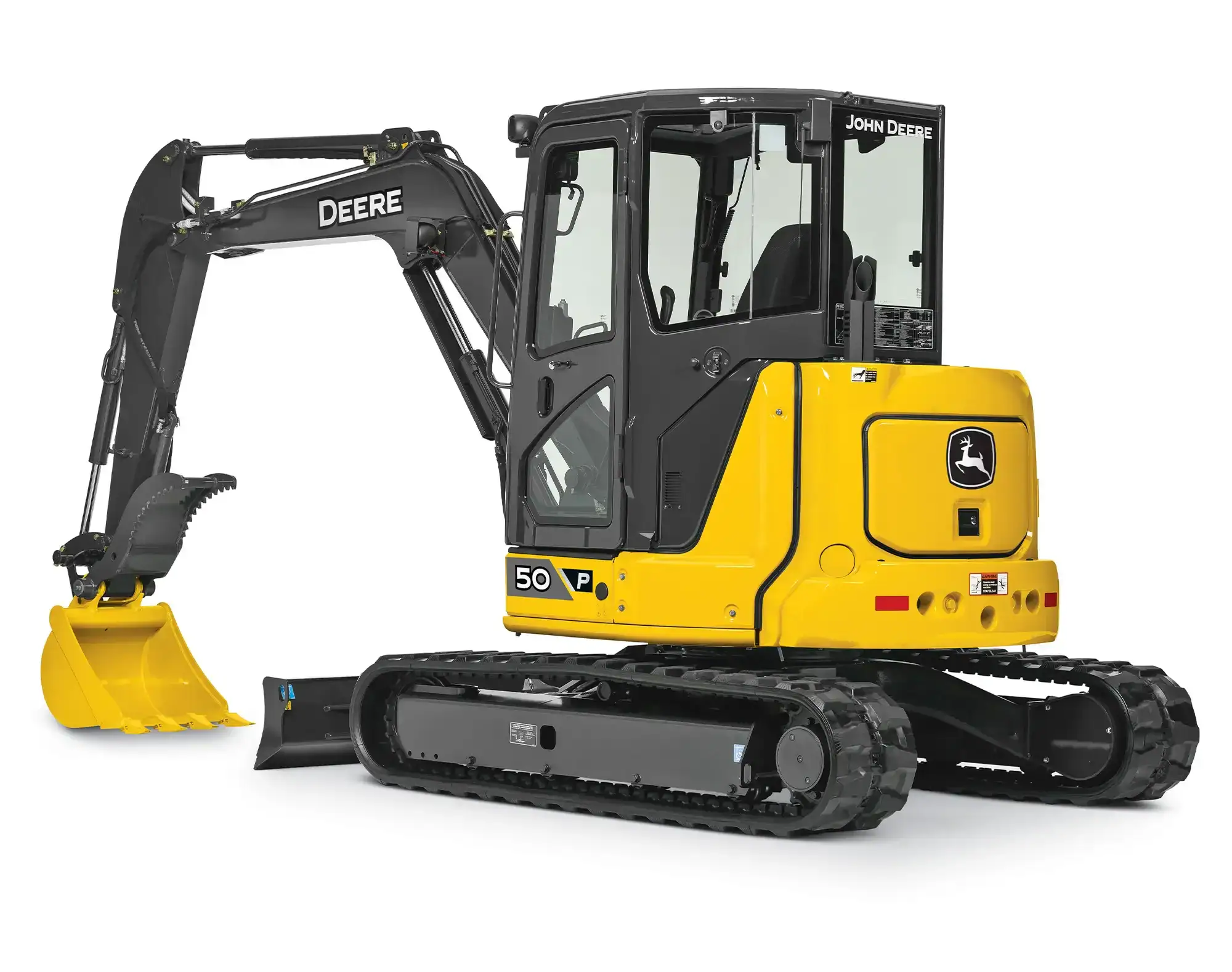
John Deere 50 P-Tier (50G) Compact Excavator
On This Page
ToggleIntroduction
The John Deere 50 P-Tier is a 5-tonne compact excavator that steps up the game with a stronger engine, greater reach, and more digging force — the machine for operators who need serious muscle for deeper trenches, tougher soil, and larger attachments. Formerly the 50G (and still widely called that), it delivers nearly 12 feet of dig depth, close to 20 feet of reach, and the stability that comes from a larger, wider undercarriage. For prairie contractors and farmers tackling demanding drainage, foundation, and land-clearing work, the 50 P-Tier is a capable step up from the 3.5-tonne class, from a brand with deep excavator experience.
On Aglist, the value is in understanding where the 50 P-Tier fits in the compact excavator market, with real owner and operator feedback beside the spec sheet. The numbers tell you what it digs; the reviews tell you how it performs on demanding jobs, how the cab feels over a long day, and how it holds up. It competes with the Kubota KX057-5 / U55-5 and other 5-tonne machines.
The 50 P-Tier uses a zero-tail-swing design — the John Deere hallmark on its larger compacts. We explain why that matters below, since tail swing is the most important design feature on any compact excavator.
Configurations & Pricing Context
The 50 P-Tier is part of John Deere’s compact excavator lineup in the 5-tonne class — the current P-Tier designation for what was the 50G (both names refer to essentially the same machine, sold side by side as John Deere transitions to P-Tier naming). It comes in canopy or enclosed cab (heat and A/C) configurations, with standard and long-arm options, mechanical quick-coupler, auxiliary hydraulics with selector valve, a backfill blade, and power/economy modes for fuel efficiency.
The 50 P-Tier runs buckets, augers, hydraulic hammers, thumbs, mulchers, and more, and is compatible with engcon tiltrotators (with EC-Oil, letting operators connect and disconnect attachments from the cab). RE40/RE50 rotary cutters and ME36/ME50 mulching heads fit the 50. A closed-center single-pump hydraulic system gives smooth attachment behaviour.
Pricing varies by configuration, attachments, and dealer. Because Dmytro has direct knowledge of Saskatchewan dealer and used pricing, we defer to local market figures over manufacturer-advertised numbers.
Key Specifications
| Specification | John Deere 50 P-Tier (50G) |
|---|---|
| Machine class | Compact excavator |
| Also known as | John Deere 50G |
| Operating weight | ~11,000 lb (~4,990 kg) |
| Weight class | 5 tonne |
| Tail swing | Zero tail swing |
| Total net horsepower | ~35.9 hp |
| Engine | Yanmar Tier 4 Final (no aftertreatment) |
| Maximum dig depth | ~11 ft 7 in (3.53 m) |
| Maximum reach | ~20 ft (nearly) |
| Bucket digging force | ~8,268 lb |
| Arm digging force | ~5,401 lb |
| Hydraulics | Closed-center single-pump |
| Arm options | Standard / long arm |
Specifications are verified against John Deere specification data and independent spec databases. The 50G and 50 P-Tier share essentially the same machine; confirm exact figures for the specific machine, year, and configuration with your dealer.
Understanding Tail Swing (Read This Before You Compare)
Tail swing is the most important design concept on any compact excavator, and the 50 P-Tier is a zero-tail-swing machine.
Tail swing describes how far the rear of the machine — the counterweight and engine housing — extends past the tracks when the upper structure rotates. The 50 P-Tier has a zero-tail-swing design: the rear stays within the track width through rotation, so you can dig flush against walls and obstacles without the tail striking anything — even in a powerful 5-tonne machine. This lets you take on demanding work in confined areas near structures.
This continues John Deere’s philosophy on its larger compacts (35 and up are zero tail swing by default), rather than the tight-tail-vs-conventional series split some competitors use. A useful comparison: the zero-tail-swing 50 P-Tier versus Kubota’s 5-tonne machines — the reduced-tail-swing U55-5 and conventional KX057-5. The Deere’s zero tail swing is an advantage for the tightest work, while the extra undercarriage width of a 5-tonne machine (versus a 3.5-tonne) also brings more stability. As one experienced operator put it, the 5-ton class is “a lot more machine than the specs may indicate,” with substantially more stability and breakout than the 3.5-tonne class.
Build & Engineering Detail
The 50 P-Tier runs a 35.9-horsepower Yanmar Tier 4 Final diesel that meets emissions without aftertreatment devices (no diesel particulate filter), reducing maintenance and avoiding regeneration downtime. Notably, the 50 uses a closed-center single-pump hydraulic system — a meaningful upgrade over the smaller machines’ open-center systems, giving smoother, more consistent behaviour when running demanding attachments like brush cutters and mulchers.
The step up from the 3.5-tonne class is significant: considerably more breakout force on both the stick and the bucket, smoother and more stable hard digging with less rocking, larger bucket volume for a given size, and more height and reach when loading (enough to load a tandem dump truck efficiently). The wider undercarriage adds stability, especially valuable when running side attachments or lifting.
Attachment versatility is strong: engcon tiltrotators with EC-Oil let operators connect and disconnect the tiltrotator and pick up a compactor, hammer, or auger without leaving the cab. RE40/RE50 rotary cutters and ME36/ME50 mulching heads support land management and clearing. Power/economy modes optimize for digging or fuel efficiency, and auto-idle and auto-shutdown conserve fuel. The comfortable cab, ergonomic controls, and excellent visibility make long days easier.
Best Applications
The 50 P-Tier is a strong fit for:
- Deep drainage and foundation work — nearly 12 feet of dig depth and strong breakout for demanding trenching and footings.
- Tough-soil digging — more force and stability handle hard ground where the 3.5-tonne class struggles.
- Land clearing and mulching — the closed-center hydraulics and rotary cutter/mulcher compatibility suit land management.
- Heavier lifting and loading — more reach and height for loading trucks, with zero-tail-swing access.
For lighter work or maximum transportability, the 35 fits better; for the largest jobs, the 60 steps up. The 50 P-Tier’s strength is serious 5-tonne power and stability with zero-tail-swing access — a big step up from the 3.5-tonne class.
How the 50 P-Tier Fits the John Deere Lineup
The 50 P-Tier sits near the top of John Deere’s compact excavator range, above the 35 and below the flagship 60. As a zero-tail-swing 5-tonne machine, it’s the choice for buyers who need substantially more power, stability, and reach than the popular 35 while retaining tight-quarters access. Its closed-center hydraulics and wider undercarriage set it apart from the smaller machines. Its Kubota counterparts are the U55-5 (reduced tail swing) and KX057-5 (conventional).
John Deere 50 P-Tier Reviews & Ratings
On Aglist, open the Reviews & Ratings section on this page to see how the 50 P-Tier (50G) performs where it matters: deep digging power and breakout in tough soil, stability versus the 3.5-tonne class, closed-center hydraulic smoothness with attachments, cab comfort, reliability, and serviceability. If you own a 50G or 50 P-Tier, your review helps the next prairie buyer judge this capable machine.
Frequently Asked Questions
Is the John Deere 50 P-Tier the same as the 50G? Essentially yes. John Deere is transitioning its lineup to “P-Tier” naming, and the 50 P-Tier is the current designation for what was the 50G. They refer to essentially the same 5-tonne machine, sold side by side; 50G is common on used machines.
What is the operating weight of the John Deere 50 P-Tier? About 11,000 lb, placing it in the 5-tonne class. It’s a substantial step up from the 3.5-tonne class in weight, stability, and capability — plan transport accordingly.
Does the John Deere 50 P-Tier have zero tail swing? Yes — it’s a zero-tail-swing machine. The rear stays within the track width through rotation, so you can dig flush against walls and obstacles even in a powerful 5-tonne machine.
How deep can the John Deere 50 P-Tier dig? Maximum dig depth is about 11 feet 7 inches (3.53 m), with nearly 20 feet of reach and an 8,268 lb bucket digging force — serious capability for demanding work.
How much horsepower does the John Deere 50 P-Tier have? About 35.9 net horsepower from a Yanmar Tier 4 Final diesel, paired with a closed-center single-pump hydraulic system for smooth attachment operation.
What’s the difference between the 35 and the 50? The 50 is a major step up: considerably more breakout force, smoother and more stable hard digging, larger bucket volume, more reach and height for loading, and a closed-center hydraulic system (better for attachments) versus the 35’s open-center. The 35 is lighter and easier to haul; the 50 is “a lot more machine” for demanding open-area work.
Does the John Deere 50 P-Tier have a DPF? No — its Yanmar Tier 4 Final engine meets emissions without aftertreatment devices (no diesel particulate filter), reducing maintenance and avoiding regeneration downtime.
How does the 50 P-Tier compare to Kubota’s 5-tonne machines? The zero-tail-swing 50 P-Tier compares to Kubota’s reduced-tail-swing U55-5 and conventional KX057-5. The Deere’s zero tail swing is an edge for the tightest work; all three are capable 5-tonne machines, and the decision often comes down to dealer support, hydraulics, and price.
Related Models
- Compact & Mini Excavators — browse and compare excavators across all brands on Aglist.
- John Deere 35 P-Tier — the popular 3.6-tonne machine one step down, easier to transport.
- Kubota KX057-5 — a comparable 5.5-tonne machine from Kubota, for cross-shopping.
Share your experience
Help other Canadian buyers — leave a quick review for the
John Deere 50 P-Tier (50G)
There are no reviews yet. Be the first one to write one.