Overview & Specs
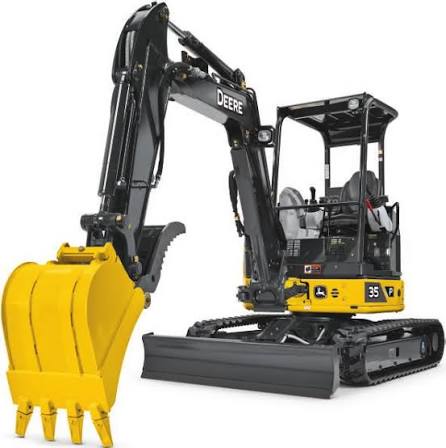
John Deere 35 P-Tier (35G) Compact Excavator
On This Page
ToggleIntroduction
The John Deere 35 P-Tier is a 3.6-tonne zero-tail-swing compact excavator and one of the most popular machines in its class — a durable, reliable digger that excels in close-quarters work with significant lift and reach, precise control, and a comfortable, quiet cab. Formerly the 35G (and still widely called that), it’s powerful enough to dig out 24-inch tree stumps yet light enough to trailer easily, making it a versatile favourite for drainage, foundation, landscaping, and utility work. For prairie acreage owners and contractors, it’s a proven choice from a brand with 40-plus years of excavator experience.
On Aglist, the value is in understanding where the 35 P-Tier fits in the compact excavator market, with real owner and operator feedback beside the spec sheet. The numbers tell you what it digs; the reviews tell you how it performs in frost-hardened spring ground, how the cab feels over a long day, and how it holds up. It’s a direct competitor to the Bobcat E35 and Kubota U35-4 — the three most popular zero-tail-swing machines in the 3.5-tonne class.
The 35 P-Tier’s defining feature is its zero tail swing. We explain why that matters below, since tail swing is the most important design feature on any compact excavator.
Configurations & Pricing Context
The 35 P-Tier is part of John Deere’s compact excavator lineup in the 3.6-tonne class — the current P-Tier designation for what was the 35G (both names refer to essentially the same machine, sold side by side as John Deere transitions to P-Tier naming). It comes in canopy or enclosed cab (heat and A/C) configurations, with standard and long-arm options, mechanical quick-coupler, auxiliary hydraulics, and a backfill blade. For Canadian year-round work, the enclosed cab is the sensible choice.
The 35 P-Tier runs buckets, augers, hydraulic hammers, thumbs, and more (100-plus John Deere attachment models), with a wear-compensating wedge-style quick coupler. It offers a swing boom and foldable travel pedals, and in-base JD Link connectivity for machine data.
Pricing varies by configuration, attachments, and dealer. Because Dmytro has direct knowledge of Saskatchewan dealer and used pricing, we defer to local market figures over manufacturer-advertised numbers.
Key Specifications
| Specification | John Deere 35 P-Tier (35G) |
|---|---|
| Machine class | Compact excavator |
| Also known as | John Deere 35G |
| Operating weight | ~8,135 lb (3,690 kg) |
| Weight class | 3.6 tonne |
| Tail swing | Zero tail swing |
| Net power | ~23.3 hp |
| Engine | Yanmar Tier 4 Final (no aftertreatment) |
| Maximum dig depth | ~10 ft 0 in (3.06 m) |
| Maximum reach | ~17 ft 1 in |
| Bucket breakout force | ~6,085 lb |
| Arm options | Standard / long arm |
| Blade | Backfill blade |
| Warranty | 2 years / 2,000 hours (standard) |
Specifications are verified against John Deere specification data and independent spec databases. The 35G and 35 P-Tier share essentially the same machine; confirm exact figures for the specific machine, year, and configuration with your dealer.
Understanding Tail Swing (Read This Before You Compare)
Tail swing is the most important design concept on any compact excavator, and the 35 P-Tier is a true zero-tail-swing machine.
Tail swing describes how far the rear of the machine — the counterweight and engine housing — extends past the tracks when the upper structure rotates. The 35 P-Tier has a zero-tail-swing design: the rear stays within the track width through rotation, so you can dig flush against a wall, fence, or building without the tail striking anything. This makes it ideal for urban jobsites, residential work, and confined utility projects where working close to structures, traffic, and obstacles matters.
This is where John Deere’s lineup reaches full zero tail swing — the smaller 17 and 26 use reduced tail swing, but from the 35 up, Deere’s compact machines are zero-tail-swing by design. Combined with an independent swing boom and 360-degree rotation, the 35 P-Tier slips into close quarters with ease. Its most direct comparisons are the zero-tail-swing Bobcat E35 and Kubota U35-4 — all three are 3.5-tonne, zero-tail-swing, roughly 10-foot-dig-depth machines, making this a genuine three-way class showdown. The choice between them often comes down to dealer support, specific features (like the Bobcat’s extendable arm), and price.
Build & Engineering Detail
The 35 P-Tier runs a 23.3-horsepower Yanmar Tier 4 Final diesel that meets emissions without aftertreatment devices — no diesel particulate filter, no regeneration cycles, less maintenance and cost. For a working machine, that’s a real uptime and simplicity advantage. (One practical note owners mention: the 35 prioritizes hydraulic flow to individual functions, so running a demanding attachment like a mulcher while also moving the arm can require managing functions — worth understanding if attachment-heavy work is your focus.)
The machine delivers significant lift and reach for its size, with a 10-foot dig depth and about 17 feet of reach. Standard and long-arm options let buyers tune between digging force and reach. The wear-compensating wedge-style quick coupler lets you tighten it as it wears, extending the life of the bucket and coupler system, and swaps attachments in 2-3 minutes.
Operator comfort is a strong point: a spacious cab with good 360-degree visibility, more interior room than the older D-series, rubber cab mounts and a noise-reducing muffler for quiet operation, backhoe-to-excavator-style controls, and foldable travel pedals. In-base JD Link connectivity (no subscription) provides machine data through the John Deere Operations Center. The 2-year/2,000-hour full-machine standard warranty adds peace of mind.
Best Applications
The 35 P-Tier is a strong fit for:
- Drainage and utility work in tight spaces — the zero tail swing and 10-foot dig depth handle confined trenching, drainage, and pipe work.
- Foundation and stump work — enough power to dig out 24-inch tree stumps and handle footings.
- Landscaping and residential jobs — zero tail swing suits work close to structures, fences, and traffic.
- Work flush against structures — dig beside foundations and walls without the tail striking anything.
For deeper or heavier work, the 50 and 60 step up (owners doing tough digging or wanting more breakout often move to the 50/60). For lighter work, the 26 or 30 fit. The 35 P-Tier’s balance of zero-tail-swing access, real capability, and easy transport makes it a class favourite.
How the 35 P-Tier Fits the John Deere Lineup
The 35 P-Tier sits in the popular heart of John Deere’s compact excavator range, above the 26 and 30 and below the 50 and 60. It’s the point where the lineup reaches full zero tail swing, and its 3.6-tonne size, 10-foot dig depth, and easy transport make it one of Deere’s most popular compact excavators. Its direct cross-brand rivals are the Bobcat E35 and Kubota U35-4 — the three-way benchmark of the zero-tail-swing 3.5-tonne class.
John Deere 35 P-Tier Reviews & Ratings
On Aglist, open the Reviews & Ratings section on this page to see how the 35 P-Tier (35G) performs where it matters: dig depth and force in different soils including frost-hardened spring ground, zero-tail-swing capability near structures, hydraulic behaviour with attachments, cab comfort and quiet, reliability, and serviceability. If you own a 35G or 35 P-Tier, your review helps the next prairie buyer judge this popular machine.
Frequently Asked Questions
Is the John Deere 35 P-Tier the same as the 35G? Essentially yes. John Deere is transitioning its lineup to “P-Tier” naming, and the 35 P-Tier is the current designation for what was the 35G. They refer to essentially the same 3.6-tonne machine, and dealers sell both side by side; 35G is common on used machines.
What is the operating weight of the John Deere 35 P-Tier? About 8,135 lb (3,690 kg), placing it in the 3.6-tonne class. It’s easy to trailer while offering real digging capability.
Does the John Deere 35 P-Tier have zero tail swing? Yes — it’s a true zero-tail-swing machine. The rear stays within the track width through rotation, so you can dig flush against walls and obstacles without the tail striking anything, ideal for urban, residential, and confined utility work.
How deep can the John Deere 35 P-Tier dig? Maximum dig depth is about 10 feet 0 inches (3.06 m), with about 17 feet of reach and a 6,085 lb bucket breakout force. It’s powerful enough to dig out 24-inch tree stumps.
Does the John Deere 35 P-Tier have a DPF? No — its Yanmar Tier 4 Final engine meets emissions without aftertreatment devices (no diesel particulate filter), reducing maintenance and avoiding regeneration downtime.
How does the 35 P-Tier compare to the Bobcat E35 and Kubota U35-4? All three are 3.5-tonne, zero-tail-swing machines with about 10 feet of dig depth — the three most popular in the class. The Bobcat E35 offers an extendable arm; all three differ in cab, hydraulics, and details. The decision often comes down to dealer support and price. See the Bobcat E35 and Kubota U35-4 pages for comparison.
Should I get the standard or long arm on the 35 P-Tier? The standard arm gives maximum breakout force; the long arm adds reach and dig depth. For attachment-heavy or side-work (like running a brush cutter), owners often prefer the standard arm plus extra counterweight for stability. Choose based on whether force or reach matters more.
Is the John Deere 35 P-Tier good for cold-weather work? With the enclosed cab (heat and A/C), yes — the quiet, comfortable cab is well suited to year-round prairie work. For winter, the enclosed cab is worth specifying.
Related Models
- Compact & Mini Excavators — browse and compare excavators across all brands on Aglist.
- Bobcat E35 — the direct zero-tail-swing rival from Bobcat, for cross-shopping.
- Kubota U35-4 — the direct zero-tail-swing rival from Kubota, for cross-shopping.
Share your experience
Help other Canadian buyers — leave a quick review for the
John Deere 35 P-Tier (35G)
There are no reviews yet. Be the first one to write one.