Overview & Specs
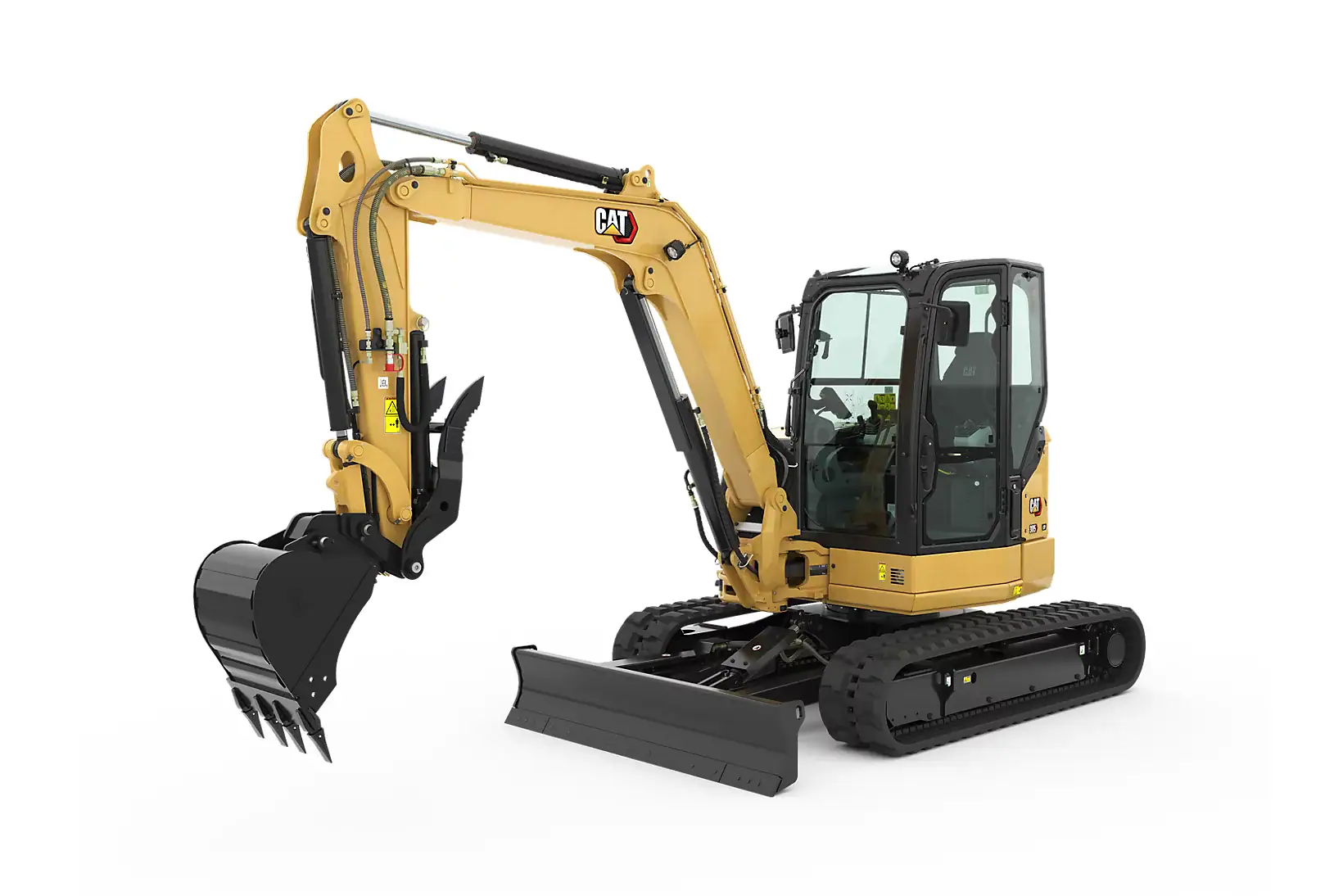
The Cat 305 CR is a candidate for Canadian owners who want one excavator to handle a sequence of jobs: dig, sort selected material with suitable equipment, backfill and prepare the area for the next stage. Choosing that machine well means looking beyond a single digging-depth figure. The arm, bucket, coupler, hydraulic provisions and blade have to support the same work plan.
This guide covers the North American C1.7 Turbo, Tier 4 Final/Stage V version documented by Caterpillar. A used 305 with an additional generation suffix is not automatically the same configuration. Establish the precise machine before using the figures below.
On This Page
ToggleCat 305 CR specifications for package selection
Source: Caterpillar 305 CR specifications.
| Item | Published value |
|---|---|
| Engine; net power | C1.7 Turbo; 33.6 kW / 45 hp |
| Track width | 1,980 mm |
| Canopy operating weight range | 4,996–5,655 kg |
| Cab operating weight range | 5,095–5,754 kg |
| Depth, standard / long stick | 3,420 / 3,670 mm |
| Ground reach, standard / long | 5,590 / 5,835 mm |
| Stick force, standard / long | 28.3 / 25.2 kN |
| Primary auxiliary flow | 80 L/min |
| Rear radius, without / with counterweight | 1,095 / 1,200 mm |
The weight configurations exclude the bucket. Cat lists an optional angle blade and cautions that peak hydraulic flow and pressure are not simultaneously available. Confirm the installed equipment on the actual machine.
Begin with a task sequence
Instead of listing every possible attachment, write a representative job in order. For a hypothetical landscape project, that might be removing planned material, separating suitable objects for reuse, placing excavated soil in a receiving area, backfilling and finishing. Each stage creates a different equipment requirement.
Ask where the excavator is productive and where it waits. If the job requires a truck or carrier, its capacity and route influence the result. If the machine changes tools repeatedly, coupler convenience and a sensible storage layout matter. If final grading needs another machine, that cost remains part of the project.
The 305 CR should be compared against that whole sequence. A good package can be more useful than a nominally larger machine with the wrong tools. Conversely, an extensive attachment list cannot compensate for insufficient access or an unsuitable working envelope.
Access and compact rear geometry
The track width is a starting point for route planning, not a promise that every component fits the same opening. Measure the blade, tools and other projections on the offered machine. Include the turn beyond the entrance and overhead restrictions, which can be missed when only the gate is measured.
At the operating position, assess the rear sweep and front equipment together. The counterweight configuration affects which dimensional information applies. Do not describe a compact-radius machine as needing no clearance, especially when working near finished structures or other equipment.
For a Canadian farmyard, space can be generous in one area and restricted around sheds, bins or stored machinery. For a residential contractor, an accessible route may still lead to a cramped material-handling area. Mark both on the same site sketch so that one successful measurement does not hide another failure.
Which stick suits mixed work?
Choose the standard or long stick from the geometry of the recurring tasks. Extra reach can be useful when the appropriate working position is constrained. Where most digging occurs comfortably within the standard range, the decision should also consider force, bucket behaviour and the complete cycle.
The published depth and reach limits occur at different positions. They cannot be treated as the sides of a rectangle within which the machine works equally well. Use the correct working-range drawing and identify the actual points that need to be reached.
Also check extraction and discharge. A bucket may touch the desired bottom while leaving little useful room for the cut or for removing material. A demonstration should show the intended task from start to finish with a representative bucket rather than simply displaying the deepest position.
For further explanation, see Aglist’s mini excavator working-range guide. The equipment comparison follows the suitable machine positions established by the site plan; it does not determine where an excavator may safely stand.
A bucket package with a clear purpose
Separate digging from finishing when selecting tools. A bucket suited to a narrow planned cut is not necessarily the tool that produces the required surface finish. Select each for its work, then verify mass, mounting and carrier suitability.
More bucket width can mean more material moved per pass, but it can also mean unnecessary disturbance or a poorly matched load. Compare the finished excavation requirements and material conditions before choosing from capacity alone. The amount of rehandling and restoration can outweigh an apparent advantage during the first cut.
For used tools, examine wear and repairs and confirm the actual mount. A similar pin size or a seller’s statement that a bucket came from a comparable machine does not establish full compatibility. Check spacing, widths, linkage and the intended coupler together.
A practical initial package should cover confirmed work. Leave speculative specialist attachments for a later decision unless they already have a clear role in booked or recurring projects.
Thumb and coupler decisions belong together
A thumb can make a bucket arrangement useful for handling suitable irregular material, but it has to be matched to the bucket, stick and coupler. A machine described as ready for a thumb is not necessarily supplied with a complete operational installation.
Have the proposed combination checked through its intended movement and storage positions. The useful question is whether it holds and releases the intended material with appropriate control and clearance, not merely whether a bracket exists on the stick.
Include the mass and geometry of the fitted equipment in the relevant load assessment. Grip is not a lifting-capacity increase. If the job involves lifting, use the applicable manufacturer information and approved provisions rather than inferring capability from digging force.
Write the exact tools into the quotation. A thumb matched to one bucket does not automatically establish suitability with every bucket or coupler that may later be fitted.
Hydraulic attachments: compare the working system
The primary auxiliary-flow figure helps screen potential tools. A complete match also requires the correct pressure range, return arrangement, controls and carrier suitability. Do not use total pump flow as though it were all available at a tool, or multiply separate maximum figures to claim guaranteed attachment power.
For a business built around a powered attachment, ask for the complete installation to be demonstrated under representative conditions. Confirm how auxiliary settings are identified and how the operator changes between tools according to the manuals.
If the work needs a thumb and another hydraulic function, establish the circuit arrangement and control requirements before purchase. The presence of several hose ends is not sufficient evidence. Installation costs and any missing provisions belong in the price comparison.
Blade choice and finishing work
The optional angle blade deserves attention when backfilling and directing loose material occupy a meaningful portion of the schedule. Evaluate it against the straight-blade arrangement using the actual finishing task. A feature has value when it reduces a real limitation in the work method.
Do not expect an excavator blade to remove the need for every other grading or material-handling tool. Assess the required finish and the space available. On some projects, a separate machine remains the practical choice even when the excavator handles the bulk of the digging.
During a used inspection, include the blade mechanism and its condition. Check for undocumented repairs and have movement or leakage concerns assessed. The value of optional equipment depends on its function and suitability, not only its presence.
Measure the cost of transitions
Mixed work often loses time between productive stages. A hypothetical job might involve six tool changes, with one arrangement taking five minutes longer per change than another. That difference is 30 minutes for the job. It is an illustration of workflow, not a measured result for any coupler or machine.
Observe the complete approved change procedure, including where tools are positioned and how their fit is verified. A quoted change time that ignores preparation or checking is not a fair comparison. Likewise, a time saving is useful only when the resulting work meets the same requirements.
Record waiting for trucks, moving unused tools and cleaning up the work area separately. Those observations can show that a better layout or supporting machine is more valuable than another excavator option.
Canadian operating schedule and support
Match enclosure and installed climate equipment to the expected work calendar. Frequent wet or cold work creates different priorities from projects that can be rescheduled. In a cab machine, test visibility, glazing, seals and the actual heating or cooling functions rather than relying on a general description.
Establish a maintenance plan from the correct serial-specific manual. Include access to routine parts, a service location and a response plan for breakdowns. A contractor with booked work needs to understand downtime logistics; an acreage owner may place more value on convenient storage and straightforward seasonal preparation.
Do not infer an emissions-system arrangement or maintenance interval from engine power alone. Verify those details on the actual machine. Keeping the manual, configuration list and service records together makes future attachment and repair decisions less uncertain.
Transport and the full delivered package
Operating-weight ranges describe particular configurations. They are not the weight of every machine with the same badge, and they do not include all the tools that might travel to a job. Establish what the relevant weight record includes before adding other equipment.
Prepare a load inventory with the machine, fitted bucket and coupler, separately carried tools and securing equipment. Avoid double-counting components. Assess the complete transport combination against its individual ratings, usable payload and applicable requirements.
Transport frequency changes the economics. Infrequent movement may justify hired delivery, while repeated transfers make hauling time and equipment central to the business. Obtain real local quotations before assuming that the machine purchase is the largest part of the ownership decision.
Used-machine assessment
Verify identity and configuration first. The stick, tracks, enclosure, blade, counterweight and hydraulic equipment should match the written description. Similar-generation names and sales photographs are not substitutes for the actual serial and equipment list.
Have a competent inspector assess the undercarriage, joints, structure and hydraulics. Observe a proper cold start and operation after warm-up, and investigate warnings or inconsistent behaviour through diagnosis. These are individual-machine checks, not claims of a known 305 CR failure pattern.
Price identified repairs before negotiating. A package with a lower asking price can become more expensive once tool repairs, missing hydraulic provisions or transport changes are included. Conversely, documented work and a verified attachment set can explain a higher asking price without proving it is automatically the better buy.
Alternatives and a final demonstration
The Bobcat E50 and Kubota U55-5 are useful catalogue entries for building a comparison list. Confirm the offered generation and package before comparing specifications or price.
Give each candidate the same task brief: access route, excavation shape, material, receiving arrangement and finishing requirement. Include the intended tools. The strongest evidence is a complete suitable job sequence, not a fast isolated movement.
Frequently asked questions
Does CR mean the rear never extends beyond the tracks?
Do not assume that. Use the applicable dimensions and actual counterweight configuration, and assess the full moving envelope.
Should I buy every attachment with the machine?
Buy around confirmed work. A smaller verified package can be more useful than several tools with uncertain compatibility or little expected use.
Is the long stick essential for farm work?
Farm work is too varied for that rule. Compare the recurring task geometry, force and load information for each configuration.
Does an auxiliary-flow match prove a tool will work?
No. Pressure, return, controls, carrier suitability and installation still need to match the tool’s requirements.
What distinguishes a good 305 CR purchase?
A complete package that moves through the actual job sequence efficiently, fits the site and transport arrangement, and has a condition and support plan appropriate to the owner’s schedule.
Share your experience
Help other Canadian buyers — leave a quick review for the
Cat 305 CR
There are no reviews yet. Be the first one to write one.