Overview & Specs
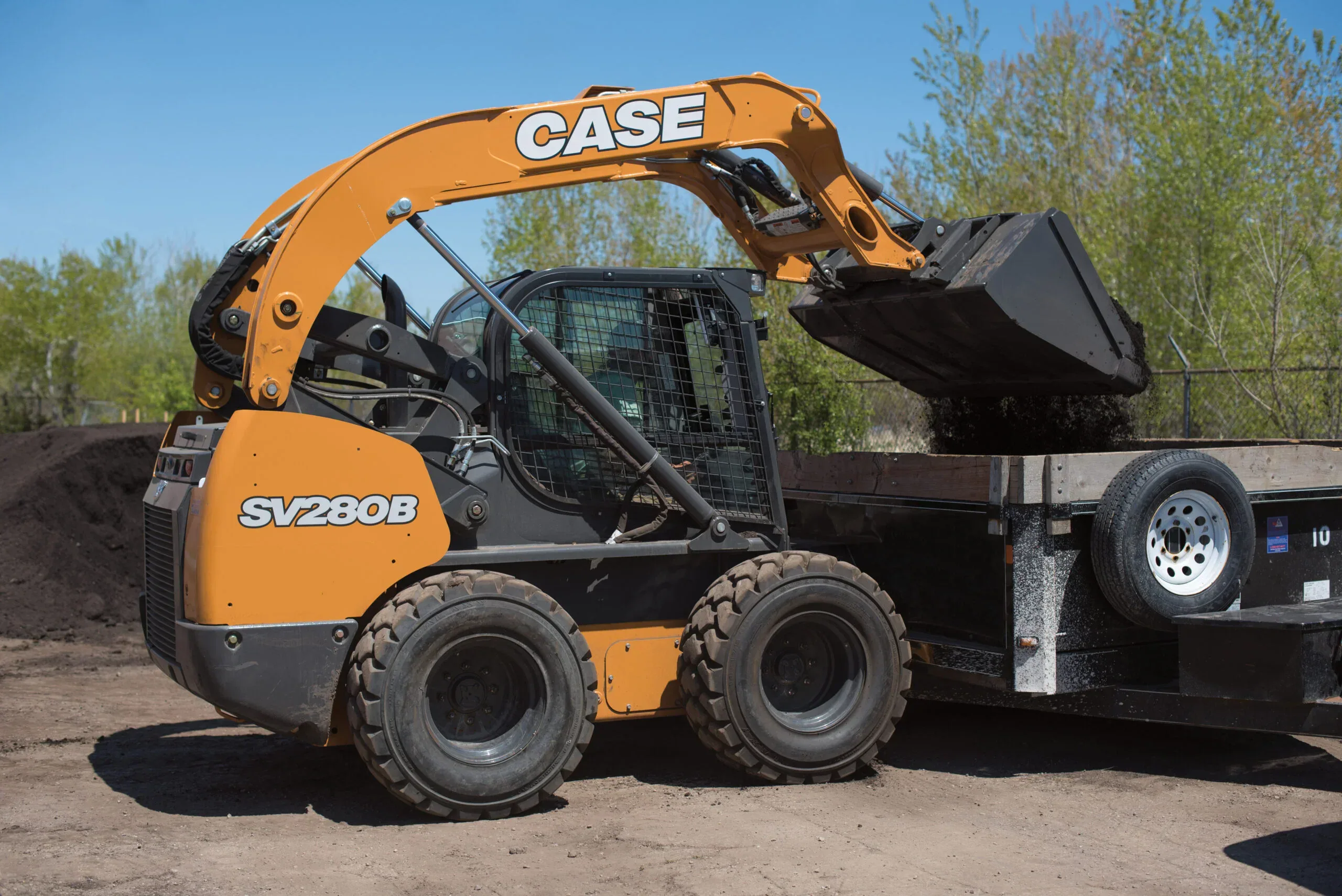
The CASE SV280B is a vertical-lift skid steer to consider when the destination of the load matters as much as picking it up. A farm may have adequate power for moving loose material yet lose time positioning beside a spreader, reaching over a trailer side or arranging pallet deliveries. In that situation, the right purchase begins with loading geometry and the actual handling task.
The SV280B combines a 74 gross hp engine with a published 2,800 lb ROC on the 50% tipping-load basis. Those figures place it on a useful shortlist, but neither establishes whether it will serve a particular truck, bale-handling arrangement or pallet. The guide below works through those decisions using CASE’s Canadian page and its linked May 2026 specification sheet.
On This Page
ToggleReference specifications for the SV280B
| Item | Published figure |
|---|---|
| Lift geometry | Vertical |
| Engine output | 74 gross hp; 68 net hp |
| ROC, 50% basis | 2,800 lb / 1,270 kg |
| Operating weight | 8,000 lb / 3,630 kg, specified configuration |
| Hinge-pin height | 129.5 in / 3.29 m |
| Wheelbase | 52 in / 1.32 m |
| Width over reference tires | 69.8 in / 1.77 m |
| Auxiliary flow | 24.2 gpm / 91.5 L/min standard; 37.6 gpm / 142.5 L/min optional |
The weight reference uses an open cab, 165 lb operator, full fuel, a 72-inch low-profile bucket and 12 × 16.5 tires. CASE’s sheet lists a 3.4-litre engine and DOC aftertreatment. These are reference-build specifications, not a guarantee that a particular used machine has identical equipment or weight.
Measure the receiver before comparing loaders
Start with the thing being loaded. Record its side height, width, wheels or fenders that keep the loader away, and the location where material must land. Note whether the receiver is always parked on a level prepared area or appears in different locations. A loader can be technically tall enough yet awkward because it cannot approach closely enough.
Then choose the bucket. Its shape affects both reach and discharge clearance. In the linked sheet, dump height is 103.1 inches with the foundry/excavating bucket and 96.6 inches with the low-profile extended bucket, both reported at 45 degrees. The difference is 6.5 inches. That is a concrete reason not to treat the model’s hinge-pin height as its usable dump clearance.
Suppose a hypothetical receiver side is 100 inches high. One of those reference dimensions is numerically above it and the other below. That comparison is only an initial screen: approach distance, actual bucket, operating movement and clearance still have to be checked. It is not permission to operate with a minimal margin or a recommendation to use maximum lift in unsuitable conditions.
Write the receiver and attachment into the purchase requirement. “Must load this spreader with this approved bucket on the prepared pad” is more useful than “needs good lift height.” It gives the demonstration a pass-or-fail purpose and prevents a pleasant unloaded drive from substituting for the actual task.
Vertical lift helps frame the comparison, not finish it
Vertical-lift geometry is relevant where placement at height is frequent. But different machines and attachments do not follow identical paths, and the phrase does not establish their capacity at every point. Evaluate the horizontal position and clearance of the working load throughout the movement.
A buyer who mostly handles low piles may find the vertical arrangement adds less value than expected. Another buyer loading into a fixed receiver many times each morning may regard it as central. Estimate the share of annual hours devoted to high placement before deciding how much weight to give the design.
The radial versus vertical lift guide explains the geometry questions. For another wheeled vertical-lift candidate, examine the Bobcat S650, then verify the current specifications of the actual machines. Treat model pages as starting points for comparison rather than proof that all years and option packages match.
Pallets: establish the complete handling arrangement
List the pallets the farm really receives. Product weight alone is insufficient; include pallet and packaging, dimensions and the position of the load’s centre. A compact dense load and a long projecting load can produce different demands at the same mass.
For a simple weight-accounting example, 40 bags weighing 25 kg each contain 1,000 kg of product. Add a hypothetical 35 kg pallet and wrapping allowance and the handled load becomes 1,035 kg before considering the fork attachment. This calculation does not show that the SV280B is approved to lift it. It shows why reading the product label alone leaves part of the problem unanswered.
Use the applicable machine-and-fork guidance for the required height and load centre. The ROC and tipping-load article explains why a headline rating cannot be converted into a universal pallet allowance. Do not replace that guidance with a simple subtraction of attachment weight.
Also review the delivery process. Can the truck stop in a suitable place? Is the surface capable of supporting the operation? Is there room to approach and withdraw without an awkward turn? Changing the unloading location can sometimes solve a handling problem more effectively than choosing a machine with a slightly larger brochure number.
Bulk loading and waiting time
A material-handling machine spends time doing more than lifting. It queues for receivers, changes attachments, moves between storage areas and waits while loads are rearranged. Before forecasting the SV280B’s output, identify which part of the process is actually slow.
Imagine a permitted loading operation with 20 cycles. If improved positioning saves 15 seconds per cycle, the potential saving is five minutes. If the receiver then waits ten minutes for another process, loader improvements alone will not remove the total delay. This hypothetical arithmetic is useful when comparing a machine upgrade with reorganising the work area.
Observe visibility from the operator’s normal seated position with the proposed bucket or forks. Check whether the attachment obscures the target and whether the route creates avoidable reversing. A camera can assist observation but should not be treated as a substitute for an appropriate route, separation of people and equipment, or the machine’s operating instructions.
Hydraulics: buy the package for a named job
Bulk loading with a bucket is a different reason to buy the SV280B from running a powered attachment. For the latter, record the tool’s flow range, pressure limits, return and case-drain requirements, controls and approved carrier conditions. A coupler that physically engages does not prove hydraulic compatibility.
The optional high-flow figure is the combined output of that package, not an addition to the standard number. Verify the installed system on a used machine. If its main value to you is a specific attachment, have compatibility resolved before negotiating the rest of the purchase.
Plan attachment changes as part of the day. A buyer using forks each morning and a bucket through the afternoon has a different changeover pattern from someone switching every few minutes. Consider coupler equipment, a clean storage location and the ability to verify engagement. The hydraulics guide helps separate output requirements from convenience features.
Canadian farm scenarios to compare
Feed and bedding movement on a developed yard
Focus on receiver access, bucket suitability and repeated manoeuvres. Material density can change with moisture, so a familiar bucket volume is not a reliable weight estimate for every condition. Build the approved working arrangement around the material actually handled.
Seasonal pallet deliveries
Check the heaviest normal delivery and the required placement before buying. If that task lies outside the approved arrangement, consider a dedicated unloading method. Occasional frequency does not make an unsuitable lift acceptable.
Winter cleanup between regular loading duties
A machine selected primarily for loading still needs a separate snow-attachment and traction assessment. Choose snow storage locations that preserve access to daily work areas. Otherwise each storm can make the primary loading task progressively more awkward.
Spring work away from the hard yard
Review ground support and routes independently of the loader’s capacity. If soft-ground work becomes the central requirement, compare a track loader or change the site plan. The wheels and tracks comparison is the relevant next step, rather than assuming a different tire alone resolves every access problem.
Ownership details that change the quote
Cab, controls, auxiliary package, coupler and tires should be written into the quote. Photographs and model names are not sufficient. On a used loader, demonstrate heating, defrosting, wipers and the controls the operator will use, especially where winter shifts are part of the justification.
The published aftertreatment arrangement should be checked against the machine’s engine identity and documentation. Avoid interpreting marketing descriptions of emissions maintenance as meaning that the engine needs no routine service. Fluids, filters, cooling-system cleanliness and inspections remain part of ownership.
Transport planning requires the actual fitted machine and carried attachments. The reference weight is an initial comparison figure. Weigh the proposed transport load and assess the complete tow vehicle, trailer and load arrangement. A heavier bucket or different tire assembly can change the result without changing the model name.
Inspect a used SV280B around its likely duty
For a machine bought for repeated loading, pay attention to coupler and pivot condition, visible structural repairs and smooth loader movement. Have a competent inspector evaluate cylinder condition and any excessive play. Inspecting these components is sensible buyer due diligence, not an assertion of a documented recurring SV280B defect.
Review drive response and hydraulic operation after the machine reaches normal working condition. A clean cold demonstration can miss behaviour that appears later. Test the intended tool under an approved plan, and record any warning messages or irregular response for diagnosis.
Ask for the previous application as well as hours. Hours accumulated in gentle intermittent work are not a complete description of a machine that may also have endured concentrated heavy duty. Service records, condition and inspection findings should be considered together. Do not pay for an unsupported claim of unusually easy ownership.
Questions that finish the shortlist
Is the SV280B mainly a pallet machine?
It is a loader with a vertical lift path, not a substitute for every forklift or telehandler task. Approved attachment ratings, load geometry, placement height and site conditions determine the actual pallet jobs it can perform.
Why does bucket choice change dump clearance?
The bucket edge occupies a different position relative to the hinge pin and changes position as it tips. Two buckets on the same loader can therefore have different discharge clearance and reach.
Would more horsepower solve a receiver mismatch?
No. Additional engine output does not make a bucket clear a sidewall or reach farther into a body. Solve the geometric requirement with the correct machine-and-attachment combination.
What should I compare against a radial machine?
Use the actual placement heights and share of time spent there. If both machines perform the approved loading cycle, compare manoeuvring, attachment requirements, ownership cost and operator fit rather than assuming the lift label settles the purchase.
What is the best demonstration task?
The most valuable demonstration resolves a requirement that remains uncertain. For this model that may be loading a particular receiver or positioning an approved pallet load, rather than a generic drive around an open yard.
Sources
Checked October 7, 2026: CASE Canada SV280B page and CCE202605SV280B specifications. This guide uses that document’s defined configuration and distinguishes original planning examples from manufacturer ratings. Confirm the specific machine’s build and instructions.
Share your experience
Help other Canadian buyers — leave a quick review for the
CASE SV280B
There are no reviews yet. Be the first one to write one.