Overview & Specs
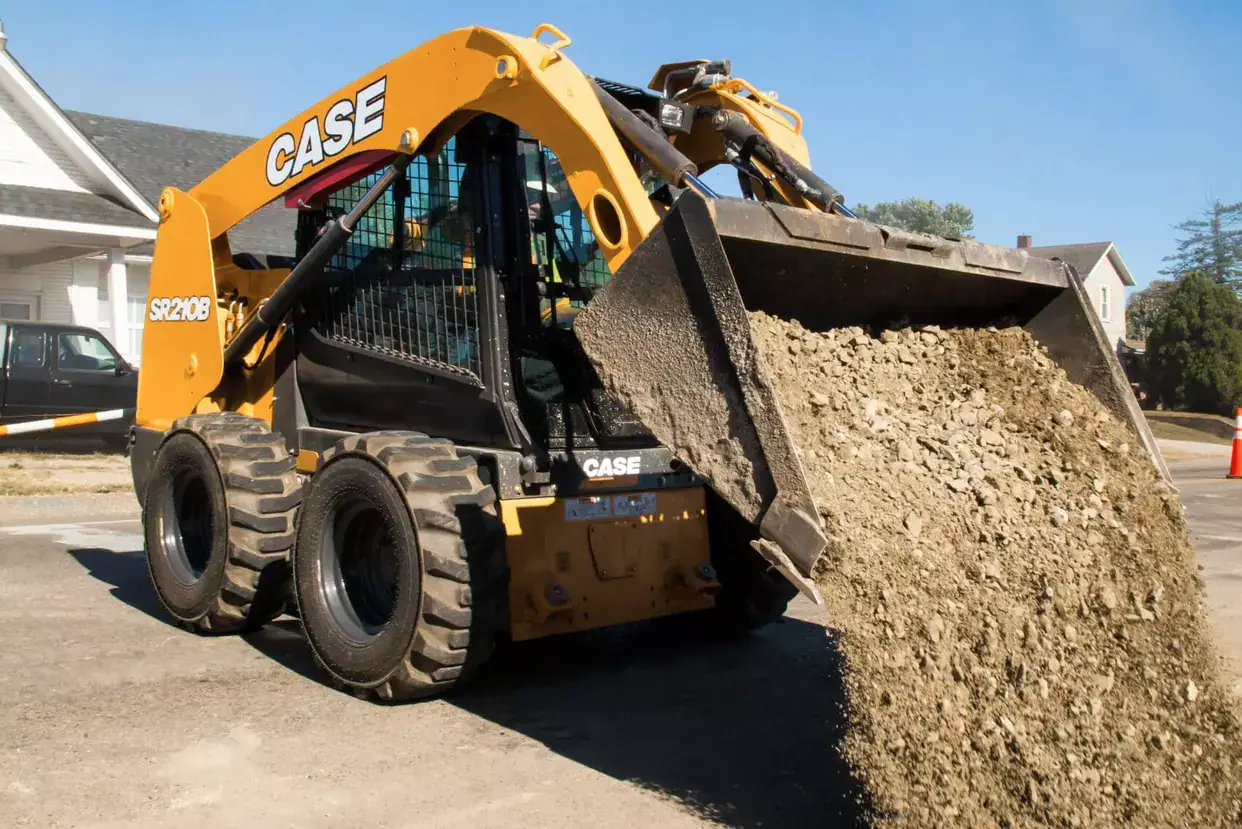
The CASE SR210B is worth examining when a buyer wants a compact radial-lift skid steer for digging, yard maintenance and powered attachments, but needs more than a small cleanup machine. Its most interesting buying question is the combination of a short chassis and useful hydraulic capability. That combination can suit work around buildings where moving up in overall length creates as many problems as it solves.
There is also a specification trap: CASE’s Canadian product page and its newer linked specification sheet disagree on optional high flow. A useful purchase comparison must preserve that difference instead of quietly selecting the larger number. The guide below separates documented specifications from practical buying analysis, using North American sources checked in October 2026.
On This Page
ToggleThe core SR210B specification
| Measurement | Published value |
|---|---|
| Lift path | Radial |
| Power | 74 gross hp / 68 net hp |
| ROC, 50% basis | 2,100 lb / 955 kg |
| Operating weight, reference build | 6,970 lb / 3,160 kg |
| Wheelbase | 44.4 in / 1.13 m |
| Length with foundry/excavating bucket | 129.6 in / 3.29 m |
| Width over reference tires | 69.1 in / 1.76 m |
| Standard auxiliary flow | 24.2 gpm / 91.5 L/min |
| Auxiliary pressure | 3,050 psi / 210 bar |
The reference weight includes an open cab, 165 lb operator, full fuel, a 72-inch Dirt & Foundry bucket and 12 × 16.5 tires. The linked May 2026 sheet lists a 3.4-litre engine with DOC aftertreatment. These numbers describe a specified build, not every used example wearing SR210B decals.
The high-flow discrepancy buyers should know about
On the date checked, the Canadian web equipment list stated 30.7 gpm, while specification sheet CCE202605SR210B stated 33.2 gpm / 125.7 L/min for optional high flow. The latter figure appears in both its hydraulic specification and optional-equipment section. We use that dated document as a reference, but do not claim the discrepancy establishes which package is installed on an individual machine.
This matters most when an attachment’s accepted flow range is close to either figure. A tool that merely turns during an unloaded demonstration has not necessarily been matched correctly. Obtain the machine’s build information and attachment requirements together. If necessary, have the installed circuit’s performance verified by a qualified technician. Keep the resulting record with the attachment rather than relying on a sales listing that may disappear.
Do not add standard and high-flow figures together. Do not confuse drive-pump flow with auxiliary implement flow either. They describe different circuits. The Aglist hydraulic selection guide explains the broader distinctions, including pressure, return plumbing and control requirements.
Why a short machine can be productive
Consider a maintenance route that passes through an equipment yard, turns beside a shop and loads material near a fence. A shorter overall working package can reduce awkward repositioning. But the comparison must include the attachment and rear sweep, not just wheelbase. A long grapple or extended bucket can erase the advantage suggested by chassis dimensions.
Map the route with the proposed tool attached. Identify the places where the operator must reverse, where the rear corner moves toward an obstacle and where visibility becomes restricted. If two loader candidates both fit comfortably, a small dimensional difference may have little practical value. If one requires a multi-point manoeuvre every cycle, the effect can accumulate over a working day.
A useful demonstration records complete cycle time: approach, fill, travel, place and return. Do not compare only the seconds required to lift an empty bucket. On constrained sites, changing the material storage location can save more time than purchasing extra engine power. The machine and yard layout should be evaluated as one working system.
Power is not the same as usable digging output
Gross and net horsepower are different reporting bases. When comparing an SR210B with another machine, use like-for-like figures and then move beyond the engine table. Tire grip, bucket geometry, material condition and the ability to position the cutting edge all affect the result.
If a loader spins without penetrating a pile, the obstacle is not necessarily insufficient horsepower. It may be traction, an unsuitable bucket, an overly aggressive approach or material that should be loosened by another method. More power cannot make an incompatible operating technique appropriate. A demonstration with representative material is more informative than a claim that one engine size always outworks another.
For Canadian property work, distinguish loose stockpile handling from excavation of undisturbed ground. Those jobs can look similar on a shopping list but demand different tools and working methods. A machine selected for moving gravel should not automatically be expected to replace an excavator for every drainage or foundation task.
Radial lift and the actual unloading point
The SR210B’s radial geometry should be assessed through the working arc. Where most work involves cleanup, backfilling and low placement, the buyer may not need to pay for a different loading arrangement. Where a truck or spreader dictates every cycle, receiver clearance becomes a central selection criterion.
Measure the receiver’s side, the distance to the target inside it and the room available for the loader’s front tires. Then check the chosen bucket through lift and dump. A longer bucket may reach farther but changes its relationship to the machine and the load. The bucket’s advertised capacity cannot tell you whether it will empty cleanly into that receiver.
For a high-loading comparison, include a vertical-lift alternative such as the Bobcat S650. Compare the actual configurations and verified ratings rather than importing every specification from an older model guide. The lift-path article explains which measurements to bring to the demonstration.
A three-attachment plan is better than a vague wish list
Build the initial package around three named tools rather than “all normal skid steer attachments.” For example, a property-maintenance buyer might need a grading bucket, an auger and a snowblower. Each introduces a different requirement, so each should have its own compatibility line on the purchase worksheet.
| Tool | Question that decides the package |
|---|---|
| Bucket | Does its width, weight and geometry match the material and access route? |
| Auger | Do the motor’s flow and pressure range match the circuit and intended ground? |
| Snowblower | Are hydraulic output, controls, return requirements and machine suitability all confirmed? |
This approach also separates useful options from attractive ones. High flow has a purpose when the selected tool requires or benefits from the compatible higher-output package. A hydraulic coupler has a purpose when attachment changes are frequent and the operator can confirm proper engagement. Neither option should be valued solely because it adds another line to an advertisement.
Where fine travel-speed control is important, examine the installed controls and creep function. CASE scopes creep to EH machines on the product page. An operator should be able to coordinate travel and implement operation predictably. Test the specific function during an authorised demonstration, rather than assuming every B-series machine has the same control equipment.
Loads, forks and a realistic growth plan
Many buyers begin with cleanup and soon add pallet handling. Assess that future job before purchase. Record product weight, pallet weight, dimensions and placement height. A long load can put its centre farther forward even if it weighs less than a compact one.
The 50%-basis ROC is a published machine rating, not a universal fork rating. The article on rated capacity and tipping load explains why these distinctions matter. If an essential pallet cannot be handled within the approved machine-and-fork limits, choose another machine or unloading method before committing to the SR210B.
Separate probable growth from hypothetical growth. A signed contract requiring a particular attachment next season deserves more weight than the possibility of buying one someday. Conversely, repeatedly hiring another machine for an established weekly task can justify stepping up now. Use the work calendar and actual load information to make that decision explicit.
Winter, thaw and the surface under the tires
A year-round Canadian machine needs a seasonal work plan. For snow work, evaluate the attachment, tire configuration, visibility and storage route together. A wide clearing tool may shorten the straight pass but make the return turn or doorway approach more difficult. Judge the complete route with its bottlenecks.
During thaw, identify ground that remains suitable for loaded travel and areas that must be avoided or improved. Tires selected for hard-yard work do not make saturated access lanes equivalent to pavement. If soft-ground access is central to the business, revisit the skid steer versus compact track loader decision before finalising a wheeled purchase.
Check winter equipment on the candidate machine rather than inferring it from location. Inspect heater operation, glazing, wipers, lighting and the prescribed cold-weather fluid and starting arrangements. A loader sold in Canada can still have a configuration that does not suit your shift length or exposure.
What to examine on a used SR210B
Begin with serial identity, service records and the installed option list. Resolve the hydraulic package question early, because it can determine whether the machine is worth inspecting further. Request evidence of maintenance appropriate to the machine’s hours and previous application, not simply a statement that it was “regularly serviced.”
Inspect the loader structure, coupler wear, cylinder rods, hoses and tires. Have a competent person assess steering and drive behaviour, auxiliary performance after warm-up and any recorded faults. Uneven response should become a diagnosis and repair estimate, not an assumption about how all compact skid steers behave.
Compare delivered-to-work cost. Include the correct tool, any missing hydraulic equipment, immediate tire work and transport arrangements. A machine that needs an uncertain high-flow conversion is a different purchase from one already documented and equipped for your attachment. Obtain a concrete parts-and-labour assessment before treating a retrofit as straightforward.
Frequently asked buying questions
Is the SR210B high-flow figure 30.7 or 33.2 gpm?
The checked webpage and newer linked specification sheet differ. The May 2026 sheet gives 33.2 gpm. Use serial-specific build information to establish the candidate’s actual package; this guide does not silently resolve the discrepancy for every production year.
Does 74 hp mean 74 hp reaches the attachment?
No. Engine output and attachment hydraulic output are different quantities. Circuit capability, losses, engine demand from other functions and the tool’s requirements all matter. The gross engine rating cannot be substituted for a measured attachment power result.
Is it a direct substitute for a bigger radial loader?
Only if the entire workload fits. Compare capacity, working dimensions, bucket choice and hydraulic package. A compact chassis can improve access, but it does not make the larger machine’s load or attachment limits transferable.
Can the reference weight be used for transport planning?
It provides an initial screen. Final planning needs the actual machine configuration, transported attachments and the complete vehicle-and-trailer ratings. Do not select a trailer from the loader’s shipping weight alone.
What would make me reject this model?
An essential load outside approved limits, a receiver it cannot serve, an unresolved attachment mismatch or a route that needs different ground support are substantive reasons. Cosmetic preference is secondary to whether the loader can complete the required work.
Primary references
Sources checked October 7, 2026: CASE Canada SR210B and CCE202605SR210B specification sheet. Document differences are retained explicitly. This guide offers purchase criteria rather than unverified owner reviews, prices or promises of attachment performance.
Share your experience
Help other Canadian buyers — leave a quick review for the
CASE SR210B
There are no reviews yet. Be the first one to write one.