Overview & Specs
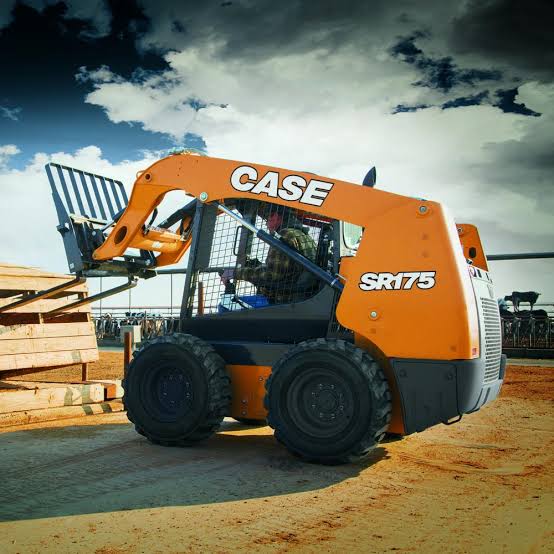
The CASE SR175B deserves consideration when access, frequent small jobs and a manageable attachment fleet matter more than maximum pallet capacity. A livestock yard, equipment shed or developed acreage can have plenty of work for a loader without having room for a larger one. The useful question is whether this radial-lift skid steer can complete the entire route: through the entrance, around the working area, into the material and back to the unloading point.
Its compact dimensions do not make every job a small-machine job. Dense gravel, wet bedding and an awkward pallet can challenge a loader long before the bucket looks full. Treat the SR175B as a candidate for a defined workload, then test the capacity, attachment and clearance requirements together. This guide uses the Canadian CASE product page and its linked North American specification sheet, checked in October 2026. It is a buying analysis, not a report of personal testing.
On This Page
ToggleSR175B specifications that affect the purchase
| Item | Published specification |
|---|---|
| Lift design | Radial |
| Engine output | 67 gross hp; 64 net hp |
| Standard ROC | 1,750 lb at 50% of tipping load |
| Reference operating weight | 6,270 lb / 2,842 kg |
| Width over specified tires | 64.6 in / 1.64 m |
| ROPS height | 77.7 in / 1.97 m |
| Wheelbase | 44.4 in / 1.13 m |
| Auxiliary flow | 20.6 gpm / 78 L/min standard; 30.7 gpm / 116.2 L/min optional |
| Auxiliary pressure | 3,050 psi / 210 bar |
The weight reference includes an open cab, 165 lb operator, full fuel, a 66-inch Dirt & Foundry bucket and 10 × 16.5 tires. It is not the scale weight of every enclosed-cab example. CASE’s linked CCE202310SR175B document identifies a 2.2-litre Perkins engine and DOC plus DPF aftertreatment. Keep that document scope in mind when evaluating another production year or an imported machine.
Start with the narrowest part of the job
A buyer often measures a doorway and stops there. The harder restriction may be a turn immediately beyond it, a feed barrier, the rear corner swinging beside a post or the space needed to lower an attachment. Map the whole route before selecting a machine. Include the point where an operator can enter and leave safely, because a loader that fits only with the attachment awkwardly positioned is not a good daily solution.
The tire width is useful for screening, but the working attachment can be wider. A nominally narrow machine carrying a broad snow bucket no longer has the same access envelope. Measure the exact tires, wheel offsets, coupler, bucket and any guards. Allow working clearance rather than planning around a theoretical zero-gap fit. Packed snow beside a doorway can make a route that worked in July unusable in January.
For a hypothetical property with a narrow service entrance and an open unloading area, the SR175B may save substantial hand work even if it takes more trips than a larger loader. For a wide-open gravel yard, the same size advantage may have little value. Access is worth paying for when it removes a genuine restriction; it is less valuable when the loader spends most of its day crossing unrestricted ground.
Choose the bucket around material, not appearance
Bucket volume and payload are different buying questions. A large bucket can be sensible for light, loose material but unsuitable when filled with dense aggregate. A smaller bucket may produce more predictable loads and easier visibility in confined work. Do not judge suitability from whether the engine can push the cutting edge into a pile.
For planning only, assume a material has a measured bulk density of 1,500 kg per cubic metre. A 0.30 cubic metre portion contains about 450 kg; a 0.50 cubic metre portion contains about 750 kg. Those are material masses, not approved SR175B bucket loads. The example shows why adding volume quickly changes the task. Attachment weight, geometry, material distribution and manufacturer limits still determine what can actually be handled.
On a farm that alternates between bedding and aggregate, two appropriately matched buckets can be more useful than one oversized general-purpose bucket. Include their purchase cost, storage and changeover time in the quote comparison. If the budget only allows one attachment initially, choose around the most demanding regular job rather than the lightest material that occasionally needs moving.
What radial lift changes in everyday work
Low-level movement, cleanup and grading are logical tasks to examine with this machine. But radial lift does not automatically mean better digging than every vertical-lift competitor, and it does not prevent truck loading. The relevant question is the attachment’s position through the part of the lift cycle your job uses.
Before buying for a manure spreader or trailer, record the side height, distance from the loader’s approach to the inside edge and space needed to dump completely. A bucket that clears the side while level can still strike it when rolled forward. Hinge-pin height alone cannot settle the issue. The radial versus vertical lift guide explains the geometry without treating either design as universally superior.
When almost every cycle ends at a high receiver, include a vertical-lift machine in the comparison. When most cycles end close to ground level and the occasional high-loading job can be handled differently, the SR175B’s overall access and attachment fit may carry more weight in the decision. Buy for the work pattern, not the exception you remember most vividly.
Capacity: separate everyday loads from occasional ambitions
List the heaviest normal loads with their actual weights. Include the pallet and packaging, or the moisture variation in material, rather than using a convenient round number. A load carried on forks can sit farther forward than material in a bucket. That changes the leverage even when the scale weight is unchanged.
The published ROC is not permission to handle every pallet of the same numerical weight. Nor is subtracting fork weight from ROC a complete assessment. The ROC and tipping-load explanation provides the background. For purchasing, obtain the applicable machine-and-attachment rating for the intended load centre and placement height.
If most work is light cleanup but a few annual deliveries require substantially heavier handling, compare two plans: owning the smaller loader with a separate unloading arrangement, or owning a larger machine all year. Include delivery coordination and the inconvenience of waiting. Either can be rational. What does not work is buying the smaller machine and relying on an unapproved occasional overload to close the gap.
Hydraulics and the first attachment budget
Start with the exact tools you expect to use during the first year. A grapple requires a different review from a continuously powered broom or snowblower. The powered tool needs an acceptable flow range, pressure compatibility, return arrangement, any required case drain and the correct controls. Mechanical attachment fit is only the first check.
The optional high-flow figure is not an amount to add to standard flow. It describes the higher combined circuit output in the specified package. A used machine advertised as “auxiliary hydraulics” is not thereby proven to have that package. Match the equipment record and installed system to the attachment documentation before spending money on the tool.
Where a tool must move slowly while maintaining working speed, control behaviour deserves a demonstration. CASE lists creep mode for EH-equipped machines; establish what the candidate actually has. The standard versus high-flow guide is useful for understanding why greater flow does not independently establish compatibility or continuous-duty performance.
Canadian seasonal work: select the complete package
For winter chores, assess visibility and traction before concentrating on bucket width. Can the operator see both front corners with the intended attachment? Do the heater, defrosting arrangements, wipers and lights work on the actual machine? A cab shown in a photograph is not proof that every comfort option is included or functioning.
A snow pusher and a snowblower create different demands. One depends heavily on the available pushing traction and route layout; the other adds a hydraulic matching problem. Plan snow storage before choosing either. Repeatedly relocating a badly placed pile can consume more time than the difference between two loader specifications.
Spring conditions deserve a separate decision. A firm yard in winter may become soft during thaw. If the SR175B’s working route repeatedly loses support, compare a prepared route, a seasonal operating change and a track loader. The wheels versus tracks guide helps frame that choice. No tire or track configuration makes saturated ground automatically suitable for loaded operation.
Emissions and maintenance are part of the workload
Do not apply a blanket “no DPF” claim to this model from another CASE machine. The linked SR175B sheet explicitly lists a particulate filter. Confirm the engine label and serial-specific instructions, then understand its regeneration indications and service requirements before purchase. A seller’s description of the entire brand is weaker evidence than the documentation for the machine in front of you.
For a property with many short jobs, ask how the machine’s prescribed operating and regeneration procedures fit that routine. Do not assume a series of brief starts is equivalent to a sustained work period. Also check access for ordinary maintenance: can filters be reached, cooling surfaces inspected and grease points serviced without obstacles created by added equipment?
Make a small ownership file containing the serial number, attachment identification, applicable manuals, service dates and fluid specifications. This is particularly useful where several family members or employees share the machine. It prevents the next operator from inheriting only verbal instructions about an unfamiliar warning light.
Inspecting a used SR175B
Arrange an inspection that begins before the machine has been warmed for display. Have a competent technician review starting behaviour, diagnostic history and any aftertreatment concerns. A clean exterior and a low hour reading do not explain the previous duty cycle.
Inspect the coupler engagement surfaces, pins, bushings, cylinder rods, tire condition and visible repairs. During a permitted demonstration, check smooth low-speed travel, predictable directional changes, loader control and the intended auxiliary function after warm-up. Observe faults or uneven behaviour; do not explain them away as normal for the model without evidence.
Price the machine as delivered into your work, including tires or repairs immediately required, the correct bucket, winter equipment and any transport changes. A cheaper open-cab standard-flow unit is not equivalent to a more expensive machine that already matches the planned job. Equally, expensive options add little value when none of your tools or working conditions requires them.
Questions buyers should resolve
Is the SR175B too small for a farm?
Farm acreage is a poor sizing measure for this purchase. The heaviest regular load, narrowest route and unloading height matter more. It can be a sensible support machine where larger equipment handles the heavy seasonal jobs.
Should I choose it over a larger skid steer?
Compare complete job cycles. If a larger machine saves trips but cannot access part of the property, count the remaining manual work too. If access is unrestricted and handling volume is high, the larger alternative deserves a serious demonstration.
Can it use a snowblower?
Only when the specific blower and installed hydraulic package are compatible. Flow range, pressure, connections, controls, attachment weight and manufacturer approval must all align; width alone does not answer the question.
Does the brochure weight settle trailer selection?
No. Weigh the transport configuration with its fitted equipment and separately carried tools, then assess the complete tow vehicle and trailer arrangement. A basic operating-weight line is a screening number, not a transport approval.
What should a demonstration prove?
It should resolve your uncertain task: access, loading a particular receiver or running a particular tool. A few unloaded turns on an open dealership yard are not a substitute for checking that requirement under an approved demonstration plan.
Sources and specification scope
Manufacturer references: CASE Canada SR175B product page and its linked CCE202310SR175B specification sheet. Checked October 7, 2026. Options and production changes require machine-specific confirmation. Calculations are labelled planning examples, not operating instructions.
Share your experience
Help other Canadian buyers — leave a quick review for the
CASE SR175B
There are no reviews yet. Be the first one to write one.