Overview & Specs
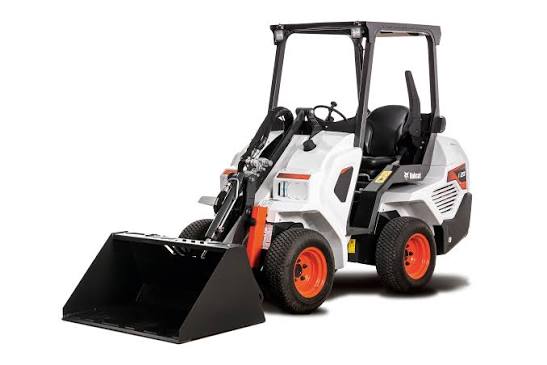
The Bobcat L23 is worth considering when the route to the work is as important as the work itself. It puts a seated operator and a front attachment into a small articulated package, making it a candidate for moving materials around landscaped properties, between buildings and through restricted access. Its strongest buying argument is not that it replaces every larger loader. It is that a correctly matched machine may reach and serve areas where a larger package becomes awkward.
For a Canadian acreage, nursery or property-maintenance operation, start with the narrowest entrance, the turning space beyond it and the heaviest normal load. The L23 must satisfy all three. A gate-width comparison alone misses the attachment, the turn and the change in published rated capacity when the machine is articulated.
On This Page
ToggleL23 specifications with the conditions attached
| Item | North American product-page entry |
|---|---|
| Engine output | 24.8 hp |
| ROC, straight / articulated | 1,395 / 1,159 lb |
| ROC with optional counterweight, straight / articulated | 1,815 / 1,471 lb |
| Operating weight | 3,790 lb |
| Width over tyres / with listed bucket | 43.2 / 44 inches |
| Auxiliary standard flow | 11.4 US gpm |
| Published hinge-pin height | 85.4 inches |
| Travel speed | 8.2 mph maximum |
Source: Bobcat’s North American L23 page, checked October 2, 2026. Ratings apply to the manufacturer’s stated configuration. Optional counterweight values do not apply automatically to a standard machine, and maximum travel speed is not a loaded working-speed recommendation.
Measure the route after the gate
A machine can pass a straight opening yet fail the first corner beyond it. Draw the route from material storage to the work area. Mark building corners, steps, fences, parked equipment and any place where the front attachment must swing. Measure the opening with the gate actually secured in its working position, rather than using the nominal gate size.
Then include the selected bucket, forks or other tool. The width across the tyres is useful for describing the carrier, but the attachment may define the wider part of the package. A long fork arrangement can also create a turning problem even where width is adequate.
A hypothetical 48-inch opening and a 44-inch attachment leave four inches of total nominal difference. That arithmetic does not establish adequate operating clearance. Hinges, uneven approaches, articulation, load projection and the operator’s view still matter. Use the calculation to identify a close fit that needs proper assessment, not as approval to squeeze through.
This is the sort of job where an authorised demonstration on a representative route is more useful than a broad claim about manoeuvrability. The L23 should be assessed with the tool that will actually be purchased and with the normal route restrictions present.
Straight and articulated capacity describe different situations
The two ROC columns deserve equal visibility in a buying worksheet. A loader that picks up a load while straight may need to turn before reaching its destination. Selecting from the higher entry alone can therefore overlook a normal part of the job.
Do not treat the lower number as a universal payload for every attachment either. The load’s centre of gravity, tool, height and applicable operating instructions remain relevant. Obtain the approved information for the exact arrangement, including any required counterweight configuration.
For example, describe a delivery as a complete pallet with packaging, dimensions and placement height. Avoid describing it only by the weight printed on a bag or by saying that it is a “small pallet.” The machine handles the whole arrangement, not the product label.
Aglist’s ROC and tipping-load guide explains why the terms differ. Keep the L23’s own rating conditions when applying the terminology; do not assign it a capacity percentage merely because another Bobcat machine uses that basis.
Surface-sensitive work: assess the finish as well as the trip time
Bobcat’s small-loader comparison distinguishes articulated turning from the flotation offered by a mini track loader. That is a useful reason to compare the machines on the actual surface. It is not evidence that either can cross every lawn without a mark.
For a landscaped property, define the acceptable result before testing: perhaps an undamaged established surface, access to a particular bed and a completed material movement. Ground moisture, tyres, carried load and repeated passes can affect what happens. A demonstration on dry gravel does not answer the question for a wet lawn.
Record surface restoration as part of the job. If one arrangement completes a task faster but leaves additional repair work, timing only the loader movement gives an incomplete comparison. Conversely, do not assume restoration is always required by the alternative; observe it under comparable conditions.
Where access is infrequent, a temporary approved route or a different material drop point may be worth considering. Buying the smallest possible carrier is not the only way to solve a constrained site. The right solution depends on how often the route is used and what other work the machine must perform.
Choose an attachment package before adding optional equipment
A bucket and forks answer different needs. For bulk material, describe its nature, the pickup area and the receiving point. A tool convenient for light bulky material may be unsuitable when loaded in the same way with dense aggregate. For forks, establish the actual load and placement task instead of carrying a bucket rating across without its conditions.
For a powered attachment, collect its permitted flow range, pressure, return requirements, electrical controls and approved carrier information. The L23’s auxiliary-flow entry is a screening input; it does not prove that every compact hydraulic tool is compatible. A familiar mounting interface is only one part of the connection.
Make an attachment matrix with one row per named tool. In separate columns, record mechanical fit, hydraulic requirements, controls and machine approval. A row with unresolved information is not ready to become a purchase promise.
For the general hydraulic selection process, see Aglist’s standard and high-flow guide. Apply the process to the L23’s own documentation rather than borrowing flow modes from a larger skid steer.
Loading a trailer is a geometry problem
The height of an attachment pivot does not tell you the clearance beneath a dumping bucket. Measure the receiving trailer, including any side extensions, and identify where the material must land. Also note how close the loader can approach without an obstruction.
If forks are involved, consider where the load needs to sit on the receiving surface. Clearing the edge is only part of the movement. Forward placement and the approved load arrangement need assessment together.
The L23 should therefore be selected around a known receiver where loading is important. If a job genuinely needs additional reach, compare a different lift arrangement instead of expecting a clever approach to compensate for missing geometry. A short demonstration that ends with the load only just off the ground leaves the central question unanswered.
Three realistic reasons to shortlist it
Material movement around established landscaping
Start with access and surface condition. The useful measure is whether the complete task can be performed with an acceptable finish and within the documented handling limits. Include loading, travel, unloading and any cleanup, rather than rewarding the fastest isolated pass.
Chores between several nearby work areas
Map the repeated route between storage, work and disposal areas. If most time is spent carrying rather than working a powered tool, route design may matter more than another attachment option. Moving the material drop point can sometimes remove unnecessary travel.
Seasonal property maintenance
Build the summer and winter attachment plans together. A machine that fits between buildings in summer may encounter narrower working space after snowbanks develop. Establish the snow-storage or discharge plan, visibility and exact tool requirements before calling the package suitable for year-round use.
Seated operation versus a mini track loader
The Bobcat MT100 is a useful comparison for buyers whose jobs involve frequent transitions between operating a loader and doing work on foot. The entry and exit routine deserves its own assessment. A preference for sitting or standing should be tested against the actual sequence of work.
If the operator spends long periods moving between locations, evaluate comfort throughout a representative session. If the operator stops every few moments to handle another task, evaluate the repeated transition instead. Neither routine is captured by a horsepower comparison.
A Bobcat S70 also provides a small skid-steer alternative to investigate. Use current manufacturer information for its exact configuration, and compare the complete route, attachment capability and operator experience rather than treating all small loaders as interchangeable.
Used inspection and Canadian ownership planning
On a used L23, identify the serial number, attachment carrier, counterweight equipment and included tools. Arrange a qualified inspection of the articulation area, steering and drive operation, lift linkage, coupler, hydraulic connections, tyres and evidence of structural repair. These are general inspection priorities, not a list of established model defects.
Review service history against the correct manual. Have missing records, operating warnings and modifications evaluated before deciding their financial effect. A low hour reading is useful information, but it does not establish the condition of every attachment or wear point.
Price the ready-to-work package in Canadian dollars using a current local quotation. Include the chosen tools, necessary equipment, delivery and service arrangements. The US starting price on a North American product page is not a Canadian transaction price and should not be converted into a claimed local offer.
For transport, account for the configured machine and everything else carried. Published operating weight is not the entire loaded trailer manifest. Evaluate the actual towing arrangement and its requirements rather than assuming a small footprint guarantees an easy hauling match.
A useful access worksheet
For each entrance, record clear width, clear height, approach slope or irregularity, the next turn and the selected attachment. Add a separate column for the load: a wider bag, pallet or plant container can govern clearance even when the empty tool passes. Mark which route is essential every week and which is occasional.
This worksheet reveals two different purchase problems. If the carrier cannot reach a frequent task, reconsider the machine or site layout. If one unusual delivery cannot pass, consider a different delivery point or handling service instead of compromising the equipment choice for every routine chore.
L23 buyer questions
Will it fit wherever its tyre width fits?
No. The attachment, load projection and turning route may set a different limit. Measure the entire working package.
Can I use the straight ROC for a route involving turns?
Do not ignore the articulated conditions. Use the manufacturer’s information for the complete movement and attachment.
Is optional counterweight simply extra payload?
Only the corresponding approved configuration carries its published rating. Additional weight is not a basis for inventing a capacity.
Does articulated steering guarantee undamaged turf?
No. Assess the actual surface, tyres, load and route. Steering geometry is one part of the result.
What makes this a convincing purchase?
A repeatable access-sensitive job that the configured L23 performs appropriately, with an attachment and ownership plan that fit the property.
Share your experience
Help other Canadian buyers — leave a quick review for the
Bobcat L23
There are no reviews yet. Be the first one to write one.