Overview & Specs
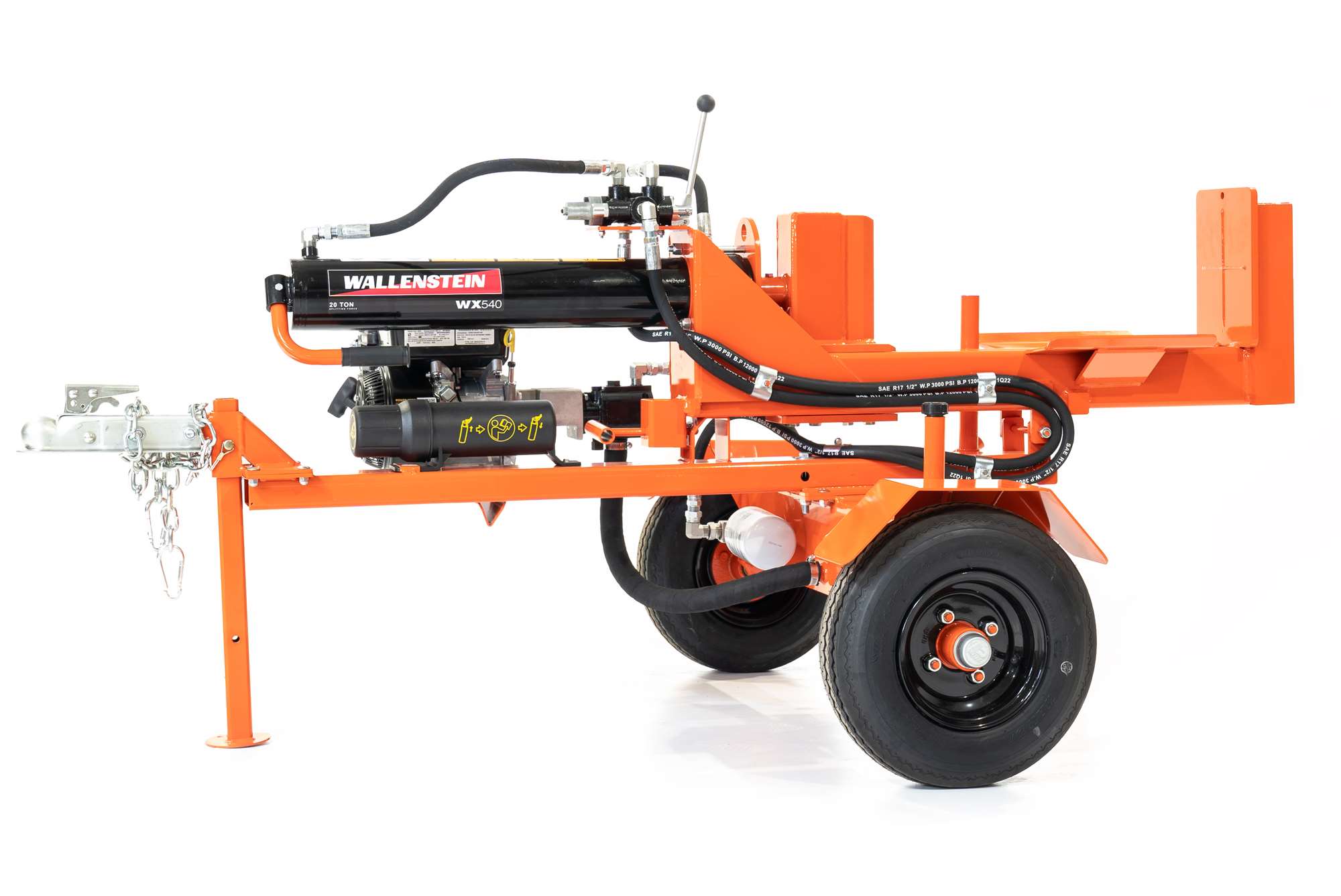
The Wallenstein WX540 is worth considering when firewood splitting needs its own power source and the option to work in either horizontal or vertical orientation. The important benefit is independence from the tractor’s hydraulic supply. That can simplify the wood-yard schedule, but it also adds an engine and a separate hydraulic system to maintain.
For a Canadian property owner, the buying question is whether that independence and orientation choice improve the complete routine enough to justify another machine. A 20-ton label alone cannot answer how comfortably rounds arrive, how many times they must be repositioned or whether the tractor is needed to move material during the same session.
On This Page
ToggleIdentify the current engine and serial range
The Canadian WX540 specification lists a Vanguard 6.5-hp, 203-cc engine, a 24-inch split opening, 20-ton force and a four-inch cylinder diameter. Listed weight is 470 lb, with a two-inch ball hitch and 32-lb tongue weight. The standard bed height is 24 inches.
The February 2023 manual applies to serial numbers 1100204 and up and confirms that engine specification. It describes the WX540L as the lighting-equipped version. A used advertisement should therefore be checked for the actual serial number, engine and variant rather than assumed to match the current page.
Engine identity matters when ordering service parts and assessing maintenance history. A familiar model name on the frame does not establish that every example has the same power unit or equipment. Retain the engine’s own documentation alongside the splitter manual.
Horizontal and vertical operation solve different handling problems
The orientation choice should follow the material. Horizontal operation can suit a steady supply of manageable rounds brought to bed height. Vertical operation provides a different positioning arrangement for material that would otherwise be difficult to place on a raised horizontal bed. Neither mode removes the need for controlled handling and the specified operator position.
During a demonstration, observe the entire transition from a round waiting nearby to split wood leaving the work area. A vertical setting may address the initial lift but still leave substantial rolling, turning and removal work. A horizontal setting may be convenient for modest pieces but poorly suited to the actual supply of rounds.
Make the comparison with the people who will regularly use the machine. A dealer’s brief demonstration may not reveal whether the repeated motion suits the owner over a complete session. Evaluate reach, footing, working space and the approved control routine, not just whether one large piece can be split.
Use the manual’s procedure for changing orientation and securing the equipment. The ability to pivot the beam is a designed feature, not permission to improvise an unsupported working position. The purchase should include a clear handover of that procedure.
Separate force, cycle time and wood output
The product page lists a 6.62-second average cycle and a 13.24-second full cycle. Keep those labels visible when comparing machines. Quoting only the smaller number can create a false impression about a complete extension-and-return sequence.
The manual identifies a two-stage gear pump. Its specification also pairs a gallons-per-minute figure with an inconsistent metric conversion, so this guide does not use that pair for performance calculations. Confirm the applicable pump information if exact flow is material to the purchase.
Do not translate the nominal force directly into a universal maximum log diameter. Grain, knots, shape and the required number of passes affect the work. A round that opens readily and a difficult crotch can demand very different time despite similar outside size.
The most useful comparison measures finished suitable wood over a representative work period. Include positioning and repeated splits. Dividing 3600 seconds by an unloaded cylinder time will not produce a defensible cords-per-hour claim, and this guide makes no such claim for the WX540.
Independent power can free the tractor for useful work
A tractor-powered splitter occupies the tractor while its hydraulics supply the operation. The WX540 removes that particular dependency. The tractor can be assigned to other work or, with an appropriately planned and separated workflow, used for material handling.
That benefit depends on the actual labour arrangement. If a single operator performs every task sequentially, freeing the tractor may mainly reduce attachment changes and scheduling conflicts. If several people are involved, independence may permit a different sequence, but the machine’s operator and exclusion-zone requirements still govern the layout.
Aglist’s material-handling attachment comparison can help identify the separate equipment question. A bucket, grapple and forks do different jobs. Choose the correct handling method and host-machine capacity rather than assuming any loader attachment makes a firewood yard efficient.
Think beyond the splitting day. If the tractor is already committed to field, livestock or property work during the desired firewood window, a self-contained machine can reduce a scheduling constraint. That convenience may justify ownership even when it does not produce a dramatic numerical payback.
Sketch the wood yard before choosing accessories
Mark an incoming area, the approved operating space and a destination for finished pieces. Leave room for movement and for the equipment’s required clearances. The yard should not depend on people standing in unsafe positions to keep production moving.
Consider how the arrangement changes between horizontal and vertical work. The suitable location for waiting rounds and finished wood may differ. A demonstration in an empty paved area should be translated into the actual property layout before the purchase is treated as settled.
Accessories should address an identified problem. A compatible shelf or stroke-limiting arrangement may be useful for a particular routine, but compatibility, intended use and installation must be verified. A four-way wedge is not automatically the best choice for every piece of wood simply because it can produce more pieces in one pass.
Record what is included in the quotation and what is optional. Two machines with the same basic designation may be offered with different useful equipment. Comparing their bare advertised prices can obscure the cost of reaching the intended working arrangement.
Transport equipment is not the same as transport permission
The hitch and tyres describe physical equipment. They do not, by themselves, establish that every towing vehicle, route or travel arrangement is appropriate. Verify the exact model’s transport instructions and the requirements applicable to the proposed use before relying on it for travel between properties.
The WX540 and WX540L distinction is particularly relevant when evaluating photographs or used listings. Do not assume lighting is fitted because another example has it. Confirm the complete equipment on the unit being purchased.
For a property-only routine, assess access, turning space, parking and how the machine will be positioned without creating an awkward manual handling task. The stated tongue weight is not a substitute for assessing the complete movement. Uneven ground, clearance and the towing arrangement still need attention.
If the splitter will be shared, define who transports it and who checks condition at handover. The sharing calculation should include the actual travel and setup time rather than assuming the machine moves between users without cost or effort.
Annual maintenance now includes an engine
Independent power removes dependence on tractor hydraulics but introduces another engine’s fuel, service and storage requirements. Follow the engine manufacturer’s instructions for the fitted unit. Avoid applying a generic schedule copied from a different engine or an older splitter.
Keep a simple ownership record with engine identity, splitter serial number, service dates and fitted accessories. This is useful even when annual hours are modest, because seasonal equipment can spend long periods stored between work sessions.
Plan readiness before the intended firewood period. A machine that needs service, tyres or hydraulic attention on the first workday has less practical independence than expected. Include routine inspection of the complete splitter and transport equipment, not only whether the engine starts.
Operate in the environment permitted by the manual. An engine-powered splitter should not be moved into an enclosed building for convenience in poor weather. Winter planning should focus on a suitable work period, footing, storage and the documented start-up requirements rather than improvising an indoor worksite.
A cost comparison with explicit boundaries
Compare complete annual cost and complete work, using real quotations where available. Include purchase and expected ownership period, maintenance, storage, operating inputs and the cost of any required accessories. Keep uncertain resale value separate instead of using it to guarantee a favourable result.
For illustration only, suppose independent equipment adds CAD 250 per year to a particular owner’s complete cost compared with a verified tractor-powered alternative. If it avoids ten hours of genuinely useful tractor scheduling or changeover burden, the difference is CAD 25 per avoided hour. If it avoids only two hours, it is CAD 125 per hour. These are invented planning inputs, not WX540 pricing or performance data.
The calculation does not say that time must be valued at either figure. It shows how strongly the ownership case depends on actual use. An owner may reasonably prefer independence for convenience, but that preference should be distinguished from a claim of measured financial savings.
Rental or a complete service is another valid comparison for occasional concentrated work. Include collection, travel, return and the scope of the service. An inexpensive daily rental is not the whole job cost if obtaining and returning the machine consumes much of the available weekend.
How to evaluate a used WX540
Start with identity and records, then have a competent person assess the engine, hydraulic system, cylinder, valve, wedge, beam, pivot and locking arrangements, frame and towing equipment. These are inspection priorities, not evidence that the model has particular recurring failures.
A representative demonstration should show correct function in the orientations the buyer intends to use. It should also establish the fitted controls and return behaviour. A short engine start or a single easy split leaves too much of the working system unexamined.
Inspect only under the prescribed shutdown and pressure-release conditions. Do not reach toward moving components, search for a hydraulic leak by hand or accept improvised control changes. Uncertain condition needs a service assessment, not a more aggressive demonstration.
Price repairs as a complete readiness package. A used machine requiring work can still be a sensible purchase, but the comparison should include that work and any unresolved configuration issue. Cosmetic condition and low asking price should not substitute for a documented functional assessment.
A practical purchase decision
| Your recurring constraint | What to evaluate on the WX540 |
|---|---|
| Tractor unavailable during splitting | Value of independent power and reduced attachment changes |
| Awkward rounds for a horizontal bed | Approved vertical workflow and remaining positioning effort |
| Limited annual use | Storage and engine ownership against rental or service |
| Work at several locations | Exact transport equipment, instructions and complete travel routine |
The best candidate is an owner who can identify a recurring advantage in independence or orientation, then demonstrate that advantage with normal material. Someone with ideal tractor hydraulics, manageable rounds and no scheduling conflict may reach a different conclusion.
Frequently asked questions
Does the WX540 require tractor hydraulics?
No. The documented package has its own engine and hydraulic system. A towing or positioning arrangement is a separate consideration.
Is every WX540 lighting-equipped?
The cited manual distinguishes the WX540L lighting-equipped version. Verify the actual unit rather than assuming equipment from another listing.
Does vertical mode remove all lifting?
No. It changes the positioning arrangement, but rounds and finished pieces still need controlled movement. Evaluate the complete routine with the intended operator.
Can I compare splitters by the shortest cycle figure?
Only after confirming what each figure measures. Here the full-cycle label differs from the average-cycle label, and actual completed work also includes handling and repeated passes.
What is the strongest reason to choose this model?
A recurring need for independent power and a useful horizontal/vertical workflow, supported by a representative demonstration. Choose it for that working fit rather than expecting the tonnage number to answer every firewood question.
Share your experience
Help other Canadian buyers — leave a quick review for the
Wallenstein WX540
There are no reviews yet. Be the first one to write one.