Overview & Specs
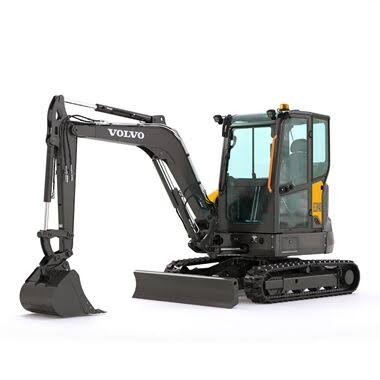
The Volvo ECR40 is a short-radius compact excavator for buyers who need to reduce rear projection while retaining a practical digging and attachment platform. Its clearest comparison is with the conventional-layout EC37, which shares the platform. The ECR40 should be chosen because its geometry improves the actual work arrangement, not because “compact” is assumed to mean zero rear overhang.
For Canadian property and landscape work, that difference can matter beside a building, in a restricted yard or where material-handling equipment occupies part of the available space. The machine still needs room for its front equipment, blade, attachments and the complete work cycle. Reduced rear projection addresses one constraint; it does not replace a site assessment.
Keep a record of the jobs where rear clearance actually changes the machine position. After several assignments, that record will show whether the compact rear delivers a recurring benefit or mainly addresses an occasional edge case. Include any extra delivery or setup burden in the same record so the ownership decision reflects the complete package.
On This Page
ToggleCurrent ECR40, not ECR40D
Volvo’s North American launch announcement introduced the EC37 and ECR40 in January 2024. It distinguishes the conventional EC37 from the short-radius ECR40. The current technical guide uses ECR40F in its dimensional table. Older ECR40D specifications should not be substituted for this machine.
The Canadian ECR40 page lists 24.8 gross hp and 8,785 lb operating weight. The linked guide gives 2,200 rpm for maximum power and 1,500 rpm for maximum torque; the webpage’s engine-speed placement differs. Keep the labels separate and use the applicable manual for operating instructions.
What short radius means on this model
| Dimension | Guide value | Practical implication |
|---|---|---|
| Overall width | 1,780 mm | Initial travel-access measurement |
| Tail radius | 990 mm | Measured from the rotation reference, not the track edge |
| Optional counterweight overhang | 80 mm additional | Fitted equipment changes the rear outline |
| Short / long arm | 1,400 / 1,700 mm | Use matching range and load information |
| Operating weight | 3,985 kg in the defined cab configuration | Options and attachments must remain accounted for |
These figures come from the Canadian-linked ECR40 technical guide. Half of 1,780 mm is 890 mm; comparing that with the 990 mm rear radius illustrates 100 mm of projection in the stated geometry. This arithmetic is not an operating-clearance allowance. It explains why short radius should not be described as zero tail swing.
Build the site sketch around the working position
Begin with the locations from which the machine can appropriately work. Mark nearby walls, fences, stored equipment, trees and overhead restrictions. Then plot both the rear outline and the front working movement. A smaller rear sweep may permit a more useful arrangement, but it cannot make an unsuitable standing position acceptable.
Next, identify where excavated material will go. A constrained yard can have adequate machine clearance yet no convenient place for spoil or a receiving vehicle. The resulting waiting and repositioning may dominate the job. Include that support arrangement before deciding which tail design offers the most value.
Check the approach as well. The same 1,780 mm published width appears in the EC37 guide, so the ECR40’s reduced rear radius should not be confused with narrower tracks in that comparison. A passage that excludes one on width alone may exclude both.
For a contractor, save measurements from several recurring job types. A model selected around one unusually tight site can be less attractive across the broader workload. A clear record makes it easier to judge whether short-radius geometry is a daily benefit or an occasional rental requirement.
EC37 versus ECR40: compare the actual constraint
The shared-platform comparison helps separate engine output from packaging. Where rear clearance is generous, the EC37 remains a relevant candidate. Where the back of the upper structure repeatedly restricts machine position or rotation, the ECR40 deserves closer attention.
Do not declare either one the superior lifting machine from its tail category alone. Use each configuration’s load chart for the required radius, height, orientation and equipment. Counterweight and attachment choices can change the comparison.
Similarly, a shorter rear radius does not automatically mean less repositioning. If the bucket’s reach or the material destination determines the moves, changing rear geometry may leave that bottleneck untouched. A representative demonstration should identify why each move is necessary.
Depth figures depend on arm and blade condition
The technical guide lists blade-up maximum digging depth of 3,133 mm with the short arm and 3,433 mm with the long arm. Its blade-down row gives different figures. Keep the stated condition visible; do not copy the greatest number into an unqualified specification.
The longer arm can change which working points are accessible from an appropriate position. It does not guarantee that the full excavation is comfortable or productive at the outer boundary. Bucket curl, extraction and the path to discharge still need assessment.
Use the correct drawing for the actual arm and attachment package. The Aglist depth-and-reach guide explains the difference between reaching a point and repeatedly working through a shaped envelope. The excavation design and suitable standing positions remain separate site questions.
If most work lies comfortably inside the short-arm range, compare that configuration before paying for reach that is rarely used. If a recurring task needs the longer arrangement, include the matching force, lifting and counterweight information in the same quotation.
Attachment changes can be a larger time issue than digging speed
A machine doing excavation, cleanup and occasional handling may change tools repeatedly. Identify the actual bucket set and whether the selected coupler makes that routine manageable. Compatibility and lock verification matter more than the number of attachments included in a bundle.
For an illustration, suppose an approved setup saves four minutes on each of six daily changes. That is 24 minutes per working day. Across 80 days with that same routine, the arithmetic is 32 hours. These are hypothetical inputs, not measured ECR40 savings or a claim that a particular coupler achieves them.
The example suggests what to observe: parking the outgoing tool, connecting the next one, verifying the connection and resuming work. A demonstration of only the locking motion can omit much of the real changeover. Count the complete routine consistently.
A thumb should be assessed with the selected buckets and coupler. The thumb buying guide explains why a nominal carrier size or the word “thumb-ready” does not define the complete installation.
Hydraulic matching and operator settings
The guide separates 110 L/min maximum system flow from 65 L/min maximum accessory flow, with an optional second accessory circuit listed at 40 L/min. Use the relevant circuit and the tool’s complete requirements. Do not treat the largest pump figure as universally available attachment flow.
The Canadian page describes configurable hydraulic settings and proportional controls. Their value depends on the installed tools and the operator’s routine. A useful handover records the approved setup for each attachment and demonstrates how the operator selects it.
When buying used, inspect the actual plumbing, outlets and controls. A family brochure’s option list does not prove the machine has the required equipment. Put missing components and commissioning into the cost comparison before choosing an attachment-only offer.
During a demonstration, assess combined movements through a representative task. Smooth operation without a load is not the same as convenient control while digging, positioning and operating a tool. Compare similar conditions and a competent operator’s normal procedure.
Do not turn digging force into lifting capacity
The ECR40’s bucket and arm force figures describe digging actions. A proposed lift needs the applicable chart and approved equipment, with all stated conditions retained. The ability to grip an object with a thumb does not create another lifting rating.
Write down the load and required placement before discussing capacity. A task near the machine and one farther away are different questions. Account for the actual bucket, coupler and other fitted equipment according to the chart’s basis.
For loading loose material, measure the receiving side and useful discharge position. A short-radius machine can fit a restricted yard while still needing a different truck position to complete the bucket path. Evaluate both machines and the receiving arrangement together where loading is central to the purchase.
Cab, seasons and ownership in Canada
Operator comfort matters most when it supports the intended schedule. Inspect the offered cab’s heating, ventilation, glass, visibility aids and controls. A description of a spacious cab is not a guarantee that every operator will find the same seat and pedal arrangement comfortable.
Consider the clothing and conditions typical of the working season during the assessment. Plan fuel, fluids, starting and warm-up from the applicable manual. Frozen ground changes the excavation task and may call for another approved tool or method; it is not simply ordinary soil at a lower temperature.
For ownership away from a service centre, identify how routine parts and repairs will be handled. Service access on the machine is useful only if there is also a practical place and plan to perform maintenance. Include cleaning, storage and the cost of moving equipment for repairs where relevant.
Transport and used-package checks
The published operating-weight configuration is not the weight of every ECR40. Establish the actual fitted equipment and separately carried tools. Check the complete hauling arrangement, including available payload, deck space, towing vehicle, hitch and the applicable requirements.
Do not use a nominal four-tonne label as a transport calculation. A coupler, thumb, counterweight and extra buckets can affect the package, while some published weights already include certain components. Keep an itemised record to avoid omissions or double counting.
For a used machine, verify identity before comparing condition. Inspect the arm and counterweight arrangement, hydraulic provisions and attachment interfaces. Have undercarriage, linkage, structure and repairs evaluated by a competent person, then observe normal warmed-up operation.
Price identified repairs, delivery, initial service and any missing installation work. This guide does not claim a model-specific fault pattern or a guaranteed life expectancy. The individual machine’s condition and documented history are the basis for that purchase.
Alternatives and questions to settle
Aglist’s Bobcat E35 and Bobcat E32 entries can help build a comparison list. Verify the exact generations, counterweights and manufacturer specifications before judging them. The best alternative may solve a different bottleneck rather than lead every numerical row.
Is the ECR40 zero tail swing?
Volvo describes it as short radius. Its published dimensions show why the rear outline still needs clearance.
Does optional counterweight change that outline?
Yes. Include the specified additional overhang and use the matching configuration information.
Which digging-depth figure belongs in my comparison?
The one matching the arm and stated blade condition, together with the relevant working-range drawing.
Can I assume a used machine has the second hydraulic circuit?
No. Inspect and document the installed equipment.
When is the ECR40 particularly worth comparing?
When recurring rear-clearance restrictions affect useful machine position, while its complete attachment, reach and transport package meets the work.
Share your experience
Help other Canadian buyers — leave a quick review for the
Volvo ECR40
There are no reviews yet. Be the first one to write one.