Overview & Specs
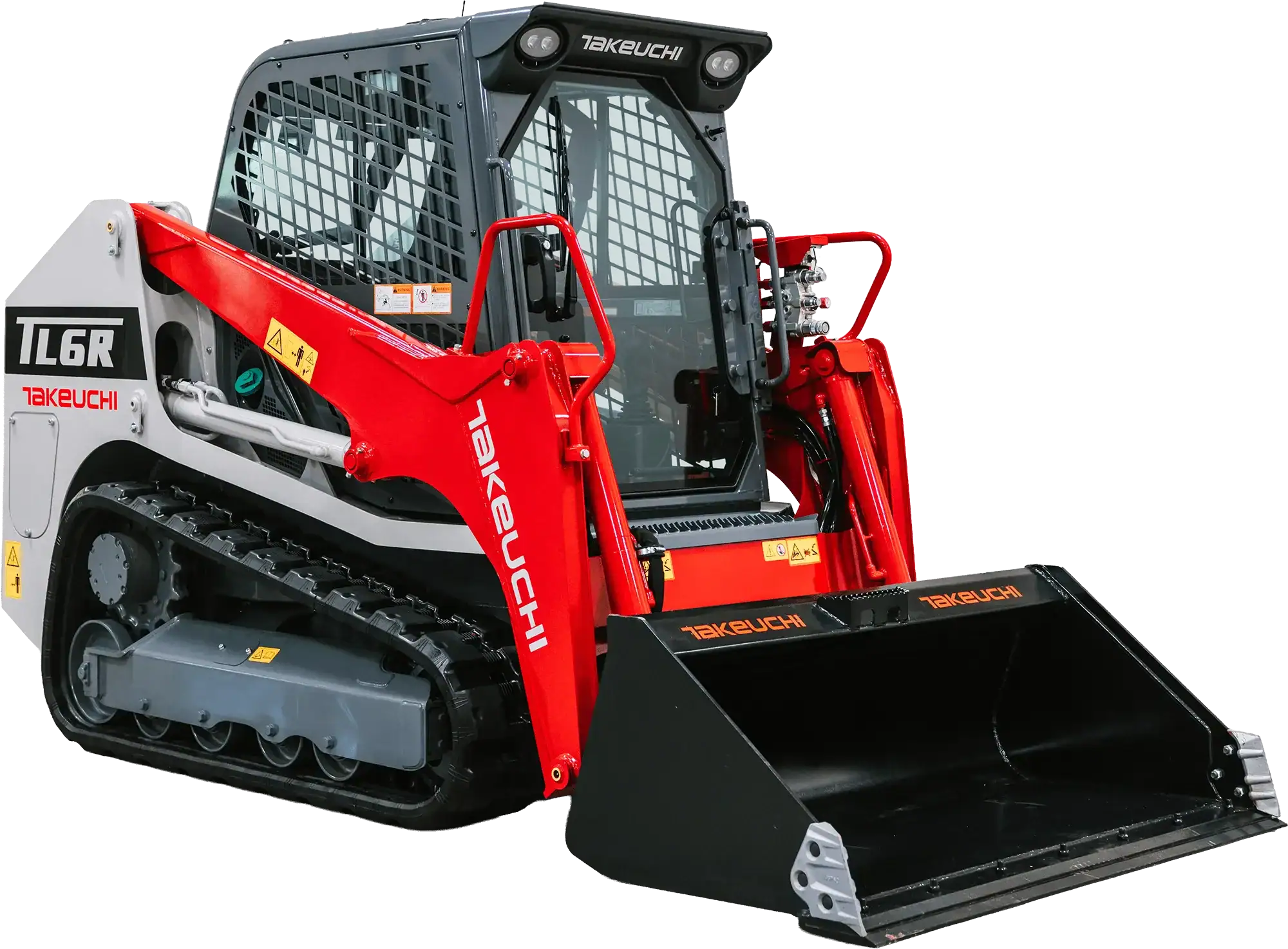
The Takeuchi TL6R is a compact track loader to shortlist when the route into a Canadian property matters almost as much as the work inside it. Its buying argument is a seated operator station and a useful bucket-and-attachment platform in a relatively narrow, low package. That argument becomes weaker if the normal job is lifting heavy pallets or repeatedly filling tall trucks.
Choose it around the entrance, material and receiving arrangement together. A small machine that reaches the work can be more useful than a larger one left outside the gate; a small machine that needs too many journeys can also become the expensive choice. This guide explains how to evaluate that tradeoff without treating compact dimensions as a substitute for capacity.
On This Page
ToggleTL6R specifications and the version behind them
The current Takeuchi US model page identifies the TL6R as a radial-lift loader. The detailed figures below follow its linked December 2017 North American brochure. They describe that documented configuration, not every subsequently equipped machine.
| Specification | Brochure value |
|---|---|
| Engine power | 65.2 hp at 2,700 rpm |
| Operating weight, canopy / cab | 3,395 / 3,530 kg |
| Rated operating capacity, 35% basis | 835 kg / 1,841 lb |
| Width without bucket | 1,530 mm |
| Transport height | 1,975 mm |
| Bucket-pin height / dump height | 2,905 / 2,275 mm |
| Primary auxiliary flow | 67.4 L/min / 17.8 US gpm |
The brochure specifies DOC and DPF aftertreatment, hydraulic pilot controls and a swing-out door on the enclosed cab. Its ROC footnote uses no more than 35% of tipping load. Confirm serial-specific equipment and documentation when buying used.
Measure the whole access route
The width without a bucket is useful precisely because it tells you what it excludes. An attachment can become the widest part of the package. Measure the actual bucket or tool, hose projections and the space required to align the loader with an opening. A nominal opening equal to the machine width provides no practical allowance for steering or obstructions.
Height deserves the same attention. Transport height on a level drawing does not prove clearance beneath every beam, door or branch. The route may slope, the ground may be uneven and added equipment can change the envelope. Include the approach and departure, not just the opening itself.
Consider a hypothetical garden renovation. The entrance is adequate, but there is a right-angle turn immediately behind it and a finished path beside the work. A tape measurement at the gate would miss both constraints. Draw the route to the stockpile and identify where the loader can turn, where attachments will sit and how pedestrian access will be separated from the work.
This is where the TL6R’s dimensions deserve a real demonstration. The question is whether the configured machine can support a workable method through the entire property. Passing a gate once is not evidence that repeated loaded movements will be practical.
A seated CTL or a smaller mini track loader?
Some buyers reaching the TL6R shortlist should also compare a mini track loader. The decision is partly about access but also about the operator’s working day. A seated machine may suit sustained loader work; a different layout may suit a task with frequent transitions between machine and ground activities. Compare those workflows directly instead of assuming the larger category is always the next logical purchase.
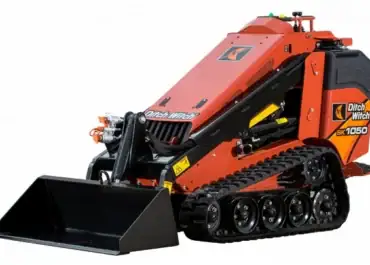
Aglist’s Bobcat MT100 page provides a starting point for researching that smaller category. Do not transfer attachments between categories merely because a mounting plate looks familiar. Carrier suitability, mounting dimensions, controls and hydraulic requirements need their own checks.
For an acreage owner, a useful exercise is to separate work into routine tasks, annual projects and rare exceptions. Owning a loader for the routine work and hiring a different machine for an exceptional task may be more practical than buying around the largest project on the calendar.
Radial lift and the receiving end of the job
The lift arrangement makes the TL6R worth evaluating for bucket work around the lower and middle parts of its range. It does not prohibit loading, but the receiving vehicle must suit the actual discharge geometry. The maximum bucket-pin height is not the height at which the bucket’s cutting edge clears a truck side.
Check the truck, trailer or container with the intended bucket. Include its side height, the desired deposit position and the space for the loader to approach appropriately. A machine that can tip material over an edge but cannot place it usefully can create avoidable rehandling.
If repeated high loading is the dominant task, compare a vertical-lift alternative using the same receiver. The Bobcat T595 is a catalogue starting point, not an assertion of equivalent specifications. Aglist’s radial versus vertical lift guide explains the broader geometry question.
Capacity starts with the actual material
The rated capacity should screen the work before a bucket is selected. A large volume of light material and the same volume of dense aggregate create very different loads. Buying a large bucket to reduce trips can be counterproductive if it cannot be filled appropriately for the material.
Use measured or supplier-provided material information when planning a real task. As an illustration only, a 0.4 cubic metre quantity at an assumed density of 1,600 kilograms per cubic metre contains 640 kilograms of material. Change the assumed density to 2,000 and the same volume contains 800 kilograms. Neither example approves that load for this loader: bucket mass, geometry, configuration and operating conditions still need to meet the applicable limits.
The calculation explains why visual estimates are unreliable. Wetness, composition and fill shape can change what a bucket contains. Match the tool to the job rather than treating its volume as a payload allowance.
Forks need a separate assessment. Their frame and the forward position of a pallet differ from a bucket arrangement. The ROC and tipping-load guide explains why a headline rating is not permission to handle every pallet of the same weight. Do not substitute the brochure’s larger 50% comparison figure for its applicable operating rating.
Attachments that suit a small carrier
Build the initial attachment list around confirmed work. A suitable general-purpose bucket may handle the main material-moving tasks, while another compatible tool serves grading or a defined powered application. A long list of inexpensive attachments is not a useful package if several exceed the carrier’s limits or rarely leave storage.
For a powered tool, compare its required flow range, pressure, return arrangement and controls with the actual machine. The linked brochure lists the primary circuit; it is not a basis for assuming an optional high-flow installation. Tool width and mass also matter when access was the original reason for choosing the TL6R.
Think about the next task as well as the first. A tool that fits through the opening may need room to work or turn once inside. An attachment change can require a suitable staging area. Put those details on the site sketch before choosing the package.
Tracks help distribute weight, but finished surfaces still matter
A track loader should not be purchased on the assumption that it leaves lawns or paving untouched. Ground response depends on conditions, loading, tread and the way the machine moves. A narrow access job may involve exactly the tight turning that makes surface protection especially important.
Assess the route when planning the job and include restoration or an appropriate protection system in the estimate. If the ground is unsuitable, another route, a different method or a change in timing may be necessary. A low catalogue pressure is not a certification that an unknown surface can support the work.
Keep undercarriage condition in the ownership calculation. Inspect track damage and wear across the rollers, sprockets and idlers with qualified help. Replacing rubber alone does not establish that the rest of the running gear is sound.
Cab choice for a Canadian work calendar
Compare canopy and enclosed packages against the months in which the machine will actually earn its keep. If projects can wait for favourable weather, the calculation differs from a contractor’s daily schedule. On a used cab machine, test the fitted heating, ventilation, glazing and seals rather than assigning value merely because the cab is enclosed.
The documented swing-out door also deserves a practical check. Review entry, exit and attachment clearance under the manufacturer’s instructions. Do not assume that a door arrangement from another Takeuchi model applies here. A comfortable demonstration should include the real tools and appropriate parked positions.
Because the documented engine uses a DPF, include aftertreatment operation and service history in the ownership review. Have warnings or reported regeneration issues diagnosed. This is a configuration-based inspection point, not a claim that the TL6R has a particular recurring fault.
Does easier access offset extra cycles?
Use a complete job comparison. Suppose, hypothetically, the smaller package avoids 90 minutes of access alteration and restoration, but requires 30 additional material journeys averaging two minutes each. Those journeys add 60 minutes, leaving a 30-minute time advantage before other differences are considered.
That result would change if the route were longer, the material denser or the larger machine required no access work. The purpose is to identify the variables worth measuring. Do not assign a productivity premium to the TL6R without a representative trial.
For a business, add delivery, labour, tool changes and the agreed finish standard. For an owner, include the convenience of having equipment available, but distinguish that benefit from actual cash savings. Owning machinery can be worthwhile without every saved hour becoming billable revenue.
Transport and a used-machine purchase
The brochure distinguishes canopy and cab operating weights. Establish what the weight information for the offered machine includes before building the transport load. Account for fitted equipment, separately carried tools and other cargo without counting an included component twice.
Evaluate the complete hauling arrangement, usable payload, deck dimensions and individual ratings. A small-looking loader is not automatically suitable for a particular pickup and trailer. For occasional moves, a delivery quotation may be more useful than an assumption that existing transport will cope.
During a used inspection, verify identity first, then assess running gear, loader pivots, coupler locking components and hydraulic condition. Observe appropriate cold-start and warmed-up operation. Have leaks, warnings or irregular motion investigated before setting a purchase price. Include every attachment in the written equipment list.
Questions that should settle the shortlist
Will a five-foot opening be enough?
Do not use the rounded marketing description as a clearance plan. The documented width is slightly greater than five feet without the bucket, and the actual route and tool need additional assessment.
Is the TL6R a high-flow attachment carrier?
The cited brochure provides a primary auxiliary-flow specification. Approve an attachment only from verified information for the installed circuit; do not assume a high-flow option from another model.
Can it replace a tractor for every acreage job?
No single category fits all acreage work. List the required implements, travel and lifting tasks first. A loader attachment platform and a tractor implement platform answer different needs.
Should the lowest-hour used example win?
Hours are useful context, but condition, records, attachment fit and needed repairs determine the usable package. Compare inspected machines on the same delivered scope.
What is the strongest reason to buy this model?
A verified access advantage that still leaves enough capability for the recurring work. If entry is easy but capacity or loading geometry fails the job, a different method is needed.
Share your experience
Help other Canadian buyers — leave a quick review for the
Takeuchi TL6R
There are no reviews yet. Be the first one to write one.