Overview & Specs
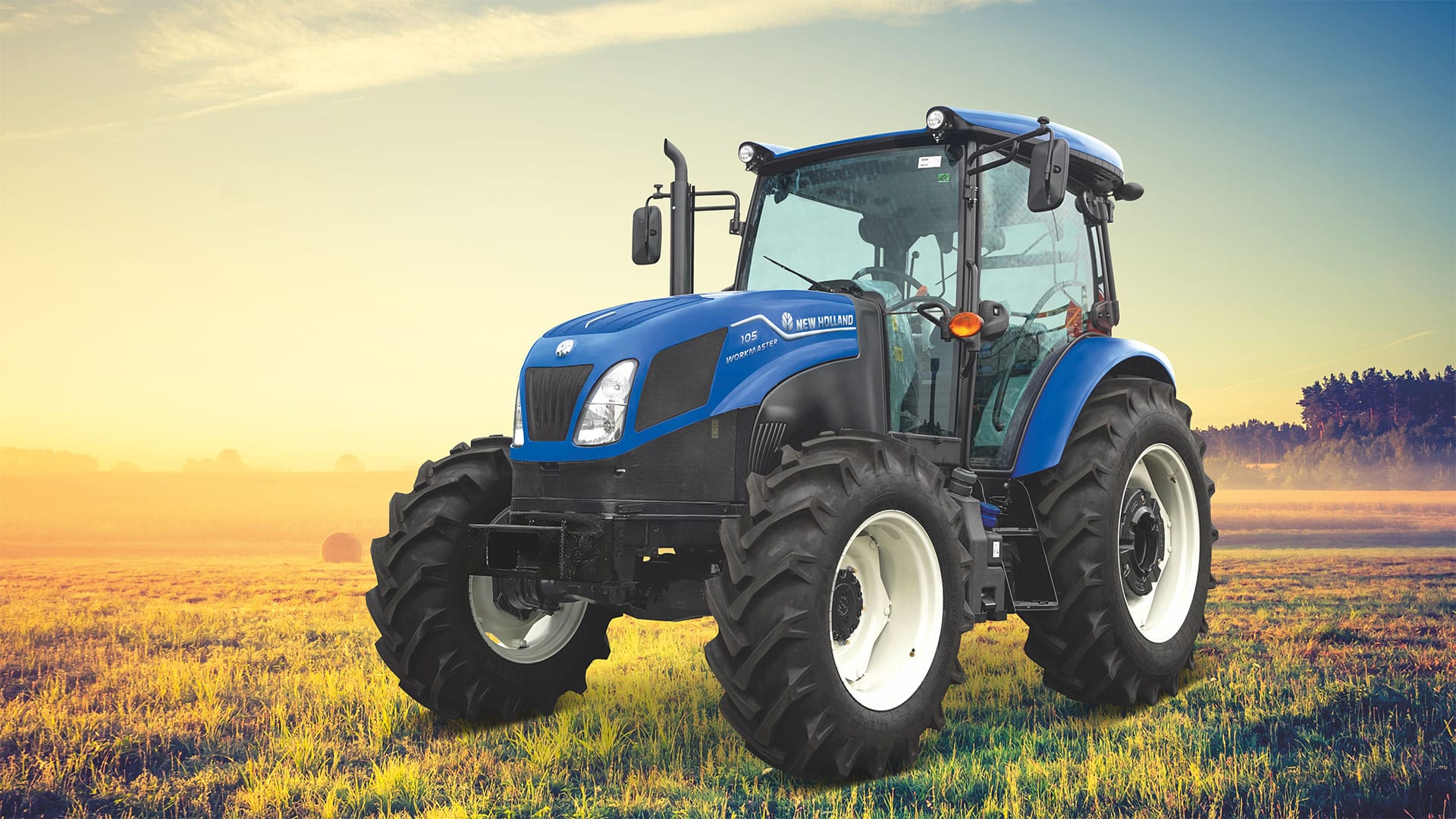
New Holland Workmaster 105 Utility Tractor
On This Page
ToggleIntroduction
The New Holland Workmaster 105 sits in the middle of New Holland’s power utility tractor range, offering more power than the Workmaster 95 while keeping the four-post cab, power shuttle transmission, and value pricing the power range is built on. With a 3.4-litre four-cylinder engine producing around 105 horsepower and standard four-wheel drive, it is a capable mid-size tractor for real farm work: baling, heavy loader work, haulage, and PTO implements. For a prairie mixed or livestock farm that wants strong utility power at a value price, the Workmaster 105 is a well-placed choice in the power range.
What defines the Workmaster 105 within the range is more power on the same capable platform. It carries the four-cylinder FPT engine with the torque for heavy work, the 12×12 power shuttle transmission that changes direction and gears under load without clutching, and the four-post cab with wide visibility for loader work and fieldwork. Standard four-wheel drive gives traction for heavy work, and it can be equipped as a Workmaster PLUS with added technology from New Holland’s higher ranges.
On Aglist, the focus is on where the Workmaster 105 fits against the smaller Workmaster ranges, against utility tractors from other brands, and its own power siblings.
Key Specifications
| Specification | New Holland Workmaster 105 |
|---|---|
| Class | Utility tractor (power) |
| Engine | 3.4 L, 4-cylinder FPT diesel, ~105 hp |
| Drive | Four-wheel drive standard |
| Transmission | 12×12 power shuttle |
| Cab | Four-post cab (wide visibility) |
| Rear PTO | 540/540E or 540/1000 rpm |
| Technology | Workmaster PLUS option (telematics-ready) |
| Loader | Factory-matched front loader available |
| Emissions | Tier 4B |
Specifications are drawn from New Holland and dealer sources and vary by configuration. Confirm exact specs, options, and current pricing with your dealer.
What the Workmaster 105 Does Well
The Workmaster 105 pairs more power with the power range’s capable platform, and its strengths reflect that.
The first is added working power. At around 105 horsepower, it gives more margin for running larger balers, mowers, and PTO implements, heavier loader work, and harder pulling than the Workmaster 95, while keeping the four-cylinder torque and standard four-wheel drive that make the power range capable. For a mixed or livestock farm working at the upper end of the utility class, that extra power handles bigger implements and heavier days without moving to a much more expensive tractor.
The second is the power shuttle and working cab. The 12×12 power shuttle changes direction and shifts gears under load without clutching, which makes loader work, headland turns, and general use faster and less tiring, and the four-post cab gives wide, clear visibility for loader work and fieldwork with comfort through long days. This combination is what separates the power range from the smaller Workmaster tractors, and the 105 carries it with more engine.
The third is capable equipment with technology options. Standard four-wheel drive gives traction for heavy prairie work, a factory-matched loader is available for proper integration, and the Workmaster PLUS option adds technology from New Holland’s higher ranges for buyers who want telematics and more features. For a farm wanting strong utility power at a value price, the Workmaster 105 is a capable middle choice in the power range.
How It Compares
The Workmaster 105 sits in the power utility class, and the comparison is about capability and value.
Against a Kubota M series or a John Deere 5M, the Workmaster 105 competes on delivering strong utility power, a power shuttle, and a working cab at a lower price, while Kubota and Deere bring their dealer networks and resale strength. For a buyer who wants capable utility power without a premium price, it is worth comparing closely. For the competing Kubota machines, see the Kubota tractors compared overview.
Within New Holland’s lineup, the Workmaster 105 is the middle power utility model, above the Workmaster 95 and below the Workmaster 120. It is a significant step up from the economy and value-cab Workmaster ranges, with a four-cylinder engine, a power shuttle, and a four-post cab. If you want more power than the 95 without going to the 120, the 105 is the middle choice.
Best Applications
The Workmaster 105 is a strong fit for:
- Mixed and livestock farms needing strong utility power for baling and haulage
- Heavier loader work and larger PTO implements than the Workmaster 95 handles
- Operations wanting a power shuttle transmission for faster, easier work
- Buyers who want a four-post cab with wide visibility at a value price
- Farms wanting the option of added technology with Workmaster PLUS
For less power or lower cost, the Workmaster 95 or the smaller ranges cover it, and for the most power in the range, the Workmaster 120 steps up. The Workmaster 105’s place is strong utility power in the middle of the power range.
New Holland Workmaster 105 Reviews & Ratings
On Aglist, open the Reviews & Ratings section on this page to see how the Workmaster 105 performs in real Canadian conditions: how it handles baling, heavy loader work, and haulage, how the 12×12 power shuttle works out, how the four-post cab performs through prairie seasons, and how it holds up over time. If you run a Workmaster 105, your review helps the next prairie operation choose.
Frequently Asked Questions
How much horsepower does the New Holland Workmaster 105 have? It produces around 105 horsepower from a 3.4-litre four-cylinder FPT diesel engine, placing it in the middle of New Holland’s power utility tractor range, above the Workmaster 95 and below the Workmaster 120.
What transmission does the Workmaster 105 have? It uses a 12×12 power shuttle transmission, which changes direction and shifts gears under load without clutching, making loader work, headland turns, and general use faster and less tiring than a synchronized shuttle.
What is the difference between the Workmaster 95 and 105? Both are power utility tractors on the same platform with a four-cylinder engine, 12×12 power shuttle, and four-post cab. The Workmaster 105 has more power, around 105 horsepower against the 95’s roughly 95, for running larger implements and heavier work. The choice is how much power you need.
Does the Workmaster 105 come with four-wheel drive? Yes, four-wheel drive is standard, giving traction for heavy work on prairie ground, whether loading, baling, or working in the field.
What is Workmaster PLUS? Workmaster PLUS is a version of the power Workmaster tractors equipped with added technology from New Holland’s higher tractor ranges, including telematics features. It is an option for buyers who want more technology on the Workmaster 95, 105, or 120.
Is the Workmaster 105 good for a mixed farm? Yes. With around 105 horsepower, four-cylinder torque, a power shuttle transmission, a four-post cab, and standard four-wheel drive, it handles baling, heavy loader work, haulage, and larger PTO implements for mixed and livestock farming at a value price.
Related
- New Holland Workmaster 95 and Workmaster 120: the other power utility models.
- New Holland Workmaster 75: the value-cab utility alternative.
- Kubota tractors compared: competing Kubota utility tractors.
- New Holland brand page: the full New Holland lineup on Aglist.
Note: We try our best to keep specs and information accurate, but some details can be missing or different depending on the source. Before you buy, service, or repair equipment, please double-check key specs with the manufacturer, the owner’s manual, or your dealer.
About reviews: Reviews on Aglist are written by real users. We moderate them for spam and abuse, but opinions and claims are still personal, so use them as guidance, not as a guarantee.
Share your experience
Help other Canadian buyers — leave a quick review for the
New Holland Workmaster 105
There are no reviews yet. Be the first one to write one.