Overview & Specs
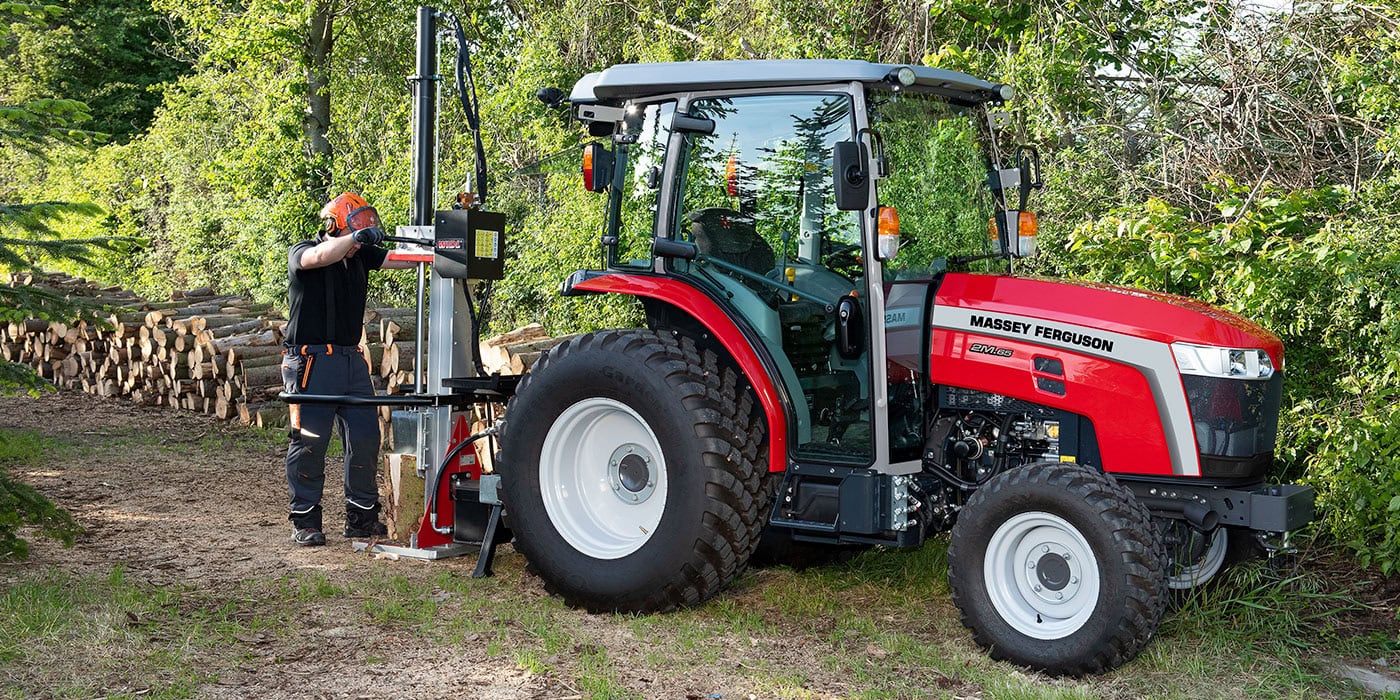
The Massey Ferguson 2M.65 is a specific answer to a specific compact-tractor requirement: a cab-equipped, hydrostatic machine with more published PTO output than the other current 2M HST models. It should not be treated as an automatic upgrade for every owner. Someone who wants a mechanical transmission, an open station or the backhoe listed for the smaller 2M models has a different buying problem.
For Canadian year-round work, the strongest reason to investigate the 2M.65 is a combination of operator environment, travel control and a driven implement that can use its output. The purchase case is weaker when the essential limitation is loader geometry, an uncertain rear-tool match or an attachment arrangement that the documentation does not support.
On This Page
ToggleThe configuration that defines the 2M.65
| Item | Published specification |
|---|---|
| Rated engine output | 65.7 hp |
| PTO output | 50 hp |
| Transmission | Three-range, two-stage Hi/Lo Servo-HST |
| Operator station | Cab only |
| Mechanical transmission | Not listed as available |
Source: the current 2M technical sheet, read alongside the Canadian M Series page on October 11, 2026. The technical sheet restricts its CB85 backhoe fitment note to the 2M.50 and 2M.60. That exclusion matters when comparing the range.
Why HST with this output can be attractive
Some owners want hydrostatic travel control for frequent repositioning but also have a rear tool with a demanding shaft-power requirement. That is the useful question behind this model: does its configuration satisfy both parts of the work better than another suitable package?
Begin with the implement’s exact documentation. Check the required power label, speed, mounting version, mass and intended duty. A nominal engine figure cannot be substituted for a PTO requirement. Equally, a passing shaft-power figure does not prove that the hitch, driveline or complete tractor setup is suitable.
Imagine a hypothetical implement with a minimum of 48 PTO hp. The 2M.65’s published output clears that initial screen, but only the full compatibility assessment could establish a usable combination. The example is not an attachment recommendation or a statement that operating at a small numerical margin will achieve an acceptable result in every condition.
Once the intended tool is suitable, evaluate the travel system in representative work. Variable material feed, short turns and precise approaches can create a useful reason to prefer HST. A buyer whose work is mainly long, consistent passes may reach another conclusion after comparing a suitable mechanical tractor.
Understand the two-stage control before assigning it value
The 2M.65’s transmission description differs from the simpler three-range entry for the other 2M models. Do not infer the exact shift procedure, available working speeds or operating permissions merely from the Hi/Lo label. The applicable manual and demonstration should establish how the controls are used.
A useful demonstration includes a steady working pass followed by a permitted change in pace and a repositioning sequence. The operator should be able to explain which control accomplishes each part of the job. If the feature feels attractive but does not change a recurring task, it may have less value than the specification suggests.
Assess the controls with the clothing and footwear normally used. Look at pedal access and the reach to implement controls while seated correctly. A second regular operator should perform the same assessment; shared equipment has to fit more than the person negotiating the purchase.
Read the transmission guide for the wider choice. Avoid converting one transmission feature into an unsupported claim about fuel savings, reliability or a percentage increase in productivity.
The cab is part of the machine’s purpose
Because this model is specified as cab-only, compare it with other complete cab packages. A lower-priced open-station quotation answers a different question. Identify which heating, cooling, glass-clearing, lighting and seat features are actually supplied in the offer, rather than assuming every feature mentioned on the family page is included.
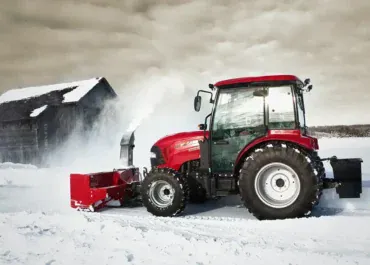
For winter work, assess the view toward the attachment and the route as well as the comfort of the seat. A rear snowblower makes rearward viewing and control access important. A front arrangement places attention on the forward sightline, drive kit and mounting. A loader used for snow brings different pile-storage and cycle requirements.
For summer work, evaluate the enclosed station during the kind of session you expect to perform. Consider entry and exit when changing tools, the ability to see the cutting or working area, and the routine needed to keep the glass clear. Climate equipment should be tested as installed; a cab label alone does not measure its performance.
Do not infer specialist protection from ordinary cab equipment. If a task requires a particular protective certification or filtration specification, obtain evidence for that exact station and application. Weather enclosure, visibility and task-specific protection are separate questions.
Backhoe plans can rule this model out
The CB85 restriction in the source is easy to miss because it sits below a shared 2M attachment table. A buyer reading only the family-level backhoe description could incorrectly assume the larger tractor accepts the same installation. The reviewed sheet does not support that assumption for the 2M.65.
If an owned backhoe is essential, start the shortlist with a documented approved tractor-and-backhoe combination. Do not order this tractor on the expectation that brackets from another model will make the installation suitable. Any alternative proposal needs its own manufacturer-supported compatibility evidence.
If digging is occasional, compare a separate arrangement: renting suitable equipment, hiring a contractor or retaining another machine. Include mobilisation, scheduling and the scale of the work in that decision. There is no universal number of digging jobs after which buying a backhoe becomes economical.
This is a good example of why a larger model number does not mean a superset of every smaller model’s capability. The right tractor follows the required equipment package, not the ranking in the brochure.
Rear-lift figures need clarification
The technical sheet shows an unusual equality between the 2M.65’s lift-point and rearward hitch entries. The overview repeats a headline rear-lift value, but that does not independently resolve the measurement conditions. This guide therefore does not turn that entry into a definitive carrying approval.
For a heavy rear implement, obtain the applicable lift information for the actual build and measurement position. Include implement centre of gravity, any quick hitch, required ballast and the permitted operating arrangement. Passing the PTO-power check is only one part of the decision.
A longer attachment can also affect turns and storage even when it is not exceptionally heavy. Measure the combination through the route to the work. If it is PTO driven, the complete driveline must suit the installed geometry and permitted movement using the correct instructions.
The three-point quick-hitch guide explains why convenient connection hardware does not remove these checks. Where documentation is unresolved, leave the proposed heavy implement unapproved rather than selecting the most generous interpretation.
Loader capability does not rise automatically with the engine rating
The 2M sheet lists the FL2814 loader across the family. The 2M.65’s higher shaft output should not be presented as extra pallet capacity. Identify the exact loader, attachment carrier, bucket or forks and required tractor setup for the task.
For a delivery, record the gross load and its dimensions, then the required pickup and placement positions. For a trailer, measure the receiver and approach. A load that is easy to pick up near the ground may not be suitable at the height and reach needed to complete the job.
Consider whether the handling task is regular enough to determine the tractor purchase. A supplier unloading one annual delivery might be a more proportionate solution than choosing a tractor around an undocumented lift. Conversely, frequent material placement deserves a properly rated handling system, even if it leads to another type of machine.
Aglist’s loader-capacity guide explains the measurement positions and full-load assessment. It is especially useful when a sales comparison provides only one large lift number without its conditions.
Three ways to test the purchase case
A demanding rear tool with frequent manoeuvring
Verify the implement first, then demonstrate a representative pass and the awkward turn or approach. Define the acceptable result before the demonstration. Record what limits progress: material processing, access, visibility, ground conditions or operator control. The 2M.65 makes sense when its actual package addresses that limitation.
Year-round property work with a fixed completion window
List the tasks that cannot simply wait for a pleasant day. A cab may have substantial personal or operational value in that schedule even without a measurable time saving. Assess that value honestly rather than inventing a payback based on faster travel.
For winter equipment, use the snowblower fitment guide to specify the exact drive and mounting arrangement. Include attachment changes and storage in the routine.
An owner moving from a smaller tractor
Write down which limitations prompted the change. If they concern power and the operator environment, this model may address them. If they concern backhoe compatibility, loader reach or a low doorway, the larger engine does not resolve the issue. Test the reason for upgrading before valuing every extra feature.
Working envelope and hauling
Measure the proposed tractor with the actual tyres, mirrors, lights and attachments. A published minimum width is not a clearance guarantee. A cab roof also changes what can pass through storage compared with an open tractor’s approved configuration.
For transport, include the entire load rather than relying on a bare tractor figure. Loader, ballast, implements and other carried equipment must be accounted for, with the trailer and towing arrangement checked against their applicable requirements. A tractor that fits the job can still demand a different service-transport plan.
Consider door opening and the operator’s access inside the storage area. A machine may physically fit between walls while leaving insufficient practical space for entry or attachment handling. The usable arrangement includes people and routine tasks, not just parked dimensions.
Compare complete alternatives and inspect used packages
The 2M.60 offers a different transmission choice, while the 2M.50 may already satisfy less demanding tools. Compare those models on the actual attachment and station requirements. The John Deere 3039R guide provides a useful example of configuration-led buying questions for an outside-brand comparison; it is not a claim of equivalent output or lift capability.
For a used or demonstration 2M.65, establish model identity, operating hours and included equipment before assigning value. Review maintenance records and have a qualified inspection assess drivetrain operation, hydraulic functions, linkage, loader mounts, tyres, cab systems and repairs. Resolve warning indications and obtain estimates for identified work.
Inspect attachments independently. Missing guards, worn components or an unsuitable installation can change the value of an attractive tractor bundle. These are inspection considerations, not claims of known model defects or guaranteed service life.
Keep a purchase worksheet separating the tractor, essential attachments, installed controls, ballast, delivery and required storage or transport changes. The highest-output compact is worthwhile when those items form a coherent working package, not merely when its monthly payment can be made to fit.
Frequently asked questions
Can I buy a mechanical 2M.65?
The reviewed current specification lists HST only. Do not combine this model’s power with the mechanical configuration of another 2M.
Is an open-station version listed?
No. The reviewed sheet specifies a cab-only configuration.
Does the CB85 fit because it appears in the family brochure?
The fitment footnote specifically names the 2M.50 and 2M.60. It does not support a 2M.65 installation.
Does fifty PTO horsepower approve any tool in that power class?
No. Mounting, carrying, driveline, duty and all other requirements remain separate checks.
Who has the clearest reason to shortlist this model?
A buyer who needs the documented cab-and-HST package and its shaft output, with compatible tools and a site that accommodates the complete machine.
Share your experience
Help other Canadian buyers — leave a quick review for the
Massey Ferguson 2M.65
There are no reviews yet. Be the first one to write one.