Overview & Specs
The Massey Ferguson 2M.50 is the current 2M model to investigate when the purchase is driven by a more substantial implement-and-loader package rather than maximum engine output within the range. For a Canadian small farm or acreage, that can mean a tractor expected to mow, maintain lanes, move material and clear snow through the year. The key is to assess the complete working platform without automatically paying for power that the tools cannot use.
It is also a model where the details of the quotation matter. Hydrostatic and mechanical versions have different PTO ratings, and the manufacturer’s overview and detailed sheet do not agree on every weight or hitch entry. A careful buyer should preserve those distinctions rather than choosing the most favourable number from each source.
On This Page
ToggleCurrent model and core specifications
| Item | 2M.50 specification |
|---|---|
| Engine | 2.43 L, four-cylinder turbocharged Iseki diesel |
| Rated output | 48.8 hp |
| PTO output | 38.1 hp mechanical; 36.2 hp HST |
| Transmission choices | 12×12 power shuttle; three-range Servo-HST |
| Loader listed | FL2814 |
These entries come from the 2M technical sheet linked by the Canadian M Series page, checked October 11, 2026. This is a guide to the current 2M.50, not a specification transfer from the preceding 2850M.
Why start here instead of at the top of the range?
Begin by separating three reasons to move into another tractor package: power for driven tools, the ability to carry or handle equipment, and the operator environment. Those requirements can move independently. A larger engine may address a PTO constraint while leaving loader geometry unchanged. A different loader package may address placement height even when the engine was already adequate.
The 2M.50 should be evaluated around the required tools first. If all their power requirements fit, compare the remaining 2M models only where they improve something that matters. The higher model number is not itself a working benefit, and buying the least expensive suitable package is different from buying the cheapest incomplete quotation.
For a step up from a smaller compact, make a list of what the current machine cannot do conveniently. Is the implement too demanding, the loader too limited at the required reach, or the station uncomfortable during long shifts? That list creates a testable reason for the change. It also helps determine whether another machine class or occasional hired work would address the actual bottleneck more directly.
Build the PTO plan around the transmission
A hypothetical implement requiring 37 PTO hp illustrates the configuration issue: the two ratings in the table fall on opposite sides of that initial requirement. The mechanical version’s numerical pass is not a guarantee of a satisfactory complete combination. Mounting, implement weight, duty, driveline and operating conditions remain essential.
If the desired attachment suits both versions, compare how travel changes during the work. A variable pass around obstacles asks different things of the operator than a long, consistent run. Test both the task itself and the turn or repositioning sequence. A smooth straight pass is only part of the workday.
For loader chores mixed with rear-PTO work, write a realistic half-day schedule. Include attaching the tool, travelling to the work, completing the pass and changing back. The preferred transmission may become clearer when judged across that sequence. Aglist’s tractor transmission guide provides the operating questions to bring to the demonstration.
Keep engine output, PTO output and PTO speed in separate columns. A tool advertised only with a vague horsepower range needs clarification before matching. A component rating on an implement is not necessarily its minimum tractor requirement. The PTO matching guide explains those labels.
Loading trailers: geometry can decide the purchase
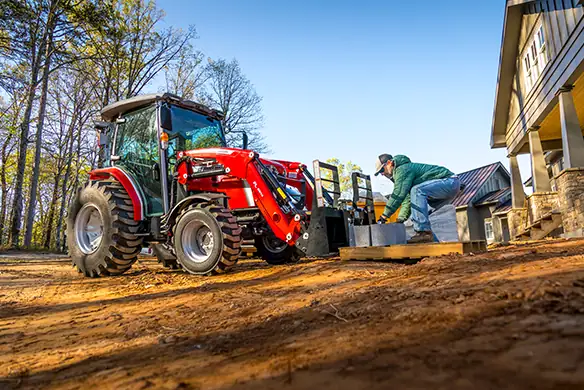
The FL2814 sheet gives a maximum pivot height of 111 inches and a maximum-height capacity of 1,880 lb measured 19.5 inches forward. Neither figure is a universal pallet allowance or a guarantee of clearance over a trailer side. Attachment geometry and the complete approved setup still control the assessment.
Draw the receiving container in side view. Record its side height, the distance from the tractor’s permitted approach to the receiving area, and any obstruction that prevents moving closer. Then examine the proposed bucket in the relevant position. The pivot can be high enough while the bucket lip or discharge path still fails to reach the desired location.
For forks, describe the load’s full dimensions and gross mass. The product may be distributed far along the forks rather than concentrated near the carriage. Include the fork assembly and any adapter in the configuration review. A successful lift close to the ground is not a demonstration of safe placement at a greater height.
Changing the handling plan can sometimes be more useful than changing tractors. A different delivery location, a suitable lower receiving body or supplier unloading can remove an awkward task from the machine’s routine. That should be assessed before an occasional difficult lift dictates every part of a year-round tractor purchase.
Use the loader capacity explanation to compare offers on consistent measurement conditions. Do not substitute a breakout-force entry for a load-carrying limit.
Rear tools: resolve the hitch discrepancy before buying heavy equipment
The Canadian overview and the technical sheet show different mechanical hitch-capacity entries for the 2M.50. This guide deliberately does not present either as a definitive approval for a heavy rear implement. Obtain the applicable documentation for the actual build when the carrying requirement is important to the purchase.
Even a resolved rating must retain its measurement location. A figure at the lift points and one behind them describe different conditions. The implement’s centre of gravity, rearward projection and any quick-hitch arrangement need to be considered with the manufacturer’s requirements.
Check the whole movement and storage envelope. A rear tool that clears the ground can still require substantial space behind the tractor when turning into a shed. If a PTO driveline is fitted, its requirements must suit the actual attachment arrangement throughout the permitted movement. These are setup questions to resolve using the exact instructions, not dimensions to borrow from a neighbouring tractor.
The quick-hitch guide is useful when considering convenience equipment. A label on the hitch cannot replace a complete tractor-and-tool compatibility review.
Hydraulic functions and optional equipment
A tractor can have adequate pump capability yet lack the valve or connection needed for a particular implement function. Make a simple function list: lift and curl, clamp, angle, offset, top-link adjustment, or any other movement the chosen equipment needs. Identify how each will be controlled in the proposed package.
Do not add steering flow to implement flow and describe the sum as supply at a rear outlet. Likewise, a loader carrier that accepts an attachment mechanically does not prove the tractor can power it hydraulically. The supply, return, pressure and control requirements belong in the same review as the mounting.
For a backhoe proposal, the technical sheet names the CB85 for the 2M.50 and 2M.60. That does not remove the need to identify the complete approved installation and any conflicts with other equipment. If digging is occasional, compare the purchase, installation and changeover burden with a suitable rental or contractor arrangement. Do not assume avoided rental costs will repay the attachment after a fixed number of jobs.
Canadian ownership scenarios
Mixed small-farm chores
Separate the repeated tasks from the occasional extreme task. Daily light material movement, weekly mowing and one difficult annual delivery should not be merged into a single “farm work” label. The 2M.50 can be assessed against each requirement, with another handling method retained where the tractor is not a verified fit.
When livestock or stored feed is involved, plan routes and separation from people and animals. A compact tractor’s size does not make every approach convenient. The location of gates and storage may matter more than a small difference in catalogue horsepower.
Lane and property maintenance
For grading, consider the surface, drainage objective and attachment design before focusing on engine power. A tool suited to maintaining an existing lane may not be suitable for a reconstruction project. Evaluate access and turning with the complete implement rather than measuring only the tractor.
For mowing, define the acceptable finish and vegetation first. Compare effective width and observed work rate in representative conditions. A larger platform should earn its place through the completed job, not through a theoretical acreage range assigned to the tractor.
Winter clearing with a cab
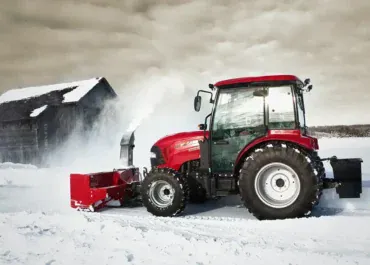
Choose the snow-handling method before adding options. A rear blower, front system and loader bucket place different demands on visibility, controls and attachment compatibility. The snowblower fitment guide helps organise the drive and mounting questions.
During a cab assessment, look beyond whether heat is present. Check the view toward the implement, the surfaces served by the installed clearing equipment, entry with winter clothing and the controls used repeatedly. Include the later-season route when banks have narrowed the available space.
Dimensions and hauling deserve a separate decision
Measure the configured tractor at the tyres and at the widest attachment. Check the height of lights, mirrors and other options at the actual storage opening. A nominal shed-door size is less useful than its usable clearance with hardware and uneven ground included.
Because published base-weight entries differ, this page does not use a catalogue mass to select a trailer. Establish the complete transport load, including loader, implements, ballast and any other carried equipment. Review the trailer, towing vehicle and loading arrangement using their applicable ratings and requirements.
If the tractor stays on one property, transport still deserves a plan for service or future relocation. Obtain an actual collection or hauling quotation rather than assuming an existing small trailer will accommodate the equipped machine.
Comparison and purchase records
Within the range, compare the 2M.60 when its additional power or specific mechanical configuration addresses a requirement. Compare the 1M models when a different package already satisfies the work. Outside the brand, the John Deere 3039R guide provides another example of why transmission and installed equipment must be compared together, rather than implying a like-for-like match from engine size.
For a used 2M.50, confirm the current model identity and inspect included tools independently. Review records and have unresolved warnings, repairs or unusual operation assessed by a qualified person. Loader mounts, pivots, hitch, tyres and hydraulic functions deserve attention, but those inspection priorities are not evidence of recurring model faults.
Keep the quoted configuration and resolved specification questions with the sale documents. Separate purchase cost, delivery, required attachments, service findings and any storage or hauling changes. That record makes the purchase decision understandable and gives the next implement purchase a reliable starting point.
Frequently asked questions
Is the 2M.50 a fifty-PTO-horsepower tractor?
No. Use the separate transmission-specific shaft ratings shown above.
Why omit a definitive hitch-capacity figure?
The reviewed official sources disagree on the mechanical version. Resolving that for the actual build is more useful than publishing an apparently precise but uncertain limit.
Does the loader’s maximum height prove trailer compatibility?
No. Bucket position, discharge clearance, reach and the receiving body’s geometry must match.
Does a listed backhoe mean every configuration is ready for it?
No. The full approved mounting and equipment arrangement must be specified.
When is this model preferable to a higher-output 2M?
When its verified package meets all mandatory requirements and the larger engine would not improve a recurring task enough to justify the equipped-price difference.
Share your experience
Help other Canadian buyers — leave a quick review for the
Massey Ferguson 2M.50
There are no reviews yet. Be the first one to write one.