Overview & Specs
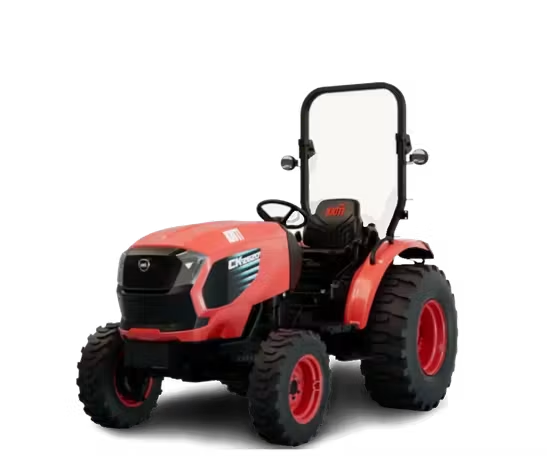
The KIOTI CK2620 is a compact tractor for buyers whose work requires a compact chassis and a useful rear hitch, but not necessarily high PTO output. Its 24.5-hp engine can look similar on paper to the engine rating of a much smaller property tractor. That similarity is a poor shortcut for comparing the machines: the working envelope, implement arrangement and loader package deserve separate attention.
The most useful CK2620 buying question is whether your demanding jobs are limited by carrying and handling requirements or by power to a driven tool. If they are mainly handling tasks, paying for additional engine output within the same tractor family may not address the problem. If they involve sustained mowing, tilling or snowblowing, the version-specific PTO rating becomes central.
On This Page
ToggleWhat this guide covers
This is a North American base CK2620 guide, with the CK2620H included for the transmission comparison. Do not borrow equipment from a CK20SE specification or assume a family photograph identifies the machine being sold. Record the full designation, transmission, station and attachments on the quotation.
The Canadian CK2620 page lists 24.5 engine hp, 19.5 PTO hp for the manual model, a 540-rpm rear PTO, Category 1 position-controlled hitch, approximately 54.5-inch width and 65.7-inch wheelbase. Those measurements describe the listed configuration, not every tyre or attachment package.
The February 2025 CK20 brochure specifies 18.7 PTO hp for the CK2620H and identifies the 1,631-lb rear lift rating at 24 inches aft of the hitch. Its base-model transmission table says 9F/3R, while the current Canadian web table says 12F/12R. That unresolved discrepancy must be checked against the actual tractor documentation; this guide does not silently combine the entries.
A compact chassis without a large PTO number
The CK2620’s appeal is easiest to understand by dividing the work into three groups: carrying a mounted tool, pulling a suitable ground-engaging implement, and powering a rotary implement. These tasks do not place identical demands on the tractor. One headline horsepower number cannot rank all three.
For example, a rear grading tool needs suitable mounting, carrying, traction and operating conditions. A driven mower also needs sufficient shaft power and the correct drive arrangement. A tractor that handles the first job satisfactorily can still be the wrong match for the second tool, even if both implements have a similar working width.
Build the shortlist from the actual equipment. If an essential tool requires more than the CK2620’s documented PTO output, the initial power screen fails. Do not use engine horsepower instead, or assume that moving more slowly cancels the manufacturer’s minimum requirement. Aglist’s engine-versus-PTO guide explains the complete matching process.
When moving up from a subcompact is useful
A move into this size of tractor should solve a named problem. Perhaps the desired rear tool cannot be carried with appropriate clearance on the smaller machine, or the work route and loading duties favour a different complete package. Those are useful reasons. A vague impression that a larger tractor must be more capable at every job is not.
There are costs to the larger working envelope. Measure storage, access around buildings and the space needed to turn with the longest implement. Lawn-oriented work may become less convenient if the property has narrow passages or many obstacles. Compare the entire route, not only whether the tyres fit through the main gate.
A good exercise is to list the three tasks that most often cause difficulty with the current equipment. Beside each, write what physically prevents completion: inadequate approved lift arrangement, insufficient tool power, access, traction, setup time or operator fatigue. If the CK2620 changes none of those constraints, the upgrade may add cost without improving the routine.
Rear hitch capacity is useful only with its geometry
The stated rear lift figure belongs to a defined measurement point. Keep that location attached to the number when comparing machines. An implement’s centre of gravity, a quick hitch and its transport position can all make the real arrangement different from an unlabeled capacity claim in a sales advertisement.
Suppose an existing tool weighs 350 kg, purely as a hypothetical example. That mass alone does not certify suitability. You also need its mounting arrangement, how far its weight acts behind the tractor, the clearance available when raised, and the applicable tractor requirements. The next question should be about those conditions rather than whether 350 is smaller than a brochure number.
Position control is relevant to repeatable hitch placement, but it should not be mistaken for a promise that every implement will automatically maintain an ideal working depth under every soil condition. Tool setup and the operating method remain part of the job. Learn the control’s actual behaviour with the equipment that will be used.
Gravel lanes and property maintenance
For a gravel lane, identify the problem before choosing a rear attachment. Redistributing loose material, correcting surface irregularities and addressing water movement are different tasks. A tractor purchase should not substitute for understanding why the lane deteriorates after rain or spring thaw.
A grading scraper, box blade and rear blade impose different working and control demands. Select the appropriate tool type and exact model, then verify its tractor requirements. Do not assign a universal width from horsepower alone. Material condition, desired finish and the space available for turns affect the practical choice.
Consider the direction of work and where material can be moved without creating a new obstruction. If the route ends in a tight yard, a long implement may force extra manoeuvring on every pass. Time saved by a wider tool can disappear there. A site sketch and a representative demonstration reveal more than an isolated pull in an open lot.
Loader work should be quoted as a separate system
The CK2620’s engine rating does not establish pallet capacity, and its rear lift rating is not a front-loader rating. Identify the exact loader, carrier and attachment, then describe the normal loads and placement heights. Include the ballast and tyre configuration required for that combination.
For deliveries, ask the supplier for gross load mass including packaging. A pallet of feed, a container of parts and a bucket of loose material are different load arrangements. If the critical task is unloading a specific delivery, make that task explicit in the equipment comparison rather than relying on a statement that the tractor “lifts plenty.”
The tractor loader capacity guide separates pivot-pin figures, forward load centres and full-height performance. For occasional loads beyond an appropriate compact-tractor package, arranging unloading can be a sensible ownership choice. For frequent demanding lifts, compare machines around the handling task instead of increasing engine output by default.
Manual or CK2620H?
The manual and hydrostatic variants should be tested around the most repetitive task. A steady run with a rear implement creates a different control pattern from repeated loader reversals and fine positioning. The small difference in published PTO output may matter at a particular tool threshold, but it should not be the only consideration.
On the geared candidate, verify the actual transmission and shift procedure because of the source discrepancy noted above. On the HST candidate, assess pedal control, appropriate range use and comfortable operation while watching the implement. Neither demonstration should involve abusing the transmission or deliberately exceeding the tool’s requirements.
Aglist’s transmission comparison helps organise those observations. Include all regular operators in the decision. A machine that one person enjoys operating but another avoids may not deliver the expected benefit on a shared acreage.
Canadian seasonal work and attachment planning
Write the equipment calendar before ordering accessories. Spring lane maintenance, summer vegetation control and winter snow clearing can require different tools and storage arrangements. Check how easily each can be parked, accessed and connected without moving several other implements first.
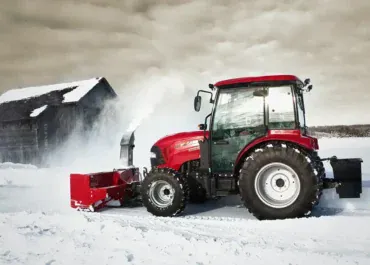
For snow work, define the clearing route, storage space for snow and the preferred direction of travel. A rear blower can create a different visibility and reversing routine from a blade. A front system requires its own complete mounting and drive package; do not assume optional family equipment is already installed on a used tractor.
Prepare for cold operation according to the applicable manual, including correct fluids, fuel and approved starting provisions. This guide does not infer a guaranteed starting temperature or emissions-system layout solely from the horsepower class. Verify the actual machine rather than accepting a generic claim that every tractor below a certain advertised output has identical equipment.
Where a more powerful CK can help—and where it may not
More PTO output is useful when it addresses the requirements of a suitable driven implement or the desired work rate under appropriate conditions. It is less persuasive as a reason to buy if the unresolved task is loader geometry, access or carrying a particular tool. Compare the specification that corresponds to the constraint.
The CK20 brochure lists the same rear hitch rating across the base CK2620, CK3520 and CK4020 entries. That is a reason to investigate a different chassis or arrangement when the rear carrying requirement is the issue. It is not proof that all other components or operating limits are identical.
For an outside comparison, start with Aglist’s John Deere 3025E and Kubota L2502 guides, then verify exact current manufacturer configurations. Compare equipped quotations and usable work sequences rather than declaring a winner from a small engine-output difference.
Inspecting a used CK2620
Check the machine identification against the seller’s specification sheet. Record the loader and implement identities separately. If the advertisement uses a CK20SE image or feature list, inspect which controls and fittings are actually present. Missing or substituted components can change both usefulness and value.
Review service history, inspect guards and mounting areas, and have leaks, unusual noises or control faults evaluated independently. Look for evidence of repairs that need explanation rather than assuming every mark proves abuse. These are general inspection priorities, not documented model-specific failure claims.
Observe a normal demonstration of the tractor and its supplied tools. Price any required repairs, initial servicing, transport and missing equipment before comparing the used offer with a new one. A lower purchase price is not necessarily lower cost to reach a complete, working package.
Frequently asked buying questions
Is the CK2620 too small because its engine is under 25 hp?
That figure alone does not answer the question. Separate PTO power, carrying requirements, loader capability and access, then assess the actual tasks.
Can a higher-horsepower CK automatically carry a heavier rear tool?
No. Check its own hitch and configuration requirements. The shared brochure rating is a warning against using engine output as a lift-capacity proxy.
Which transmission specification should I trust?
Obtain the documentation applicable to the actual tractor and serial configuration. The Canadian webpage and dated brochure disagree on gear count.
Should the quote include rear hydraulic outlets?
Include them when the chosen implements require them, with the correct valve functions. Do not pay for unspecified future capability without identifying what it will operate.
What is the strongest reason to choose this model?
A verified tool and handling package that fits the property while its PTO output meets the recurring work. That is a stronger case than either a low engine number or a large tractor appearance by itself.
Share your experience
Help other Canadian buyers — leave a quick review for the
KIOTI CK2620
There are no reviews yet. Be the first one to write one.