
Introduction
Line up the John Deere 317G, 325G, and 331G and it looks like a simple ladder: small, medium, large, pick the number that matches your budget. The reality is more useful to understand than that, and getting it right saves you from buying the wrong machine or overpaying for one you cannot use on your ground.
These three are not neighbouring trims of one machine. They are three different frame sizes in Deere’s G-Series compact track loader range, built for genuinely different work, with real gaps between them in weight, lift, and price. And one of them, the 331G, is worth a careful note before you shop: Deere replaced the large-frame 331G with the 331 P-Tier in June 2024, so a new 331G is no longer in the current lineup, even though used ones are common and the small-frame 317G is still in production. Knowing which machines are current and which have moved to the P-Tier name matters when you are comparing quotes or shopping used.
This guide lays out where each machine sits, what separates them, and who each one suits, with Canadian acreage, snow, and light construction work in mind. The short version: most farm and property buyers land on the 317G or 325G, and the 331G (now P-Tier) is a bigger, heavier machine for operators who genuinely need the capacity.
The short answer
The 317G is the small-frame machine. It fits through narrow gates and barn doors, trailers easily behind a standard pickup, and handles bale work, grading, snow, and general material handling. For most acreage and property owners, it is the right amount of machine, and it is still in current production.
The 325G is the mid-frame step up. More engine, more lift, a wider track, and more capacity for heavier attachments and denser material. If your work regularly approaches the 317G’s limits, or you run high-flow attachments like mulchers, it is the better long-term tool.
The 331G is the large-frame machine, and the one to think about carefully. It carries much more weight and lift than the 325G, built for serious construction and heavy material handling. But the new version is now the 331 P-Tier, so if you are buying new, that is the machine you are actually ordering. A 331G on the used market is the older-named version of the same large-frame class.
Which of the three you need comes down to weight, lift, and where you work, and that is what the rest of this guide sorts out.
First, the naming: G-Series and the P-Tier switch
Before the specs, clear up the naming, because it causes real confusion on this exact set of machines.
John Deere is moving its lineup from the “G-Series” name to “P-Tier.” For compact track loaders, this has already happened at the large-frame end: the 331G and 333G were replaced by the 331 P-Tier and 333 P-Tier in June 2024. The small-frame 317G, by contrast, is still sold under the G name in the current lineup. So as of now, you can buy a new 317G, but a new large-frame machine in the 331 class comes as a 331 P-Tier, not a 331G.
For used buyers, this is simple enough once you know it: a used 331G is the same large-frame machine that Deere now sells new as the 331 P-Tier. Do not let the two names make you think they are different classes. Throughout this guide, we use the 331G name because that is what buyers are searching and cross-shopping, and note the P-Tier equivalent where it matters.
There is a second naming trap worth naming while we are here. The “G” in Deere’s model numbers shows up on both wheeled skid steers and tracked machines, so a number alone does not tell you the undercarriage. The 317G is a compact track loader; the 318G is the wheeled skid steer in the same small-frame class. When comparing, always confirm you are looking at the track loader, not its wheeled sibling.
Where they differ: frame size, weight, and lift
The real separation between these three is frame class, and everything else follows from it.
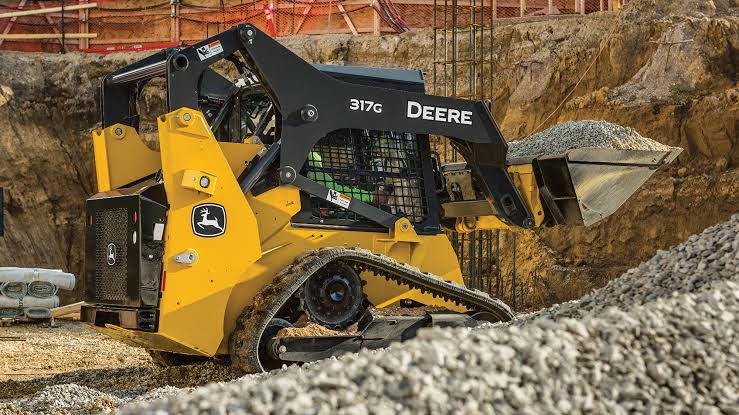
The 317G is the small-frame machine. It runs a 65 gross horsepower Yanmar diesel, carries a rated operating capacity of 2,125 lb at the 35% standard, and weighs about 8,400 lb. Its narrow width lets it pass through 65 to 72 inch gates and barn doors, and its lighter weight makes it easy to trailer. This is the machine built for tight spaces and lighter work.
The 325G is the mid-frame machine. Its 74 horsepower Yanmar and 2,590 lb rated operating capacity give it more muscle, and a wider track (18 inches versus the 317G’s 16) spreads its extra weight so ground pressure stays comparable. The step from the 317G to the 325G is a real jump in capability, aimed at heavier lifting and attachments that need more oil and more machine behind them.
The 331G is the large-frame machine, and the gap up to it is larger still. It carries a rated operating capacity in the region of 3,100 lb and weighs around 11,900 lb, with the longer track frame and heavier build that serious construction and heavy material handling demand. This is a different weight class of machine, not a slightly bigger 325G. Its size and weight are an advantage on big jobs and a liability on soft ground or tight sites, which is exactly why matching the frame to your work matters.
Rated operating capacity: read the standard
One number on these machines deserves a word of caution, because it is easy to misread across brands.
John Deere rates the operating capacity of its track loaders at 35% of tipping load. That is the number quoted above: 2,125 lb for the 317G, 2,590 lb for the 325G, and about 3,100 lb for the 331G. Some competitors quote capacity at 50% of tipping load instead, which produces a bigger, better-looking number for a machine that may be no stronger. When you cross-shop a Deere track loader against another brand, check which percentage each figure uses, or you will not be comparing like with like. Among these three Deere machines, the 35% figure is consistent, so they compare directly to each other.
Specs side by side
| Specification | 317G | 325G | 331G |
|---|---|---|---|
| Frame class | Small | Mid | Large |
| Type | Compact track loader | Compact track loader | Compact track loader |
| Engine | Yanmar diesel | Yanmar diesel | Yanmar diesel |
| Gross power | 65 hp | 74 hp | Higher |
| Rated operating capacity (35%) | 2,125 lb | 2,590 lb | ~3,100 lb |
| Operating weight | ~8,400 lb | ~9,500 lb | ~11,900 lb |
| Track width | 16 in | 18 in | Wider |
| Current status (2026) | In production (G) | In production (G) | Replaced by 331 P-Tier |
Specs are drawn from John Deere published figures and dealer specification sheets. Capacity figures use the 35% of tipping load standard. Confirm exact numbers and current availability with your dealer, since configurations and the G-to-P-Tier transition affect what you can order new.
Which one fits your work
The 317G suits the largest share of Canadian acreage and property buyers. Its small frame fits through barn doors and narrow gates, it trailers behind a standard pickup, and its standard hydraulic flow handles bale grabs, manure forks, grain buckets, and snow work. For pasture and yard work where a narrow profile and lighter weight matter, and for operators who do not push into heavy daily mulching, it is the right machine, and it is still in current production. If your daily plan is forestry mulching or running large planers, it is undersized, and you should look higher.
The 325G suits operators whose work consistently approaches the 317G’s limits, or who run high-flow attachments like mulchers and large brush cutters. The extra horsepower, lift, and wider track give real margin for denser material and heavier tasks, while keeping ground pressure reasonable. For a mixed operation that does heavier work often enough to feel the 317G straining, it is the better long-term tool.
The 331G, now the 331 P-Tier when bought new, suits operators who genuinely need large-frame capacity: serious construction, heavy pallet and material handling, and high-capacity work where the 325G runs short. Its weight and size are an asset on big, firm jobs and a drawback on soft ground and tight sites. Buy it because your work truly needs the capacity, not because bigger sounds better. On a light property, it is more machine, more weight, and more cost than the job calls for.
The deciding questions are weight, lift, and ground. Match the frame class to the heaviest work you do regularly and the ground you do it on, and the choice becomes clear.
Frequently asked questions
What is the difference between the John Deere 317G, 325G, and 331G?
They are three different frame sizes in Deere’s G-Series compact track loader range. The 317G is the small-frame machine (65 hp, 2,125 lb rated operating capacity), the 325G is the mid-frame step up (74 hp, 2,590 lb), and the 331G is the large-frame machine (roughly 3,100 lb, much heavier). They are built for different work, not minor variations of one machine, and the gaps between them in weight and lift are significant.
Is the John Deere 331G still made?
Not under that name. Deere replaced the large-frame 331G with the 331 P-Tier in June 2024, so a new machine in that class is now sold as the 331 P-Tier. Used 331G machines are common and are the same large-frame class. The small-frame 317G, by contrast, is still sold under the G name as of 2026.
What is the difference between the 317G and the 318G?
The undercarriage. The 317G is a compact track loader (rubber tracks); the 318G is the wheeled skid steer in the same small-frame class, with a similar engine and frame. A model number alone does not tell you whether a machine is tracked or wheeled, so confirm which you are looking at.
Which John Deere track loader is best for a farm or acreage?
For most Canadian acreage and property work, the 317G is the right size. It fits through barn doors and gates, trailers easily, and handles bale work, snow, and general material handling. Step up to the 325G if your work regularly approaches the 317G’s limits or you run high-flow attachments like mulchers. The 331G (now P-Tier) is usually more machine than a typical farm needs.
Why do the capacity numbers matter when comparing brands?
John Deere rates its track loaders at 35% of tipping load, while some competitors use 50%, which produces a larger number for a machine that may be no stronger. When cross-shopping a Deere machine against another brand, confirm which percentage each capacity figure uses, or the comparison is misleading. Among the 317G, 325G, and 331G, the 35% standard is consistent, so they compare directly.
Is the 317G good for snow removal in Canada?
Yes, for residential and light commercial snow. It has strong push power for its size, and snow pushers, standard-flow snow blowers, and angle plows all fit. For Canadian winters, specify the enclosed cab with HVAC rather than an open ROPS, since open-station snow work is miserable in the cold.
Do these machines compare directly to Kubota SVL track loaders?
They can, because both John Deere and Kubota rate their track loaders at 35% of tipping load, so those capacity numbers line up without a conversion. The brands tier their machines differently, though, so there is no exact model-for-model match. For the full breakdown, see the John Deere versus Kubota skid steer comparison on Aglist.
Keep comparing
For a broader look across brands, see John Deere vs Kubota skid steers and the difference between a skid steer and a compact track loader. You can also read the full specs and owner reviews on the John Deere 317G and John Deere 331Gmodel pages.
Note: We try our best to keep specs and information accurate, but some details can be missing or different depending on the source. Before you buy, service, or repair equipment, please double-check key specs with the manufacturer, the owner’s manual, or your dealer.
About reviews: Reviews on Aglist are written by real users. We moderate them for spam and abuse, but opinions and claims are still personal, so use them as guidance, not as a guarantee.
