Overview & Specs
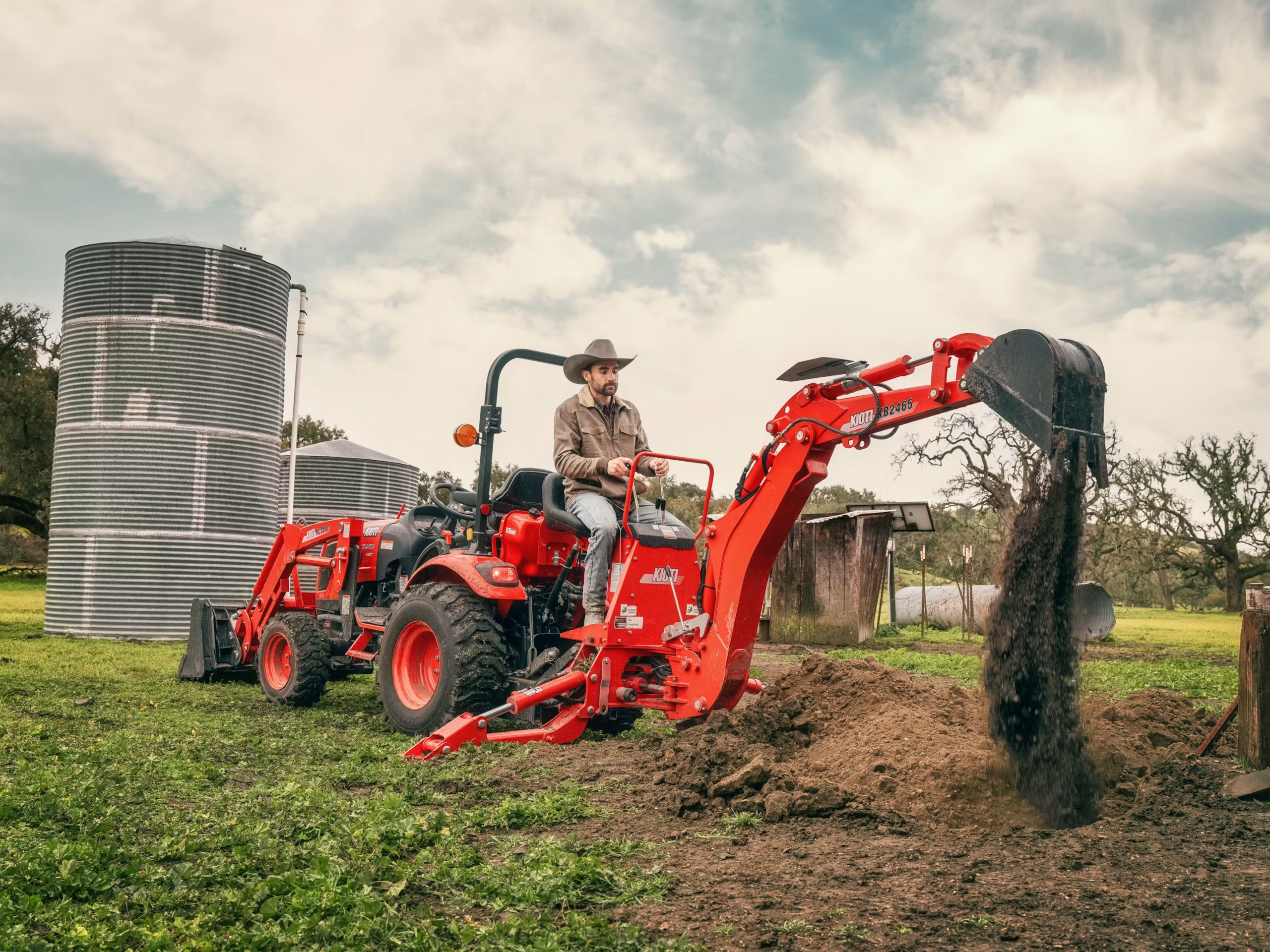
The KIOTI CX2510 is worth considering when a Canadian acreage needs a compact tractor for steady rear-implement work, garden maintenance and occasional loading, but a larger machine would complicate access or storage. The key buying distinction is its manual transmission and transmission-driven PTO. A listing that mixes CX2510 and CX2510H specifications can hide a control difference that matters more in daily use than a small horsepower advantage.
This page focuses on the North American manual CX2510. The hydrostatic CX2510H is discussed where it changes the decision; cab and other family features are not automatically included. Start with the tractor’s identification and the equipment actually fitted, especially when comparing used bundles assembled from several advertisements.
On This Page
ToggleCX2510 specifications with the version kept visible
| Specification | Manual CX2510 | Why it matters |
|---|---|---|
| Engine power | 24.5 hp | Not the rating to use for a PTO-horsepower minimum |
| Displacement | 1,647 cc | Identifies the engine package, not a guarantee of work rate |
| PTO power | 19.3 hp | Screen driven implements against the correct requirement |
| Transmission | Manual, six forward and two reverse speeds | Test available working speeds and direction changes |
| Rear PTO | Transmission type; 540 rpm | Understand clutch and PTO interaction before choosing tools |
| Three-point hitch | Category 1, position control | Connection class does not settle complete fitment |
| Minimum-tread width | 49.4 inches | Measure the actual tyre and attachment configuration |
The Canadian CX2510 page provides the model figures. Its shared family feature descriptions also discuss HST; those descriptions should not be substituted for the manual model’s specification table. KIOTI’s CX2510/CX2510H operator manual is particularly useful because its side-by-side table identifies the PTO difference.
The PTO distinction can decide the purchase
The manual labels the CX2510 PTO as transmission type and the CX2510H PTO as live. These labels describe how power delivery relates to the drivetrain and its controls. They are not simply different names for the same experience. Have the operating sequence demonstrated on the exact tractor rather than assuming either version behaves like a previous machine.
Consider a tool that repeatedly needs travel interrupted while its own working process is managed. The useful question is what happens to the PTO when the operator uses the clutch and stops or changes direction. That behaviour affects the sequence of the job. A shopper who cares mainly about the engine number can overlook this until after the implement is purchased.
This does not make a manual tractor unsuitable for all driven implements. It makes the working routine important. Long, regular passes in an open area and frequent stop-start manoeuvres around obstacles are different operating patterns. Assess the actual tool and the operator’s comfort with the required controls.
Aglist’s hydrostatic, gear and shuttle comparison helps frame the control decision. Use the CX2510 manual for the procedure itself. Do not infer an independent PTO or a clutchless shuttle from general compact-tractor advertising.
Six forward speeds: evaluate the useful ones
The number of gears is less important than whether the available travel speeds suit the work at the required engine and PTO settings. A tractor can have a satisfactory transport speed yet lack the operating feel a buyer wants for a particular slow task. Conversely, a familiar geared layout may be entirely comfortable for regular passes with modest variation.
During the demonstration, identify how ranges and gears are selected and when stopping is required. Try the normal direction-change routine in a suitable clear area. The purpose is to understand operation, not to prove that controls can be forced through an inappropriate sequence.
For loader-heavy ownership, count reversals rather than estimating “some loader work.” Moving several small piles involves a different number of direction changes from occasionally positioning a bucket for garden maintenance. A transmission preference becomes easier to justify once the weekly routine is described in concrete cycles.
For shared ownership, include every regular operator. Someone comfortable with geared equipment may place little value on a different control system; another operator may find frequent clutch work the main reason to choose the HST version. The right comparison includes ease of completing the job consistently, not only purchase price.
Two hydraulic figures that should not be confused
The operator manual separates total pump capacity of 42.9 L/min from 26 L/min for the main pump and 16.9 L/min for steering. Calling the total figure available implement flow would therefore be misleading. A powered hydraulic attachment needs evidence about the circuit that actually supplies it, along with pressure, return and control requirements.
For a rear tool with a hydraulic adjustment, begin by listing the required functions. Does it need one double-acting circuit, a particular control behaviour, or something more specialised? Then inspect the tractor’s installed outlets and valves. A loader joystick at the front does not prove the necessary rear connections are present.
This distinction is useful when a used tractor is sold with several implements that do not all belong to the same hydraulic setup. A mechanically mounted tool may connect easily while an additional function remains unusable. Identify the missing parts and their installed cost before treating the bundle as complete.
Rear lift capacity: keep both measurement points
KIOTI’s manual lists 1,629 lb at the lower-link ends and 1,203 lb at 24 inches behind them. The two values refer to different locations. The larger figure should not be used as a universal rear-implement weight allowance, and neither figure substitutes for the complete tractor-and-implement requirements.
A mounted tool places its centre of gravity behind the connection. Length, adapters and its transport attitude affect the arrangement. A compact implement and a longer one of equal mass can therefore present different questions. Keep the tool’s mounting and weight distribution information with the hitch specification.
For an implement already owned, take photographs and identify its model before shopping. Record whether a quick hitch is currently used and whether the driveline was fitted for that arrangement. Changing tractors or adding an adapter can require a fresh assessment even when the implement’s nominal category stays the same.
Garden and mowing work: match duty before width
The CX2510’s 19.3 PTO hp belongs in a matching worksheet beside the implement’s explicitly labelled power requirement. A “25 hp” tractor recommendation is ambiguous unless the manufacturer defines whether that means engine or PTO output. The PTO horsepower guide explains the difference and the additional checks.
For tilling, describe the starting ground and intended finish. Maintaining an established garden is a different task from preparing a new area with unknown obstructions. Tool design, working depth and an appropriate travel pace matter alongside power. A wide tiller should not be selected simply because it covers the tyre tracks in a photograph.
For mowing, distinguish a maintained lawn from rough vegetation management. The tool must be designed for the material and desired result. The tractor then needs to meet its power, lifting, drive and configuration requirements. Once those conditions are met, compare the time lost to manoeuvring and setup as well as the width cut in each pass.
A simple hypothetical comparison illustrates the point. An effective width of 1.2 metres at 4 km/h gives 0.48 hectares per hour before losses. A wider 1.6-metre tool at 3 km/h gives the same theoretical coverage. These assumed combinations are not CX2510 recommendations; they show why width alone is an incomplete productivity measure.
Loading and property access
The CX2510 can be evaluated as part of a loader package, but the rear hitch figures do not describe front-loader capacity. Specify the loader, attachment carrier, bucket or forks and required ballast together. For regular deliveries, obtain the actual mass and dimensions of the heaviest normal load before comparing machine packages.
Aglist’s loader rating guide distinguishes pivot ratings, forward load positions and attachment mass. This is particularly important when a seller demonstrates lifting something just clear of the ground and treats that as proof of suitability for placing it at height.
Walk the property route with the intended attachment in mind. Gate width, space to turn beside a shed, low branches and the receiving area can determine whether the complete package is convenient. The bare tractor width is useful background, but it does not describe a rear blade angled across the route or a projecting loader bucket.
Winter use in Canada
A geared tractor can form part of a winter maintenance plan, but the attachment and control routine need to suit the site. For a rear snowblower, consider visibility, the required reversing pattern and the time the operator will spend looking behind. For a blade, consider where snow will accumulate and how that changes access later in the season.
Do not assume a front implement fits because another CX-series listing mentions a mid PTO. Confirm the complete drive and mounting package on the actual model. A missing component can be more consequential than a small difference in the tractor’s advertised price.
Cold preparation should follow the applicable manual and approved equipment: fuel, fluids, battery, starting procedure and any fitted heater. This guide makes no claim that a particular temperature is guaranteed or that engine displacement predicts reliable starting. Plan storage and attachment changeover before surfaces freeze, when access to couplers and mounting points is easier to arrange.
Used CX2510 inspection and ownership costs
Confirm model identity before inspecting condition. If a seller calls the tractor a CX2510 but shows hydrostatic pedals, clarify the full designation and documentation. Photograph the identification plate, controls and supplied attachment labels. That prevents a specification sheet for one version from becoming the basis for buying another.
Inspect clutch operation, gear selection and PTO behaviour through the proper demonstration procedure. Have abnormal noise, difficult engagement or evidence of adjustment problems assessed by a competent technician. These are sensible inspection areas for this layout, not a claim of common CX2510 faults.
Check mounting hardware, guards, tyres, hydraulic connections and service records. Price identified repairs and missing parts. The comparison should include transport, initial service and the attachment equipment needed for the first year’s work, rather than only the tractor’s advertised amount.
Ask how routine service will be handled at your location. Access to filters and parts, travel for service, and space to maintain the machine are practical ownership considerations. There is no verified annual maintenance cost or guaranteed service-life figure offered here; the useful budget comes from the actual machine and work plan.
Alternatives and final fit questions
Cross-shop the HST version if repeated direction changes or variable travel dominate. If the requirement is primarily a small lawn-oriented package, also examine a subcompact such as the Kubota BX2380. If carrying or sustained implement demands justify a larger compact, the Kubota L2502 is another comparison starting point. Verify each exact configuration from its manufacturer.
Is the CX2510 automatically better for PTO work because it is geared?
No. Compare rated output, control behaviour and the implement’s requirements. A small numerical advantage cannot compensate for an unsuitable operating routine.
Can I use the full published pump flow at a rear outlet?
Do not assume that. The manual divides flow between main and steering pumps; establish the specifications of the actual circuit.
Does Category 1 guarantee my implement will fit?
It identifies part of the interface. Geometry, lifting, driveline, clearance and other requirements still need confirmation.
Is a used loader-and-tool bundle necessarily better value?
Only if the components are compatible, complete and in acceptable condition. Missing drive or mounting parts should be priced before comparing the bundle with a fully equipped alternative.
What should decide between manual and HST?
Use the most repetitive task and the regular operator’s experience as the main comparison. Test the required sequence on each version with an appropriate attachment.
Share your experience
Help other Canadian buyers — leave a quick review for the
KIOTI CX2510
There are no reviews yet. Be the first one to write one.