Overview & Specs
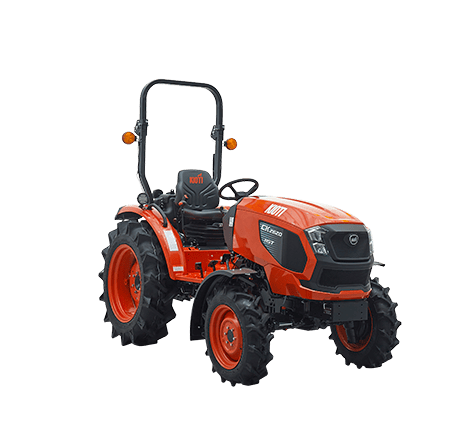
The KIOTI CK3520 is a useful compact-tractor candidate when the recurring workload includes driven rear implements as well as property maintenance. It occupies the middle engine-output position among the base CK2620, CK3520 and CK4020 models, but the buying decision should begin with the implement list. In particular, the manual CK3520 and hydrostatic CK3520H sit on different sides of a 30-PTO-hp numerical threshold.
That distinction does not make one version universally better. It means the exact transmission needs to be known before a mower, tiller or snowblower is matched. A tractor selected for comfortable loader operation can have a different shaft rating from the version used in an attachment advertisement.
On This Page
ToggleCK3520, CK3520H and CK3520SE are not interchangeable labels
This guide concerns the North American base CK3520, with the HST version considered where relevant. The SE designation brings a separate specification and equipment discussion. A cab pictured on a family brochure, or an SE feature mentioned in a sales description, should not be assumed to be part of a base-model quotation.
Record the full model designation and transmission first, followed by the station, tyres, hydraulic options and attachment package. This creates a stable basis for comparing prices. Without it, a seemingly cheaper offer may simply omit the equipment that made another tractor attractive.
| Item | Relevant manufacturer figure | How to use it |
|---|---|---|
| Engine power | 34.9 hp | Keep separate from PTO output |
| Manual-model PTO power | 30.9 hp | Initial screen for driven tools |
| CK3520H PTO power | 28.9 hp | Use this figure for the HST version |
| Rear PTO speed | 540 rpm | Must match the implement’s drive requirement |
| Hitch | Category 1, position control | Check complete mounting and carrying suitability |
| Rear lift rating | 1,631 lb at 24 inches aft of hitch | Retain the measurement condition |
Sources are the Canadian CK3520 page and February 2025 CK20 brochure. The brochure lists 9F/3R for the base manual model, whereas the current web table lists 12F/12R. Confirm the actual transmission through the applicable machine documentation. This discrepancy is not resolved by borrowing the SE specification.
The 30-PTO-hp example
Imagine an implement whose documentation states a minimum of 30 PTO hp. The manual-model figure is 0.9 hp above that initial threshold; the HST figure is 1.1 hp below it. This is a hypothetical requirement, not approval of a particular implement. It demonstrates why selecting the transmission after selecting the tool can cause a mismatch.
Passing the power screen is only the beginning. The tool also has requirements for mounting, shaft speed, driveline, tractor configuration and intended duty. A narrow numerical margin does not guarantee a desired working speed through difficult material. Preserve both minimum and maximum requirements where the manufacturer provides them.
Nor should a buyer choose a manual tractor solely to clear that example threshold if its operating routine is poorly suited to the property. A different implement or tractor package may be a better overall solution. The objective is a combination that completes the work comfortably within its documented requirements.
Aglist’s PTO horsepower guide explains how to distinguish a tractor requirement from a gearbox rating or an ambiguous “HP” label. Bring the actual implement manual into the comparison instead of relying on a seller’s recollection of what previously powered it.
Build a workload sheet before choosing attachment width
Divide the property into working areas with different conditions. Maintained grass, rough growth, established garden soil and snow are separate workloads, even when the same tractor serves them. Identify the tool type appropriate to each before deciding how wide it should be.
For mowing, note the required finish and obstacles. A tool intended for rough vegetation is not interchangeable with a finish mower. For tillage, record whether the ground is already cultivated and what result is required. For snow, record the discharge destination and the route as banks accumulate. These details often matter more than a single acreage total.
Then write down the time window. A job done occasionally with a flexible schedule may not justify the same package as a recurring task that must be finished between other commitments. This turns “I want more power” into a question about actual work and available time.
| Workload question | Evidence to collect |
|---|---|
| What must the tool process? | Vegetation, soil or snow conditions and the intended finish |
| What restricts travel? | Obstacles, turning space, access and an appropriate operating pace |
| What restricts completion time? | Setup, repeated passes, unloading or changeover |
| What must the tractor supply? | Power, hitch, drive, hydraulics and required configuration |
A work-rate calculation that identifies the bottleneck
For an illustrative approved tool, assume an effective width of 1.5 metres and a suitable travel speed of 4 km/h. Multiplying width by distance travelled gives 6,000 square metres per hour, or 0.6 hectares per hour, before interruptions. These inputs are hypothetical; they are not measured CK3520 performance.
Now assume the job includes 15 minutes of setup and 20 minutes of manoeuvring or stops. A theoretical one-hour cutting task becomes 95 minutes overall. Even if a different approved tool reduced uninterrupted cutting time to 50 minutes, the whole job would still take 85 minutes under those assumptions.
The lesson is not that additional power is unhelpful. It is that its value depends on which part of the job it changes. If most time is lost connecting equipment or navigating obstacles, a wider implement may offer less benefit than expected. If sustained processing is the constraint, output and tool match deserve greater weight.
Use a demonstration to measure the relevant portions of the task, with appropriate equipment and conditions. Keep estimated and observed times separate. A clean result achieved once on an easy patch does not establish seasonal productivity across the entire property.
Transmission choice for mixed work
A mixed-use owner may spend one day making long passes and another repeatedly reversing with a loader. The preferred controls can differ between those tasks. Count the recurring motions and assess which task occupies the largest share of operating time.
For the manual model, establish the actual gear arrangement and shift procedure before judging suitability. For the HST model, assess pedal modulation, range selection and the operator’s ability to maintain an appropriate pace while watching the tool. Do not treat either version as a universal fuel-economy or reliability winner without evidence for the conditions being compared.
The transmission guide provides a broader comparison. A practical test should include the regular operator’s normal footwear, seat position and visibility needs. If two people share the machine, their assessments may reveal a control issue that a specification table cannot show.
Hitch, PTO and hydraulic compatibility are separate
An implement can pass the power screen yet fail the carrying or mounting check. Its mass acts at a particular distance behind the tractor, and the transport position must provide suitable clearance. Category 1 identifies part of the connection system; it is not a universal fit certificate.
A quick hitch changes the mounting arrangement and adds another component with its own limits. A PTO shaft previously fitted for direct attachment needs reassessment when the geometry changes. Do not assume that reaching the tractor stub at one height establishes correct length throughout the permitted movement.
Hydraulic functions require their own inventory. A rear tool may need outlets for adjustment even though its primary working mechanism uses the PTO. Identify the number and type of functions and compare them with the valves actually installed. A family option list is not evidence that a used tractor has those outlets.
Canadian snow work: plan the sequence
For winter use, choose the clearing method around the site. Pushing snow requires a destination and space for accumulated banks. Blowing requires a suitable discharge area and a complete drive and mounting arrangement. A more powerful engine does not solve an unsuitable discharge direction or an obstructed approach.
If considering a rear blower, evaluate the operator’s reversing routine and rearward visibility over a realistic session. If considering a front system, confirm all required mounting, drive and control parts for the exact tractor. Equipment from a neighbouring model or a different station should not be treated as interchangeable by appearance.
Prepare the tractor according to its applicable cold-weather instructions. Verify fluids, fuel suitability, battery condition and approved starting equipment. Retain the machine’s actual engine and emissions instructions rather than applying a generic schedule copied from another tractor family.
Loader jobs and the temptation to buy horsepower
If the most demanding job is handling a pallet or placing material into a trailer, make a separate loader comparison. Obtain the load mass, dimensions, placement height and required reach. Then evaluate the exact tractor-loader-attachment arrangement with its required ballast.
The CK3520’s additional engine output relative to a lower-power model does not automatically create a higher permitted fork payload. The relevant evidence is the loader and complete configuration documentation. Aglist’s loader capacity guide explains the measurement conditions that belong beside the number.
Buying more power can be reasonable when it serves recurring driven-tool work while the loader package already meets the handling task. It is a weak substitute for confirming that task in the first place. Keep the two justifications distinct in the purchase worksheet.
Used-machine assessment and ownership planning
A used CK3520 should be evaluated as an identified configuration. Photograph the model plate and verify whether the tractor is base, HST or SE. Match the manuals to the machine and record each supplied implement separately. A seller’s broad “CK35” description is insufficient for precise matching.
Inspect controls, hitch connections, PTO guarding, hydraulic fittings and service records. Have abnormal operation or evidence of repair assessed by a qualified person. This guide does not assert a model-specific defect pattern or a guaranteed life expectancy; condition and documented maintenance need individual evaluation.
Compare the cost to reach a complete working package. Include identified repairs, required valves or mounting components, delivery and initial service. Keep optional comfort equipment separate so that its value can be judged against actual operating hours rather than hidden inside a single bundle price.
For alternatives, the Kubota L2502 provides a lower-output compact comparison and the wider Aglist catalogue offers other compact families. Use current manufacturer data for each exact version, particularly where engine and PTO figures are easily confused. A useful comparison preserves requirements instead of forcing every candidate into the same generic specification row.
Frequently asked questions
Is the CK3520H rated at the same PTO output as the manual?
No. The cited brochure separates the two figures. Use the HST entry when matching that version.
Does meeting a minimum power requirement guarantee good performance?
No. Duty, conditions, complete compatibility and desired work rate remain part of the assessment.
Should I move to a CK4020 if I need more rear lift?
Investigate the carrying requirement directly. The cited base-series table gives the same rear hitch rating, so engine output alone does not establish a solution.
Can an optional mid PTO be assumed present?
No. Inspect the actual equipment and verify the complete implement package before including that function in the buying decision.
What is the best demonstration for this model?
Use the intended recurring implement and representative conditions, then assess control, finish, setup and completion time. A short unloaded drive cannot answer the main workload question.
Share your experience
Help other Canadian buyers — leave a quick review for the
KIOTI CK3520
There are no reviews yet. Be the first one to write one.