Overview & Specs
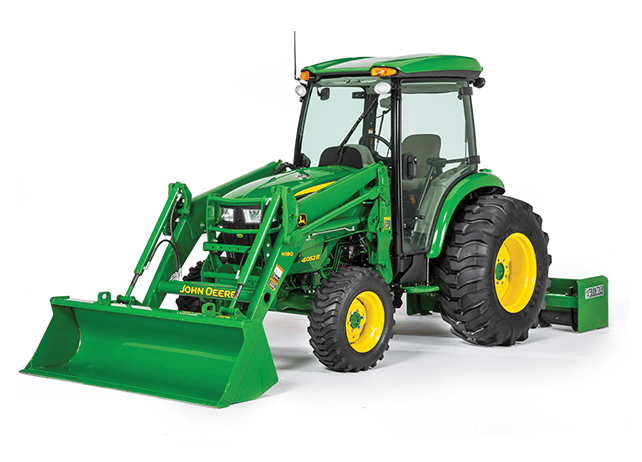
The John Deere 4066R is a compact tractor to investigate when powered implements, year-round operator comfort and varied property work all belong in the same equipment plan. It is not automatically a substitute for a utility tractor simply because its engine output overlaps machines in that category. The important comparison is the complete work system: PTO requirements, loader task, rear implements, cab, access and transport.
For Canadian owners, the strongest purchase case is often a recurring workload that uses both the power and the available operator environment. If only one of those matters, another configuration may be better value. This guide explains how to establish that distinction without assuming higher horsepower creates a higher load rating.
On This Page
Toggle4066R specifications: keep the versions separate
| Item | Canadian model-page specification |
|---|---|
| Gross output | 48.5 kW / 65 hp / 65.9 PS |
| PTO output | 54.2 hp PowrReverser; 51.9 hp eHydro |
| Implement hydraulic flow | 42.3 L/min |
| Hitch | Category 1; 1,135 kg at 24 inches behind link arms |
| Approximate shipping weight | 1,710 kg open station; 2,120 kg cab |
| Cab description | ComfortGard configuration with eHydro |
Source: John Deere Canada’s detailed 4066R page, checked October 1, 2026. These are labelled product-page entries, not the measured operating weight of a fully equipped tractor. A loader, attachments, ballast and the exact build change the complete package.
Write the two reasons for buying it
For this model, it is useful to write one reason concerning the work and another concerning the operator. A work reason might be a documented PTO requirement that a smaller candidate cannot meet. An operator reason might be frequent winter use that makes a suitable enclosed station important.
If the work reason is “it feels more capable,” make it more precise. Which attachment, load, terrain constraint or operating schedule requires the change? If the operator reason is simply that the cab looks comfortable, test the actual view, access and controls with the intended tools. Turning impressions into requirements makes the premium easier to assess.
There may be a strong case even without high annual hours. A machine used for essential access work can be important despite a modest hour meter. But the economics should then reflect availability and the alternative arrangements, not an invented commercial utilisation rate.
Conversely, high hours do not by themselves establish that this is the right platform. If most work involves a handling task outside the approved loader arrangement, buying a more powerful compact does not solve it. Identify the constraint first.
Match the PTO implement before choosing a cutting width
Use the implement manufacturer’s requirements and the rating for the chosen transmission. Check whether the requirement means engine or PTO power. Then examine attachment mass, hitch configuration, driveline and operating conditions. A power match is necessary for some tools, but it is not the whole compatibility decision.
For a hypothetical implement requiring 50 PTO hp, both published entries pass that initial numerical threshold. That still does not establish appropriate work rate or approve the complete installation. This example is a screening exercise, not a recommendation for a particular mower, blower or hay implement.
Work rate deserves its own calculation. Suppose, purely for planning, that a task requires ten productive hours and another four hours for travel, setup, turning and cleanup. Even eliminating one productive hour would reduce the fourteen-hour total by about seven percent. This illustrates why an engine upgrade cannot be evaluated from theoretical cutting speed alone.
Measure your actual non-working time where possible. If attachment changes and travel dominate, improving the work layout may be more valuable than additional output. If the implement is genuinely power-limited within an approved combination, the engine difference has a clearer purpose.
Cab comfort should be assessed with the attachment fitted
For winter clearing, begin with where the snow will go. A blade needs storage space; a blower needs a suitable discharge plan; a bucket requires a practical loading and travel routine. Each option changes what the operator needs to see. Inspect those sightlines from the actual seat position.
Evaluate rearward viewing as well as the view ahead. A rear implement may require repeated looking behind, and a comfortable forward-driving posture does not guarantee a comfortable working posture. Regular operators should try the controls and seat adjustments themselves, using their normal footwear and clothing.
Check heating, defrost and wipers on the particular tractor. Used-cab condition matters: doors, seals, glazing and controls contribute to the result. A working climate system should be demonstrated, not inferred from the presence of vents. Avoid assigning an unmeasured noise or fatigue advantage based solely on marketing language.
Include storage height and door clearance before buying. If the tractor needs a different building arrangement, that is part of the package cost. A cab chosen for winter comfort should not create an unresolved year-round storage problem.
Loader capability: power is not the deciding number
The relevant 440R loader page provides a starting point for equipment discussions, but its current public lift table contains inconsistent unit entries. This guide does not convert those conflicting entries into a claimed permissible payload. Obtain the configuration-specific information for the actual tractor and attachment.
A load description should include mass, dimensions, centre of gravity and required placement height. For a pallet, include packaging and the pallet itself. For a bale, establish its actual weight and the approved handling attachment. A familiar-looking load can still differ materially from the one used in a previous demonstration.
Think through the entire move. The tractor must approach, pick up, travel and place the load within its instructions. The pickup area may be spacious while the destination is narrow or elevated. Buying from the easiest part of the movement can leave the important part unresolved.
Where large or frequent handling tasks dominate, compare a suitable utility tractor or dedicated loader using the same job description. A smaller engine on a different platform might still offer a better documented match for a particular handling requirement. Horsepower is not a substitute for that comparison.
Rear tools and hydraulic functions
A rear implement’s length affects the complete machine even when its mass appears modest. Map the turn into storage, the gate and the working area with the tool attached. Avoid discovering after delivery that an implement that fits the hitch is inconvenient around the property.
For hydraulic functions, list exactly what must move and how it is controlled. A blade with several adjustments, a grapple and a motor-driven tool have different requirements. Confirm installed valves, connections, required return arrangements and the tool’s operating limits. Available options in a brochure are not necessarily installed equipment.
The hitch number also needs its measurement position. Keep ratings taken at the link ends separate from those taken behind the links. Do not infer a universal tool weight from one published figure; use the complete implement and tractor requirements.
Attachment convenience is valuable when tools change frequently, but should be evaluated against the actual process. Identify which steps require lining up, connecting hoses, attaching a driveline or adjusting the tool. A feature that helps one step may leave the others unchanged.
Transport and access can decide the purchase
The two shipping-weight entries show why station choice belongs in transport planning. Neither is a ready-to-haul total with every accessory fitted. Establish the actual configuration and include the loader, front attachment, ballast and any rear tool carried with the tractor.
Assess the entire transport arrangement through its applicable ratings and requirements. Do not select a trailer from bare tractor mass alone or assume that a familiar towing vehicle can accommodate the completed package. If transport is occasional, compare an appropriate delivery or hauling service with owning the necessary equipment.
On the property, measure the restrictive route rather than just the open field. Gates, shed approaches, trees and parked equipment can make manoeuvrability a more important factor than theoretical output. Include the attachment in those measurements. “Compact” describes a category, not a guarantee that the tractor will fit a particular entrance.
Buying a used 4066R
Start with identity: serial number, transmission, station and installed equipment. Reconcile the advertisement with the actual tractor. Features described on the current product page should not be assumed present on every older build.
Have the mechanical inspection cover operating behaviour, fluid leaks, loader and hitch wear, axle and tyre condition, repair evidence and relevant warning history. Check the cab equipment separately. Review maintenance records against the serial-specific manuals and obtain estimates for identified work before negotiating final value.
These are general inspection priorities rather than a model-specific defect list. No reliability score, typical repair bill or guaranteed service life is claimed here. Condition and documentation provide a more useful basis for a particular used purchase than broad statements that an entire model is trouble-free.
Included implements also need inspection. Confirm identification, guards, wear parts and compatibility. A worn attachment collection may have less practical value than one correctly matched tool in good condition. Price the equipment you can actually use.
Compare against both smaller compacts and utility tractors
The John Deere 3046R provides a smaller-platform comparison when the required implements may already fit. The Kubota MX6000 and New Holland Workmaster 75 are other starting points for a broader task-led shortlist. Verify each exact configuration from current primary information.
A comparison table should show the essential tool, operator station, approved loader job, access and total equipped cost. If a candidate fails an essential requirement, do not compensate by awarding it extra points for unrelated features. This keeps the choice tied to the farm rather than the most impressive brochure.
Use Aglist’s utility tractor guide when the real question is whether to change platform class. If the compact configuration covers the tasks, its versatility may be attractive. If it does not, a larger model number within the same category may be the wrong direction.
For a tractor working at more than one property, make a second task sheet for the remote site. Include access, attachment storage and who handles transport. A configuration that works well at home may be inconvenient elsewhere if every short job requires hauling several tools. Compare keeping one implement at that site or hiring the infrequent task before expanding the transport package.
4066R FAQ
Is 65.9 PS a different tune from 65 hp?
No. These are different units describing the listed gross output. Keep units consistent when comparing specifications.
Can the shipping weight be used as the hauling weight?
No. Establish the actual equipped load, including attachments and ballast, and assess the full transport arrangement.
Does the cab version use the higher listed PTO figure?
Do not assume that. Use the rating for the quoted transmission and the documented cab configuration.
Is it necessarily better than a utility tractor with similar horsepower?
No. The loader task, rear equipment, dimensions and working routine may favour either platform. Compare complete configurations.
What is the clearest reason to buy it?
A documented need for the powered-implement capability together with an operator environment and attachment package that suit recurring year-round work.
Share your experience
Help other Canadian buyers — leave a quick review for the
John Deere 4066R
There are no reviews yet. Be the first one to write one.